
Recipes from Marche, Italy

For this entry, I made two recipes. Neither of them were especially good, but I don't blame the people who posted the original recipes or any of the traditions they came from, I blame myself and my propensity for Googling things that might kill me.

Recipes from Marche, Italy: Brodetto

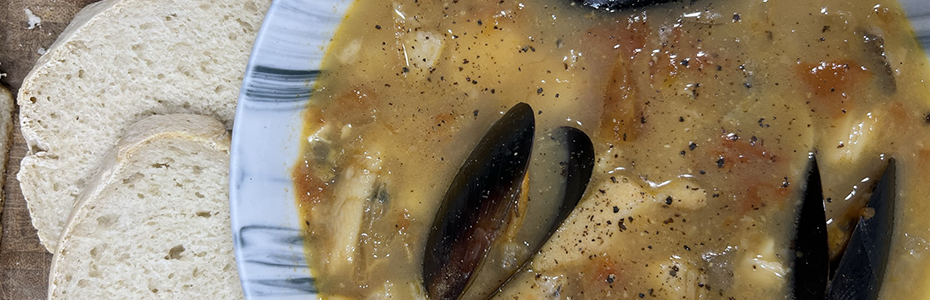
A seafood stew with mussels and clams, minus the Vibrio.

Recipes from Marche, Italy: Filone Casereccio

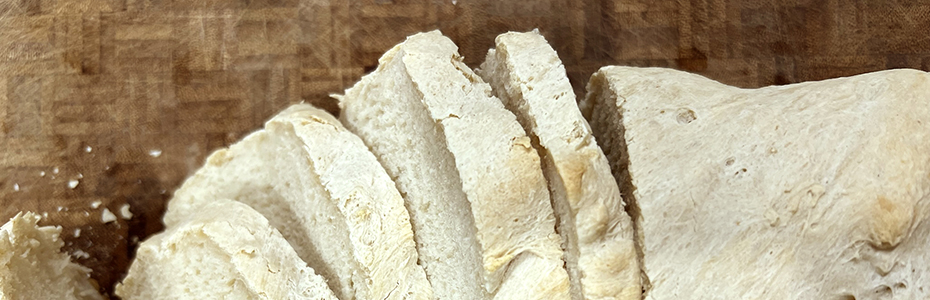
An Italian bread that will come out much better than mine did if you use fresh brewer's yeast and steam.

Recipes from Malta

This is actually the third time I’ve cooked a meal from Malta. The first time, I cooked the meal and then just did not write the blog post. Years went by.

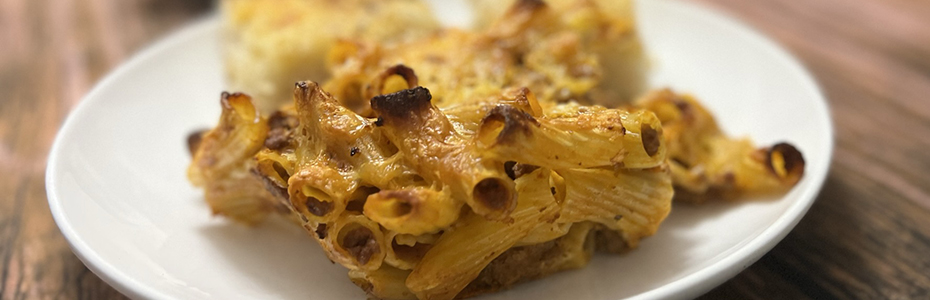
Recipes from Malta: Imqarrun

Imquarrum (also called Imqarrun il-forn) is descended from a dish served in Sicily, but the Maltese have adopted it as a traditional staple. The key to making this dish is to be patient.

Thursday, November 10, 2011

Recipes from Antarctica

This week's recipes come from Antarctica. No, really. Antarctica.

I won't lie. I was really concerned about this one. I started doing research for it almost as soon as I decided to start writing this blog.

Here's why: There are no traditional Antarctic recipes. There is no "national dish of Antarctica." Recipes don't get passed down from generation to generation. That's because Antarctica has no native population, unless you count the penguins. No one really raises kids in Antarctica. In fact, until 1820 no human being had even laid eyes on the southern-most continent. And the only people who live there now are research scientists and the people who provide them with supportive services.


Just to set the record straight, Antarctica isn't a country. Unlike many of the other territories and psuedo-nations on my list, its status as a non-country isn't even in question. It has no government, though there are a few countries who have tried to lay claim to various regions. Activities in Antarctica are regulated by the 1959 Antarctic Treaty, which was signed by 12 nations (including neighbors Argentina, Chile and Australia, as well as the super-nations of the time, the USSR, the UK and of course the USA). The treaty primarily banned military activity and designated the continent as a scientific and environmental preserve.
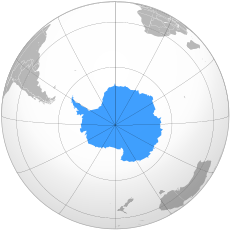
Antarctica, the bottom of the earth.


So I guess I could have opted out of Antarctica, since it clearly doesn't belong on a list of sovereign nations. But you know me.

So how does one go about finding recipes for a land of ice, that has no real culinary tradition and no permanent population?

Google, of course. At least that's where I started ... but I didn't get very far. Predictably, there were no easy-to-find Antarctica recipe collections or even single recipes anywhere on the internet. By week three of my search I'd almost resigned myself to cooking a meal of pemmican and sledging biscuits. My poor family.

I wasn't quite ready to quit yet, though, so I thought I'd try emailing some of the bloggers I'd found who had traveled to Antarctica or were just particularly enthusiastic about it. The first couple of people I contacted were happy to write back with suggestions, but when I asked them for a recipe that was "quintessentially Antarctic" they really just shrugged their electronic shoulders. I finally got put in touch with Jason Anthony, who is the author of a forthcoming book about food at the South Pole (Hoosh: Roast Penguin, Scurvy Day, and Other Stories of Antarctic Cuisine (At Table) , published by the University of Nebraska Press). Jason's book is "a narrative history of Antarctica with food as its focus," but even he had to admit that there really is no real "Antarctic cuisine." He did send me a link to a semi-famous cookie recipe by Antarctic dietician Sally Ayotte, but woman cannot feed family on cookies alone, though my kids would certainly not have a problem with the idea. 

Jason also offered to send me some recipes for penguin and seal. Now, I'm pretty sure, though I have never asked, that Safeway doesn't carry penguin or seal. I briefly considered substituting duck, but that felt too much like cheating. So I had to decline, and I was back to square one.

I was almost coming back around to the idea of pemmican and sledging biscuits (with cookies for dessert?) when I decided to try contacting someone who actually worked in a kitchen in Antarctica. So I emailed the Office of Legislative and Public Affairs at the National Science Foundation, which is in charge of the United States Antarctic Program, and they referred me to the contract agency that hires kitchen staff some of the research stations in Antarctica. That's when I first got in touch with Elaine Hood, who I have to thank for finally setting me on the right course.

Elaine got in touch with two Antarctica chefs--one former and one current--who both sent copies of the same recipe: Beef Wellington, which is served at the Amundsen-Scott South Pole Station every Christmas. Because it's the busy season in Antarctica, I wasn't able to coax any additional recipes out of them, but I did find a transcript of a sous chef at McMurdo Station cooking parsnip mashed potatoes, from which I gleaned ingredients (though I had to guess at measurements). And finally I went back to that Sally Ayotte cookie recipe for dessert. Yay! My Antarctica menu was complete.

"Cookie" Jon Emanuel, former chef at the
Amundsen-Scott South Pole Station.
James Brown, current chef at Amundsen-Scott South Pole. Both
these guys sent me a copy of the same Beef Wellington recipe.


Ready? Here are the recipes:

South Pole's Favorite Beef Wellington
Courtesy South Pole Chef James Brown and Former South Pole Chef Cookie Jon Emanuel

  • 1 whole beef tenderloin, trimmed of fat and silver skin 
  • 4 tbsp butter 
  • 1 lb mushrooms, sliced 
  • 2 garlic cloves, minced 
  • 1 C red wine 
  • 1 tsp fresh thyme leaves, chopped 
  • 2-3 sheets 12 x 6 frozen puff pastry dough (or equivalent) thawed 
  • 1 lb. pork liver paté (optional) 
  • 2 T prepared Dijon mustard 
  • 1 egg, beaten with 1 T water 
  • Salt and pepper to taste

Parsnip Mashed Potatoes
(from McMurdo Station, Antarctica)
  • 3 medium white potatoes
  • 3 parsnips
  • 1 medium onion
  • 5 cloves garlic
  • Salt to taste
  • 3 tbsp butter
  • 1/4 cup heavy cream
  • 1/4 tsp. white pepper

Sally Ayotte's South Pole Chocolate Chip Cookies
(recipe posted at Quark Expeditions)
  • 1/2 cup margarine
  • 1/2 cup butter
  • 3/4 cup packed brown sugar
  • 3/4 cup granulated sugar
  • 2 eggs
  • 2 teaspoons vanilla extract
  • 2 1/2 cups flour
  • 1 teaspoon baking soda
  • 1/2 teaspoon salt
  • 2/3 cup chocolate chips
  • 2/3 cup white chocolate chips
  • 2/3 cup butterscotch chips
  • 1 cup nuts, chopped  (I used peanuts and cashews)

First a word on the beef tenderloin. If you regularly shop for beef, you probably already know that this is the most expensive cut on the cow. If you get a whole tenderloin (as dictated by the recipe), you will probably spend more than 100 bucks (Sam's Club had whole tenderloins for $75). Unless you're feeding an army or a bunch of scientists at the South Pole, you won't need this much meat. But supermarkets usually cut tenderloins into fillets and sell them as "fillet mignon." If you want a piece of meat that will work in a Wellington, you'll need to ask your butcher to cut off a piece of a whole tenderloin. I asked for a pound and a half and was given more like a pound and three quarters. Here's what I spent:


Yes, that's right. Thirty bucks for a pound and 3/4 of beef.


I ended up cutting off two steaks and putting them away for later. The amount left over was just enough for Martin and I to enjoy and for my kids to reject (I didn't give them more than about a quarter slice each). So I'm guessing you could probably feed four adults on about 1 1/2 pounds of tenderloin.

A quick note on adjusting this recipe to feed fewer people: I used a lot less beef but I really only halved most of the other ingredients. So I probably ended up with a higher mushroom mixture to beef ratio than they'd see at the South Pole on Christmas day, but this worked just fine for me and made it easy to figure out what quantities to use.

So first trim all the fat and silver skin off the tenderloin, then rub it all over with salt and pepper.

Ready for the pan.


Now add about half of the butter and melt it over medium heat. Let it foam, then add the tenderloin and sear it on all sides until it is a nice brown color.

Sear the beef until all sides are brown (a little longer than pictured).


Remove the meat from the pan and let it cool. Now in the same skillet, add the rest of the butter and melt over high heat. Add the mushrooms and sauté until they reduce in size, but don't let them brown.

Saute the mushrooms in butter.


Just before the mushrooms are done, add the garlic. Pour in the wine and cook over a medium high heat until the liquid is reduced and the mixture is almost dry. Add the thyme, salt and pepper.

After the wine has reduced, add the thyme, salt and pepper.


Remove the mushrooms from the heat and let them cool in a shallow pan. Then put them in a food processor and chop them until they form a rough paste. Set aside.

Your chopped mushrooms should look a bit like this.


Lay the puff pastry out on the work surface. You may have to use some flour to prevent sticking (you may also have to roll the dough a bit until it is the right size). Now spread the mushroom mixture in a wide strip down the center of the pastry, leaving about an inch and a half of bare pastry at each end.

Spread the mushroom mixture in a wide strip down the center of the pastry.


Now if you were brave, you bought some paté. Personally, I think organs are yucky. But I like to be true to the recipe, so I got the paté. If you're not really used to buying such things, you can find pork liver paté in the canned meat section of most supermarkets. Here's what it looks like:

Ew.


Now the recipe says to "arrange thin slices of the paté down the center of the mushroom strip." My paté was a paste, and it didn't slice. So using my fingers (double ew), I just spread it down the center of the mushroom mixture. It was fiddly, but it worked.

The mushrooms with the paté. Ew and blech.


Brush the tenderloin all over with dijon mustard.

The tenderloin is ready to be wrapped in pastry.


As gently as you can, place the tenderloin in the middle of the mushroom and paté strip and wrap the pastry over it. Seal the edges with your fingers, then brush with the egg and water mixture to ensure a good seal. Repeat with the ends (trim any excess pastry, or it won't cook all the way through).


Seal the ends and brush with egg wash.


Now turn the wrapped meat over (carefully!) and place it in a greased pan so the seam is at the bottom. Brush the egg mixture over all the pastry, and then make three slits in the top to stop the pastry from bursting open while cooking.

An oven-ready beef Wellington. I still can't believe I got this right.


Bake at 400 degrees until the internal temperature reaches 120 degrees. Note: this temperature seems low, but once you take it out of the oven the meat will continue to cook and the temperature may climb by as much as 15 or 20 degrees. So if you want a rare or medium rare beef make sure to take it out early. Use a meat thermometer that can stay in the oven while cooking to ensure perfect results.

The pastry should be a golden color when you take it out of the oven. Let it rest for at least 15 minutes before slicing. When you do cut into it, the juices should flow out and you can use this to make an au jus sauce to serve with it.

Yum yum yum yum yum yum yum


While your Wellington is in the oven, you can start on the parsnip mashed potatoes. This isn't usually what they serve with the beef Wellington on Christmas at the South Pole, but they do serve it at various other times of the year. So it's not the full Christmas-at-the-Pole experience (you would actually also need lobster tail for that) but it's still true to the region.

First assemble your ingredients:

A simple recipe: parsnips, potatoes, onions and garlic.


Now peel the potatoes and parsnips and boil them with the garlic until all the vegetables are soft. Meanwhile, saute the onions until they are translucent but not brown (you want the final dish to have a creamy white color).

Saute the onions. I should really have a stock photo of this.


When the vegetables and onions are done, mash them all together and add the cream, butter, salt and white pepper. 


Now put it all together:

This meal is from Antarctica! Wow!


But ... we can't forget the cookies! I am told that these cookies are so famous, the Air National Guard has been known to detour to the South Pole just to get some.

I made them earlier in the day with Hailey's help. For a famous recipe there's actually not much to it (at least nothing that different from making any batch of cookies).

First, cream the butter, margarine and the two kinds of sugar. Confession: when I made these I read the recipe wrong, and only used a half cup of butter (without the margarine). Mine were still really good, but the extra half cup of butter will give you a softer cookie.

My mixture was more of a crumble than a "cream," because I left out the margarine.


Now add the eggs and the vanilla:

This made the mixture a lot creamier.


In a separate bowl, mix together the flour, baking soda and salt. Then add to the sugar/butter/egg mixture and blend until a soft dough forms. Then dump in the chips.

Dang, that is a whole lotta chips.


Finally, add the chopped nuts. I made a batch with nuts and a batch without (I'm not quite ready to test Henry for peanut allergies).

Now drop the dough by teaspoons onto a baking sheet, about two inches apart. The recipe doesn't say to grease the baking sheet, but my cookies stuck pretty badly so I would definitely put a little butter on the pan next time I make these.

Ready for the oven.


Bake at 375 degrees for 12 to 14 minutes, or until the bottom edges are lightly browned. Now try telling your family they can't have any until after dinner.

We want cookies NOW!!!!


So how did this meal go over? Well predictably, my kids were more interested in the pastry than in the meat, but that's just them. As far as I'm concerned, the whole meal was delicious. The beef was juicy and perfect (and I couldn't even taste the paté!) The potatoes were good too, with just a little hint of parsnip flavor (next time I might use a few more parsnips). I did undercook the onions which was kind of unfortunate, but they were still good.

Now Martin didn't like having onions in his mashed potatoes. I guess it wasn't British enough for him. Also I think he was a little perturbed because I invaded his territory (Martin usually makes the beef Wellingtons in our house). But he admitted that the meal was good, though he would not admit that it was better than the ones he usually does. I won't say what I thought.

As for the cookies, well, they were awesome too. I guess I don't have to tell you that my kids agreed.

The finished cookies. The recipe makes between 3 and 4 dozen.


Next week: Antigua and Barbuda.

Thursday, November 3, 2011

Recipes from Anguilla


Recipes from Anguilla
Back in my very first blog post, I clearly remember vowing that I would not spend any unreasonable amount of time in search of unusual ingredients. Now, nine weeks later, I think I can say that was a bit of an unrealistic statement.

Sure, you can usually find international recipes that don't contain ingredients that are unavailable at any Safeway, but with some of these countries that can be a long, difficult ordeal. Also, I have to admit, looking for unusual ingredients is kind of a fun challenge.

First it was the halloumi, back in Akrotiri (remember that)? Then it was the piri-piri sauce in last week's shrimp recipe from Angola. This week it was pigeon peas.

OK so let's back up a little. Why did I spend half my week trying to track down pigeon peas? Well, because pigeon peas are a key ingredient in the "National Dish" of our next country: Anguilla.

Anguilla is yet another tiny, tiny place--16 miles long by 3.1 miles wide--which (at least in my mind) has questionable status as an actual country. Located in the Caribbean (near Puerto Rico), Anguilla is a British overseas territory, perhaps known best for its typical Caribbean beauty, and of course for the complete absence of most kinds of taxes, including profit, capital gains, estate taxes and most other kinds of direct taxation on both individuals and corporations. Tourism is one of Anguilla's biggest industries, though it has suffered a severe decline because of the past few years of worldwide economic decline.

Anguillan cuisine includes a lot of seafood, though funnily enough, I couldn't actually find any of those recipes during my research. Very little is grown on Anguilla either, with exceptions including limes, tomatoes, squash and, yes, pigeon peas.

So what in the what what are pigeon peas? Well, they look a bit like black-eyed peas, except without the black eye--hence one of their other common names, "no-eyed peas." Where do you get them? Well, you can try Amazon.com, if you want to either buy a whole case of them, (and let's face it, you don't really want to buy a whole case of something you've never tasted), or you can visit other sources if you want to pay more to ship a single can than you paid for the can itself. How about iGourmet? Well, they don't seem to have even heard of pigeon peas. Where else then? When I Googled "Pigeon Peas" I discovered that a lot of the stores selling them online were Latin and Mexican grocers. So I did a Yelp search for Mexican grocers near me and was excited to discover one about 30 minutes away in Auburn, a town where I go to shop all the time anyway. A quick stop there and ta da! Pigeon peas.

Yeah, it's kind of fun to track this stuff down. When the hunt results in a kill of course.

So pigeon peas in hand, I returned home to embark on my virtual culinary adventure in Anguilla. Here are the recipes:

Pigeon Peas and Rice (Anguilla's national dish)
(from Anguilla-Anguilla)
  • water
  • juice of one lime
  • 1 cup of rice
  • 1/4 teaspoon of thyme
  • 1 tablespoons of butter
  • Dash of hot pepper sauce
  • 1/4 pound of corned beef (optional)
  • 6 ounces of dried pigeon peas
  • Black pepper to taste
  • Salt to taste


Anguillan Beef and Pineapple Kebabs
(from Healthy Life)

  • 2 pounds of beef
  • 1 tablespoon of salt
  • Black pepper to taste
  • 2 tablespoons of molasses
  • 1/2 cup pineapple juice
  • 1/4 cup wine vinegar (white)
  • About 1/2 a fresh pineapple, cored and cubed
  • Wood skewers (soaked in water for about 20 minutes)

And for dessert: Warm Chocolate Pie
(from Celtnet)

  • 1 egg, separated
  • 1/4 cup sugar
  • 1/3 cup butter
  • 1 roll white bread, crumbed
  • 1/4 cup mixed nuts
  • 2 ounces dark chocolate, melted


Starting with the elusive pigeon peas:

Here they are, finally tracked down at a semi-local Mexican market.


Pigeon peas look a bit like black-eyed peas, but without the black eye.


Like other dried legumes, pigeon peas require overnight soaking, which of course I forgot to do. So I boiled mine for about two hours, which meant this dinner was just for me and Martin and my kids got to eat burritos and go to bed early.

So whether you soak or boil, when the pigeon peas are soft it's time to drain and rinse them. If you're serving this as a main course, you can add corned beef at this point with just enough water to cover, and boil until the meat is done. I didn't add the corned beef to mine since I was planning to serve it as a side dish.

There should be about two cups of water in the pot for the next step, so if you are making this with corned beef you'll need to drain the liquid, reserve and measure it, then add enough water for a total of two cups. If you're going sans-beef just add two cups of fresh water to the beans, then bring to a boil. Add the rice, lime juice, thyme, hot sauce and butter, then cover and reduce heat. Simmer until the liquid is absorbed, which should take about 20 minutes. Add salt and pepper to taste.

The pigeon peas actually darken quite a bit when they are cooking.


 If you think that dish seemed pretty simple, the kebabs were even more so. This recipe consists of a very basic marinade made from molasses, pineapple juice and vinegar. Just cube the beef into kebab-sized bits, mix these three ingredients together and marinade the beef chunks in them for about an hour. 

Marinading beef chunks.


Then cut up your pineapple into equal sized chunks (you could use canned chunk pineapple, but I love fresh pineapple) and thread onto the skewers with the beef (I used about two parts beef to every one part pineapple). Drizzle the remaining marinade over the skewers and grill over a hot flame or cook under your broiler (which is of course what I did).

Slightly blackened, just the way I like it!


While the rice is cooking (but before you put the beef on, since that will only take a few minutes), gather the ingredients for the warm chocolate pie. This dessert is prepared a little strangely by American standards: there is no crust, and the body of the pie comes from crumbled bread rather than flour. Here's how you make it:

Chop the nuts and set aside. Now cream together the butter and sugar.

Cream the butter and sugar.


 Add the egg yolk and continue to blend until well incorporated.

Add the egg yolk.


Next add the breadcrumbs and the melted chocolate.

I just melted the chocolate in my microwave. Try not to lick it out of the bowl.


Fold in the chocolate and breadcrumbs.


Whip the egg while until stiff peaks form, or if you're like me convince yourself you can see stiff peaks even though you can't, because your arm is tired and you'd really just like to stop beating the stupid egg white already. Gently fold in the egg white and the nuts.

 Pour the mixture into a pie tin lined with wax paper. Note: this recipe does not make very much, so I used a pretty small pie tin, probably about half the size of a standard one.

This pie has no crust, just filling.


 Bake at 350 degrees for about 25 minutes. Serve warm.

Warm chocolate pie, ready to serve!


Here is my verdict on this Anguillan meal: Good. Decent. But sadly, after all that searching for the right ingredients I really can't give it higher marks than that.


Pigeon peas and rice: sadly bland.


Beef and pineapple kebabs: good but uninteresting.


The pigeon peas and rice were predictably bland (you can really see that just based on the recipe), even though I over-salted them in an attempt to draw out some flavor. In fact the pigeon peas were so underwhelming that Martin failed to even comment on them, even though they were clearly not something he'd ever eaten. When I prompted him he just said, "They don't really taste any different than pinto beans." The kebabs were good but not really that unusual in flavor. Ditto for the warm chocolate pie.

So was I disappointed? No, and we did both go back for seconds. It was satisfying food, just not very exciting.

Next week: Antarctica. Yes, that's right, Antarctica.

Thursday, October 27, 2011

Recipes from Angola


Recipes from Angola
I really needed another week off, but I managed to limp my way into the kitchen this week anyway. By the way these antibiotics make me loopy (the other day I caught myself trying to put the flour in the refrigerator, and when making chicken and buttermilk dumplings I put the cream in the dumplings and the buttermilk in the sauce) so please forgive me if I write any non-nonsensical sentences and then don't bother to correct them.

Fortunately, Angola was pretty easy on me, and the food both tasted and looked pretty good:

But first a little background. The Republic of Angola is a pretty good sized country in south central Africa. Here it is on the map:


From about the 16th century Angola was occupied to some extent by the Portuguese, who left their mark on the cuisine that is still popular there today. Angola has been independent since 1975, but it is a troubled place, with appallingly high rates of infant mortality, a very poor record of human rights and an average life expectancy for its citizens of less than 48 years.

Angolan cuisine depends greatly on imports from Portugal, as well as on non-western ingredients such as palm oil, banana leaves, cassava flour and a number of other things I couldn't find locally or even on igourmet.com. So I did have to pass up a number of otherwise perfectly good recipes just based on my failed pursuit of ingredients.

I also passed up many other recipes, including Cabidela, which is traditionally cooked in blood, Catatos, which is caterpillar fried in garlic (and I had a few juicy looking ones on my tomato plants this year too, darn it), Gafanhotos de palmeria (toasted grasshopper), Jinguinga (goat tripe and blood), and Mafuma, which is made out of frog's meat. I know, I know, they all sound delicious. What was I thinking.

Here are the dishes I did settle on:

Camarões Piri-Piri (Shrimp in red pepper sauce)
(from Recipes2Share)
  • 2 pounds shrimp, peeled and deveined
  • 1/2 cup Molho de Piri-Piri
  • 6 cloves garlic, minced

Arroz de Coco e Papaia (Rice with coconut and papaya)
(from Celtnet) 
  • 1 cup rice
  • 1/2 tsp salt
  • 1/2 tsp ground cinnamon
  • 2 cups coconut milk
  • 1/4 cup water
  • 1 papaya, peeled, de-seeded, and finely diced

Salada limão (Lemon salad)
(from Celtnet) 
  • 1/4 cup lemon juice
  • 4 tsp olive oil
  • 1/2 tsp salt
  • 2 fennel bulbs
  • 2 ounces finely grated parmesan cheese

60ml lemon juice 4 tsp olive oil 1/2 tsp salt 2 fennel bulbs 50g grated parmesan cheese

Read more at Celtnet: http://www.celtnet.org.uk/recipes/miscellaneous/fetch-recipe.php?rid=misc-lemon-salad
Copyright © celtnet

60ml lemon juice 4 tsp olive oil 1/2 tsp salt 2 fennel bulbs 50g grated parmesan cheese

Read more at Celtnet: http://www.celtnet.org.uk/recipes/miscellaneous/fetch-recipe.php?rid=misc-lemon-salad
Copyright © celtnet
60ml lemon juice 4 tsp olive oil 1/2 tsp salt 2 fennel bulbs 50g grated parmesan cheese

Read more at Celtnet: http://www.celtnet.org.uk/recipes/miscellaneous/fetch-recipe.php?rid=misc-lemon-salad
Copyright © celtnet
60ml lemon juice 4 tsp olive oil 1/2 tsp salt 2 fennel bulbs 50g grated parmesan cheese

Read more at Celtnet: http://www.celtnet.org.uk/recipes/miscellaneous/fetch-recipe.php?rid=misc-lemon-salad
Copyright © celtn1/4 cup lemon juice
Let's start with the shrimp, since that has to marinade at least 30 minutes (mine was marinading for a couple of hours).

You are, of course, wondering how to make "Molho de Piri-Piri," which is the key ingredient in Camarões Piri-Piri. Here's the recipe:
  1. Go to www.igourmet.com
  2. Search for "peri-peri" (an alternate spelling of the same thing)
  3. Click "Add to Cart"
  4. Check out

Is the a cop out? Not really. Well, kind of. Piri-piri is the Portuguese spelling for the African bird's eye chili pepper, which is native to Southern Africa. Now you can, with some effort, get piri-piri seeds and grow them here in the US, but I thought my chances of doing that in less than a week weren't very good, so that's not a route I chose. You can also buy pickled piri-piri peppers, but I thought that would change the flavor too much. A third alternative is to substitute habanero peppers, but that didn't seem particularly authentic either. So I chose to buy the ready-made sauce in the hope that it would provide for a finished product that was a little closer to what they might eat in Angola. Of course, I was disappointed to find that the peri-peri sauce sent to me by igourmet.com is actually bottled in Georgia, but I guess you can't have it all.

DiChickO's "Peri-Peri" sauce


In case you'd rather make your own psuedo-piri-piri, here is the recipe:

  • 3 to 5 habanero peppers
  • 2 cloves of garlic
  • 2 tsp salt
  • 1/3 cup red wine vinegar
  • 1 cup olive oil

Put the first four ingredients into a blender or food processor and pulse until smooth. With the blender running, slowly add the olive oil. Add salt to taste.


Now peel and devein your shrimp. I'm sure you love deveining as much as I do. Then add the piri-piri sauce and the crushed garlic to the shrimp. Mix well and refrigerate for at least 30 minutes.

The shrimp, peeled, deveined and marinading. Oh how I love deveining shrimp.


Now on to the rice. I've made Jamaican peas and rice plenty of times, but have always had a hard time getting the rice to absorb the coconut milk, so lately I've been boiling the rice and then just adding it to the milk after the fact. This recipe gave me that "aha" moment (or maybe it was a "duh" moment) by instructing me to thin the coconut milk with 1/4 cup of water. Oh wow, that seems so obvious.


Now add the rice, salt and cinnamon.

Coconut milk, water and cinnamon


 Bring to a boil, then cover and reduce heat. Simmer for 20 minutes or until the rice is done (mine took quite a bit longer). Also it says to "fluff" the rice and let stand covered for 10 minutes. Mine was distinctly unfluffy. In fact, it was almost the opposite of fluffy, kind of risotto-like.

While you're doing all this, you can get the shrimp ready for grilling. Traditionally this dish would be cooked over an open flame, but in our house Martin does all the outdoor grilling. I usually broil anything that would otherwise be grilled.

Thread the shrimp onto skewers and cook for about five minutes, turning once, until the shrimp is pink (note this can be a little hard to figure with this recipe, since the marinade is red. You can also tell shrimp is done when it starts to curl and develop a firm texture).

The shrimp are skewered and ready for the broiler.


Back to the rice: while the rice is standing (presumably undergoing fluffification, if you did it right), cut and seed the papaya, then finely dice it. Mash half of the dice and keep the other half as-is.

Dice half the papaya and mash the other half.

Put both the mashed papaya and the diced papaya into the rice and mix, warming over the stove. Easy huh?

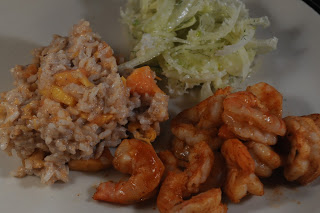
My finished rice looked a bit like risotto with papaya.


Finally the salad, which was my least favorite part of the meal. Normally I like fennel as a garnish or as a minor ingredient, but as the focus of a salad it was a little overwhelming. Easy, though. Here's the directions:

Trim the fennel bulbs, reserving about two tablespoons of the fronds. Finely chop the fronds and whisk them together with the first three ingredients.

Lemon juice with fennel fronds, salt and olive oil.


Thinly slice the fennel bulbs and toss with the dressing. Sprinkle with parmesan cheese and serve.

The finished salad was OK. A little too fennely for me.


Now I didn't make my kids eat any of this, mainly because it was really spicy, and also because it was shrimp (I have a hard time even getting my husband to eat shrimp). Martin did give the meal kudos though, which is nice from a guy who doesn't like shrimp. "If I have to eat shrimp," he said, "This is probably one of the better ways to have it." So that's a high compliment. Sort of. He did also go back for seconds of the rice, though by popular vote the leftover salad went in the trash. Shame about all that wasted parmesan cheese.

Next week: Anguilla


Copyright 2023 Becki Robins and Palfrey Media.. Powered by Blogger.

Blog Flux

Blog Directory