
Recipes from Marche, Italy

For this entry, I made two recipes. Neither of them were especially good, but I don't blame the people who posted the original recipes or any of the traditions they came from, I blame myself and my propensity for Googling things that might kill me.

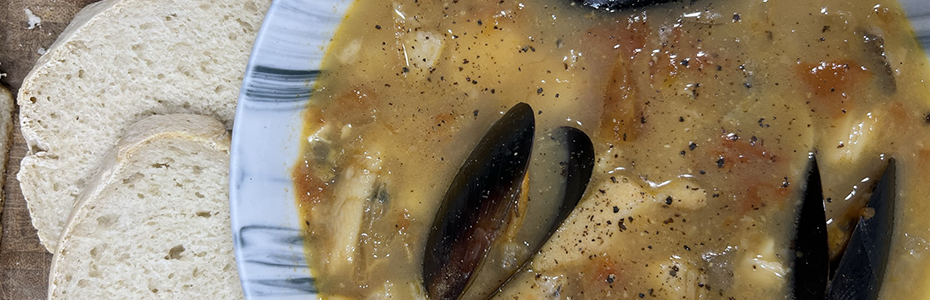
Recipes from Marche, Italy: Brodetto

A seafood stew with mussels and clams, minus the Vibrio.

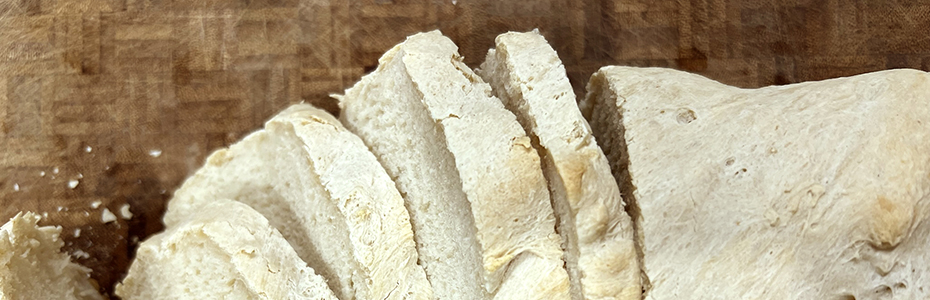
Recipes from Marche, Italy: Filone Casereccio

An Italian bread that will come out much better than mine did if you use fresh brewer's yeast and steam.

Recipes from Malta

This is actually the third time I’ve cooked a meal from Malta. The first time, I cooked the meal and then just did not write the blog post. Years went by.

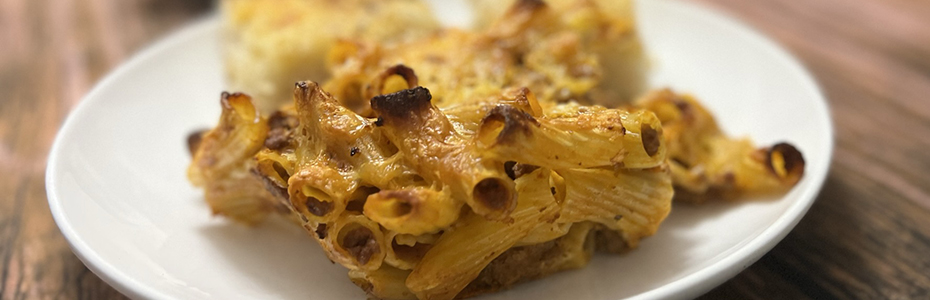
Recipes from Malta: Imqarrun

Imquarrum (also called Imqarrun il-forn) is descended from a dish served in Sicily, but the Maltese have adopted it as a traditional staple. The key to making this dish is to be patient.

Saturday, June 21, 2014

Recipes from Kalimantan, Indonesia

Look at that it's almost Sunday! This week I'm three days behind getting my blog post up. Damn.

Anyway yay, summer! I hope you're having as much fun as we are, and are only half as busy and stressed out as I am. Which is probably still more busy and stressed out than you ought to be.
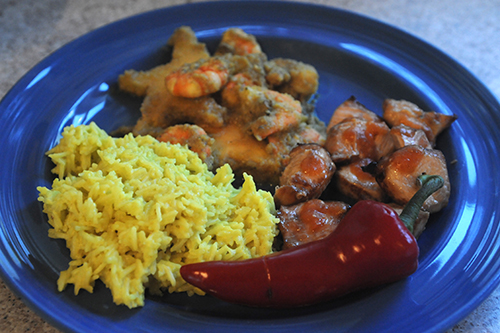
I'm still finding time to blog, but only just. We've already spent some time at the beach and at a pirate festival in between all the time we've spent swimming. And we're only a week and a half in ... Whew!

Pulau Beras Basah, Bontang, Kalimantan Timur, Indonesia.
Photo by M Reza Faisal.

And yet I still managed to take us all the way to Indonesia, at least in foodie sense. This week we're in Kalimantan, Indonesia, which is the Indonesian part of the island of Borneo. Borneo is the third largest island in the world, after Greenland and New Guinea.

 
Kalimantan is home to one of the world's largest and oldest rainforests, which is somewhere between 50 and 100 million years old. Many of the drugs we depend on here in the US are manufactured using raw materials that come from this forest, which is also one of the most bio-diverse places on earth. Orangutans live there, and so does the Sumatran rhinoceros, the Dayak fruit bat and a myriad of other amazing creatures.

The food in this part of the world is quite popular in the rest of the world--in fact if you go to an Indonesian restaurant here in the US you're quite likely to find a lot of dishes on the menu that hail from the island of Borneo. Here are the ones I picked:

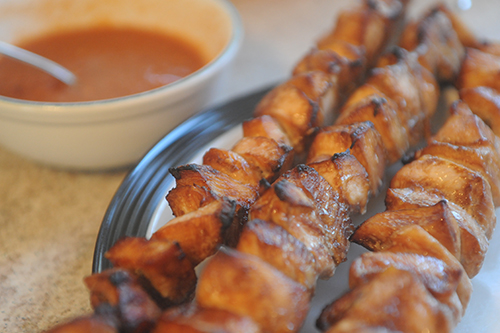
Sate Banjar 
(from Indonesian Dessert Recipes)
  • 1 lb chicken breasts, cut into cubes
  • 3 tbsp cooking oil
  • 5 curly red chili peppers (substitute red jalapenos)
  • 2 cloves of garlic 
  • 1 whole tomato, sliced 
  • 1 tbsp brown sugar
  • 1 tsp salt
  • 3 tbsp soy sauce
  • 4 tbsp cooking oil
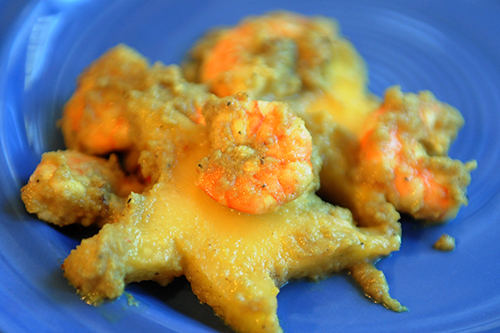
Asam-Asam Prawns 
(also from Indonesian Dessert Recipes)
  • 1 lb jumbo shrimp, peeled and deviened
  • 1 tsp tamarind, dissolved in 1/4 cup water 
  • 2 tbsp oil for sauteing 
  • 6 red onions 
  • 3 cloves of garlic 
  • 1/2 tsp pepper grains 
  • 4 items pecans, toasted 
  • 1/2 inch turmeric, roasted 
  • 1 1/2 tsp salt
  • 1 tsp sugar 
  • 2 bay leaves 
  • 1 stalk lemongrass, crushed 
  • 1 inch piece galangal
  • 5 pieces starfruit, cut into pieces
  • 3 large red chilies, sliced oblique
  • 3/4 cup water
Nasi Kuning 
(from Indonesia Eats)
  • 2 cups jasmine rice, washed and drained
  • 2 1/4 cups coconut milk
  • 3/4 cup chicken stock
  • 1 cup water (more if needed) *
  • 1 Indonesian bay leaf 
  • 2 lime kaffir leaves 
  • 1 pandan leaf (substitute 3 drops pandan essence) 
  • 1 stalk lemon grass, bruised 
  • 1 tsp turmeric powder 
  • 1 inch piece galangal, cut in 4 lengthwise slices 
  • salt to taste
* I added this ingredient--in my experience, this recipe doesn't have enough liquid in it for the rice to absorb.

First let's do the chicken:
Boil the peppers with the garlic and tomatoes until soft. Drain and set aside.

Now mix the brown sugar with the salt. Add the soy sauce and oil, then transfer to a blender with the peppers, garlic and tomatoes. Pour over the chicken and let stand for 20 minutes.
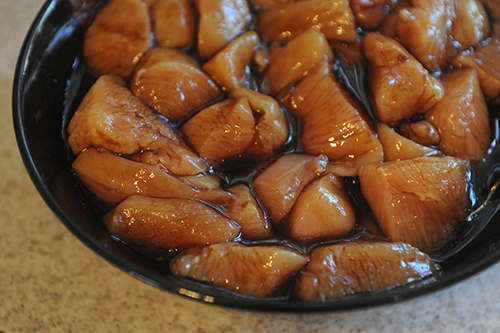
Thread the chicken pieces onto skewers and grill on your barbecue, turning occasionally. Baste with the residual marinade and continue to cook until the internal temperature reaches 165 degrees.

Now for the shrimp:

Mix the shrimp with the tamarind water and set aside. Now heat the oil over a medium flame and add the ground spices, bay leaves, lemongrass and galangal. Cook until fragrant.

Add the shrimp and stir-fry until pink, then add the chili pepper, water and star fruit. (I didn't have any star fruit, so Martin cut some pineapple into a star shape and we used that. Probably the biggest cheat I've done so far for this blog.) 
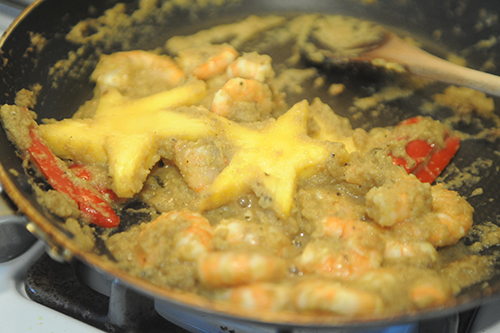
 
Stir until the starfruit softens. Discard the bay leaves, lemongrass and galangal. Done!


I know, it's not star fruit. It's pineapple. Cheater!

Finally, the rice.

Mix all the ingredients together in a heavy stock pot. Bring to a boil, then cover and reduce heat. Simmer for 20 minutes or until the liquid is absorbed and the rice is fluffy. Discard the lemongrass, galangal, bay leaves and lime leaves. Serve.

Mmm loved the rice! It had a nice lemony, coconutty flavor although I'm not sure the texture was quite right. It was pretty sticky. I confess that I had a hard time with this, I had to keep adding water because it's really not that easy for rice to absorb a liquid as thick as coconut milk. At one point while it was cooking, Martin lifted the lid and said (aghast) "Rice-A-Roni??" which is probably the most insulting thing anyone has ever said about anything I've cooked--but in the end it tasted pretty good and went nicely with the shrimp and chicken. I enjoyed all of these dishes a lot--they had lots of flavor and color.

My kids, as I'm sure you guessed, wanted to know where the dessert was and then picked unenthusiastically at their meals until I had mercy on them and let them leave the table. I don't know why I even bother to report to you what my kids thought of their food--I need some canned stuff that I can just cut and paste into the end of every blog.

Next week: Kashmir, India

Friday, June 13, 2014

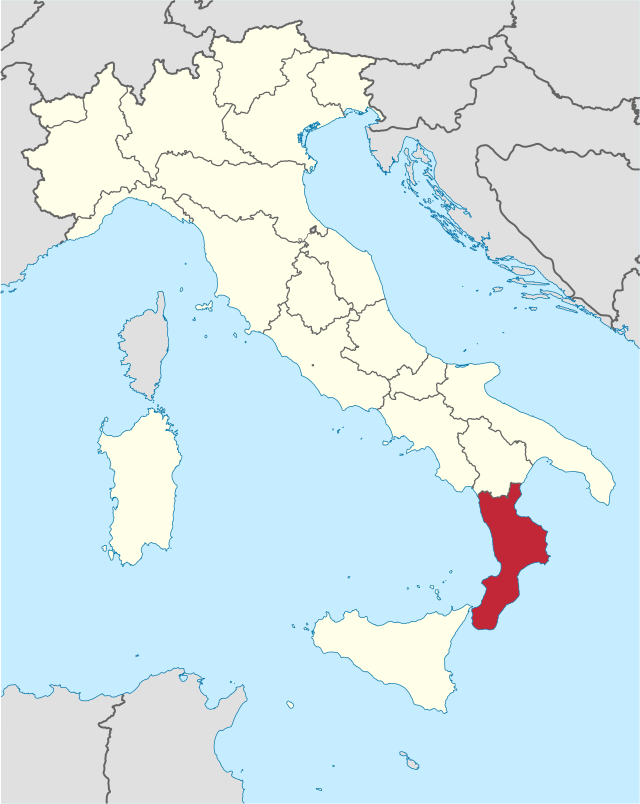
Recipes from Calabria, Italy

So this week was supposed to be another non-country, but I've been a bit behind in my research. I used to be so on top of these things, and then I became employed. Sigh.

 
So Juan de Nova island will have to wait, pending a reply from an email I sent a few weeks ago. Meanwhile, I figured this was as good a time as any to go back and revisit one of those Italian provinces. This week, it's Calabria, Italy.

Stilo, Calabria, Italy. Photo by Flickr user mrholle.

Calabria is the toe of the Italian boot. Now I've never been to Italy, but if I did go I think I would visit Calabria. Calabria has got some cool stuff--a beautiful coastline, some gorgeous countryside, lakes, national parks and important historical sites such as Reggio Calabria, an 8th century seaside town that has botanical gardens, beaches, a castle and a number of historic works of art. Yep, that sounds like my kind of place.


And you guessed it, the food is good too. The cuisine is typical southern Italian fare with a mix of meat, vegetables and fish--and, of course, pasta. Because of the hot summer climate in Calabria, there has traditionally been a need to preserve food, so you'll also find a lot of pickled vegetables and meat, sausages and cured fish.

All of my recipes this week came from a book called A Taste of Calabria by Salavtore Vona and Niall Allsop. I tried to go with dishes that were a bit different (pasta seems so cliche), and here's what I settled on:

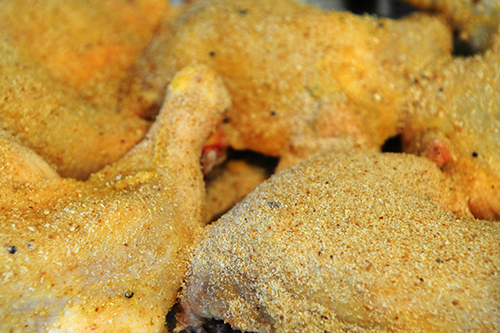
Galletto alla diavola (devil’s chicken)
  • 1 chicken, cut up
  • 2 eggs, beaten
  • salt and pepper to taste
  • 1 tbsp mustard
  • olive oil
  • breadcrumbs
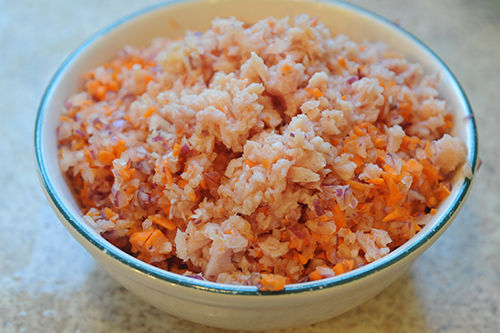
  • 1 carrot, minced
  • 1 red onion, minced
  • 1 3/4 oz uncooked ham, finely chopped
  • 7 tbsp butter
  • 1 cup white wine
  • 1 cup dry Marsala wine
On the side:

Risotto alle verdure (vegetable risotto)
  • 1 handful spinach
  • 2 tbsp butter
  • 2 tbsp onion, chopped
  • 3/4 cup rice
  • 2 tbsp white wine
  • 3 stalks asparagus, chopped into small pieces
  • 2 cups vegetable stock, hot
  • 1 thick slice cooked ham, diced
  • 1 oz Parmesan cheese, grated
  • parsley
  • salt and pepper to taste
And for dessert:

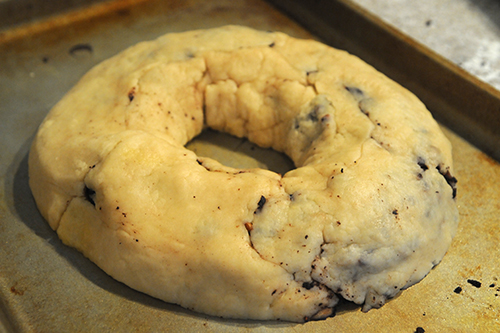
Buccellato Buccellato
  • 2 1/2 cups flour
  • 10 tbsp butter
  • 1/2 cup sugar
  • 1 cup Marsala wine
  • Pinch salt
  • 10 1/2 toasted dried figs
  • 3 1/2 oz almonds, roughly chopped
  • 1 3/4 oz walnuts
  • Zest of 1 lemon
  • 3 1/2 oz cooking chocolate, chopped fine
  • Pinch cinnamon
  • 1 egg yolk, beaten
  • 3 1/2 oz pistachios
  • 10 1/2 oz currants
And here's how:

First to make the chicken, preheat the oven to 325 degrees. Mix the eggs with the salt and pepper and mustard.

 
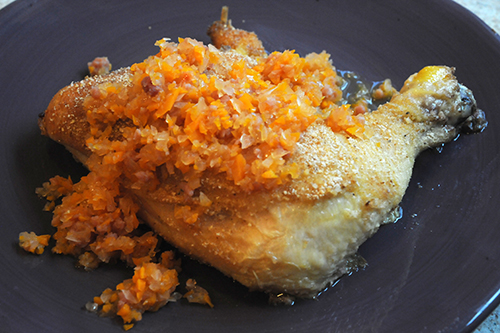
Dip each chicken piece into the egg mixture, then coat with breadcrumbs. Grease a casserole dish with a little bit of olive oil and then add the chicken pieces.

 
Pour a little bit of olive oil over the pieces and bake for 30 minutes, or until the internal temperature of the thickest piece reaches 165 degrees.

Meanwhile, fry the carrot in butter with the onion and ham.

 
 Season with salt and pepper, then add the white wine and Marsala. Reduce heat and let simmer until thickened. Let the chicken rest for a few minutes, then pour the sauce over and serve.

 
Now for the risotto:

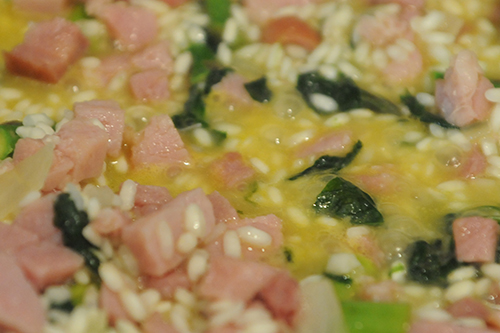
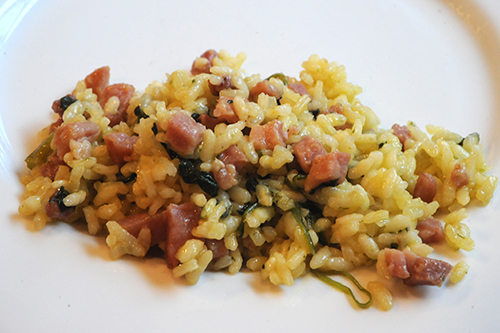
First boil the spinach in salted water until it wilts. Chop fine and set aside. Now melt a tablespoon of butter in a large pan and add the onion. Sauté until translucent, then add the rice. Cook stirring for two or three minutes, then pour in the wine. Once the wine has evaporated, add the asparagus. Cook until tender-crisp, then add the spinach.

Add about 3/4 cup hot stock and cook, stirring, until the liquid is absorbed. Add the ham and then start adding stock one ladleful at a time, waiting until each ladle is absorbed before adding the next.

 
When the stock is gone, remove the rice from the heat and stir in the rest of the butter and the Parmesan cheese. Season with salt and pepper and garnish with the parsley.

 
And now for that dessert:

Preheat your oven to 350 degrees. Mix the flour with the butter, sugar, a half cup of the Marsala and a pinch of salt. Wrap the dough in a clean towel and let rest for two hours.

Meanwhile, mix the figs together with the almonds, walnuts, lemon zest, chocolate, a pinch of cinnamon and the rest of the Marsala. Cook in a medium sized pan over low heat for 20 minutes, stirring often. Remove from the heat and let cool.

Now roll the dough out into a long rectangle just under a half inch thick. Spread the filling into the center of the dough, leaving about an inch on all four sides.

 
Roll up lengthwise and then join the ends to make a ring.

 
Poke a few holes in the top and transfer to a greased baking sheet. Bake for 30 minutes, then remove from the heat and brush with the beaten egg yolk. Sprinkle the pistachios and currants over and return to the oven. Bake for an additional five minutes or until golden.

 
So, my kids thought they were getting a giant doughnut. Again. One of these days I'm going to have to make them an actual giant doughnut, just so I'm not always so cruel to them.

The chicken was tasty, and from a carrot hater like me that's really saying a lot. The sauce was sweet with just a touch of savory from that ham and the skin was super crispy, which is tough to accomplish with a baked chicken. I think I may be modifying my oven-fried chicken recipe to use this technique, because the results were really perfect.

I liked the risotto too but I'm picky about risotto because I actually make it all the time and I already have my favorites (mushroom risotto mmmm). This was decent, as risottos go, but I've had better.

The dessert was definitely different from anything else I've ever made, or eaten. My kids were not impressed, probably because the Marsala flavor was quite strong. Martin, however, was impressed by the Marsala flavor, because in his mind wine+anything=good. I was kind of so so about it. I didn't devour the leftovers while everyone else was at school/work so I guess I didn't love it. But I did finish the one serving I did have.

Next week--giant doughnuts! No, not really. Kalimantan, Indonesia.

Saturday, June 7, 2014

Recipes from Jordan

I actually don't have time to do a blog post this week, either, which you probably ascertained based on the fact that it's the early morning hours on Saturday and I'm just now getting around to posting. I guess I can't get away with avoiding it two weeks in a row, can I? How come I don't remember the last couple of weeks of school being this crazy last year? Oh yeah, it's because of that whole job thing. I really need to figure out a way to make money without actually working.

So this week it's Jordan, and to be honest, I really can't remember a whole lot about this meal because it was so danged long ago now, and these days my brain only maintains information for maybe a day or two. I seem to remember that it was good, but not fabulous.

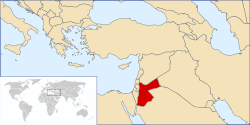
So with that glowing recommendation, let's start with the usual who-where. Jordan is an Arab nation located on the banks of the Jordan River. It borders Saudi Arabia, Iraq, Syria, Palestine, Israel and the Dead Sea, so it's really almost exactly in the middle of all the recent noise in that part of the world.

I won't come right out and say that Arab nations are bad places to live, but Jordan ranks as one of the better in terms of economy and democratic reforms. However it still performs pretty abysmally when it comes to things like civil liberties and corruption. Still, that doesn't stop the tourism--at least 10 percent of Jordan's economy comes from that industry. People flock to Jordan to see its cultural and historic sites, to have fun on the shores of the Dead Sea and for Eco-tourism in places like the Dana Nature Reserve. Oh and there's a ton of nightclubs, too.

The Temple of Dushares, Jordan. Photo by Dennis Jarvis.

Cuisine: I'm sure it won't surprise you to hear that Jordan's cuisine is similar to the cuisine of neighboring nations. Food is very important culturally--every meal is a celebration and guests are always lavished with meals, regardless of how wealthy or poor the hosts may be.

So here are the recipes I chose and yes! It's all coming back to me now.

Chicken Mansaf 
(from The Middle East Kitchen)
  • 1 whole chicken, cut up
  • 1 large onion, finley chopped
  • 2 cloves garlic, crushed
  • 3 cups plain yogurt
  • 1 egg
  • 1 tsp cumin
  • 1 tsp turmeric
  • 1 tsp chili powder (optional)
  • 1 cup almonds, toasted
  • 1/2 cup pine nuts, toasted
  • Parsley to taste, finely chopped
  • Salt and pepper to taste
On the side:

Mujadara (lentil spice rice with carmelized onions) 
(from Chef in Disguise)
  • 1 tbsp olive oil
  • 1 cup short grain rice
  • 1 cup lentils
  • Water as needed
  • 1/2 tsp cumin
  • 1 tsp allspice
  • 1/4 tsp coriander
  • 1/4 tsp cinnamon
  • 1/4 tsp cardamom
  • 1 1/2 tsp salt
  • 1 large onion, cut into strips

And this really oddly-named thing:

Ka3ek bel semsem 
(also from Chef in Disguise)
  • 3 to 3 1/2 cups all-purpose flour
  • 3 eggs
  • 2 tbsp powdered milk
  • 3/4 to 1 cup lukewarm water
  • 1 tsp vinegar
  • 1 tbsp yeast
  • 1 tbsp sugar
  • 1/4 tsp salt
  • 1 egg beaten
  • 1 tsp vinegar
  • Sesame seeds
  • Anise seeds (optional)
OK, here's how to make this meal: First put the chicken in a large stock pot and cover with water. Add a pinch of salt and then bring to a boil. Reduce heat to medium and let simmer for 35 to 45 minutes. When the chicken is cooked through, drain and set aside, reserving about a half cup of the broth.

In a large pot, saute the onion and garlic over medium heat for two or three minute or until fragrant.  Now add the yogurt and spices. Stir until blended, then slowly whisk in the beaten egg. Add a little bit of stock from the boiled chicken (you don't need to use the whole half cup, just use enough to give the sauce a nice creamy texture, not too thin).

Add the chicken pieces and cover the pot. Cook over low heat for 10 to 15 minutes, or until warmed through. Serve over basmati rice (I served it with the mujadara) and top with the nuts and parsley.

Now for the the mujadara:

Put the olive oil in a large pan and saute the onions over medium heat until they turn a rich caramel color. Drain, reserving the oil.

Wash the rice and soak for 10 to 15 minutes.  Meanwhile, put the lentils in a pot and add water until it's about an inch above the lentils. Bring to a boil, then reduce heat and simmer until the lentils are tender. Add the rice, spices, reserved oil and salt to taste. Now add a little more water and bring to a boil.

This is an imperfect science, by the way. You want the water to be about a half inch above the contents of the pot, but you'll need to keep checking to make sure that the rice cooks all the way and doesn't burn at the bottom. The idea is to cook until all the water is absorbed.

Fluff with a fork and top with the onions.

Finally, that bread with the really weird name:

Proof the yeast in 3/4 cup water with the sugar. Let stand until frothy.

Now mix the flour together with the salt, powdered milk, eggs and vinegar. Rub the wet ingredients into the flour the way you would rub butter into pastry. 

Now pour in the yeast mixture and knead for 10 minutes until you get a smooth dough (the recipe says it should be "slightly sticky"). Add a little more water or flour if you need to.

Transfer the dough to a greased bowl, cover and let rise in a warm place until doubled in bulk.

Cut into four parts and roll each one out until it is an elongated rectangle. Roll up lengthwise so that you get a snakelike piece of dough and then shape into a ring.

Beat the eggs and add the vinegar, then paint over the dough with the egg mixture. Sprinkle on the sesame seeds and anise seeds (if using).

Preheat your oven to 500 degrees. The dough should rest while the oven warms up. Bake for 5 to 7 minutes, then reduce the heat to 400 degrees and bake for another 7 to 10 minutes, or until golden. Let sit for five minutes and serve warm.

Now that this has all come back to me I will say that I did like the mujadara. I think it was the caramelized onions that made the dish, but it was quite flavorful and a nice change from just plain boiled basmati. The chicken was good too, but it needed something. I'm not sure what. The flavor was really mild, which in itself is not a bad thing (I've been trying to convince my husband of this fact since I started this blog--he seems to think every blog meal must be an explosion of wild exotic flavors or it's no good). But this particular mildness almost bordered on bland. Maybe just a little extra seasoning, because it definitely had all the components of good flavor.

The bread was good, but it too needed a touch more salt. Maybe they're just not that big on seasoning in Jordan? Anyway my kids were excited for a second because they thought I was making giant doughnuts. But bread of almost any kind is rarely disappointing to them so they weren't too irritated with me when I broke the news that it wasn't actually a dessert.

So whew, I got through that post and I would go curl up in my bed and sleep for a few days if it wasn't for the fact that it's Saturday morning and I still haven't finished all my work for this week. Sigh. Time to start playing Lotto.
Calabria, Italy

Next week: Calabria, Italy

Thursday, May 29, 2014

Recipes from Nowhere

This week we're in ... um, we're not, because it's been a crazy week and I haven't had time to write a post! So I apologize, with Memorial Day weekend plus my daughter's class trip I'm afraid I have to take a pass on this week's entry.

I did make the food, but sometimes the blog posts take more time than the recipes do.

See you next week!

Thursday, May 22, 2014

Recipes from Jiangsu Province, China

You would think that my kids would be used to this by now. They’re not. To them, blog night is still all about the dessert, even though they’re usually disappointed that the dessert in question isn’t the cream and sugar-filled festival of processed fats that their American palettes are used to.

But this week, no dessert. They were pissed.

I actually don’t think I’ve ever done a dessert for any of the Chinese provinces I’ve covered for this blog, because to be honest the idea of Chinese desserts is sort of off putting. Water chestnut cakes, grass jelly and sweets made from glutinous rice–I mean, I’m not as addicted to the sugary, fatty processed stuff as my kids are but jeez, Chinese desserts just don’t sound very delicious. Add to that those weird, typically-stale cream puffs and strangely-textured cakes they give you at Chinese buffets and, um, no thank you.

I should probably try doing a dessert for one of the Chinese provinces at some point, but it’s not gonna happen this week.

Anyway, this week’s province du jour is Jiangsu, China. Jiangsu is an eastern coastal province, and it has the happy distinction of having the highest GDP per-capita of any of the Chinese provinces–in fact the GDP for Jiangsu alone is more than half the GDP of the entire nation of India. This is largely because of electronic equipment manufacture and export, as well as export of chemicals and textiles.

Zhouzhuang, Jiangsu Province, China. Photo by Jakob Montrasio.
Jiangsu also sounds like a cool place to visit–it’s the home of the world’s largest Buddha statue, the Ming Dynasty city wall and gates and the water-town of Zhouzhuang, “an international tourist destination with Venice-like waterways, bridges and dwellings.” It doesn’t stop there, either; I’m pretty sure you could spend at least a month in Jiangsu before you would start to feel bored.


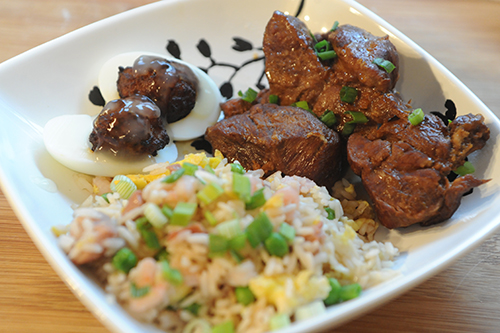
Jiangsu cuisine (also just called “Su” cuisine) is one of the eight culinary traditions of China. Because of its proximity to the sea, Jiangsu cuisine is often seafood based. Many if the dishes are braised or stewed, and presentation is particularly important, which I’m sure you’ll find quite humorous when you see the photos from this week.

I chose three dishes this week, and here they are:

Wuxi Sweet and Salty Pork Spareribs
(from Chinese Food Recipes) 

  • 1 1/2 lbs spareribs
  • 1 tbsp sugar
  • 1 tbsp dark soy sauce
  • 1 tbsp Shaoxing wine
  • 1 tbsp oil
  • 1 tbsp dark soy sauce
  • 1 tsp Shaoxing wine
  • 1 to 2 tsp light soy sauce
  • 1 tbsp tomato sauce
  • 2 cups water
  • 2 whole star anise
  • 1 inch cinnamon stick
  • 5 slices of ginger
  • 1/2 onion, sliced
  • 6 cloves garlic
  • 2 tbsp sugar
  • Salt and ground black pepper to taste
  • 2 stalks spring onion
On the side:

Yang Zhou Fried Rice
(from Chinese Food Recipes)
  • 1/2 cup shelled and deviened shrimp
  • 1/4 tsp salt
  • 1/4 tsp sugar
  • 2 cloves garlic
  • 3 thin slices ginger
  • 2 eggs, lightly beaten
  • 3 cups cooked rice, cold
  • 1/2 tsp salt
  • 1/2 tsp soy sauce
  • 1/2 tsp sugar
  • Dash of pepper
  • 1 to 2 tbsp water
  • 1/2 cup Chinese barbecued pork
  • 1/2 cup green peas
  • 3 stalks green onions, chopped
  • 3 tbsp cooking oil
And also:

Immortal Eggs
(from Flavor and Fortune)
  • 6 eggs, hard-boiled
  • 1/4 pound finely chopped pork
  • 2 tbsp rice wine
  • 1 tbsp soy sauce
  • 1 tbsp finely chopped ginger
  • 1 tbsp cornstarch
  • 1 cup corn oil
  • 1/4 cup chicken stock
  • 2 tbsp cornstarch mixed with 2 tbsp cold water
Let's start with the pork. First mix the sugar with the dark soy sauce and Shaoxing wine. Pour over the spareribs and let marinate in the fridge for 2 hours.

Now heat the oil in a pressure cooker and then fry the ginger, onion and garlic until fragrant. 

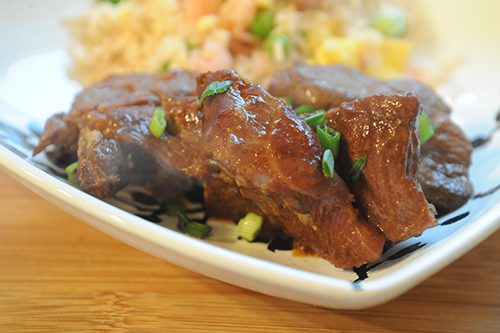
Add the spareribs and the remaining ingredients (except the spring onion). Cover the pressure cooker and set to high. When the cooker reaches the right pressure, reduce the heat and cook for 15 minutes. Then turn off the heat and let the pressure release.

Take the lid off and turn the heat back on. Let simmer until the sauce thickens, then sprinkle green onions over and serve.

Now for the rice:

Mix the shrimp with the salt and sugar and let sit for 20 minutes. Now heat the oil over a medium flame and add the garlic and ginger. Cook for a minute and then add the shrimp. Cook until the shrimp turns pink, then transfer to a plate and set aside. Add the eggs to the pan and scramble a little.

 This is the sauce for the rice: a little goes a long way.
Now add the rice, salt, soy sauce, sugar and pepper, adding a little bit of water if needed to soften up the rice. Fry for a minute or two, then add the pork and peas. Cook for a few more minutes or until the rice becomes fragrant. Now add the scallions and remove from heat. Toss and serve.

Finally, the eggs. First peel the eggs and cut them in two, as if you're making deviled eggs. Take out the yolks and put two of them in a bowl. Mash the two egg yolks and then mix with the pork, wine, soy sauce, ginger and cornstarch.

Now heat the oil until bubbles rise around the non-stirring end of a wooden spoon. Shape the yolks into balls and deep fry until golden. Drain on paper towels and cool slightly, then use to stuff the sliced eggs. Now heat the chicken stock over a medium flame and quickly whisk in the cornstarch/water mixture. Pour over the eggs and serve.

Um, they look a little bit like someone sneezed on them.

So I never met a fried rice I didn't like, and that was by far my favorite part of this meal. It really wasn't hugely different from any other fried rice, but it was fried rice so I was happy. I did like the pork, too, and so did my kids. I have to confess that I made them with country style ribs though, because the way my husband is about fat and bone actual spareribs might have made his head explode. And the eggs, well, they were weird. I had serious texture issues with them, I think because of the egg yolk. Even though I went OCD with my meat thermometer to make sure they were cooked, they really didn't seem cooked when I bit into them. The egg yolks gave them a sort of mushy texture that was kind of alarming. Martin said he didn't notice, because he didn't know there were any egg yolks in the mix. But I noticed, and it was weird.

So no dessert but even if we really were missing something delicious, that's probably not such a bad thing. We've had four birthday parties in the last four months, so I've kind of had my fill of dessert anyway.

Next week: Jordan

Thursday, May 15, 2014

Recipes from Jersey

I know I will be getting some hate mail for this. Because some countries are really, really proud of their produce, cheese, wine, jam or other product and they get really mad when I make substitutions.

So please Jerseyans, know that I mean no offense when I say that you can't get Jersey Royals in California. I'm quite sure they are far superior to the potatoes I used in the recipe I made this week, but the only other option I had was to find some other main dish for this week's entry. And sadly, there just aren't a ton of Jersey recipes out there to choose from, unless you count pizza from NEW Jersey, which of course you can't.

Yes, Jersey. This is another one of those British crown dependencies--it is a part of the ancient duchy of Normandy, which was considered a part of England for many centuries even though it is geographically in France. Jersey is located in the Channel Islands off the coast of Normandy, and though it is technically a British possession it is self-governing, with its own parliamentary democracy and its own financial, legal and judicial systems. Jersey isn't British its citizens don't identify as British, although the UK is constitutionally obligated to kick the butts of anyone who tries to threaten them.

Gorey Castle, Jersey. Photo by Paul Davis.
The food in Jersey is actually very similar to the food in Guernsey, another one of those Channel Islands crown dependencies. In fact Jersey also has a version of the bean jar that I did for Guernsey. But while Guernsey is proud of their butter and milk, Jersey is proud of their royals. The Jersey royal is a kind of new potato that supposedly has a distinct flavor though I wouldn't know, because I had to use the new potatoes that you can buy in a California supermarket.

 Anyway I'm not sure I could have even done this entry without the help of the Facebook page "Traditional Jersey Recipes," which is where I got all of the recipes I made this week. Once again, my search was complicated by the smallness of the nation in question--with just under 100,000 people, I guess Jersey cookbooks and food blogs have yet to make it into the international consciousness.

So thanks to Traditional Jersey Recipes, here's what I came up with for this week:

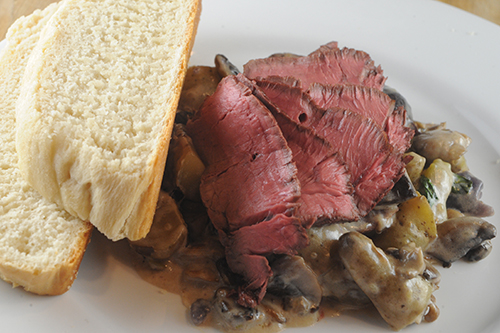
Roast Sirloin of Beef with Creamy Jersey Royals
  • 1 tbsp vegetable oil
  • 8 oz sirloin steaks
  • 8 oz assorted mushrooms (I used white mushrooms and oysters)
  • A handful of baby spinach, washed
  • 8 oz cooked Jersey Royal potatoes, quartered (I used mixed new potatoes)
  • 1 cup cream
  • 4 oz Parmesan cheese, shaved
  • Salt and pepper to taste
Cabbage Loaf
  • 3 2/3 cup plain flour
  • 2 1/2 tsp active dry yeast
  • 1/2 cup water
  • 1/2 cup milk
  • 1 tsp sugar
  • 2 tbsp margarine
  • Pinch salt
  • 2 large cabbage leaves

For dessert I decided to make these, though I think they are typically served as a snack:

Jersey Wonders
  • 5 1/2 cups self-raising flour
  • 1 stick butter
  • 1 cup caster sugar
  • 6 eggs
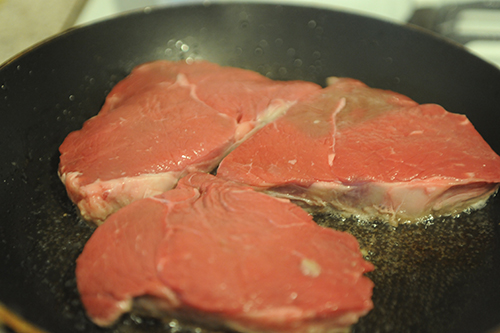
Let's start with the beef and potatoes. First, preheat your oven to 350 degrees. Now heat the oil in a frying pan and brown the meat on both sides. Transfer to an oven-safe dish and cook until your meat reaches an internal temperature of 125 to 130 degrees (note this is not a safe internal temperature yet--the meat will continue to cook after youtake it out of the oven).

Oh steak photo, how crappy are thee ....
 Season the steaks and let them rest while the internal temperature rises. Now, I like my meat medium rare which is about 140. If you like  your meat more well-done or less well-done than that, you will have to adjust the temperature at which you remove the meat from the oven.

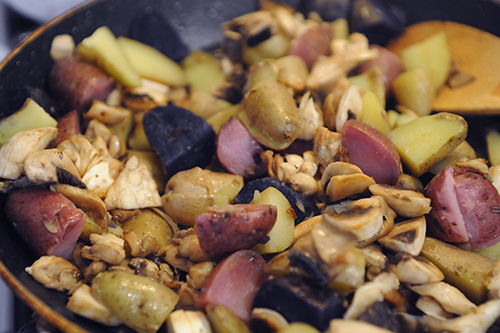
Now add the mushrooms and potatoes to the same pan you used to cook the steaks. (Note you will have quartered and boiled the potatoes ahead of time). Cook over a medium flame until the potatoes start to form a golden crust.

Now turn down the flame and add the cream and the Parmesan cheese. Once the cheese has melted, toss in the spinach and add salt and pepper to taste.

The sauce should now be nice and thick. Turn off the heat and divide the potato and mushroom mixture amongst plates. Slice the beef and serve alongside the potatoes (I served the beef over the potatoes, because I thought it was prettier).

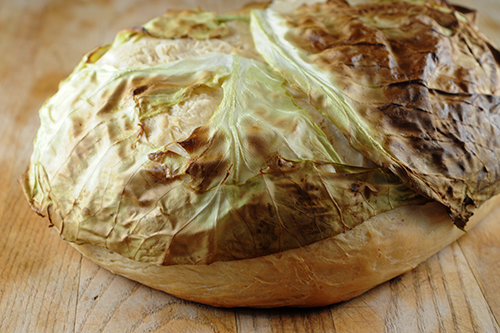
Now for the cabbage rolls. So this recipe didn't say so, but the sole purpose of those cabbage leaves is to create a pretty indentation in the top of each roll, which I really wish I'd known before I made them, because mine didn't come out exactly right. So here's what you're actually supposed to do:

Sift the flour into a large bowl. Meanwhile, mix the yeast and sugar together with 1/4 cup of water. Now make a well in the middle of the flour and pour in the yeast mixture. Let stand until frothy, then add the rest of the liquid along with the margarine and salt. Knead until you get a firm dough (note you can also have your bread machine do all of this for you).  Transfer to a bowl and let rise in a warm place until doubled in size. Punch down and knead for a few more minutes, then shape into a loaf and let rise again.

Preheat your oven to 400 degrees. Lightly grease the undersides of each cabbage leaf, then cover the loaf with the leaves, making sure to press down so that you make an impression of the leaf in the surface of the dough.

Bake for 15 minutes or until the loaf makes a hollow sound when you thump it.

OK now for the Jersey wonders. First sift the flour together with the sugar. Now cut the butter up into small pieces and rub into the flour/sugar mixture with your fingers. Add the eggs and blend until you get a light dough.

Flour your hands and roll the dough into balls that are about the size of golf balls. Lightly flour a cookie sheet and place the balls on the sheet. Cover with a clean damp cloth and let stand for about two hours.

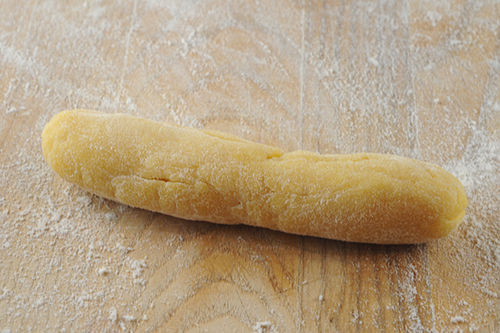
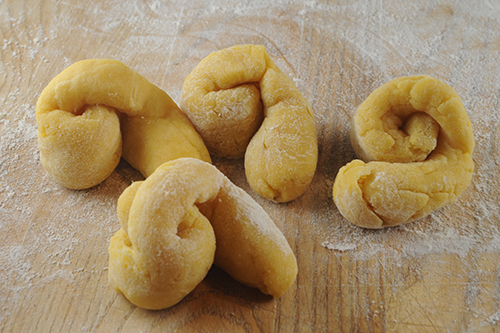
Now roll the balls out into oblong shapes that are about twice as long as they are wide.

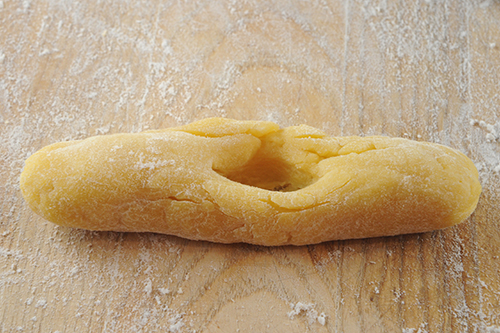
 Cut a little slit into the center of each shape ...

... and stuff one end into the slit.
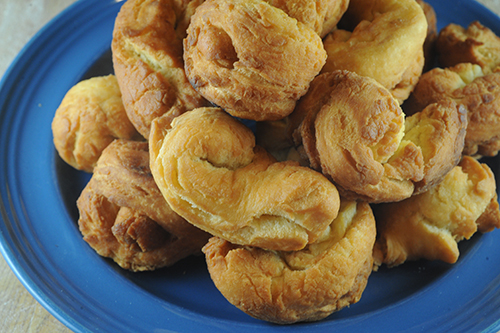
Meanwhile, heat some oil on the stove until bubbles rise around the non-stirring end of a wooden spoon. Drop the wonders into the oil and let fry on each side until they are a nice golden brown color. Drain on paper towels and serve.

This was restaurant quaility food. If I'd paid 20 bucks for this at a steakhouse, I would have been happy. The potato mushroom mixture was creamy and delicious and the steak was perfectly cooked, if I do say so myself (I love my meat thermometer). The cabbage rolls were good--they actually had a mildly cabbagey flavor but I didn't get that nice impression of the leaf on the top because, you know, no one told me that's what was supposed to happen and I didn't push down hard enough. But they were good, and of course my kids gobbled them up because my kids could eat nothing but bread every day of the week and actually be perfectly happy.

We all loved the Jersey Wonders. Martin was kind of mad at me for making them because he couldn't stop himself from eating them. I did think they could be a little sweeter so I sprinkled them with powdered sugar, and everyone was happy.

It was a god meal, which was kind of surprising given my fairly limited choices. I would make it again, and for a special occasion, too.

Next week: Jiangsu Province, China

Friday, May 9, 2014

Recipes from Java and Madura, Indonesia

I lived in the San Francisco Bay Area for 10 years, so I've eaten a lot of Asian food. There's a very large Asian population in the Bay Area, and you can find almost every variety of Asian restaurant somewhere in the region: Chinese, Japanese, Vietnamese, Korean--but I'll admit that I never did eat at an Indonesian restaurant the whole time I lived there.

I think I actually missed out a little by waiting until I was a stay at home mom with four kids living in the whitest county in California before I started doing this blog. Because around here, we have American food, Americanized Chinese food, Americanized Italian food and Americanized Mexican food. And a couple of Americanized sushi places. And that's as international as we get. If I still lived in the Bay Area, I would go to restaurants that serve the sort of food I make for my blog, so I could experience both the restaurant version and the second hand version I often end up with here at home.

But alas, I don't have that option so I have to settle with guessing. Usually it turns out great, though I never really know if I got it right.

This week we're doing Indonesia, or more specifically, Java and Madura, Indonesia. These two volcanic Islands are often grouped together but Java is the larger one--in fact it's actually the 13th largest island in the world by land mass and the world's most populous island. Java is 53,589 square miles but there are 143 million people living there--that's roughly the same number of people living in Russia's entire 6,592,800 square miles. So Java is also one of the most densely populated places in the world.

 The Hidden Buddhist Temple of Borobudur.
Photo by Trey Ratcliff.

Javanese food differs from other Indonesian cuisines primarily by how much sweeter it tends to be. Javanese food often contains palm sugar or kecap manis, which is a sweet soy sauce (we used it back in the Ashmore and Cartier Islands, way back in the A's). Most Javanese food is simple and doesn't tend to be very spicy, though one of the dishes I made this week certainly was.

Java is the red island; Madura is that little
gray finger off the North Eastern Coast.

The first recipe came from a website called Pig Pig's Corner. This site is actually run by a Malaysian blogger, but this recipe was a guest post from a blogger from Indonesia Eats, which is incidentally the place where I got my other two recipes. Anyway here's that first one:

Lombok Kethok
  • 3 tbsp oil coconut oil
  • 4 decent-sized shallots
  • 3 cloves garlic
  • 9 oz beef brisket
  • 4 tbsp kecap manis
  • 10 jalapeno peppers
  • 1 1/2-inch piece galangal, halved and bruised
  • 3 Indonesian bay leaves
  • 1 stalk lemongrass (white part only), halved and bruised
  • 1/2 cup reserved beef broth
  • Sea salt to taste
The second one:

Bakmi Godhog

For the spice paste:
  • 3 decent-sized shallots
  • 4 garlics cloves
  • 
5 candlenuts (substitute macadamia nuts)
  • 
1 tbsp sea salt
For the chicken broth
:
  • 1 2/3 lb bone-in chicken
  • 1 inch piece of ginger, scrapped and bruised

  • 4 stalks Chinese garlic (substitute sprouted garlic)
  • 1 oz Chinese celery

  • 9 1/2 cups water
Other ingredients:

  • 10 1/2 oz fresh cooked Chinese noodle
s
  • 2 eggs, lightly beaten
  • 
2 tbsp kecap manis

  • 4 1/2 oz cabbage, shredded

  • 4 1/2 oz bok choy, cut into 1 inch pieces
  • 3 green onions, sliced

  • 1 oz Chinese celery, chopped

And for dessert:

Javanese Coconut Sticky Rice Cake
  • 1 1/2 cups glutinous rice (sticky rice) flour
  • 1  3/4 cups medium coconut milk
  • 1 tsp vanilla extract
  • 1 1/3 cup raw cane sugar
  • 1/4 tsp kosher salt
  • 2 1/2 cups grated coconuts
  • 3/4 oz 90% dark chocolate
  • 1/4 cup cocoa powder
  • banana leaves
We'll go in order this time, how's that for mixing things up? First let's do that chili pepper dish:

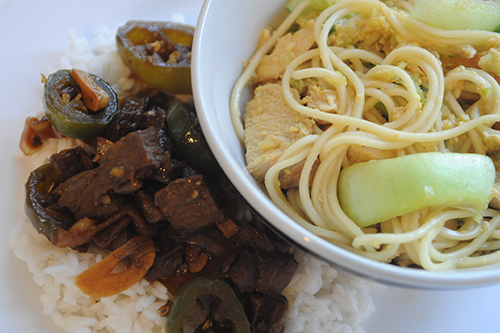
Boil the brisket with a half stalk of lemongrass, half the galangal and one Indonesian bay leaf until just tender, taking care not to over-cook it the way I did. Drain, but reserve a half cup of the broth for later.

Now cut the beef up into cubes or slices (I cut mine into small cubes in the hope that no one would notice how overcooked it was) and set aside. Heat the oil and fry the shallots until fragrant, then add the beef pieces, kecap manis and beef broth. Stir to mix and then add the other half of your lemongrass stalk, the rest of the galangal, the rest of the bay leaves and all of the chiles.


Cook until the liquid has reduced down. Remove the lemongrass stalk and serve over rice.

Now for the noodles. First remove the skin from your chicken and boil it in the water with the Chinese chives and ginger. When the chicken is no longer pink in the middle remove from the pot and set aside. Strain and reserve the broth.

Meanwhile, put all the spice paste ingredients together in a food processor or mortar and pestle. Process until smooth.

Your noodles should already be cooked, so prepare some warm water and then transfer the noodles to that pot for about one minute. Drain well.

Now take the chicken pieces and put them under your broiler. Let them broil until blackened, then remove from the bone and shred or cube the meat.

Heat 3 tbsp of oil and fry the spices until they start to turn brown, which should take between five and seven minutes.

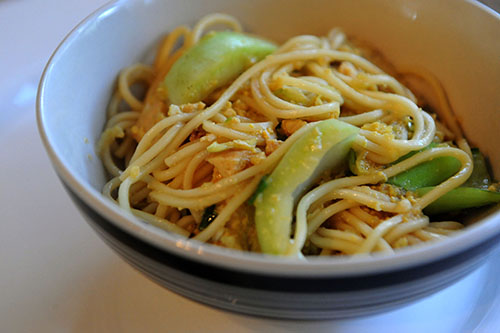
Add six cups of the chicken broth and bring to a boil, then very quickly whisk in the egg. Add the kecap manis and shredded chicken and return to a boil. Finally, add the cabbage, bok choy and green onions. Toss everything together with the noodles and Chinese celery.

Finally the dessert:

Preheat your oven to 350 degrees. Layer a 9x9 pan with banana leaves (if you don't have any, just grease the pan. I promise they'll be fine).

Now heat the coconut milk over medium heat. Add the vanilla extract and sugar and stir until melted, then add the salt, the dark chocolate and the cocoa powder. Whisk until everything is melted and blended together.

In a large bowl, mix the rice flour with the coconut. Add the sauce a little bit at a time, stirring to mix. Pour the batter into the pan and bake for 35 to 40 minutes. 

Note: these things slice much easier if you refrigerate them before serving.

Here's what we thought: The chile dish was quite tasty, for me and Martin anyway. I didn't tell my kids to eat the peppers because that would have been cruel, but I did ask them to nibble a little on the beef. Even that was a bit spicy--this particular crop of jalapenos had a pretty good kick to it.

I liked the noodles, too, but my eggs curdled so they were actually very unpleasant to look at, though tasty. I think if I made this again I would add the eggs after taking the dish off of the heat, the way I did it back in Bolivia. For that I might actually use pasteurized eggs though, because past experience has made me kind of chicken about eating anything that might potentially contain undercooked eggs.

Now for the dessert--it was very sticky and very different. My kids said they liked it, then they said they didn't like it, so they were clearly confused. Martin ate a lot of them. I ate one or two. I'm not sure I ever decided what I thought about them--they were good, but I'm an American so really I would rather just have a brownie.

Next week: Jersey


Copyright 2023 Becki Robins and Palfrey Media.. Powered by Blogger.

Blog Flux

Blog Directory