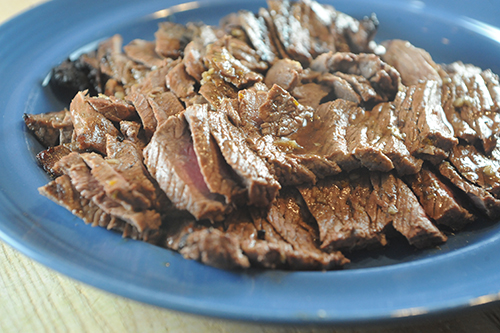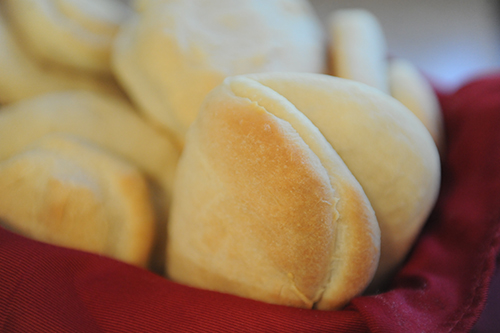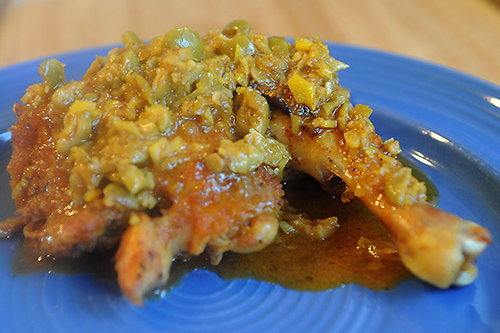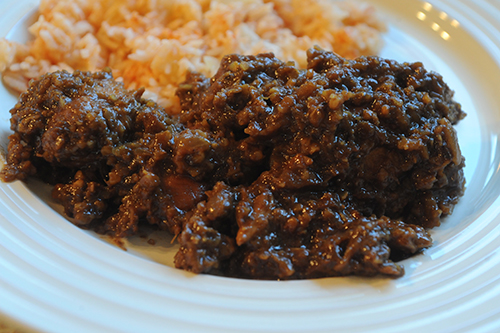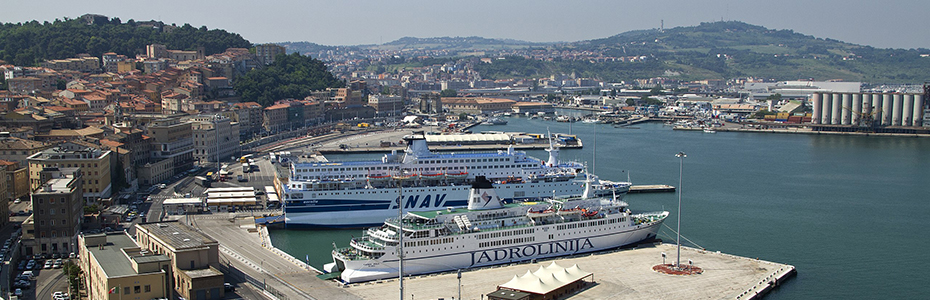

Recipes from Marche, Italy

For this entry, I made two recipes. Neither of them were especially good, but I don't blame the people who posted the original recipes or any of the traditions they came from, I blame myself and my propensity for Googling things that might kill me.

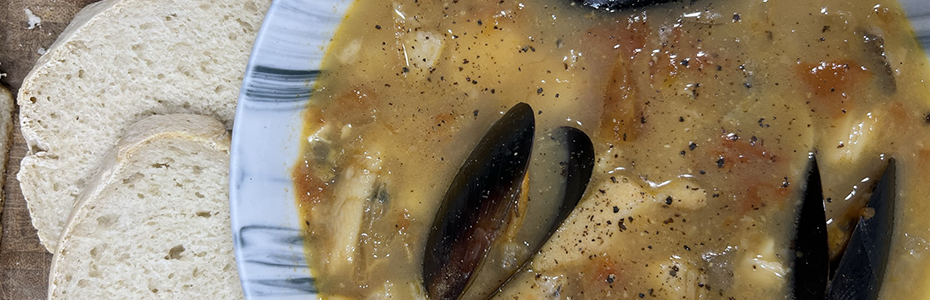
Recipes from Marche, Italy: Brodetto

A seafood stew with mussels and clams, minus the Vibrio.

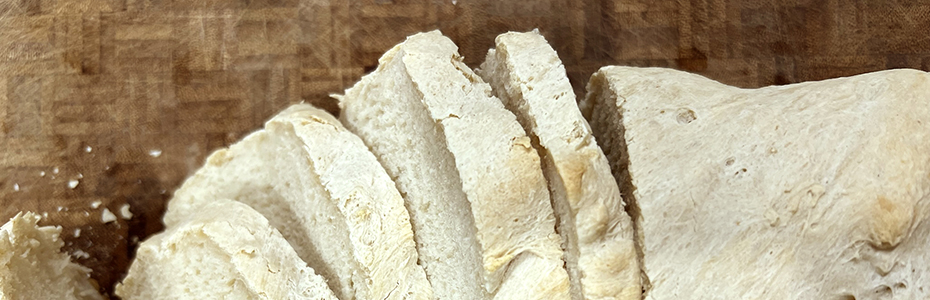
Recipes from Marche, Italy: Filone Casereccio

An Italian bread that will come out much better than mine did if you use fresh brewer's yeast and steam.

Recipes from Malta

This is actually the third time I’ve cooked a meal from Malta. The first time, I cooked the meal and then just did not write the blog post. Years went by.

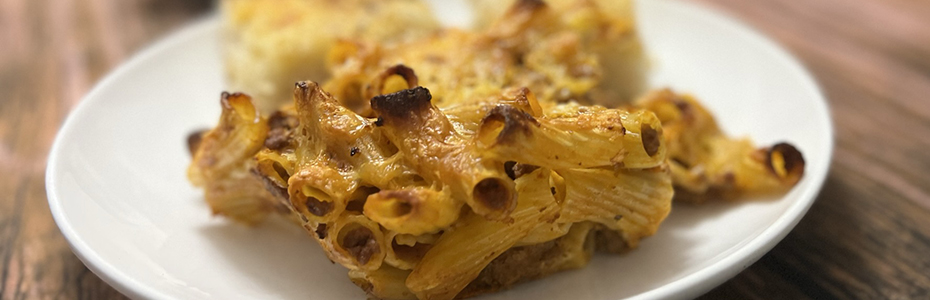
Recipes from Malta: Imqarrun

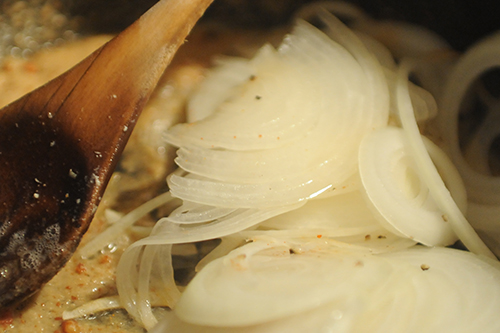
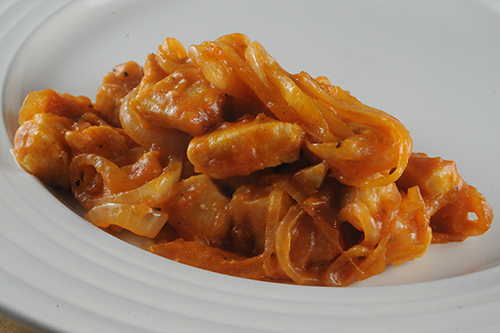
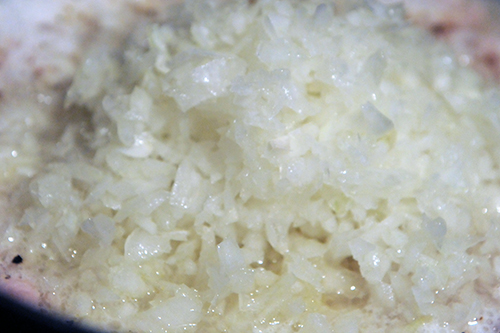
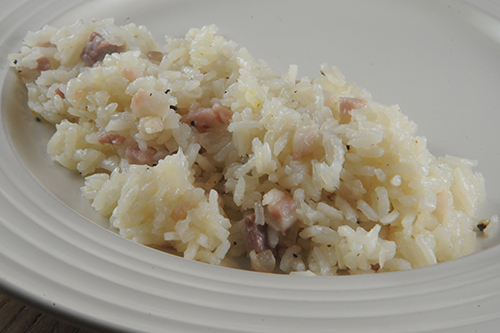
Imquarrum (also called Imqarrun il-forn) is descended from a dish served in Sicily, but the Maltese have adopted it as a traditional staple. The key to making this dish is to be patient.

Monday, March 2, 2015

Recipes from Liechtenstein

I have finally met a cheese I don't like.

I once would have thought it was impossible. I *love* cheese. Before I had kids, one of my favorite things to do was visit cheese shops and sample all the different cheeses, and then go home with some exotic, wonderful cheese that I've never had before and eat it with some sort of fancy or unusual cracker. Haha! Like I could ever do such things today, with four kids in tow.


So up until this point I have not been phased by the idea of ordering cheese online, even though it costs a lot of money to ship the stuff (We don't really have any gourmet cheese shops here. Scratch that--up until two days ago I didn't know we had a gourmet cheese shop here, but that's a different story.) Anyway I was getting my exotic cheese from iGourmet.com, and that's where I got the two cheeses I used for this week's meal.

Let me back up a little before I start telling you that story. This week we are in Liechtenstein, which is a really, really tiny country in Central Europe. It is so small, in fact, that not only can you not see it on this big map, but you also can't really see it very well on the zoomed in version, either:

Liechtenstein is tiny. At 62 square miles, it is roughly the same size as New Milford, Connecticut. Never heard of New Milford, Connecticut? That's because it's tiny.

Now, clearly Liechtenstein has a short man's complex, because despite its diminutive size it has a lot going for it. In fact, it has the highest gross domestic product per person in the world when adjusted by purchasing power parity. No, really. And if you measure by GDP per capita, it is the second richest nation in the whole world, after Qatar. It also has one of the lowest rates of unemployment anywhere in the world (1.5%). Liechtenstein is mountainous, which means it's great for skiing (not that I ski or anything) and (I'm not making this up) it is also the word's largest exporter of false teeth. Which I don't know, I wouldn't be surprised to find out that someone put that little factoid in Wikipedia for fun and it's not actually true, but it does make for entertaining reading.

Schloss Vaduz, Liechtenstein. Photo by jimynu.

Anyway, the food in Liechtenstein is is heavily influenced by its neighbors, Austria and Switzerland. Potatoes are popular there, which seems to be pretty typical for the region, and the nation's large dairy industry also means that cheeses are an important part of the cuisine. Really, really stinky cheeses.

So here's my menu (both recipes are from Liechtenstein's Tourism Board):

Pepper Venison
  • 2 lbs shoulder of venison
  • 3 oz onions, chopped
  • 2 oz carrots, chopped
  • 2 oz celery, chopped
  • 2 garlic cloves, pressed
  • 8 cups red wine
  • 1 cup apple cider vinegar
  • 2 bay leaves
  • 6 cloves
  • 8 whole allspice corns
  • 1 tsp coriander seeds
  • 10 juniper berries
  • 1 sprig of fresh thyme
  • 2 tbsp flour
  • Splash of port or sherry
with:

Käsknöpfle
  • 4  3/4 cups flour
  • 8 eggs
  • 7 to 8 tbsp fresh water
  • Pinch of pepper
  • Pinch of nutmeg 
  • Pinch of salt
  • 1 small onion, sliced
  • 2  tbsp butter 
  • 2 oz Appenzeller cheese, grated
  • 2 oz sour cheese, grated
So I was excited about this. I've never cooked venison before and I had to go on a bit of a hunt for it--I finally learned that I could order stew venison from the co-op here in town. That's one thing checked off my to-do list. And then there was the cheese.

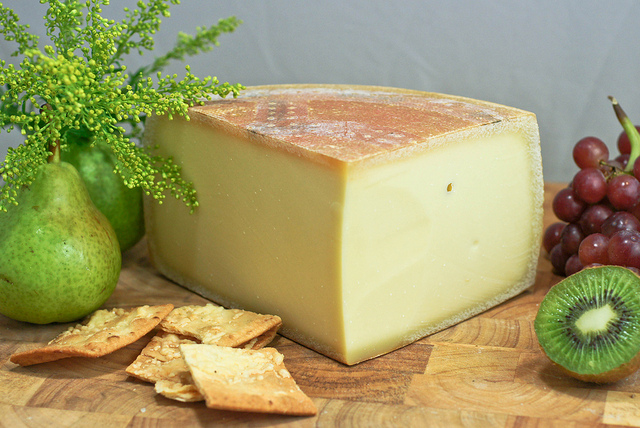
What's that smell? (Photo by Artizone)
Appenzeller is available on iGourmet.com, which described it as being "appreciated by cheese connoisseurs around the world," and "a delicacy on any cheese platter." Sounds great, doesn't it? I ordered some. In retrospect, I am a little angry that nowhere on the iGourmet website was I warned about what I was getting into.

Now the sour cheese, that was a bit more of a challenge.

Sour cheese cannot be had anywhere in the US, and I suspect there's a pretty good reason for that. Several sources referred to it as "strong" or "not for everyone." I was not dissuaded, because up until that point I'd never met a cheese I didn't like, strong or otherwise. I looked for Handkäse, I looked for Harzer, and even for some of the lesser-known varieties of sour cheese from the region. The closest I could come (which probably isn't close at all) was Limburger. So I got some of that, too.

Armed with all of my hard-to-find ingredients, I started with the venison.

First place four cups of the wine in a pot with the apple cider vinegar, half the vegetables and all of the spices. Bring to a boil, then remove from the heat and let cool. Pour over the meat and let marinate in the fridge for a couple of days (or up to a week).

Filter the marinade into a saucepan and reserve. Let the meat drain for a couple of hours, then heat the oil in a pan and sear the meat on all sides with a little salt.
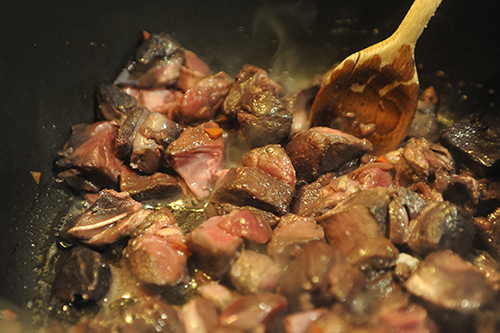
Gently heat the marinade on the stove. Meanwhile, heat up some oil in a separate pan and saute the rest of the vegetables. Add the meat and stir until it darkens (mine was already almost black from marinating in the wine for all that time). Now add a cup of wine, a little more marinade and the spices. Let stew for an hour or so, until the meat is tender.

Remove the meat with a slotted spoon and transfer it to a warm plate. At this point the recipe starts talking about what to do with the pig's blood, which was news to me because pig's blood wasn't anywhere in the ingredient list. But then it says to thicken the stew with toasted flour if you don't have any pig's blood, which was good, because I didn't have any pig's blood. So I just toasted the flour in a dry pan until it took on a golden color, and I mixed it with a little water before adding it to the sauce.

Now add the port or sherry. Put the meat in another pot with the rest of the wine, and add the sauce. Season with a little salt and pepper.

And now for the Käsknöpfle.

I made the mistake of opening the cheese and grating it before I made the dough. Don't do that.

Appenzeller is stinky. In fact, it's so stinky that I didn't even notice the Limburger, which for most Americans is the stinkiest cheese going. Appenzeller is so stinky that I smelled it for hours. The odor permeated everything. By the time I was done making the dough, I had no appetite left from smelling the Appenzeller.

So wait until the very end to grate the cheese. First, put the eggs, flour, water and spices in a bowl and make a dough. Let rest for 20 minutes, then grate. Laugh because you think I must be joking.
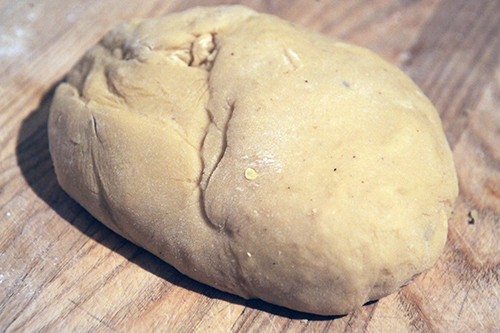
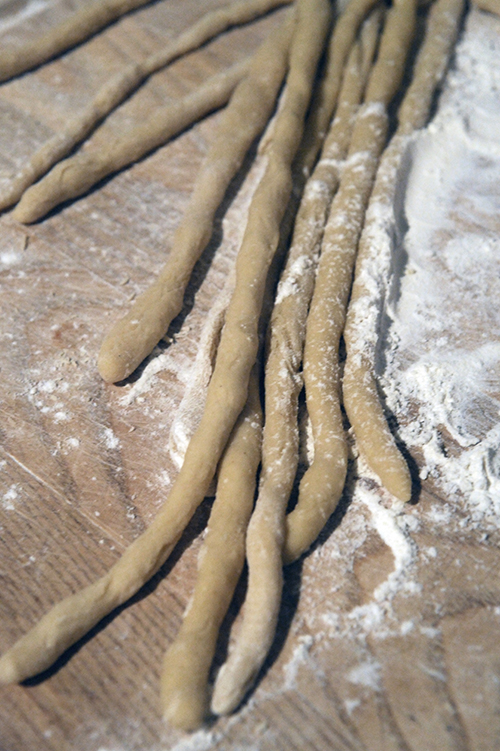
I couldn't grate this. It just wouldn't go near the holes in the grater. So I recruited my husband and kids to roll it out into really small lengths of rope and cut it into tiny pieces, which is probably not traditional but it seemed to work.

While your family is slaving away at this, fry the onions in the butter until golden.

Drop your finished pasta into boiling, salted water and cook until the pieces float. Remove with a slotted spoon and top with the grated cheese and the onions.
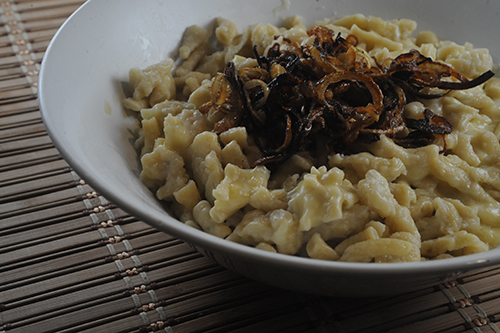
So despite the smell, it really didn't taste that bad. I've actually found that to be true with most stinky cheeses--the flavor tends to be pretty mild compared to the stink. But because I'd smelled that stink all evening, I just couldn't eat it. I mean, I did, but I didn't enjoy it. Neither did my kids.

I did like the stew. It was really rich and flavorful. In fact it was so rich and flavorful that it was almost disappointing, because it could have been any meat in that dish. I didn't particularly even notice the flavor of the venison.

My husband was unphased by the stinky cheese. So unphased that a few days later he put the rest of the Appenzeller on omelets. My poor kids walked into the kitchen and about fell over from the stink. We had to throw out half the omelets because no one would touch them, myself included. Though Martin did eat his, and so did my older son, whose culinary adventurousness never ceases to amaze me.

Next week: Friuli-Venezia Giulia, Italy
Liechtenstein Liguria, Italy Lithuania Lombardy, Italy Lorraine and Alsace, France* - See more at: http://travelbystove.blogspot.com/p/the-list.html#sthash.0kc4RoYd.dpuf

Monday, February 23, 2015

Recipes from Libya

Have you heard? This year's flu shot is only 23% effective. What does that mean exactly? That it's 23% effective against all flu viruses? Or it only protects against 23% of the flu viruses that are out there? I don't know really, but I can tell you this: it was zero percent effective for us. Except for my husband, who was the only one of us who didn't get the flu shot. For him, it was 100% effective. Figure that one out.
So, I am just now emerging from 2 1/2 weeks that can only be described as hellish, with one child after another suffering from fevers in excess of 104 degrees and me hardly able to drag myself out of bed to take care of the ones who had to stay home from school. I spent the better part of three weeks feeling like I'd just put away a couple of bottles of Nyquil, not to mention the coughing and aches and fever. I did lose four pounds though, so I guess there's a silver lining in everything, haha.

Anyway, I'm back, sort of. This week we're in Libya, even though I actually cooked this meal so long ago I almost don't remember it.


You don't hear a whole lot about Libya these days, but when I was a kid it was always in the news. Libya was involved in the Lockerbie bombing of Pan Am Flight 103 in 1988, and before that happened they got a lot of negative attention for buying arms and sponsoring various paramilitaries and terrorist groups all over the world. The US disliked them enough that we tried (but failed) to take out head of state Muammar Gaddafi in 1986. In fact he remained in power (though mostly as a figurehead) until 2011, when the Arab Spring movements in Tunisia and Egypt inspired Libyans to rebel. The revolution was short but bloody, and eventually ended in the capture and execution of Gadhafi in the summer of the same year.


Sadly, the revolution failed to unite Libya and today the nation is torn between the armed militias of various regions, tribes and cities, and the central government has been wholly unable to control much of anything. It's easy to see why, because Libya is a nation with a lot of hardship. It is the 17th largest nation in the world, but much of it is not only desert but "one of the most arid and sun-baked" deserts on earth. In some places it doesn't rain for years. In fact in Uweinat, there hasn't been any rain since 1998.
Awbari, Libya. Photo by Patrick.

So much of Libya doesn't grow anything at all, and quite a lot of Libya's food is imported. Libyans eat a lot of grains but the nation imports five tons of wheat for every one ton it actually grows. And Libyans love their wheat, because they have a tradition of eating pasta as a staple, especially in the west. This comes largely from that brief period of time between 1912 to 1927, when Libya was occupied by Italy and officially known as "Italian North Africa."

I didn't do any pasta recipes though, I stuck with rice (more commonly eaten in the east) because this recipe sounded pretty good:

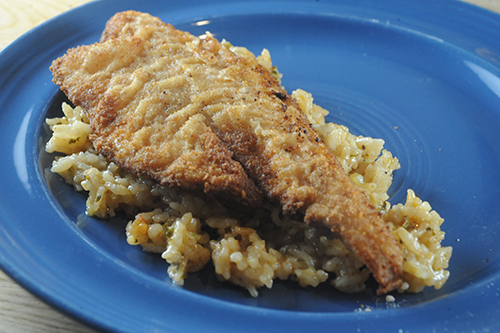
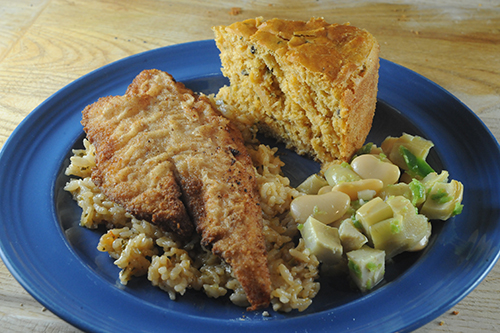
Ruz Hoot bil Kusbur (Herbed Rice with Coriander Seeds and Fish Fillets in a Cumin Marinade)


(This week all my recipes come from Libyan Food.)

For the rice:
  • 3 cups short grain rice, rinsed and drained
  • 6 cups hot fish stock
  • 5 tbsp corn oil
  • 1/2 cup celery, finely chopped
  • 1/2 cup parsley, finely chopped
  • 1/2 cup onion, finely chopped
  • 1/2 cup tomatoes, finely chopped
  • 1 chili pepper, finely chopped
  • 2 to 3 garlic cloves, pressed
  • 1 tbsp ginger, grated
  • 1 to 2 tbsp coriander seeds, lightly toasted
  • 1 tsp cumin
  • 1 tsp black pepper
  • 1 tsp paprika
  • 2 tbsp salt
For the fish:
  • 6 white fish fillets
  • vegetable oil
  • 3 to 4 garlic cloves, pressed
  • 1 tbsp cumin
  • 1 chili pepper, finely chopped (optional)
  • Salt and pepper to taste
  • Juice of 1/2 a lemon
  • 5 tbsp white flour
  • 5 tbsp fine breadcrumbs
  • 2 to 3 tbsp water
  • 2 eggs
Plus a bread:

Libyan Herb Bread (Khubzah bil A3shab)

For the dough:
  • 1 cup warm milk mixed with 1/2 cup warm water
  • 1/2 cup warm water
  • 1 tbsp dried yeast 
  • 1 tsp sugar
  • 4 cups white flour
  • About 1/4 cup olive oil
  • 4 tsp sugar
  • 2 tsp salt
  • 2 tsp baking powder
For the flavorings (according to taste):
  • Thyme
  • Parsley
  • Rosemary (optional)
  • Green and/or black olives
  • Paprika
  • Chili peppers (optional)
  • Cheese (optional)
This salad:

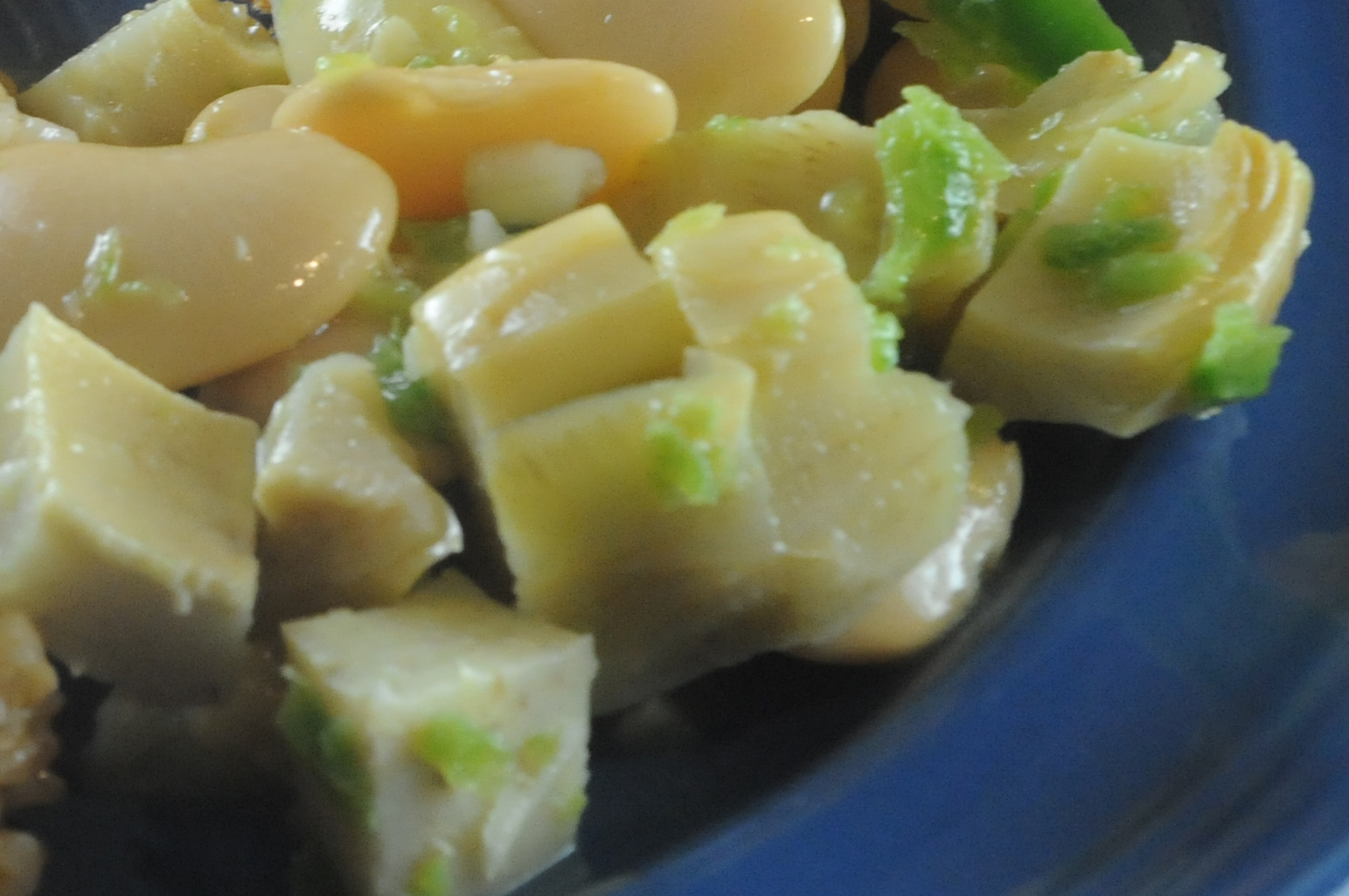
Green Broad Bean and Artichoke Salad (Salatet Fool Akhdar)
  • 14 oz green broad beans
  • 6 artichoke bottoms
  • 1 red chili
  • 1 green chili
  • 1 garlic clove
  • Olive oil
  • Salt to taste
  • Juice of half a lemon
And for dessert:

Date Filled Semolina Cookies (Magroodh) 
  • 3 cups semolina
  • 1 cup flour
  • 1 cup corn oil
  • 1 1/2 tsp baking powder
  • 1 tbsp orange blossom water or rose water
  • 1/2 liter warm water
For the filling:
  • 1 lb 10 oz date paste
  • 2 tsp cinnamon
  • 1 tsp grated nutmeg
  • 1 tbsp oil
  • 1/2 cup sesame seeds, lightly roasted
For the syrup:
  • 4 cups boiling water
  • 3 cups sugar
  • 1 tbsp lemon juice
  • 1 lemon slice
  • 2 tbsp orange blossom water
  • 1/2 cup sesame seeds, lightly roasted
Let's start with the bread:

First mix the yeast with 1/2 cup of water and the sugar. Let stand until frothy, then add to the milk and water mixture. Add the flour, baking powder and salt and mix well.

Now add the herbs. I used olives, parsley, paprika and feta cheese. I would have used the chili peppers but spicy stuff is wasted on my kids. Of course, olives are wasted on them too ... but there you go.

Now mix in the olive oil, then cover and let rise in a warm place for about an hour.

Heat your oven to 425. Butter a cake pan (I used a bread pan for mine) and add the dough. Brush the top with olive oil and bake until golden.

Now we'll do the date cookies:

First mix all the syrup ingredients together and bring to a boil. Reduce heat the medium and simmer for 30 minutes or until the consistency starts to resemble a syrup. Add the blossom water and then set aside and let cool.

Meanwhile, mix the semolina with the flour and baking powder. Add the oil and mix well. Cover and let rest for about an hour.

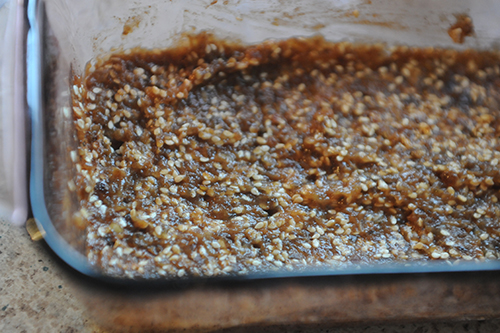
Now for the filling. You probably can't buy date paste at your local supermarket (I can't), so just get some dried dates and put them in your food processor with a little water. You don't want it to be soupy (it should definitely be a paste) so make sure you don't add too much water.

Add the cinnamon, nutmeg and sesame to the date paste.

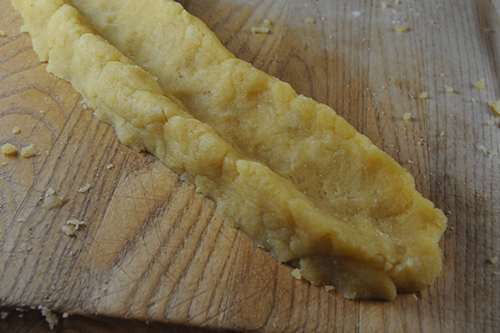
Divide the dough up into four parts and add a little bit of the blossom water to each one until the dough becomes smooth and easy to work with. Now roll each one out into a long cylinder, and then put a furrow in the middle of it, like this:

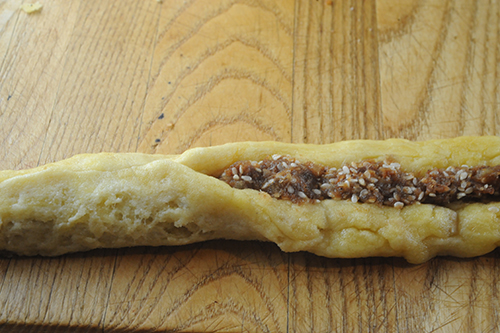
OK now put the date paste into the furrow. The recipe says to roll out the date paste too, like you did with the dough, but mine was the wrong consistency for that so I spooned it in.

Pinch the edges of the dough together over the date paste and roll until smooth. Now cut at an angle into small pieces about half a finger length in size.

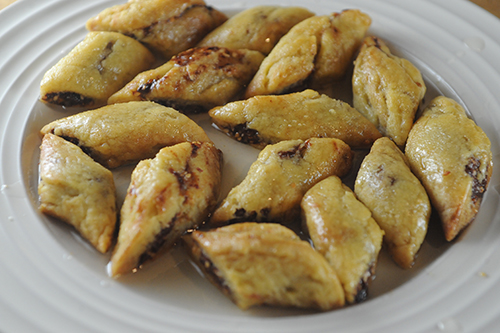
Bake at 450 degrees for 12 minutes or until golden. Pour half the syrup over and let stand 15 minutes, then turn each cookie over and pour the rest of the syrup on. Sprinkle with sesame seeds and let rest before serving.

Now let's make the salad:

First boil the broad beans and artichoke bottoms until tender. I used canned versions of both, so I got to skip this step.

Meanwhile, put the garlic and chiles in your food processor and pulse until finely chopped. Add the salt, lemon juice and olive oil and toss with the beans and artichoke bottoms. Easy!

And finally, the fish:

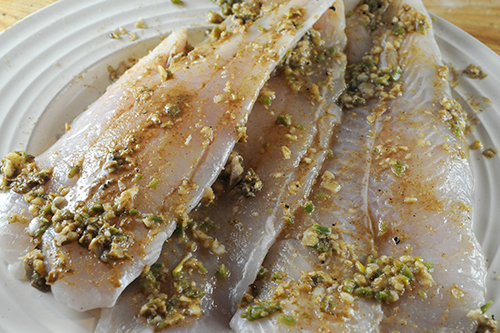
Put all the marinade ingredients in your food processor and pulse until you get a smooth paste. Toss with the fish filets and set aside.

Heat the oil in a pot and add the vegetables. Stir and let cook over a low flame until the onions are translucent. Add the rice and the spices, and stir well.

Pour in the fish stock and turn the flame up to medium. Let simmer until the water is just above the level of the rice. Stir, then cover and reduce heat. Let cook for 30 minutes. 

Meanwhile, whisk the egg together with the water. In a large bowl, mix the flour with the breadcrumbs. Dip each fillet in the egg mixture, then the breadcrumb mixture. Deep fry until golden, then transfer to paper towels.

To serve, place some of the rice on each plate and top with the filets. Serve with lemon wedges.

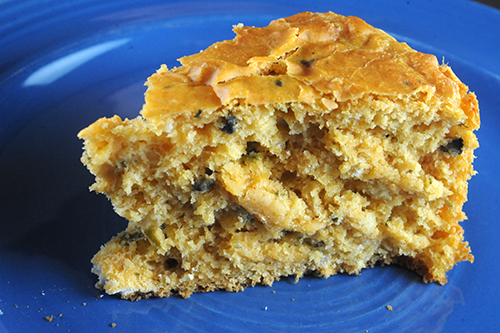
So now that I've relived all these recipes, I can say that I do actually remember this meal, despite the weeks that have passed since I made it. It was a really nice piece of fish and it worked really well with the herbed rice. I liked the salad, too--it was nice and simple. The bread I could have done without. It was OK, but it had a cake-like texture that kind of clashed with the savory herbs. My kids didn't love it, either.

The date cookies were delicious. I ate way, way too many of them.

I actually bookmarked a lot of recipes from Libyan Food, and will probably try a few more. I'd say the food was a nice medium between Middle Eastern food and some typical African dishes. Simple, but with flair.

Next week: Liechtenstein

Thursday, January 29, 2015

Recipes from Liberia

These days, when you think about Liberia, you probably immediately think of ebola. Ever since the latest outbreak started no one seems to talk about Liberia for any other reason. In the past year, just over 3,600 Liberians have died from ebola, though the disease is happily in decline.

Even though the situation was (and still is, in many ways) tragic and terrifying, it is, of course, unfair to talk about Liberia as if ebola was the only thing that defines it. Liberia has, in fact, a really interesting history that you might not even be aware of. First, it's a colonial nation, and (shockingly) the colonists weren't British ... they were American. That's right, Liberia was founded by the US government in 1820 as a home for freed salves, presumably because it was a lot easier to send them there than to send them back to their homelands or, I don't know, give them rights and citizenship in the US. Of course I can't really pretend to understand the thinking behind that move, but it does seem to be at least partially motivated by goodwill. Evidently the American Colonization Society, whose idea this was, believed that blacks in the US would be a permanent racial underclass if they remained here, and would have more opportunity in Liberia. And while it's true that blacks in the US still have to put up with a lot of racist bullshit, I don't know that life in Liberia (even without ebola) is a whole lot better than even the worst poverty over here. 

 Pond in Bomi, Liberia. Photo by jbdodane.

Now Liberian food--it's actually quite good if you don't eat bushmeat, which a lot of Liberians do. Many scientists and doctors actually suspect that that's where ebola comes from--in particular the fruit bat, which is both a Liberian food source and a known carrier of the disease.


So, I avoided fruit bat when I made my Liberian menu. Instead I chose these four recipes (all of them are from LiberianForum.com):

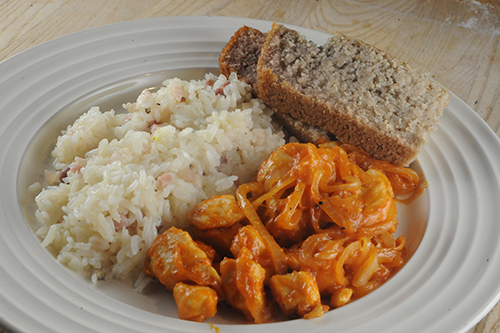
Chicken Gravy
  • 1 to 3 lbs boneless chicken, cut up into chunks
  • 1/3 cup cooking oil
  • 2 tbsp flour
  • 2 onions, sliced
  • 2 Maggi cubes
  • 3 tbsp tomato paste     
  • Salt, pepper and cayenne pepper to taste

Dry Rice
  • 1 cup rice, parboiled
  • 1/2 lb salted pork 
  • 1 medium onion, chopped
  • 2 quarts boiling water 
  • 1/4 tsp pepper (optional)
  • 1 tsp salt, if desired
  • 1 Maggi cube
  • 1 tsp oil/margarine/butter

Rice Bread
  • 2 cups cream of rice cereal
  • 3 cups mashed bananas
  • 1/2 cup vegetable oil
  • 4 tbsp sugar 
  • 1/2 tsp nutmeg 
  • 1 tsp salt
  • 1/2 cup water 
  • 1 tsp baking soda

Pineapple Nut Bread
  • 2 1/2 cups all-purpose flour 
  • 1 tbsp baking powder 
  • 1 tsp baking soda 
  • 1 tsp salt 
  • 1 cup wheat bran 
  • 2 eggs, beaten 
  • 3/4 cup crushed pineapple, drained 
  • 1/2 cup chopped roasted peanuts or walnuts

First let's make the rice bread:

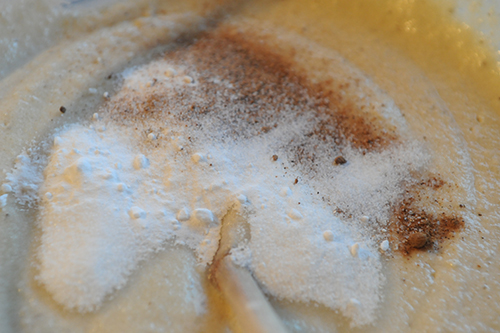
Preheat your oven to 400 degrees. Put all the ingredients in a large bowl and mix well.

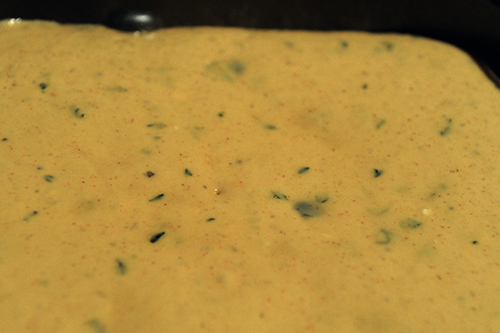
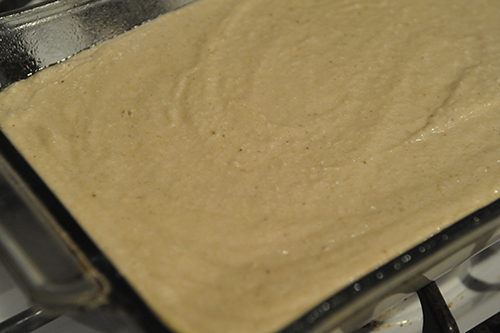
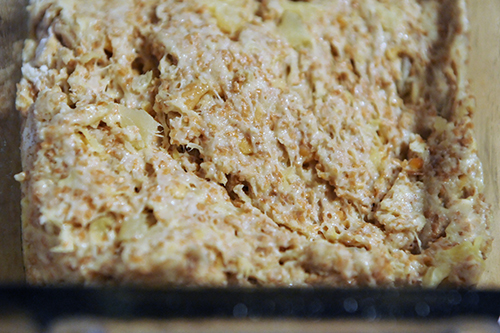
Pour into a greased 8 x 12 pan ...

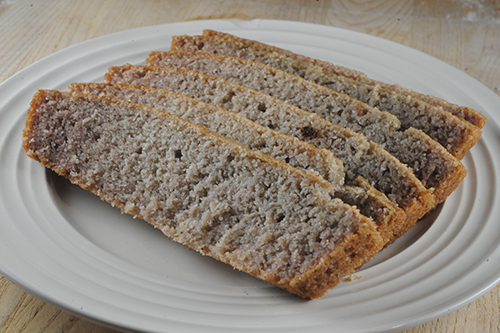
... and bake for 30 minutes, or until a toothpick inserted into the center comes out clean. That's it!

Now the pineapple bread:

First sift the flour together with the baking powder, baking soda and salt. 

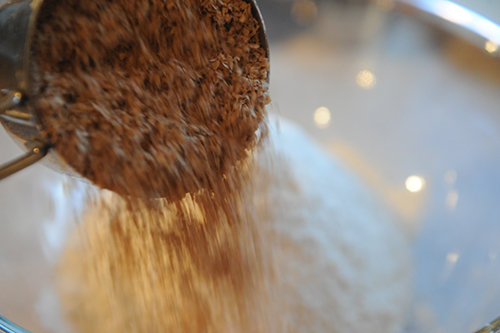
Now add the wheat bran, then mix in the eggs, pineapple and 1/4 cup of the nuts.

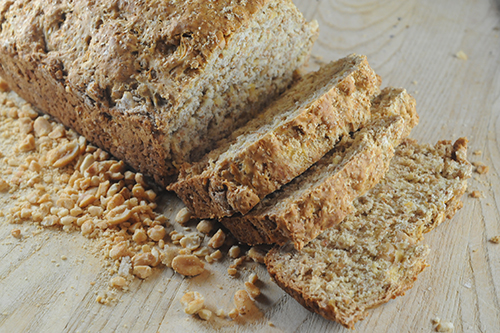
Mix well, then transfer the batter to a greased loaf pan. Mine was really stiff and had to be kind of molded into the pan.

Bake at 350 degrees for 1 hour, or until a toothpick inserted into the middle comes out clean. Top with the remaining nuts and serve.

Now for the chicken:

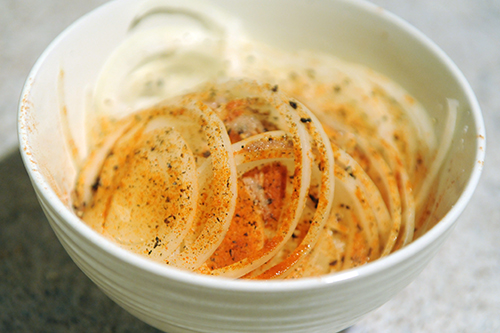
First mix the onions with the seasonings.

Then heat the oil and cook the chicken and onions until golden. Remove and set aside, reserving the cooking oil.

Add the peppers, Maggi cubs and tomato paste to the pot and fry for six minutes, stirring constantly. Now return the chicken to the pan and add a little water. Simmer until the chicken is cooked through and the sauce dries out a bit, then serve.

Finally, the rice:

First rinse the rice in hot water and let drain. Now place the water, rice and oil in a pot. Bring to a boil. 

Add the rest of the ingredients to the pot, then reduce heat to a simmer.

When the rice is al dente, remove from the heat and serve.

I really liked this. It was simple, which is pretty typical for African food, but I thought it had a lot of flavor. The rice bread I was actually a bit iffy about because it seemed more like a dessert or something you'd have with your coffee in the morning (all those bananas) and I really didn't like it served with everything else. It wouldn't surprise me to learn that it's really not the sort of thing you would serve with your chicken gravy and dry rice. The pineapple bread was pretty good too but I don't know, it kind of wanted to be a dessert and it kind of didn't. In the end I think I could have done without it.

I would actually make the chicken and rice again, though I'll probably stick with my own banana bread recipe. I do like simple recipes, and when they're simple and tasty, that's a win-win.

Next week: Libya

Thursday, January 15, 2015

Recipes from Lesotho

My first week of 2015 was Not Good. I won't go into any details, but it involved a leaky toilet, a bad blower motor in my furnace, a broken microwave, two ruined pots and a lost camera. Among other things.

If this is how 2015 is going to be, I think I'm going to spend the whole year in bed.

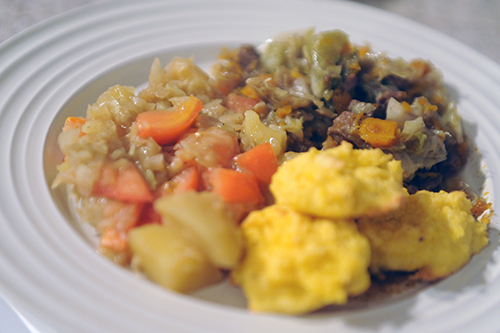
In keeping with the spirit of the new year, my first blog meal of 2015 was also Not Good, though I won't say it came anywhere near all the other things that were Not Good about the first week of 2015. In fact, Not Good is probably too strong a sentiment, really, and just reflects how bitter I'm feeling at the moment.

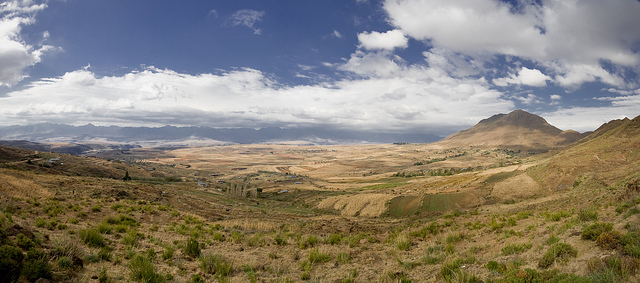
The country is Lesotho, which I'm betting you haven't heard of unless you were really, really paying attention in your high school geography class. It's pretty small, like, roughly the size of the state of Maryland small. It's in southern Africa, and as a nation it’s actually very young—younger than the US by almost a half century.


Malealea, Lesotho. Photo by Daniel Weber.

Fifty years after the US emerged as a democracy, Lesotho emerged under a king. His name was Moshoeshoe, which might be the coolest name ever, and he led this small nation until his death in 1870, when the British took over. Because that was what always happened to small, African nations in those days. The British controlled Lesotho until 1966, when it finally gained independence. Today it has a constitutional monarchy not unlike England’s, with a figurehead monarch and a prime minister.

As with all tiny, obscure nations, Lesotho has limited online resources to turn to if you’re looking for traditional recipes. Wikipedia’s entry for “Cuisine of Lesotho” contains a grand total of 101 words of information, and I think the author padded it a little. To sum up this already summarized version: the cuisine of Lesotho is a mix of African and British influences. Staples include potatoes, seafood, rice and vegetables. Here’s the menu I chose (I had to go with—gasp—offline resources):

Curried Meat
(from The World Cookbook for Students)
  • 3 tbsp oil
  • 1 lb stew beef, cubed
  • 2 cups water
  • 1 tbsp curry powder
  • salt to taste
  • 1⁄2 lb cabbage, shredded roughly
  • 1⁄2 lb squash, cut into chunks
Here's what I did on the side:

Stewed Cabbage and Potatoes
(from The World Cookbook for Students)
  • 2 tbsp vegetable oil
  • 1 large onion, chopped
  • 1 tbsp curry powder
  • 10 oz potatoes, peeled and chopped into large chunks
  • Water as needed
  • 10 oz white cabbage, shredded roughly
  • 2 tomatoes, chopped roughly
  • salt and pepper to taste
And to mop up the juices:

Mealie-Meal (Cornmeal Cakes)
(from Holidays of the World Cookbook for Students)
  • 1 cup yellow cornmeal
  • 2 tbsp sugar
  • 1 tbsp vegetable oil
  • 2 cups boiling water
  • 2 eggs, separated
  • Salt and pepper to taste
First, the beef:

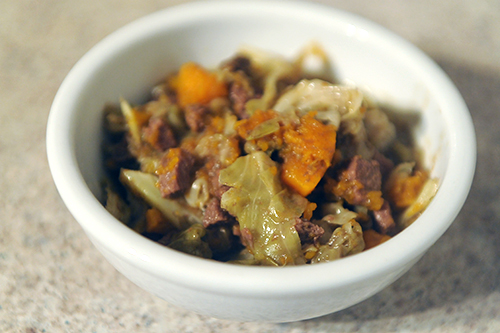
Heat the oil in a pot and brown the meat on all sides. Add the water and bring to a boil. Reduce heat to a simmer and cover. Let cook for 30 to 45 minutes, or until the meat is tender. Now add the curry powder, salt and vegetables. Let simmer for another 15 to 20 minutes until the squash is tender.


Here's how to do the mealie-meal:

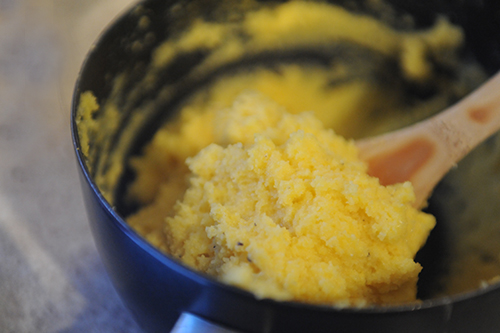
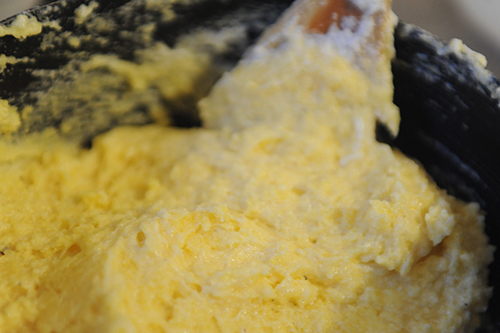
First heat your oven to 375 degrees. Put the cornmeal into a pot with the sugar and oil. Add the boiling water and stir until blended. Set the flame on low and cover, stirring frequently, until the mixture becomes thick and porridgey (that should take 10 to 12 minutes). Now remove from the heat. Let cool.


Beat the egg yolks and mix in with the cornmeal. Stir to blend. Now beat the egg whites and fold those into the mix.


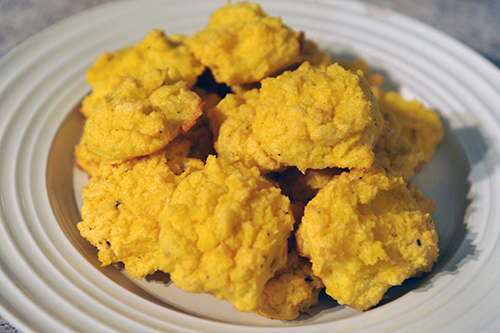
Drop the batter by tablespoons onto a cookie sheet, just as if you were making cookies. You want your patties to be about two inches wide and ¼ inch thick. Bake for 25 to 30 minutes until they puff up and turn golden.


Now for the cabbage and potatoes:

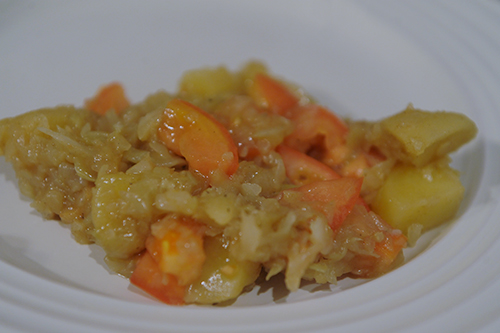
In a large pot, sauté the onion in the oil, then add the curry powder. Stir for a minute or two, then add the potatoes and enough water to cover. Cook 15 minutes or until the potatoes are tender but not completely cooked. Now add the cabbage and keep cooking until the potatoes are tender. Add the tomatoes and season with salt and pepper. Remove from heat.


This was a good, hearty meal, great for winter but let's face it, not really very interesting. I used butternut squash in mine, which is really the only kind of squash I can tolerate. The whole meal was pretty filling, which is what you want if you live in a place where subsistence farming is the norm.
Moving on now, slowly, but really, still moving on ...

Next week: Liberia

Monday, January 5, 2015

My favorite world recipes of 2014

You may have noticed that I've been slowing down a little, especially in the last few months of 2014. This is in part due to this job I have, where I have to write between 7,000 and 9,000 words every week (if I could devote that many words a week to writing a novel, I'd be able to pump one out every 10 weeks), and in part due to my older kids not taking swimming lessons anymore. I know that doesn't seem like it should have anything to do with anything, but I used to spend poolside time working on my blog posts, so without that I haven't really got a regular slot carved out for blogging. I know, I ought to be able to make one, but I just haven't managed.

I could launch into a speech about New Year's resolutions and swear to do better this year, but I don't want to make any promises because I'm mostly bad at keeping them. But regardless of how many weeks pass between posts, I do believe I will eventually get to the end of the alphabet. Eventually.

Anyway, I want to start the new year by remembering last year. I made some great food last year, and here's a list of my favorite 10 recipes:

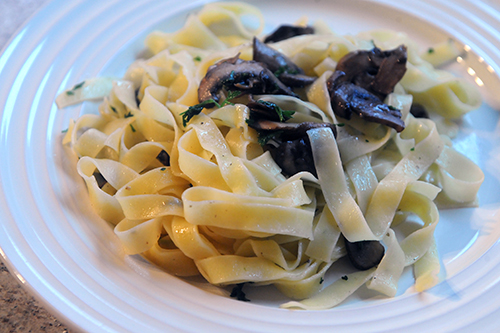
Emilia Romagna, Italy: Tagliatelle with Porcini Mushrooms

Simple dishes are sometimes the best tasting. This whole meal was brilliant, but my favorite part was the mushroom pasta. It had a simple, earthy flavor and was one of the best things I ate all year.

Honduras: Carneada

I had a hard time deciding which dish from Honduras was my favorite, because I loved all of them. So I chose the main course, because it was definitely the star of what was a really amazing show. It was juicy, full of flavor, and it went beautifully with the other items on the menu.

Hong Kong: Soy Sauce Chicken

It's rare that I make a dish that all six of us like, because my kids have very different tastes. But this soy sauce chicken was loved by all, so much so that I really wish I'd made a lot more of it. And it was really easy to make, too.

Israel: Bourekas

My Isreal meal was definitely one of the most time-consuming blog meals of the year, but it was worth it. I chose a lot of different dishes and these cheese-filled bourekas were one of my favorite things on a very full table. I ate way too many of them and almost couldn't make room for the rest of the food. Almost.

Jamaica: Coco Bread

I am pretty sure that coconut-flavored bread has made my list of favorites in past years, so this may be a bit of a repeat. It wouldn't be fair to leave it off the list, though, because my whole family adored this bread. In fact, it actually inspired tears in my older daughter, who could not believe I had the audacity to eat the leftovers while she was at school.

Kazakhstan: Kazakh Lemon Chicken

This chicken dish had very complex flavors and I thought it was really delicious. It's actually the only dish that made the top 10 list that wasn't loved by both me and my husband, though, because he really doesn't like olives. I didn't think his personal preferences should exclude an otherwise fabulous meal from the top 10, though, so here it is. Delicious, lemony and tender, mmmm.

South Korea: Korean fried chicken

My American fried chicken recipe is pretty yummy, but I don't make it very often because of that whole most-unhealthy-thing-ever problem. I don't think this fried chicken recipe was really much better in terms of health but oh my, it was delicious. In fact my chicken-on-the-bone hating husband declared that these were the best drumsticks he'd ever had. High praise!

Kurdistan: Xorsht Fesenjan (chicken with pomegranate molasses and walnut)

OK, so the photo really looks awful. Like, if you had to go by pictures you would probably put this chicken in the bottom 10 of the year. Flavor-wise, though, it was amazing. It had a really deep, rich flavor that was reminiscent of sun dried tomatoes, but only a little. Be prepared for big, bold flavors if you make this dish.

Kuwait: Kuwaiti Honey Cake

My eight year old liked this honey cake so much that she actually said she wants me to make it on her birthday instead of getting her a store-bought cake. What? She loves those sickly-sweet, butter cream frosted cakes so it was a shock to hear her say that. I loved this dessert too, it was very middle-eastern in flavor and had a great texture.

Lebanon: Djej w Batata Bil Sayniyyeh (Baked Garlic Chicken and Potatoes)

I love one-pot meals for their ease, but this one was really delicious, too. You really gotta love anything with a garlic sauce, and this was one well-executed garlic sauce. With the potatoes it made for a really delicious and complete meal.

Runners Up


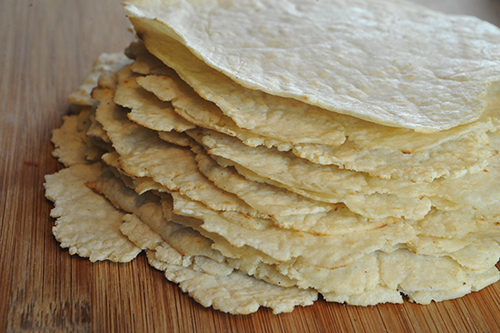
Honduras: Corn Tortillas

OK I know it's just corn tortillas, and nothing could be simpler to make. But the difference between these tortillas and something you'd buy at the grocery store is like night and day. These tortillas have an amazing, smooth texture and they don't fall apart when you try to fold them up. Stuff them with whatever you want and they'll hold together, and they taste delicious, too.

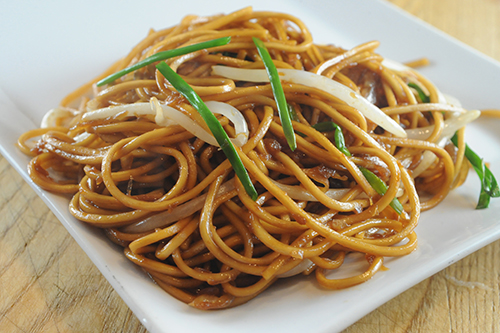
Hong Kong: Soy Sauce Noodles

My whole Hong Kong meal was delicious and I thought these noodles deserved a mention for one very important reason: they were the first Asian noodles I've personally made that did not turn out sort of slimy. Because of this dish, I finally have conquered chow mien, and for that I am eternally grateful.

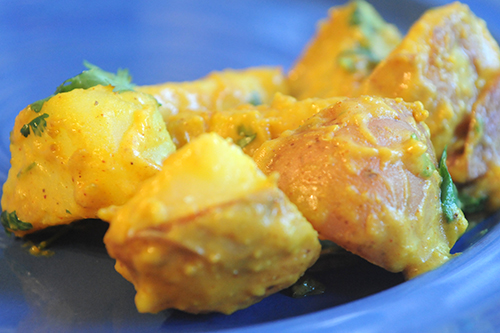
Kashmir, India: Saunf Aloo

These were beautiful, simple and creamy potatoes--an easy dish to throw together and serve with Indian curry. I love making curry on or off my blog, so this recipe is going into my book and will for sure be accompanying some of this year's Indian dishes.

That's my list! I hope you tried some of these dishes too, and if not that you will have a chance to do so in 2015. They're totally worth the effort (and some were hardly any effort at all!)

Happy new year and I really do hope to have more posts up in 2015!


Copyright 2023 Becki Robins and Palfrey Media.. Powered by Blogger.

Blog Flux

Blog Directory