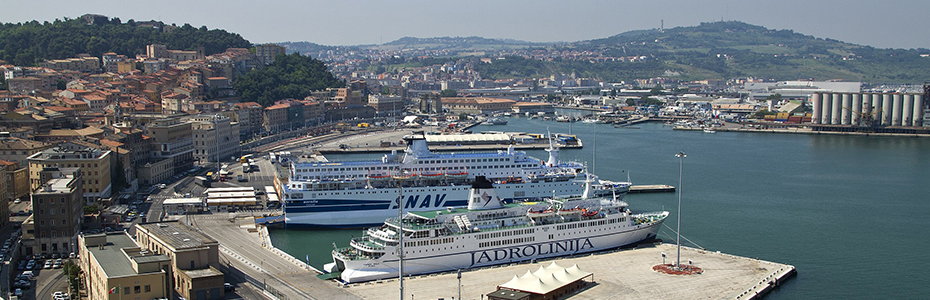
Recipes from Marche, Italy

For this entry, I made two recipes. Neither of them were especially good, but I don't blame the people who posted the original recipes or any of the traditions they came from, I blame myself and my propensity for Googling things that might kill me.

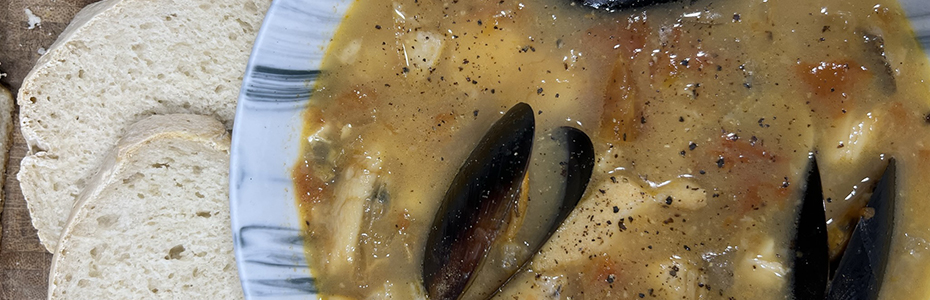
Recipes from Marche, Italy: Brodetto

A seafood stew with mussels and clams, minus the Vibrio.

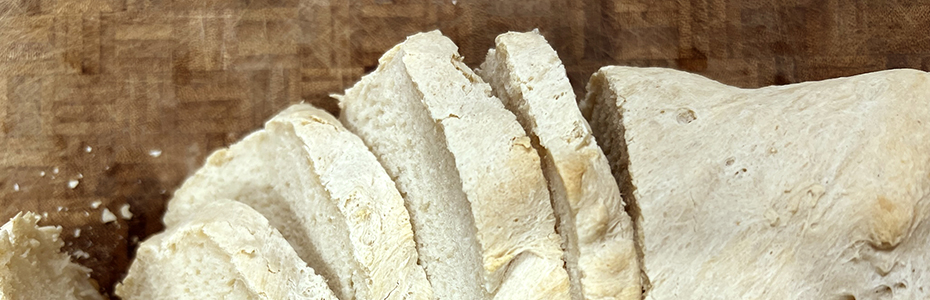
Recipes from Marche, Italy: Filone Casereccio

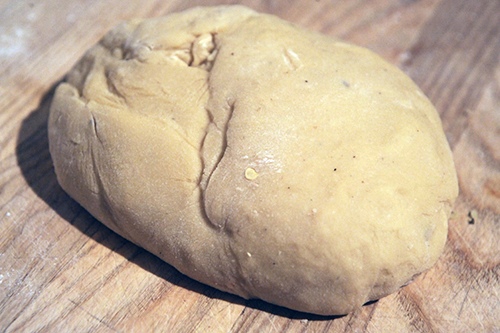
An Italian bread that will come out much better than mine did if you use fresh brewer's yeast and steam.

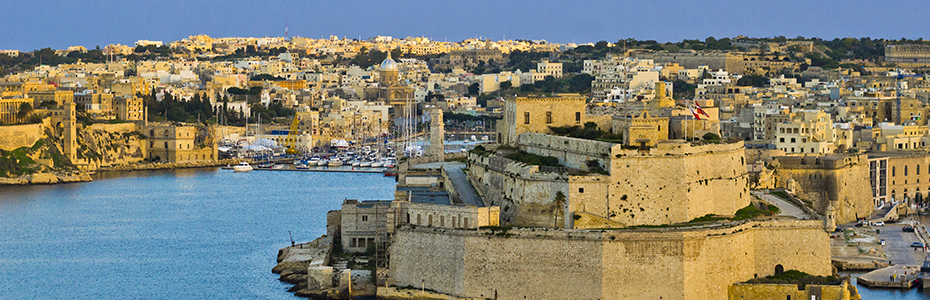
Recipes from Malta

This is actually the third time I’ve cooked a meal from Malta. The first time, I cooked the meal and then just did not write the blog post. Years went by.

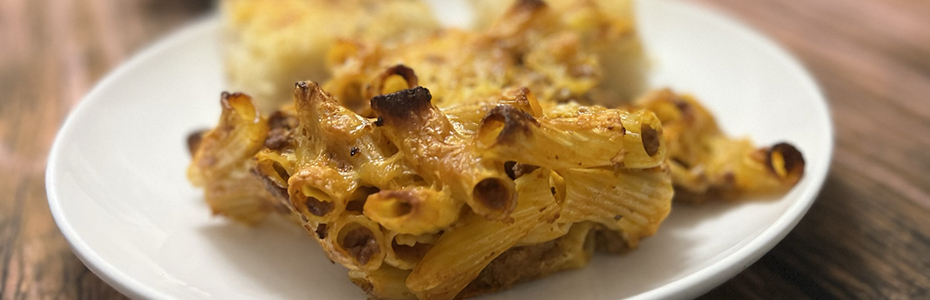
Recipes from Malta: Imqarrun

Imquarrum (also called Imqarrun il-forn) is descended from a dish served in Sicily, but the Maltese have adopted it as a traditional staple. The key to making this dish is to be patient.

Monday, March 23, 2015

Recipes from Lombardy, Italy

Are you sick of Italian food yet? Of course not, no one ever gets sick of Italian food, even though we really have a kind of bastardized version of it over here on this side of the pond. Anyway this is my third week in a row of doing an Italian menu--this week we're in Lombardy.


Milan is in Lombardy; that's where a large number of Italy's art galleries and museums are located. If you want to see The Last Supper, The Brera Madonna or Correggio's Adoration of the Magi, you go to Milan.

Besides being a Mecca of Italian art, Lombardy is the most populous and the wealthiest region in Italy--home to 1/6th of the population and responsible for about 1/5th of the entire nation's GDP.

Bergamo, Lombardy, Italy. Photo by Eric Hossinger.

When Americans think of Italian food, the first thing that usually comes to mind is pasta--but in Lombardy rice is often favored. With that in mind, I chose a popular risotto recipe:

Risotto Milanese
(from The Italian Chef)
  • 2 tbsp olive oil
  • 6 tbsp butter
  • 1 medium onion, chopped fine
  • 1 tsp saffron threads
  • 2 cups risotto rice, such as arborio
  • 1/2 cup white wine
  • 4 cups beef broth
  • 1/2 cup freshly grated Parmagiano-Reggiano cheese
And although I've often served risotto as a main course, I kind of wanted some protein to go with it. So this is the second recipe I chose:

Skillet Perch with Lemon and Capers
(from Jovina Cooks Italian)
  • 1 1/2 cups each: flour, fine cornmeal
  • 2 tbsp paprika
  • 2 tsp salt
  • 1/2 tsp freshly ground white pepper
  • 2 large eggs, lightly beaten
  • 1 cup milk
  • 2 lbs lake perch fillets, skinned*
  • Olive oil
  • Juice of 1 lemon
  • 1/2 cup capers, drained
  • 1/4 cup snipped fresh chives
  • 1 lemon, sliced (for garnish)
* I often have to find subs for fish when cooking for TbS. This time I used red snapper.

And I found this one for dessert:

Crostata
(from Italian Addiction)
  • 2 cups flour
  • 11 tbsp butter, at room temperature
  • 1/4 cup sugar
  • 1 egg
  • zest of 1 lemon
  • 1 tsp yeast
  • 1/2 tsp salt
  • jam or nutella (I used black cherry jam)
For this meal you do have to multi-task a little, since the risotto and the fish both need to be cooking at the same time. So let's start with the crostata just to get that out of the way.

First make that volcano that pastry recipes are always wanting you to make, and add some yeast and a pinch of salt. Add the eggs, sugar and room-temperature butter to the flour and mix well (you may need to use your hands). Don't overmix because then the butter might actually start to melt.

When the dough is smooth, move it to the fridge and let it rest there for 15 minutes or so. Then take it out and roll it to a thickness of about a third of an inch.

Now put your cake pan on top of the dough and draw around it with a sharp knife, leaving a border of about 2/3rds of an inch all the way around. Don't toss the dough you cut off, instead set it aside.

Line the cake pan with some waxed paper and put the dough on top of that, so the edges come up the side of the pan.

Now add your filling (the black cherry jam was really good, but you could also use chocolate or a different kind of jam). Finally, use those extra pieces of dough to make the basket-weave top, like in the photo below: 

Fold the edges down to meet the edges of the weave, then bake for 15 minutes at 350 degrees. Let rest for 10 minutes before serving.

 
OK, let's do the risotto next. First heat the broth to a simmer. In a separate pan, cook the onion in the olive oil and two tablespoons of the butter over a medium flame. When the onions are translucent, add the saffron and stir for one minute. Now add the rice and give the whole pot a good stir until each grain of rice is coated in oil.

Add the wine, and then pour in one ladle of the simmering broth. Stir until all the liquid has been absorbed.

Continue to add one ladle at a time--don't add another ladle until there isn't any more liquid in the pan. Repeat until all the broth is gone. The rice should be tender but firm, and the texture should be creamy.

Finally, add the rest of the butter and the cheese. Let the lid sit on the pot for a couple of minutes, then stir one more time and serve.

OK now on to the fish. First mix together the flour with the cornmeal, paprika, salt and pepper. In a second bowl, mix together the eggs and milk.

First dip the fish filets in the egg mixture, letting the excess drip off. Now dip in the four and cornmeal mixture. Give each filet a shake to get any loose mixture to fall off.

Now cover the bottom of a large skillet with oil and heat. Fry the filets in the hot oil for about two or three minutes on both sides, or until golden. When done, drain on paper towels and transfer to a warm oven to keep warm.

To make the sauce, drain the oil from the skillet and add the lemon juice and capers. Cook for one minute or until the mixture starts to bubble up. Now add the chives, salt and pepper. Transfer the filets to plates and top with the caper sauce. Garnish with the lemon slices and serve.

I thought this meal was delicious. The fish was quite simple but I like simple, as long as it's got flavor. The risotto wasn't the best risotto I've ever made, but it was still good. Martin complained a little because it tasted too much like the canned beef broth, and he was right. When you make this dish in Lombardy, you use a stock made from beef marrow, which of course isn't the sort of thing you can buy at Safeway. Though in retrospect, I think I've bought marrow bones there before so I probably could have done a less lazy job at this if I'd thought it through.

The crostata was really good with the black cherry jam. It was actually a lot like a scone in texture and flavor, but who doesn't like scones? It was my kids' favorite part of the meal (of course) and easy to make, too. In fact I'd have to say the whole meal was pretty low stress, as TbS meals go.

Next week we're going east, to Lithuania. I had some fun (haha) with that one and am looking forward to telling you about it.

Monday, March 16, 2015

Recipes from Liguria, Italy

Hey guess what, I achieved a Travel by Stove first this week! That's right, I nearly burned down my kitchen. Not only was it a Travel by Stove first, it was also the first time I've ever done anything like that at all, ever.

I know you're wondering what happened, but first I have to talk about Liguria, Italy.

Liguria is a narrow strip of land that borders the Ligurian Sea. On the other side of that narrow strip of land are the Alps and the Apennines, so there's a lot of mountainous land in the region. Much of the coastline is rocky, and in some places the cliffs and mountains rise right out of the sea.

The capitol of this part of Italy is Genoa, which has a long and sordid history, starting with its role as an important port city in the first crusade (for a fee, Genoese ships would carry European knights and troops the the Middle East). After that it became heavily involved in the the spice trade, which explains why hometown hero Christopher Columbus was so interested in finding a faster route to the East Indies.  

You probably already guessed that a lot of the food in Liguria is seafood-based, which is what you would expect from a land that's pretty much all coastline. Seafood isn't the only thing going there, though, in fact Ligurian tastes cover the gamut from fish to poultry to beef to cheese to vegetables. So if food is your thing and you were thinking of visiting Italiy, Liguria should definitely be one of your stops.

Portofino, Liguria, Italy. Photo by Callum Moy.

And here's another fun fact: pesto was invented in Liguria. Which was perfect for me, really, because I have a basil garden growing out of control in my office and I really needed a reason to use some of it up. So with that in mind, here's my menu:

Trenette with Pesto
(from Academia Barilla)
  • 1 lb trenette pasta*
  • 1 oz basil
  • 1/2 oz pine nuts
  • 1 clove garlic
  • 2 oz grated Parmigiano Reggiano cheese
  • 1 1/2 oz grated Pecorino cheese**
  • 1 cup extra virgin olive oil
  • salt and pepper to taste
*Trenette is similar to linguine. I couldn't find trenette because it's a little bit obscure in California, so I just used linguine for mine.

** Pecorino is widely available in California supermarkets, unless I'm looking for it. I had to sub some of last week's montasio cheese and some romano for the pecorino, and I honestly don't know how good a sub that was. Tasted delicious, though. Anyway the next time I was a the grocery store I found pecorino cheese, which was annoying.

Some focaccia:

La Focaccia alla Genovese di Roberto
(from Rustico Cooking)
  • 3 1/2 cups all-purpose flour
  • 1 tbsp plus 1 tsp fine sea salt
  • 1 tsp sugar
  • 3/4 cup warm water
  • 1/2 cup extra-virgin olive oil, plus extra for greasing
  • 1 1/2 tsp active dry yeast
  • 1/4 cup water
And a dessert:

Almond and Chocolate Torta
(from Channeling Nonna)
  • 5 oz butter, softened
  • 1/4 cup plus 2 tbsp light extra virgin olive oil or an additional 5 oz butter
  • 1 3/4 cups all purpose flour
  • 1 tsp baking powder
  • 1 cup sugar
  • 5 eggs
  • Zest of one lemon
  • 1 tsp vanilla or almond extract
  • 2 cups almond flour
  • 3/4 cup mini chocolate chips
  • 1/4 tsp salt
Let's make the dessert first, since I'm sure you are still dying to know how I nearly burned down my kitchen:

First put the oil, butter and sugar (or just the butter and sugar, which is what I did) into your mixer and beat until fluffy. Then add the eggs and mix for another minute, but take care not to let the eggs curdle.

Now add the zest, vanilla flavoring and the almond flour.

Mix until just combined. Finally, add the all-purpose flower, salt and baking powder. Turn your mixer down to low and mix just enough to get a smooth batter, but not too much more than that. Finally, add the chocolate chips.

When the chips are distributed throughout the batter, get out your fire extinguisher because you might need it. Now transfer the batter to a springform pan.

Bake at 350 degrees for 40 minutes or until golden (put a toothpick in the center if you're not sure, if it comes out clean it's done). Cool, then serve.

Now here's what happened when I made this--there was so much butter in this thing, that it actually started leaking out of the seams of the springform pan, and then it landed on the bottom of the oven and burst into flames. Fortunately I didn't have to extinguish the thing because after hearing my screams of panic my husband came running and reassured me that it would burn itself out and I was not in fact about to burn the house down, though I still don't believe him. Anyway it did burn itself out and my cake came out slightly smoked, though that was not the only problem with it. More on that later.

Next make the bread. First combine the flour, 1 tablespoon of salt and the sugar in an electric mixer. Now add the water and 1/4 cup of the olive oil. Stir until the dough starts to come together, then either use a dough hook or knead it by hand (I used my bread machine, because I'm a cheater that way).

You may need to add a little more flour if the dough is too sticky, or a little more water if the dough is too dry. Now add the yeast and keep kneading. The final product should be smooth and easy to work.

Shape the dough into a ball and transfer it to an oiled bowl. Cover and let rise at room temperature for about an hour, or until doubled in bulk.

Now move the dough to a pizza pan and press it into the pan. Cover and let rest for another 30 minutes. Dimple the dough with your fingers, taking care not to tear it. Cover again and let rise for another 30 minutes. 

Mix the rest of the olive oil with the rest of the salt and the 1/4 cup of water.  Pour over the dough. Bake at 475 degrees for 20 minutes, or until golden and slightly crisp. Serve.

And finally, the pesto pasta:

Put the basil, garlic and pine nuts into a food processor. Pulse, adding the oil slowly.  

When the mixture is creamy, add the cheese. Keep pulsing until you get a lovely green paste. Add the salt to taste.

Now, my pesto was a little bitter, probably because my basil leaves were on the large side and you're really supposed to use younger leaves for pesto. So I added more cheese, pine nuts and salt to help counter the bitterness, and in the end I had delicious pesto. Make sure that you taste yours and adjust, because all basil is not created equal. 

Now cook the trenette (or linguine) in salted, boiling water until al dente. Drain and toss with the pesto. You can dilute the pesto with a little bit of that pasta water, if you need to. Top with a little bit of grated parmesan and serve. 


The pesto pasta was by far the most delicious part of this meal. I suppose all that really fresh basil had something to do with it but yes, it was really good. Even my kids loved it, which is saying something since they won't normally go near anything that's green, even if it's frosting on a St. Patrick's Day cake. The focaccia was also very good--it was salty, crispy and soft all at the same time. The cake, unfortunately, hmm. It was really oily, which shouldn't surprise you considering that it set the oven on fire. It was so oily that when you bit into it the grease kind of pooled up in your mouth, which really wasn't very nice at all. I'm giving the recipe the benefit of the doubt, though. Maybe that extra five ounces of butter wasn't a very good substitution for the oil. Or maybe some other measurement was totally off. At any rate, I wouldn't recommend this recipe as printed above. Normally I love butter, but when there's that much of it you might as well be eating it by the stick.

So we're on a trifecta of Italian provinces, culminating next week with Lombardy, Italy. See you then!


Tuesday, March 10, 2015

Recipes from Friuli-Venezia Giulia, Italy

So after last week, I needed to restore my faith in cheese. I'm pretty sure I can still smell that appenzeller. Blech.

Anyway, what better place to look for a wonderful, non-stinky new cheese than Italy? I've still got a few regions leftover from earlier in the alphabet, so it's time to backtrack. This week we're going to Friuli-Venezia Giulia.

Friuli-Venezia Giulia borders Slovenia and Austria and is located on the back cuff of the boot, overlooking the Adriatic Sea. Historically, the region was an important one, and I don't mean to the people of Italy. The Germanic and Slavic people in particular liked Friuli-Venezia Giulia, because as a region it is the most accessible from outside of Italy. Which means of course that those Germanic and Slavic invaders used it as a place to launch invasions. Imagine how annoying that must have been if you lived in Friuli-Venezia Giulia--"Oh good lord, here comes that damned Germanic army again."

It may surprise you to learn (as it did me) that Italian isn't the primary language spoken in this part of Italy. Much of Friuli-Venezia Giulia (especially the people who live in rural areas) speaks Friulan, which has roots in Aquileian Latin and pre-Roman languages like Gualish and Venetic. There are 300,000 native speakers of Friulan, most of whom also speak Italian.

Udine, Friuli Venezia Giulia, Italy. Photo by Andrea.
        
As might be expected, the cuisine in Friuli-Venezia Giula is heavily influenced by those Germanic and Slavic neighbors--you will find dishes like sauerkraut and strudel there, and lots of those heavier dishes containing potatoes, beans and cabbage that are so popular in the eastern European nations. As for me personally, I just wanted to find some nice cheese. It wasn't hard, because Friuli-Venezia Giulia has one cheese in particular that seems to crop up in a lot of different dishes: Montasio, which is a cow's milk cheese that originated in the region. Most famously, it's used in a dish called Frico, which is essentially a chip made out of cheese. You had me at "chip made out of cheese."

Anyway, here's the menu I selected this week:

Gnocchi in a Montasio cheese sauce with poppy seeds 
(from Snaidero-usa.com)
  • 1 lb of gnocchi
  • 1/2 lb semi-aged Montasio cheese
  • 2 tbsp of grated aged Montasio or Parmigiano Reggiano
  • 1/3 cup light cream or whole milk
  • Pinch of salt
  • 2 tbsp poppy seeds, pounded or crushed
Cevapcici con Ajvar
(from Simple Italy)

For the cevapici:
  • 8 oz ground beef
  • 8 oz ground pork
  • 2 tbsp finely chopped onion, plus extra for serving
  • 2 garlic cloves, minced
  • 1 tsp paprika
  • 1 tsp salt
  • 1/2 tsp freshly ground black pepper
  • Dash cayenne pepper
For the ajvar:
  • 1 large red bell pepper
  • 1 small eggplant
  • 1 tbsp olive oil
  • 1 tsp red wine vinegar
  • 1 tsp sugar
  • Dash cayenne pepper
and of course:

Frico (Cheese Chips)
(from Lidia's Italy)
  • 1/2 tsp unsalted butter
  • 3/4 lb Montasio cheese, shredded
And finally:

Cavolo Verza Arrosto con Pancetta Croccante
(from Rustico Cooking)
  • 2 tbsp extra-virgin olive oil, plus extra for greasing the baking dish
  • 1 Savoy cabbage, quartered, cored, and cut into thin strips
  • 1/2 cup chicken broth
  • 1/4 tsp salt
  • 1/4 tsp freshly ground black pepper
  • 1/4 tsp hot Hungarian paprika
  • 2 garlic cloves, minced
  • 1/4 lb bacon, defatted and cubed
I started with the cabbage. First, preheat your oven to 450 degrees. Oil a 9x12 roasting pan. First arrange the cabbage on the bottom of the pan, then drizzle with the chicken broth and olive oil. 
 

Top with the spices and toss it all together with the garlic. Sprinkle the chunks of bacon on top.

Transfer to the oven and let roast for 45 minutes. Check on it a couple of times and give it a stir. When it's golden and starting to turn crispy, it's ready.

Now for the cevapcici. You may recall I did a dish a lot like this one with a similar name back in Bosnia and Herzegovina, in fact it may be too similar to this one though it was served differently and without the addition of the ajvar. Anyway the rest of my menu is varied enough that I didn't feel too bad about the repeat. Here's how to make:

First do the ajvar. Cut the bell pepper into strips and place it skin side up in a 400 degree oven (I lightly sprayed mine with some olive oil to help the roasting process). Put the eggplant in there too (I cut mine up but I don't think you need to). Roast until the skins begin to brown, which should take a half hour to 40 minutes. Move the bell pepper into a tupperware and seal for 10 minutes or so (this makes it a lot easier to get the skin off). Remove the stem, seeds and skin. Scoop out the soft flesh of the eggplant and then transfer both to a food processor. Add the remaining ajvar ingredients and puree until smooth. Add salt to taste.

Now mix together all the ingredients for the cevapcici. Roll the mixture into little cylinder-shaped sausages--they should be about 3 inches long and 3/4 of an inch around.

Heat a large skillet over a medium flame and cook on all sides until brown (this should take roughly five or six minutes).

Now for the gnocchi, which really couldn't be simpler:

Grate the cheeses. Meanwhile, heat the cream slowly until it reaches a simmer. Add the cheeses and stir until they melt. 

While you're making the sauce, bring a pot of salted water to a boil. Add the gnocchi. When they start to rise to the top of the pot remove them with a slotted spoon; they're done.  

Toss the gnocchi with the sauce until well-incorporated, then add the poppy seeds. Stir to combine and serve.

And finally, those cheese chips:

Melt the butter in a small skillet over a moderate to low flame, then sprinkle two tablespoons of cheese into the pan. Spread evenly and cook until golden on one side, then flip and cook for a few minutes longer. Let drain on paper towels. Keep going until you run out of cheese.

OK so first I want to say that I'm pretty sure I overcooked the cheese chips, because they were just a little bit too golden and maybe a bit chewy. But I liked them. Fried cheese, what's not to like? Warning: don't do this with appenzeller. I mean, I don't know if you can do it with appenzeller but I can just imagine what your kitchen would smell like.

Loved those little sausages and I thought the ajvar was really tasty, even though I don't generally like eggplant. It really added some interest to those otherwise basic sausages. The gnocchi was delicious too, because it was really just gnocchi in cheese sauce. It wasn't really unusual, but you know, it was gnocchi in cheese sauce. And I was actually quite fond of the cabbage, mainly because it's a vegetable that I like in most incarnations and one we don't eat a lot of, so it made for a nice change.

My husband enjoyed this meal too, though he's always wishing for things that are really interesting and unusual. Of course even the smaller areas of places like Italy have been done and done here in America, so I'm not sure what he expected. Good food is good food, it doesn't always have to be exotic.

You can guess what my kids thought of the food. Well, they ate the sausages because they're sausages, but everything else ... more for me. And yes, I did successfully restore my faith in cheese.

Next week we're still in Italy, but this time: Liguria
Friuli-Venezia Giulia, Italy

Monday, March 2, 2015

Recipes from Liechtenstein

I have finally met a cheese I don't like.

I once would have thought it was impossible. I *love* cheese. Before I had kids, one of my favorite things to do was visit cheese shops and sample all the different cheeses, and then go home with some exotic, wonderful cheese that I've never had before and eat it with some sort of fancy or unusual cracker. Haha! Like I could ever do such things today, with four kids in tow.


So up until this point I have not been phased by the idea of ordering cheese online, even though it costs a lot of money to ship the stuff (We don't really have any gourmet cheese shops here. Scratch that--up until two days ago I didn't know we had a gourmet cheese shop here, but that's a different story.) Anyway I was getting my exotic cheese from iGourmet.com, and that's where I got the two cheeses I used for this week's meal.

Let me back up a little before I start telling you that story. This week we are in Liechtenstein, which is a really, really tiny country in Central Europe. It is so small, in fact, that not only can you not see it on this big map, but you also can't really see it very well on the zoomed in version, either:

Liechtenstein is tiny. At 62 square miles, it is roughly the same size as New Milford, Connecticut. Never heard of New Milford, Connecticut? That's because it's tiny.

Now, clearly Liechtenstein has a short man's complex, because despite its diminutive size it has a lot going for it. In fact, it has the highest gross domestic product per person in the world when adjusted by purchasing power parity. No, really. And if you measure by GDP per capita, it is the second richest nation in the whole world, after Qatar. It also has one of the lowest rates of unemployment anywhere in the world (1.5%). Liechtenstein is mountainous, which means it's great for skiing (not that I ski or anything) and (I'm not making this up) it is also the word's largest exporter of false teeth. Which I don't know, I wouldn't be surprised to find out that someone put that little factoid in Wikipedia for fun and it's not actually true, but it does make for entertaining reading.
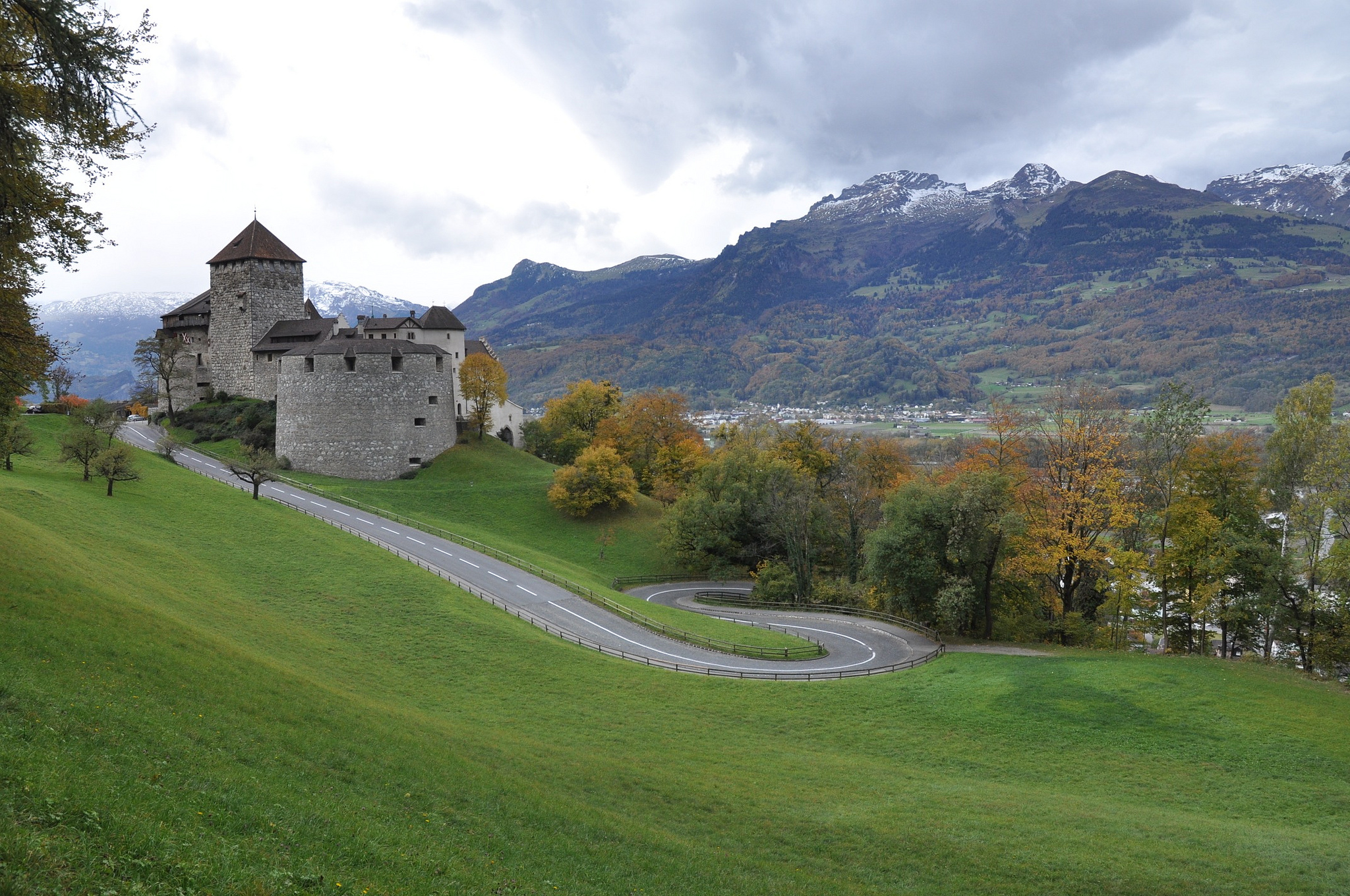
Schloss Vaduz, Liechtenstein. Photo by jimynu.

Anyway, the food in Liechtenstein is is heavily influenced by its neighbors, Austria and Switzerland. Potatoes are popular there, which seems to be pretty typical for the region, and the nation's large dairy industry also means that cheeses are an important part of the cuisine. Really, really stinky cheeses.

So here's my menu (both recipes are from Liechtenstein's Tourism Board):

Pepper Venison
  • 2 lbs shoulder of venison
  • 3 oz onions, chopped
  • 2 oz carrots, chopped
  • 2 oz celery, chopped
  • 2 garlic cloves, pressed
  • 8 cups red wine
  • 1 cup apple cider vinegar
  • 2 bay leaves
  • 6 cloves
  • 8 whole allspice corns
  • 1 tsp coriander seeds
  • 10 juniper berries
  • 1 sprig of fresh thyme
  • 2 tbsp flour
  • Splash of port or sherry
with:

Käsknöpfle
  • 4  3/4 cups flour
  • 8 eggs
  • 7 to 8 tbsp fresh water
  • Pinch of pepper
  • Pinch of nutmeg 
  • Pinch of salt
  • 1 small onion, sliced
  • 2  tbsp butter 
  • 2 oz Appenzeller cheese, grated
  • 2 oz sour cheese, grated
So I was excited about this. I've never cooked venison before and I had to go on a bit of a hunt for it--I finally learned that I could order stew venison from the co-op here in town. That's one thing checked off my to-do list. And then there was the cheese.

What's that smell? (Photo by Artizone)
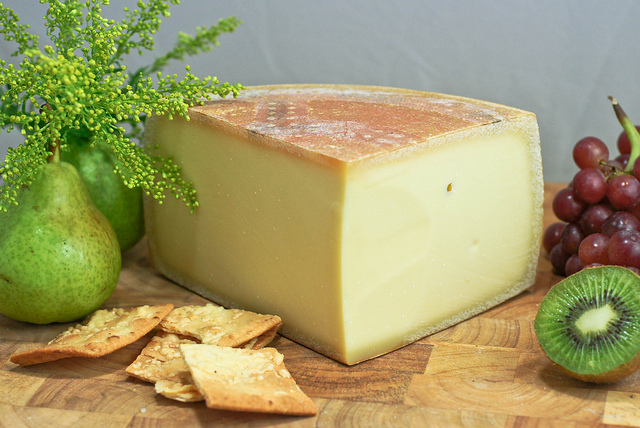
Appenzeller is available on iGourmet.com, which described it as being "appreciated by cheese connoisseurs around the world," and "a delicacy on any cheese platter." Sounds great, doesn't it? I ordered some. In retrospect, I am a little angry that nowhere on the iGourmet website was I warned about what I was getting into.

Now the sour cheese, that was a bit more of a challenge.

Sour cheese cannot be had anywhere in the US, and I suspect there's a pretty good reason for that. Several sources referred to it as "strong" or "not for everyone." I was not dissuaded, because up until that point I'd never met a cheese I didn't like, strong or otherwise. I looked for Handkäse, I looked for Harzer, and even for some of the lesser-known varieties of sour cheese from the region. The closest I could come (which probably isn't close at all) was Limburger. So I got some of that, too.

Armed with all of my hard-to-find ingredients, I started with the venison.

First place four cups of the wine in a pot with the apple cider vinegar, half the vegetables and all of the spices. Bring to a boil, then remove from the heat and let cool. Pour over the meat and let marinate in the fridge for a couple of days (or up to a week).

Filter the marinade into a saucepan and reserve. Let the meat drain for a couple of hours, then heat the oil in a pan and sear the meat on all sides with a little salt.

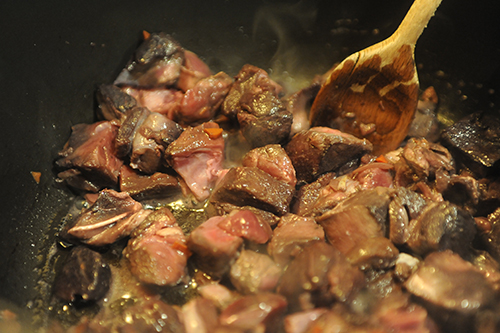
Gently heat the marinade on the stove. Meanwhile, heat up some oil in a separate pan and saute the rest of the vegetables. Add the meat and stir until it darkens (mine was already almost black from marinating in the wine for all that time). Now add a cup of wine, a little more marinade and the spices. Let stew for an hour or so, until the meat is tender.

Remove the meat with a slotted spoon and transfer it to a warm plate. At this point the recipe starts talking about what to do with the pig's blood, which was news to me because pig's blood wasn't anywhere in the ingredient list. But then it says to thicken the stew with toasted flour if you don't have any pig's blood, which was good, because I didn't have any pig's blood. So I just toasted the flour in a dry pan until it took on a golden color, and I mixed it with a little water before adding it to the sauce.

Now add the port or sherry. Put the meat in another pot with the rest of the wine, and add the sauce. Season with a little salt and pepper.

And now for the Käsknöpfle.

I made the mistake of opening the cheese and grating it before I made the dough. Don't do that.

Appenzeller is stinky. In fact, it's so stinky that I didn't even notice the Limburger, which for most Americans is the stinkiest cheese going. Appenzeller is so stinky that I smelled it for hours. The odor permeated everything. By the time I was done making the dough, I had no appetite left from smelling the Appenzeller.

So wait until the very end to grate the cheese. First, put the eggs, flour, water and spices in a bowl and make a dough. Let rest for 20 minutes, then grate. Laugh because you think I must be joking.

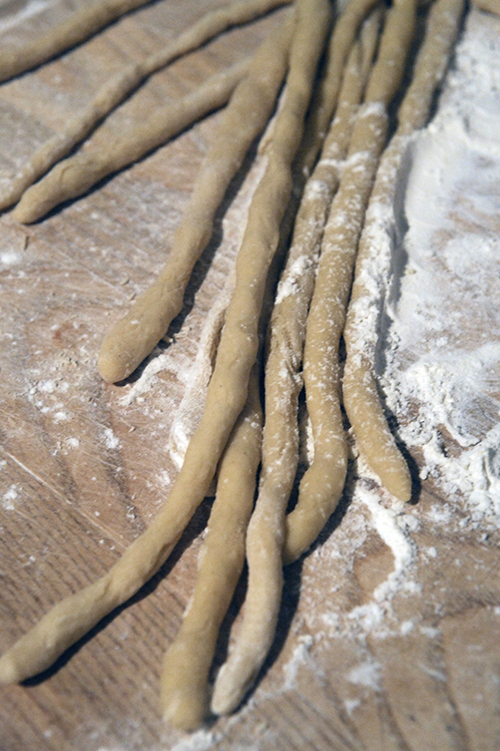
I couldn't grate this. It just wouldn't go near the holes in the grater. So I recruited my husband and kids to roll it out into really small lengths of rope and cut it into tiny pieces, which is probably not traditional but it seemed to work.

While your family is slaving away at this, fry the onions in the butter until golden.

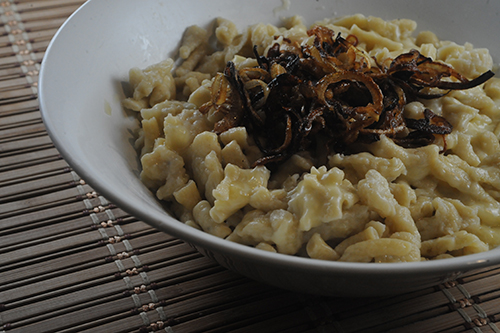
Drop your finished pasta into boiling, salted water and cook until the pieces float. Remove with a slotted spoon and top with the grated cheese and the onions.

So despite the smell, it really didn't taste that bad. I've actually found that to be true with most stinky cheeses--the flavor tends to be pretty mild compared to the stink. But because I'd smelled that stink all evening, I just couldn't eat it. I mean, I did, but I didn't enjoy it. Neither did my kids.

I did like the stew. It was really rich and flavorful. In fact it was so rich and flavorful that it was almost disappointing, because it could have been any meat in that dish. I didn't particularly even notice the flavor of the venison.

My husband was unphased by the stinky cheese. So unphased that a few days later he put the rest of the Appenzeller on omelets. My poor kids walked into the kitchen and about fell over from the stink. We had to throw out half the omelets because no one would touch them, myself included. Though Martin did eat his, and so did my older son, whose culinary adventurousness never ceases to amaze me.

Next week: Friuli-Venezia Giulia, Italy
Liechtenstein Liguria, Italy Lithuania Lombardy, Italy Lorraine and Alsace, France* - See more at: http://travelbystove.blogspot.com/p/the-list.html#sthash.0kc4RoYd.dpuf

Monday, February 23, 2015

Recipes from Libya

Have you heard? This year's flu shot is only 23% effective. What does that mean exactly? That it's 23% effective against all flu viruses? Or it only protects against 23% of the flu viruses that are out there? I don't know really, but I can tell you this: it was zero percent effective for us. Except for my husband, who was the only one of us who didn't get the flu shot. For him, it was 100% effective. Figure that one out.

So, I am just now emerging from 2 1/2 weeks that can only be described as hellish, with one child after another suffering from fevers in excess of 104 degrees and me hardly able to drag myself out of bed to take care of the ones who had to stay home from school. I spent the better part of three weeks feeling like I'd just put away a couple of bottles of Nyquil, not to mention the coughing and aches and fever. I did lose four pounds though, so I guess there's a silver lining in everything, haha.

Anyway, I'm back, sort of. This week we're in Libya, even though I actually cooked this meal so long ago I almost don't remember it.


You don't hear a whole lot about Libya these days, but when I was a kid it was always in the news. Libya was involved in the Lockerbie bombing of Pan Am Flight 103 in 1988, and before that happened they got a lot of negative attention for buying arms and sponsoring various paramilitaries and terrorist groups all over the world. The US disliked them enough that we tried (but failed) to take out head of state Muammar Gaddafi in 1986. In fact he remained in power (though mostly as a figurehead) until 2011, when the Arab Spring movements in Tunisia and Egypt inspired Libyans to rebel. The revolution was short but bloody, and eventually ended in the capture and execution of Gadhafi in the summer of the same year.


Sadly, the revolution failed to unite Libya and today the nation is torn between the armed militias of various regions, tribes and cities, and the central government has been wholly unable to control much of anything. It's easy to see why, because Libya is a nation with a lot of hardship. It is the 17th largest nation in the world, but much of it is not only desert but "one of the most arid and sun-baked" deserts on earth. In some places it doesn't rain for years. In fact in Uweinat, there hasn't been any rain since 1998.
Awbari, Libya. Photo by Patrick.

So much of Libya doesn't grow anything at all, and quite a lot of Libya's food is imported. Libyans eat a lot of grains but the nation imports five tons of wheat for every one ton it actually grows. And Libyans love their wheat, because they have a tradition of eating pasta as a staple, especially in the west. This comes largely from that brief period of time between 1912 to 1927, when Libya was occupied by Italy and officially known as "Italian North Africa."

I didn't do any pasta recipes though, I stuck with rice (more commonly eaten in the east) because this recipe sounded pretty good:

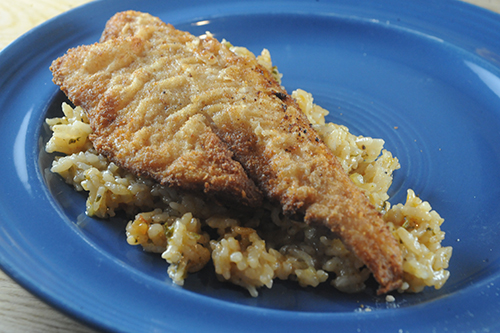
Ruz Hoot bil Kusbur (Herbed Rice with Coriander Seeds and Fish Fillets in a Cumin Marinade)


(This week all my recipes come from Libyan Food.)

For the rice:
  • 3 cups short grain rice, rinsed and drained
  • 6 cups hot fish stock
  • 5 tbsp corn oil
  • 1/2 cup celery, finely chopped
  • 1/2 cup parsley, finely chopped
  • 1/2 cup onion, finely chopped
  • 1/2 cup tomatoes, finely chopped
  • 1 chili pepper, finely chopped
  • 2 to 3 garlic cloves, pressed
  • 1 tbsp ginger, grated
  • 1 to 2 tbsp coriander seeds, lightly toasted
  • 1 tsp cumin
  • 1 tsp black pepper
  • 1 tsp paprika
  • 2 tbsp salt
For the fish:
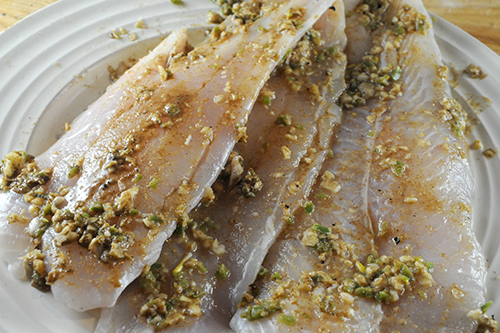
  • 6 white fish fillets
  • vegetable oil
  • 3 to 4 garlic cloves, pressed
  • 1 tbsp cumin
  • 1 chili pepper, finely chopped (optional)
  • Salt and pepper to taste
  • Juice of 1/2 a lemon
  • 5 tbsp white flour
  • 5 tbsp fine breadcrumbs
  • 2 to 3 tbsp water
  • 2 eggs
Plus a bread:

Libyan Herb Bread (Khubzah bil A3shab)

For the dough:
  • 1 cup warm milk mixed with 1/2 cup warm water
  • 1/2 cup warm water
  • 1 tbsp dried yeast 
  • 1 tsp sugar
  • 4 cups white flour
  • About 1/4 cup olive oil
  • 4 tsp sugar
  • 2 tsp salt
  • 2 tsp baking powder
For the flavorings (according to taste):
  • Thyme
  • Parsley
  • Rosemary (optional)
  • Green and/or black olives
  • Paprika
  • Chili peppers (optional)
  • Cheese (optional)
This salad:

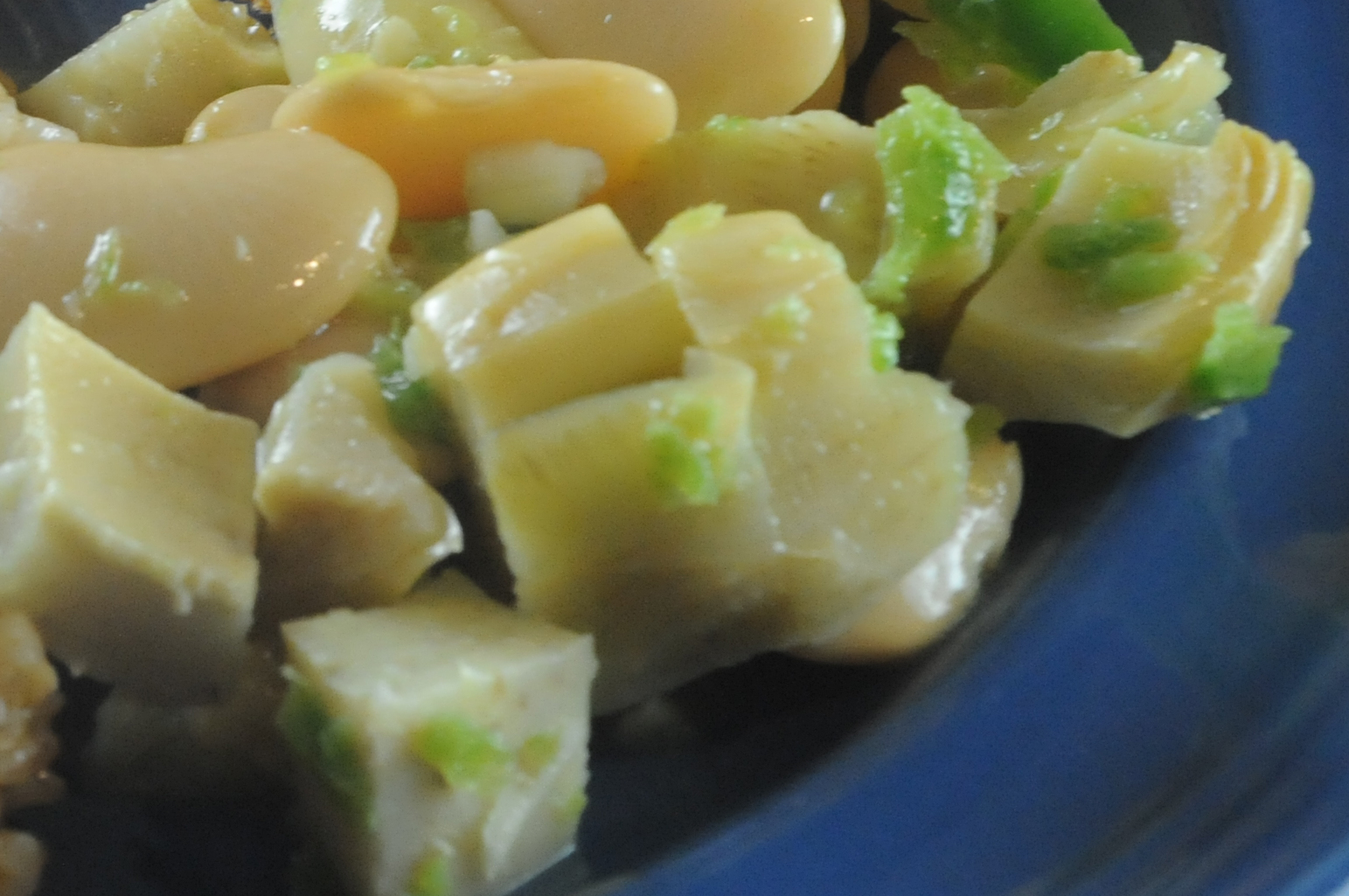
Green Broad Bean and Artichoke Salad (Salatet Fool Akhdar)
  • 14 oz green broad beans
  • 6 artichoke bottoms
  • 1 red chili
  • 1 green chili
  • 1 garlic clove
  • Olive oil
  • Salt to taste
  • Juice of half a lemon
And for dessert:

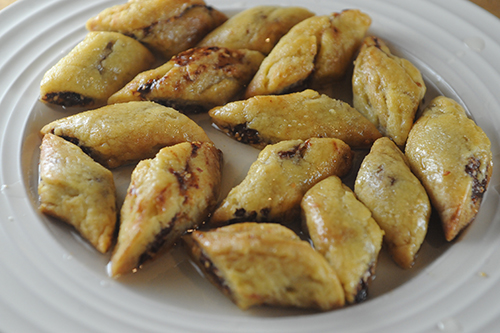
Date Filled Semolina Cookies (Magroodh) 
  • 3 cups semolina
  • 1 cup flour
  • 1 cup corn oil
  • 1 1/2 tsp baking powder
  • 1 tbsp orange blossom water or rose water
  • 1/2 liter warm water
For the filling:
  • 1 lb 10 oz date paste
  • 2 tsp cinnamon
  • 1 tsp grated nutmeg
  • 1 tbsp oil
  • 1/2 cup sesame seeds, lightly roasted
For the syrup:
  • 4 cups boiling water
  • 3 cups sugar
  • 1 tbsp lemon juice
  • 1 lemon slice
  • 2 tbsp orange blossom water
  • 1/2 cup sesame seeds, lightly roasted
Let's start with the bread:

First mix the yeast with 1/2 cup of water and the sugar. Let stand until frothy, then add to the milk and water mixture. Add the flour, baking powder and salt and mix well.

Now add the herbs. I used olives, parsley, paprika and feta cheese. I would have used the chili peppers but spicy stuff is wasted on my kids. Of course, olives are wasted on them too ... but there you go.

Now mix in the olive oil, then cover and let rise in a warm place for about an hour.

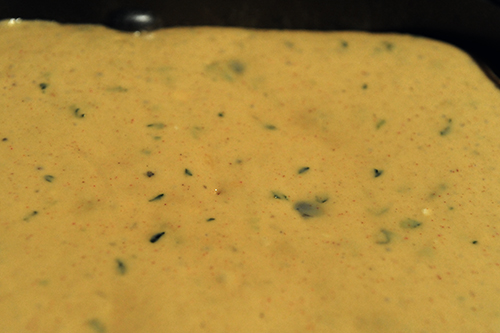
Heat your oven to 425. Butter a cake pan (I used a bread pan for mine) and add the dough. Brush the top with olive oil and bake until golden.

Now we'll do the date cookies:

First mix all the syrup ingredients together and bring to a boil. Reduce heat the medium and simmer for 30 minutes or until the consistency starts to resemble a syrup. Add the blossom water and then set aside and let cool.

Meanwhile, mix the semolina with the flour and baking powder. Add the oil and mix well. Cover and let rest for about an hour.

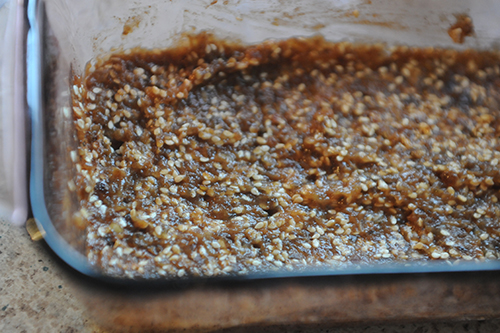
Now for the filling. You probably can't buy date paste at your local supermarket (I can't), so just get some dried dates and put them in your food processor with a little water. You don't want it to be soupy (it should definitely be a paste) so make sure you don't add too much water.

Add the cinnamon, nutmeg and sesame to the date paste.

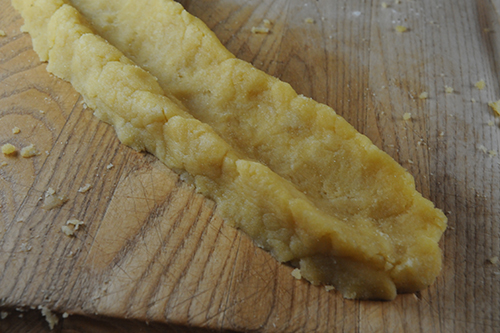
Divide the dough up into four parts and add a little bit of the blossom water to each one until the dough becomes smooth and easy to work with. Now roll each one out into a long cylinder, and then put a furrow in the middle of it, like this:

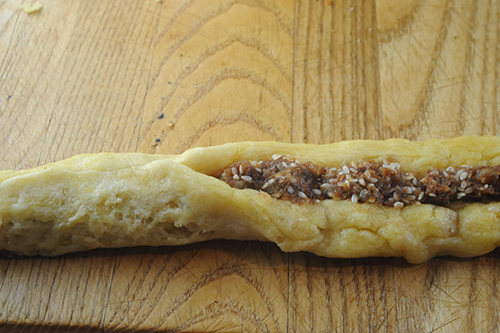
OK now put the date paste into the furrow. The recipe says to roll out the date paste too, like you did with the dough, but mine was the wrong consistency for that so I spooned it in.

Pinch the edges of the dough together over the date paste and roll until smooth. Now cut at an angle into small pieces about half a finger length in size.

Bake at 450 degrees for 12 minutes or until golden. Pour half the syrup over and let stand 15 minutes, then turn each cookie over and pour the rest of the syrup on. Sprinkle with sesame seeds and let rest before serving.

Now let's make the salad:

First boil the broad beans and artichoke bottoms until tender. I used canned versions of both, so I got to skip this step.

Meanwhile, put the garlic and chiles in your food processor and pulse until finely chopped. Add the salt, lemon juice and olive oil and toss with the beans and artichoke bottoms. Easy!

And finally, the fish:

Put all the marinade ingredients in your food processor and pulse until you get a smooth paste. Toss with the fish filets and set aside.

Heat the oil in a pot and add the vegetables. Stir and let cook over a low flame until the onions are translucent. Add the rice and the spices, and stir well.

Pour in the fish stock and turn the flame up to medium. Let simmer until the water is just above the level of the rice. Stir, then cover and reduce heat. Let cook for 30 minutes. 

Meanwhile, whisk the egg together with the water. In a large bowl, mix the flour with the breadcrumbs. Dip each fillet in the egg mixture, then the breadcrumb mixture. Deep fry until golden, then transfer to paper towels.

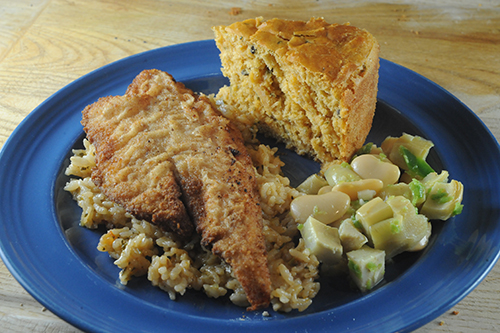
To serve, place some of the rice on each plate and top with the filets. Serve with lemon wedges.

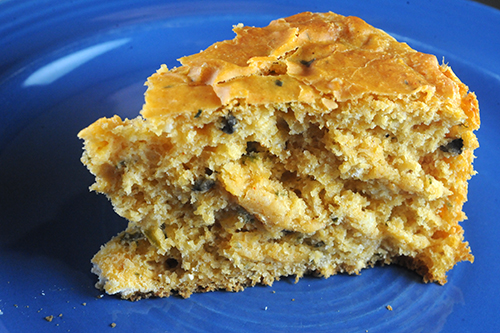
So now that I've relived all these recipes, I can say that I do actually remember this meal, despite the weeks that have passed since I made it. It was a really nice piece of fish and it worked really well with the herbed rice. I liked the salad, too--it was nice and simple. The bread I could have done without. It was OK, but it had a cake-like texture that kind of clashed with the savory herbs. My kids didn't love it, either.

The date cookies were delicious. I ate way, way too many of them.

I actually bookmarked a lot of recipes from Libyan Food, and will probably try a few more. I'd say the food was a nice medium between Middle Eastern food and some typical African dishes. Simple, but with flair.

Next week: Liechtenstein


Copyright 2023 Becki Robins and Palfrey Media.. Powered by Blogger.

Blog Flux

Blog Directory