Recipes from Marche, Italy

For this entry, I made two recipes. Neither of them were especially good, but I don't blame the people who posted the original recipes or any of the traditions they came from, I blame myself and my propensity for Googling things that might kill me.

Recipes from Marche, Italy: Brodetto

A seafood stew with mussels and clams, minus the Vibrio.

Recipes from Marche, Italy: Filone Casereccio

An Italian bread that will come out much better than mine did if you use fresh brewer's yeast and steam.

Recipes from Malta

This is actually the third time I’ve cooked a meal from Malta. The first time, I cooked the meal and then just did not write the blog post. Years went by.

Recipes from Malta: Imqarrun

Imquarrum (also called Imqarrun il-forn) is descended from a dish served in Sicily, but the Maltese have adopted it as a traditional staple. The key to making this dish is to be patient.

Showing posts with label Caribbean. Show all posts

Thursday, April 17, 2014

Recipes from Jamaica

Years ago I found a recipe for Jamaican Jerk Chicken somewhere on the internet. I cooked it, and my husband-to-be fell in love with it. He loves that recipe so much, in fact, that almost without fail he asks me to make it every year for his birthday and for father’s day. I make Jamaican peas and rice to go with it, and I have to admit that I love both recipes almost as much as he does.


I can’t really say that makes me familiar with Jamaican food, though. It makes me darn near an expert at cooking jerk chicken and peas and rice, but that’s as far as my experience with Jamaican food goes. But I did have the very good fortune of having some help with this entry in the form of a reader who contacted me a very long time ago—years ago, actually, when I did my Bahamas entry—with a suggestion for a Jamaican cookbook. I was more than happy to make this purchase because if jerk chicken is anything to go by, I like Jamaican food. But the book has mostly been sitting untouched in my kitchen because I kind of felt like it would be cheating to try and cook something from it before I actually got to Jamaica. Anyway, this book, called The Real Taste of Jamaica by Enid Donaldson is the source for two of this week’s four recipes.

7-mile beach in Jamaica. Photo by Michael McCarthy.
So if you don’t know anything about Jamaica, then you clearly haven’t listened to enough reggae music. Ack! Sorry, stereotype. But it is true that reggae originated in Jamaica, and so did ska, rocksteady, dancehall and some lesser-known musical genres. James Bond was also born in Jamaica, sort of—author Ian Fleming lived there and used the island as a setting for several James Bond novels.

Jamaica has a rich history, some of it good, some of it not so good. It was originally a Spanish territory but was of course eventually conquered by England, because in those days England thought it ought to own everything. When this happened the Spanish settlers fled, leaving their slaves behind. Those slaves retreated to the mountains and established free communities there that flourished for many generations, even while the British brought their own slaves to the island to work on the sugar plantations. After slavery was abolished, the British plantation owners brought in Indian and Chinese indentured servants, and their descendants still live on the island today, along with the descendants of those original slaves.


Jamaica gained independence from Great Britain in 1962, though Queen Elizabeth is still pretty sure she’s their sovereign. The island is really a commonwealth realm, though, which means it is a sovereign state that is a member of the British Commonwealth of Nations.

Jamaican cuisine is, of course, famous for jerk spice, which I will not be using because as you know, I don’t like to cook things I already have in my repertoire for these Travel by Stove meals. Instead I chose the following main course:

Jamaican Curry Chicken
(from The Real Taste of Jamaica)
  • 1 whole chicken (3 to 4 lbs)
  • 2 limes
  • 3 cloves garlic, minced
  • 2 stalks green onion, minced
  • 1/4 inch ginger root
  • 1 1/2 tbsp curry powder
  • 1 pinch allspice
  • 1 tsp sugar
  • 2 tsp salt
  • 2 tbsp oil
  • 2 cups water
  • 3 medium potatoes, diced
On the side (though this is often served as a meal on its own)

Jamaican Seasoned Rice
(from Jamaican Recipes)
  • 2 sprigs thyme
  • 3 stalks green onion
  • 1 small tomato, diced
  • Oil
  • 2 oz butter
  • 3 cups long grain rice
  • 1/4 salted cod filet
  • 1 habanero pepper (optional)
  • 6 cups water
  • 1 tbsp catsup
  • Salt to taste
Some bread:

Coco Bread
(from Cook Like a Jamaican)
  • 4 cups all purpose flour
  • 2 tbsp sugar
  • 1 tsp salt
  • 2 1/2 tsp quick-rise yeast
  • 14 oz coconut milk
  • 4 tbsp butter, melted
And for dessert:

Rum Balls
(also from The Real Taste of Jamaica)
  • 1 1/2 cup cake crumbs (or crushed biscuits*)
  • 1/2 cup raisins
  • 1 1/4 cup grated coconut
  • 1/4 cup lemon juice
  • 2 tbsp cocoa powder
  • 3 tbsp rum
  • A few tbsp condensed milk, as needed
  • grated coconut
*Only in America are biscuits those fluffy buttermilk things that come in a pop-open can. In most other nations, “biscuits” are hard, thin, slightly-sweet wafers.

First the bread:

Mix the dry ingredients together with the yeast (the recipe didn’t say to proof the yeast first, which I thought was a bit odd). Now heat the coconut milk to lukewarm and mix in 2 tbsp of the melted butter.

Add the wet ingredients to the dry and mix until you get a soft, slightly sticky dough. Turn out onto a floured surface and knead until smooth (about 10 minutes).

Or, just put it in your bread machine (which is what I did).

Now grease a bowl with some of the melted butter and put the dough inside. Cover and let rise in a warm place until doubled in bulk (about 1 1/2 hours).

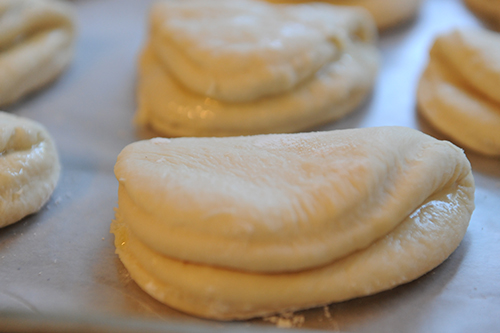
Preheat your oven to 375 degrees. Meanwhile, roll out the dough and divide into eight pieces. Cut each one into a circle (I used a small bowl), then brush with butter and fold over to make a semi-circle.

Place the dough pieces on a baking sheet lined with parchment paper. Brush the tops with butter and bake for 15 to 20 minutes or until golden.

You will need to chill the dessert, so do that next:

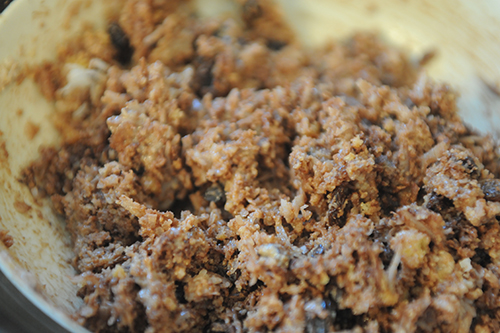
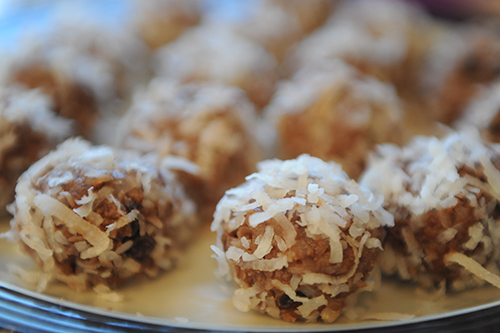
Mix the first six ingredients together and then add a little bit of condensed milk, just enough to hold everything together. Transfer to the fridge and let chill for about 30 minutes, then take a little bit of the mixture out and roll it into a ping-pong sized ball. Roll the ball in the shredded coconut. Keep going until you’ve used up all the mixture. Return to the fridge and chill until ready to serve.

And now for the chicken:

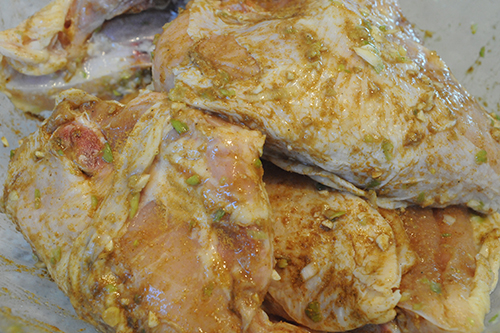
I was a little confused by this recipe, because it called for a whole chicken and then it said to cut up the chicken while frozen so the bones don’t splinter, that way it “will be better enjoyed at eating time.” Which I interpreted to mean I should cut it into legs, thighs, breasts etc. until I went back and noticed the part that said 1 1/2 to 2 inch pieces, so oops. I cooked mine on the bone, and I guess I was supposed to take it off the bone and serve it in bite-sized pieces instead.

Anyway, once you do this correctly you are supposed to add the lime juice to some water and use it to wash the chicken. Drain well.

Mix together the garlic, green onions and ginger and then spread over chicken. Let sit in the fridge for 30 minutes. Mix the rest of the spices together and rub over the chicken. Put back in the fridge for another hour.

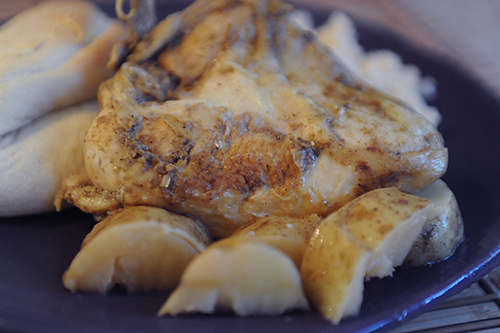
Now brown the chicken in 2tbsp oil. Add 2 cups water and the potatoes. Bring to boil then reduce heat and simmer for 20 to 30 minutes or until chicken is cooked through and tender.

Serve with mango chutney.

Finally, the rice:

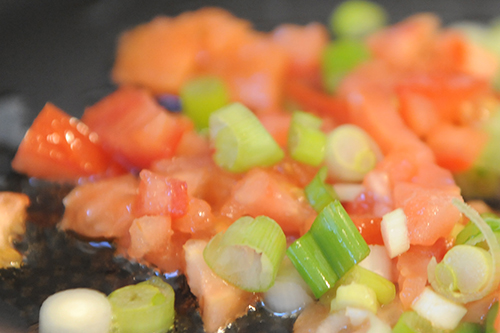
Boil the salted cod with one of the two sprigs of thyme. Meanwhile, saute the tomato in a little oil with the green onion and the second sprig of thyme.

When the salted cod is cooked all the way through, take it out of the pot and flake it (mine was quite tough so I just chopped it into little pieces).

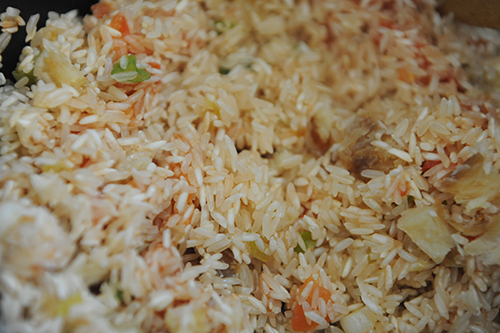
Add everything but the butter, stirring well. Add salt to taste. Cook uncovered over a medium flame for 10 minutes, then add the butter. Simmer for a few more minutes, or until the water disappears beneath the surface of the rice. Now cover the pot and turn down to medium low. Simmer until the rice is tender and the water has been absorbed.

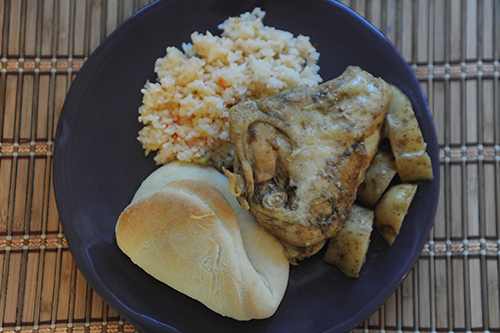
What we thought: The chicken was really good with a nice subtle flavor. I actually think it would have been better with a spicier curry sauce (can’t do that to my kids though) and I also think it would have been more flavorful if I had actually cut it up into bite-sized pieces. I liked the rice but I think I may have made a mistake with the liquid because it turned out way too sticky, and I don't think it was supposed to be that way. And although I do like recipes that include salt cod this one was a bit too salty and fishy for my tastes. I guess I prefer my salt cod in a spicy sauce rather than as the source of flavor. 

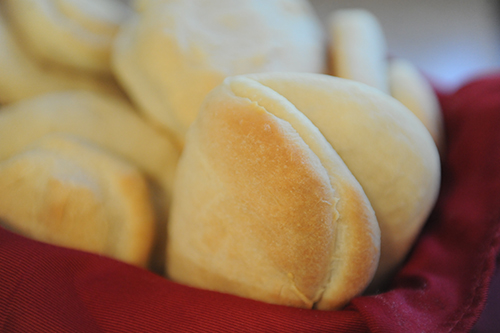
The bread was the highlight of this meal for everyone. It was really soft and had a mild coconuty flavor. My kids were so afraid they weren’t going to get seconds that they raided the bread basket before they’d even finished eating their firsts. They were really angry at me when I ate the one leftover roll the next day. Hailey actually cried because she wanted to have it with her dinner. I know, I'm such a mean mom.

The rum balls were good, but a bit strange. Martin said they had a sour aftertaste that he didn’t like, but then he kept eating them. Of course I didn’t spend a ton of money on the rum I used, so a higher quality rum probably would have improved them.

So thank you dear reader for that book suggestion, and now that I have fulfilled my obligation to Jamaica I’ll be making a few more recipes out of that book, though probably not the calves feet jelly and pickled cow tongue.

Next week: Jan Mayen
Tuesday, April 8, 2014

The Great Jug Jug Blow-Back

Every blogger has a controversial post, the sort of thing that invites scathing criticism and hate mail. Of course if you're The Alpha Parent or Free Range Kids then pretty much everything you write ends up being controversial. For me, it was just jug jug.

If you're a longtime reader you may remember jug jug ... It's the beloved Christmas dish served in Barbados. So beloved, in fact, that woe be to any blogger who gets it wrong.

Not everyone who complained about my take on jug jug was full of such blind fury that they couldn't even see straight long enough to, you know, send me a better version of the recipe. I did have one reader who did not make me feel like an awful human being, and had a recipe from a favorite Bajan cookbook that she was kind enough to post. So I have to begin by apologizing for just how long it took for me to get around to making this new version of jug jug, and then I have to say that her recipe was indeed about a million times better than the one I originally used.

Which brings me to my next point, the recipe I originally used. Now, all the jug jug related hate mail I've received was aimed directly at me, as if I'd somehow devised an evil version of jug jug out of my cruel and sadistic imagination, just for the sole purpose of giving jug jug and Barbados a bad name. So I feel I must point out that the recipe I used came from what I believed to be an authentic Bajan source, and I followed all the directions faithfully and used all the required ingredients, right down to the cassava flour (instead of guinea flour) that that particular recipe gave me permission to use as a substitute. Here's the original recipe, and as you can see it is pretty significantly different from the version sent to me by my reader, which is as follows:

Jug Jug
  • 4 cups water
  • 8 pints green pigeon peas
  • 1/2 lb salt meat, soaked
  • 1/2 lb pork, cut into bite sized pieces
  • 1/4 lb green seasoning (see below)
  • 3 springs fresh thyme
  • 3 stems fresh marjoram
  • 1 cup guinea corn flour
  • Salt and pepper to taste
  • 2 tbsp butter
And here's my reader-approved green seasoning recipe:

Lady Jane's Perfect Pinch
(From Lady Jane)
  • 1 bunch green onions, chopped fine
  • 1 habanero pepper
  • 1 small bunch parsley
  • 1 small bunch dill
  • 1 sprig thyme
  • 1 sprig marjoram
  • 3 garlic cloves, grated
  • 1 small onion, grated
  • Lime juice to taste
  • Splash of vinegar
  • Pinch of salt and pepper
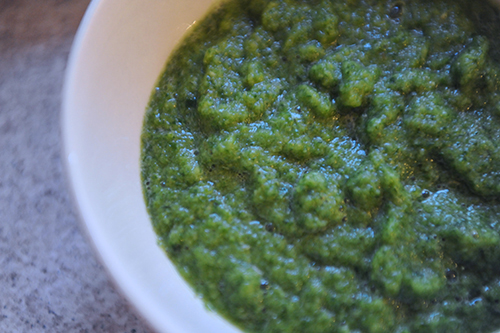
The seasoning is easy, so make that first. Just chop everything as instructed and then mix it all together. I put mine in a food processor to get it nicely mixed. That's all!


Now make the jug jug:

First boil your pigeon peas until soft. I had some canned peas so I got to skip that step. Now, you're meant to reserve the cooking water but I just substituted the liquid from the can.

Cut up the salt meat into bite-sized pieces and fry with the pork pieces. Add the perfect pinch seasoning, the habanero, herbs and the reserved water.

Now fish the meat out of the water, put it in a food processor with the peas and grind it all up together. Meanwhile, add the guinea flour to the water and cook until you get a nice porridge-like consistency. Add a little bit of water as needed if the mixture is too thick.

Transfer the meat and peas back to the pot and season with salt and pepper. Mix well and cook over medium heat for 30 minutes, stirring often. Top with a few pats of butter and serve.

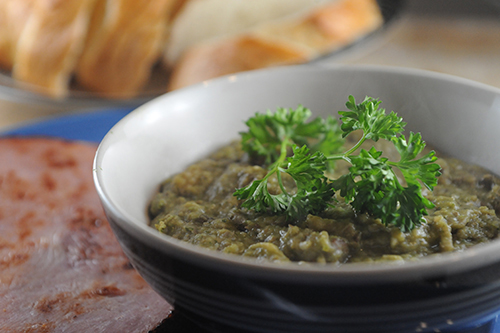
So I hope I have vindicated myself with this dish. It was a lot more flavorful and had a nice texture compared to the first recipe I tried to make, and it looked the way I'm told it's supposed to look; the first one was quite watery and this one had more body. I served it with some fresh bread from Safeway's bakery and some ham steaks, which I actually fried instead of boiled. It was a good meal, almost like Christmas, except without the turkey and cranberry sauce. :)

Thursday, January 2, 2014

Recipes from Haiti

Hey! Welcome to 2014, and the H’s. We’re opening up a new year with a new letter of the alphabet, how’s that for a clean slate?

I hope your holiday was lovely, and that you’re not dreading the first half of the year like I am. Because for me, it’s birthday party planning just about every month until May. I’d say my least favorite thing about being a mom is birthday party planning. So, I’m just going to put it out of my mind and tell you about Haiti instead.


If you’re up on current events the first thing that probably pops into your head when you hear the name “Haiti” is that 7.0 earthquake of 2010, which devastated an already suffering population. Haiti is a poor nation, and as with many poor nations it has an unstable government that was wholly unprepared to handle the aftermath of such an event.

So most of us on the outside have probably been rightfully fixating on that quake and its impact on Haiti, forgetting entirely the inspiring early history of that nation. Haiti was the first independent nation in Latin America and the Caribbean—but most importantly, it was the only nation in the whole world that was established after a successful revolt by slaves. In fact, all of Haiti’s original leaders were former slaves. That’s pretty cool, and it’s a great legacy for this small Caribbean nation.

 Fort St. Joseph - Fort-Liberté, Haiti. Photo by Nick Hobgood.

Sadly, Haiti doesn’t benefit as much as it ought to from its location in the Caribbean, at least not as far as the tourism industry is concerned. That’s because Haiti is not really a safe place for tourists, who sometimes get kidnapped or murdered while on holiday there. So tourists often prefer neighboring Dominican Republic, and then of course they miss out on the food.

Haitian food is good. Its style is a blend of French, African and Taíno (the aboriginal population), and it’s flavorful. It’s Caribbean, but with it’s own flare.

Here are the two recipes I chose for my culinary trip to Haiti:

Tassot (stewed meat)
(from Everything Haitian)
  • 2-3 lbs beef or goat, cut into bite-sized pieces
  • 1/2 cup orange juice
  • 1/4 cup lime or lemon juice (I used lemon)
  • 1/2 cup vegetable oil
  • 1 tsp parsley
  • 1 tbsp garlic, minced
  • 1 tbsp onion powder
  • Salt and freshly-ground black pepper to taste
Diri kolé ak pwa (beans and rice)
(from Kreyol Cuisine)
  • 3 cups basmati rice
  • 1 cup red beans
  • 8 cups water
  • 5 tbsp oil, divided
  • 1 tsp margarine
  • 1 large onion, diced
  • 3 cloves
  • 3 cubes chicken stock
  • 1 hot pepper
  • 2 chopped shallots
  • 2 cloves garlic
  • 1 tsp salt
  • 1 tsp ground pepper
  • 1/2 tsp thyme
I also bought the ingredients for a dessert called “Bonbon Sirop,” but in the end decided not to make it. Honestly, I’m sick of sugar. I know, I bet you never thought you’d hear me say that. But after several weeks of fudge, pie, cakes and cookies I really am done with sweets for a while. So if you decide to make Bonbon Sirop, please let me know how it came out, because I don’t think I’m going to get around to it any time soon.

The two recipes I did make were really easy. Here’s how, starting with the tassot:

Now, I did not use goat for mine even though I have some in my freezer. In retrospect, goat would have been great for this dish because you can cook it for as long as it takes to get a tender meat. My goat is all on the bone, though, so I would have had to endure my husband moaning about “booby-trapped meat,” as he often does. So I used stew beef instead. But really, I think you could do this in a crockpot with even a tougher bit of goat and it would be delicious.

OK, first put all the ingredients except for the vegetable oil in a large bowl. Toss and let marinate in the fridge for 3 or 4 hours.

Now move the whole lot to a pot and add just enough water to cover. Bring to a boil, then reduce heat. Cover and let simmer until the meat is tender.

Now heat the oil in a large frying pan. Remove the meat from the pot with a slotted spoon and fry it in the oil until it’s golden brown all over. I know, this seems backwards, but it works. Trust me.

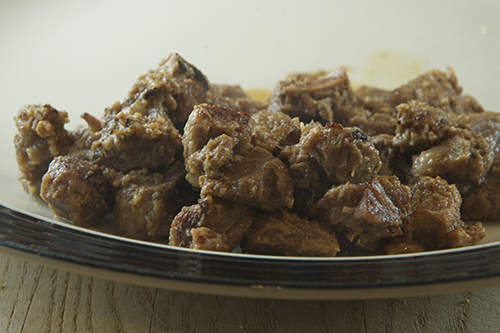
It doesn't look very exciting, but it really is very tasty.

Now for the beans and rice: First rinse the beans and transfer to a large pot with 8 cups of water and a tablespoon of the oil. Bring to a boil and cook for an hour or two, until they start to split. Drain but keep the cooking water.

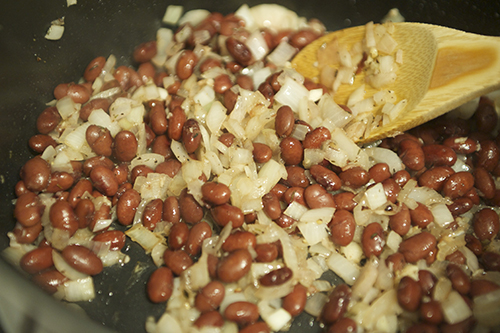
Heat 3 tablespoons of the oil in a large frying pan and saute the onions, garlic, and shallots until they start to soften. Add the spices, the red beans and the stock cubes.

Now add 6 cups of liquid from the beans (I didn’t have that much left over, so I had to top it off with water). Bring to a boil, then add the rice and the hot pepper.

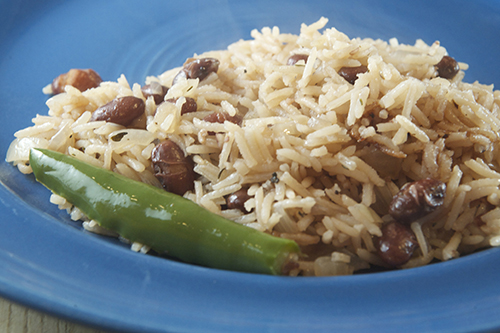
Cook uncovered over low heat until all the water has been absorbed. Now add the last tablespoon of oil and the butter. Cover the pan and make sure the flame is on a medium-low setting. Cook for another 15 minutes. Have faith! I know it seems like you’re going to burn the rice, but you’re not. You’re going to get a nice golden crust on the bottom and rice that is the most perfect texture ever.

Now, let me preface this by saying that I used to only ever boil rice. After doing this blog for a few years I now understand that boiling is the dumbest way to make rice. Sure, you get edible rice but you can’t get that wonderful, fluffy texture unless you make it in the above (or similar) manner.

My rice and beans came out perfectly. In fact I almost cried when I realized that the leftovers had been buried under a bunch of holiday leftovers and forgotten about, and I had to throw them out. Because this was probably one of my life’s top five beans-and-rice experiences. It was flavorful, but that texture, oh-my. You just can’t underestimate the importance of good texture in food.

The meat was also very delicious. Mine was a little dry, but that was my own fault for not keeping it topped up with water. Like I said, I think I would do this again in a crockpot. The flavor was really good and the crockpot would make a tender beef (or goat!) without drying it out too much.

So there you go, the first TbS meal of 2014—and it was a good one! I love when things start off well.

Next week: Heard Island and McDonald Islands

For printable versions of this week’s recipes:

Thursday, December 19, 2013

Recipes from Guyana

Some people like to shoot deer. Me, I wish I liked to shoot them, because they keep eating my tomatoes. I don't have it in me, though. Deer are too beautiful. Of course, around here they are like pigeons, except there are more of them and they're only about half as useful.

I was going somewhere with this, where was it? Oh yeah, people like to hunt. Everyone does, even those of us who don't like to hunt animals. We like to hunt other things, like maybe a bargain or that rare penny to add to a coin collection or maybe sea glass on the beach. Me, I like to hunt for exotic ingredients. And also sea glass on the beach.

So that's why I've had a bottle of cassareep in my pantry for the last maybe year and a half. Because it was that long ago that I decided to make pepperpot when I got to Guyana, mostly so I could go hunting for that critical ingredient. Cassareep was not easy to track down and when it arrived it had leaked all over the inside of the box, but damn it, I'd bagged me some cassareep. And that's where it's been sitting for the last 18 months.

So yeah, Guyana. It is the world's 500 billionth Caribbean nation. Sorry, that's just me being cynical, because I've made a lot of Caribbean food in the last couple of years. Anyway, Guyana is actually distinct from most of the other 499 billion 999 thousand 999 Caribbean nations in that it is not an island, but rather a country on the northern coast of South America.


I hate to just hone right in on the notorious stuff, but you know it makes for better reading than "British colonization followed by independence followed by blah blah." If you know anything about Guyana you know where I am going with this: Jim Jones. Yes, sadly this nation was the site of that notorious cult suicide of 1978, when cult leader Jim Jones ordered 918 people (including more than 300 children) to drink a concoction of cyanide-laced Kool-Aid. Which they did. That event went down in history as the "greatest single loss of American civilian life in a deliberate act," a title it held until September 11, 2001.

 Kaieteur Falls from Potaro. Canyon, Guyana. Photo by Alan Hopkins.
So now that I've brightened your day, let's get on to the food. Guyanese food is pretty typically Caribbean; a mixture of African, creole, Amerindian and British influences. The Guyanese enjoy curry and roti as well as typical Caribbean-style peas and rice. And, of course, pepperpot.

Here's that recipe:

Pepperpot
  • 2 lbs stewing steak (pork or beef) or brisket
  • 2 pigs' feet (optional)*
  • 2 lbs oxtail
  • 1 cup cassareep
  • 2 red hot peppers
  • 1-inch cinnamon stick
  • 3 whole cloves
  • 2 oz sugar
  • Salt to taste
  • 2 sprigs basil
  • 1 bunch thyme
  • 1 large onion, chopped
  • 3 cloves garlic, chopped
* The pigs' feet will help thicken the stew. I left them out of mine, because ew.

And something to mop up the juices:

Dahl Puri

For the filling:
  • 1 tsp salt
  • 1/4 tsp turmeric
  • 2 cloves garlic
  • 1 tsp ground cumin
  • 2 cups yellow split peas
  • 1/4 of a scotch bonnet pepper
For the dough:
  • 3 cups all purpose flour
  • pinch fast acting yeast
  • 1/4 tsp salt
  • 2 tbsp baking powder
  • water
  • 5 tbsp vegetable oil
And also a dessert, because I just couldn't resist:

Salara (Red Coconut Cake)
  • 1 tbsp dry yeast
  • 1/4 cup warm water
  • 1 tbsp plus 1/4 cup brown sugar
  • 1 cup milk
  • 1/4 cup butter, melted
  • 1 tsp salt
  • 3 cups flour
  • 1 egg, beaten
  • 1 egg, separated
For the filling:
  • 3 cups sweetened, shredded coconut
  • 1/2 tsp cinnamon
  • 1/2 tsp vanilla extract
  • 1 tbsp red food coloring
For the glaze:
  • 1/4 cup granulated sugar
  • 1/2 cup water
Let's make the cake first. It's actually a lot simpler than it looks.

First dissolve all that yeast in warm water with a tablespoon of sugar. Let it stand for 10 minutes or until frothy. Now gently heat the milk until warm and add the rest of the sugar, stirring until dissolved. Whisk in the butter and egg.

In a separate bowl, sift the flour together with the salt. Add the yeast mixture along with the milk/butter and mix thoroughly, preferably with an electric mixer. Now pour in the flour and keep mixing until you get a soft dough.

Now, I don't really know what went wrong with mine. It wasn't a dough, it was a batter. That could have been because I measured something wrong. Something terribly, terribly wrong. But it could also be because the recipe was wrong. I do intend to try again and will post an update when I know for sure--but in the meantime if you make this recipe do tell me what your results were.

Anyway I just turned my batter into dough by mixing in maybe another half cup of flour (just keep adding it until you get a soft, bread-like dough).

Ok now knead your dough ball on a floured surface or let your bread machine do it. Butter a bowl and transfer the ball to it, then cover with a damp towel. Let rise for an hour or until doubled in size.
Meanwhile, combine the ingredients for the filling and set aside.


Now turn the risen ball out onto a large, floured surface. Punch down, then roll into a large rectangle shape . Brush the edges with the egg white and then spread that bright red coconut filling evenly over the dough, almost but not quite to the edges.

Now roll the dough lengthwise into a log shape and seal the edges.

Brush with the egg yolk, cover loosely with plastic wrap and let rise for maybe another hour.

Bake at 350 degrees for 20 or 30 minutes or until a beautiful golden color.

During the last 10 minutes of baking, make the glaze. Dissolve the sugar in the water and heat in a small saucepan until boiling. Boil for 5 to 10 minutes. Brush over the finished Sahara and then let cool. Devour.

OK now let's do the Dahl puri. I was pretty seriously intimidated by this recipe but it really wasn't that hard, just wordy. I'm going to try to edit it down to make it seem a little less scary.

First rinse the split peas. Meanwhile, boil 5 or 6 cups of water in a large saucepan and add the peas, salt and turmeric. Reduce heat and let boil for 20 minutes or until soft. Drain and let cool.

Meanwhile make your dough. Mix the flour with the salt, yeast and baking powder. Add water until you get a firm dough. Shape into a ball, cover with plastic wrap and let rest for 20 minutes.

Transfer the cooled peas to a food processor and process until they look kind of like bread crumbs. You should have no whole peas remaining.

Divide the dough into six smaller balls. Flatten the first one and then shape into a sort of shallow bowl. Dust with a little bit of flour and then fill with some of the split pea mixture. 

Now fold over the edges and pinch together to seal. You should end up with a good sized ball. Repeat until you have six split pea filled balls.

Ok here's the tricky bit. Put one of the balls on a floured surface and then very gently roll it flat. If you've done everything right, your disk should be about 12 inches wide and an eighth of an inch thick and none of the filling should burst through the dough. Miraculously, this actually came out right when I did it, though I think my dahl puri were a bit smaller than they were supposed to be. I do think this is probably the first time I've done a recipe like this and not had it turn into a pathetic mess.

Continue until all the balls are rolled flat. Then heat some oil in a large, nonstick skillet and cook for about 30 seconds on one side. Flip, brush with oil and cook for another minute or so. Repeat until your dahl puri is starting to puff up and turn golden.

Now for the pepperpot. If you’re using pigs’ feet you’ll need to boil those first until about half cooked, skimming that yucky stuff off the surface of the water. No I don’t mean the whole pigs' foot.
Add the rest of the ingredients and make sure they are covered with water. Now, the recipe didn’t say what to do with that pepper, so I just dropped it in whole. But my result really didn’t have a lot of pepper flavor so I wonder if that was the right move. I think if I had it to do over I would chop the pepper up instead. Whatever you choose to do, bring to a boil, then reduce heat and simmer until the meat is tender.

Add some salt and sugar to taste. Easy-peasy.


So now that I’ve finally had a chance to use that cassareep I worked so hard to obtain and which sat in my kitchen cabinet for all those months, what did I actually think about the pepperpot?

Well, it was OK. I liked it well enough, but to be honest the cassareep just tasted like molasses. In fact I think you could probably get away with just using molasses in your pepperpot and you wouldn’t really know the difference. The whole dish was really sweet and could have been spicier. I think I was right, that pepper probably should have been chopped up.

Now, I do have to wonder if maybe my cassareep was the right stuff. Wikipedia describes cassareep as the “bitter exctract of cassava,” and it really didn’t taste all that bitter to me. I wonder if it’s usually made with molasses or if that was just for the benefit of the American market. Oh well, unless a Guyanan emails me with the answer, I guess I’ll never know.

I did like the dahl puri. I liked it a lot, though I would add a little salt to the split peas if I made it again. They really came out shockingly perfect and they tasted very good, though they do fall apart if you try to tear into them vs. just biting into them whole.

Now for that cake, oooh it was really good. The glaze gave it just enough sweetness on the outside but it was really quite sweet and coconutty on the inside, too. I swear I gained at least two pounds eating this stuff because the loaf was enormous. I didn’t hoard it, either; everyone in my family was stuffing themselves with it.

So yes, very good overall, especially the bread and the dessert. As for the cassareep, well, I didn’t use it all and it went back into the cabinet. Where I suppose it will stay for another 18 months. At least.

Next week: I'm posting my list of favorite recipes for 2013! I'll get back to nation-hopping the week after.

For printable versions of this week's recipes:

Thursday, October 31, 2013

Recipes from Guadeloupe

Once, I used to complain about how many nations there are in the Caribbean. Can you imagine that? In my defense it was really more because of my abnormal love of variety. If you want to know what I'm talking about, ask my poor kids, who never know what to expect at the dinner table, and not just on blog nights. I only have a handful of recipes that I make regularly, and by regularly I mean a couple of times a year on average. The rest of the time I'm filling their plates with scary, scary experiments. And then when I actually do cook something they like they have to wait another six months before I get around to making it again.

So I got kind of tired of the Caribbean in those early weeks of this blog. But now, I really, really wish I was spending as much actual time in the Caribbean as I've been spending there this month. There is some good food in the Caribbean. I don't know if this is because the tourist trade compels all those excellent chefs to come up with new and flavorful dishes or if it's just the climate and all the lovely and exotic ingredients that grow there. Anyway Caribbean food is tasty and I should be happy to make more of it.

And that brings me to Guadeloupe, a small group of five islands in the Lesser Antilles. I'm sure you will be shocked to hear that people have been fighting over this particular 629 square miles since the 8th century, when the Caribs fought the Arawak, or so sayeth Wikipedia, the Source of All Knowledge (citation needed). After that Christopher Columbus came along and "discovered" the pineapple on the islands, which had actually been grown in parts of South America for who knows how long but hey, Columbus didn't actually "discover" America, either.

So then the Spanish fought the Caribs and the British fought the Spanish and then somehow the French ended up owning it all, which of course pissed off the British and then they all started fighting each other again. Eventually the French came out on top and now the islands are an overseas region of France. Hope it was worth it.

Le Gosier, Pointe-À-Pitre, Guadeloupe. Photo Credit: rachel_thecat
All this fighting and changing of hands did have the happy side effect of contributing to a unique and delicious cuisine, which is largely Creole in character with shades of African and Asian flavors. Despite the small size of Guadeloupe it was actually difficult to narrow down my menu and I had to leave one or two things out. Here's what I finally settled on:

Bokit au Poulet
(I am missing the source for this recipe. Does anyone recognize it?)

For the rolls:
  • 1 1/3 cup flour
  • 1 tsp lard
  • 1/3 cup water
  • 1/2 tsp salt
  • 2 1/4 tsp active dry yeast
  • 1/2 cup warm water
For the filling:
  • One 3 1/2 lb chicken
  • 1 whole allspice
  • 2 cloves garlic
  • 1/2 onion
  • 1/2 tsp salt
  • 1/2 tsp French 4-spice blend
  • 3 1/2 tsp oil
  • 3/4 tsp red pepper paste
  • 1/4 tsp mixed dry herbs (I used a poultry seasoning)
  • Juice of 1 lemon
  • 3/4 tsp colombo powder
  • 4 turns of the pepper mill
  • 2 green onions, chopped
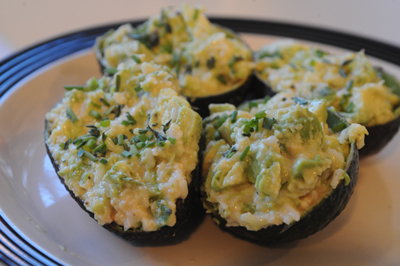
Creole Avocado
(This recipe comes from Myguadeloupe.ca)
  • 2 avocados
  • 2 tbsp uncooked long grain rice
  • 1 can crabmeat
  • 4 tbsp mayonnaise
  • 1 tsp mustard
  • 7/8 cup oil
  • 1 tbsp ketchup
  • 1 tbsp lemon juice
  • 1 tbsp finely chopped herbs
  • salt and pepper
Pigeon Peas
(This recipe is from Recette Guadeloupe)
  • 2 lbs dried pigeon peas
  • 6 tomatoes, blanched and peeled
  • 2 onions
  • 2 cloves garlic
  • 1 tbsp oil
  • 1 carrot
  • Chives
  • Parsley
  • 1 bouquet garni
  • Salt and pepper to taste
  • 3/4 lb bacon
  • Olive oil
Pineapple Banana Cake
(This recipe is from Bananas Guadeloupe & Martinique)
  • 2 bananas
  • 4 pineapple rings
  • 6 tbsp salted butter, softened
  • 2 eggs
  • 2 cups flour
  • 1/2 cup brown sugar
  • 1/2 cup water
  • 1 1/8 tsp active dry yeast
  • 1/2 tsp cinnamon
  • 1/2 tsp nutmeg
  • 1/2 tsp ginger
  • 1/2 tsp vanilla extract
First the cake, since it can be made ahead:

Preheat your oven to an unspecified temperature. I chose 350 degrees because the recipe didn't say otherwise.

Now cut up the pineapple. Cream the butter with the sugar then add the eggs. Now you will note that this instruction caught me by surprise, since the ingredient list said nothing about eggs. So I decided to use two, which may not have been the right decision.

Now mix the yeast with the flour and water.

These very vague instructions also didn't say anything about letting the yeast become foamy, or about allowing time for the cake to rise, which is kind of what I thought yeast was for. I'm thinking now that you should mix it all together and then let it sit for an hour before baking it. However that's not what I did.

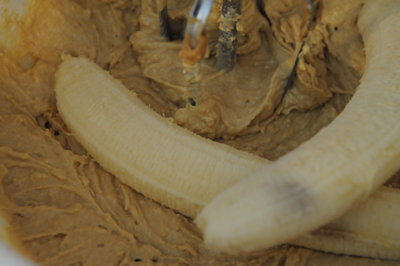
Now add the flour mixture to the the butter/sugar/eggs. Stir in the bananas and pineapple (I just used my electric mixer to make sure the bananas were well incorporated, then I added the pineapple).

Bake for 45 minutes. Wonder what went wrong.

Now for the pigeon peas:

The instructions were for a pressure cooker, but since my peas were canned I was kind of scared of what might happen to them in a pressure cooker. So I did my peas like this:

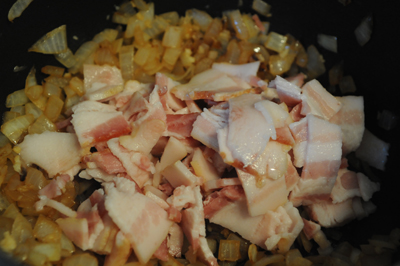
First cut up the carrots into small pieces, but not so small that you won't be able to pick them out, because cooked carrots are gross. Now saute the onions and garlic in the oil, then add the bacon.

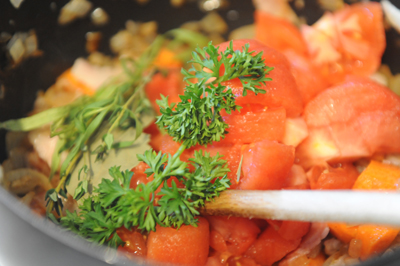
Add the tomatoes and carrots and the bouquet garni and stir for five minutes.

Add the pigeon peas, parsley, chives and salt and pepper. Cook for 15 or 20 minutes and serve hot.

And the avocados, which I think are generally served as appetizers, though I served mine as a side:

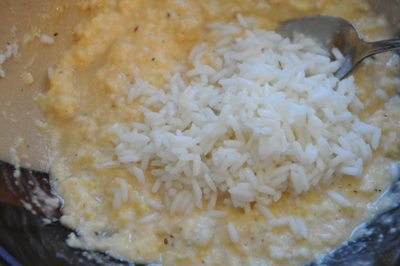
Boil the rice according to how you usually boil rice. Drain and let cool, then transfer to a large bowl. Mix in the mayo and mustard, then add the salt, pepper, lemon juice and ketchup.

Halve the avocados, scoop out the insides (taking care to keep the rinds intact) and dice. Toss with the crabmeat and rice mixture. Now stuff the rinds with the mixture and sprinkle with the chopped herbs. Chill and serve.

And now for the bokit:

Proof the yeast in 3 tbsp of the water. Meanwhile, mix the flour with the lard and salt, then when the yeast is frothy add it to the flour with the rest of the water. Knead for one minute or until you get a firm dough.

Put the dough in a bowl and cover with a damp cloth. Let rise in a warm place for two or three hours.

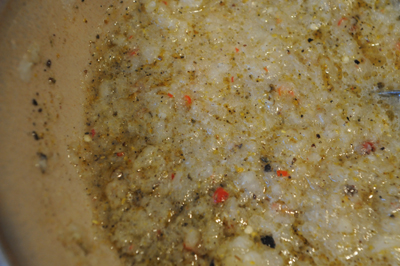
Meanwhile preheat your oven to 395 degrees. Blend the onions with the garlic and allspice in a food processor until you get a paste. Transfer to a bowl and add the spices, dried herbs, pepper, Colombo powder, red pepper paste, oil and lemon juice.

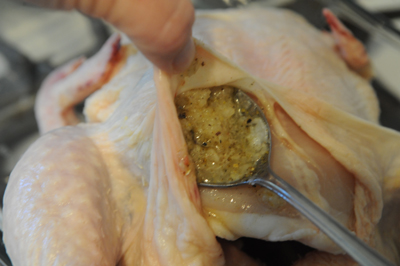
Now loosen the skin on the chicken but don't remove it. Rub the spice mixture evenly under the skin. If there's a little left over, put that inside the cavity.

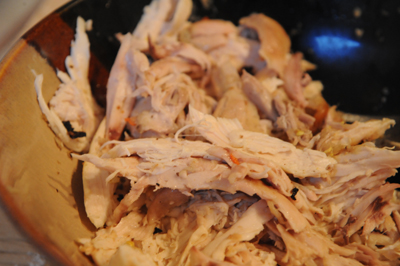
Pour a little bit of water into the roasting pan with the chicken and bake for 50 minutes, or until an thermometer inserted in the thickest part of the thigh reads 175 degrees. Let rest for 10 minutes, then remove the meat from the bones and shred it. Set aside.

Now that your dough has risen, punch down and then shape into individual balls. Let rise another 15 to 30 minutes, then flatten each ball slightly with the palm of  your hand.

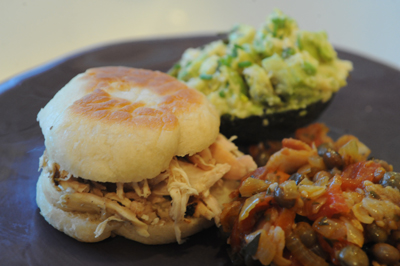
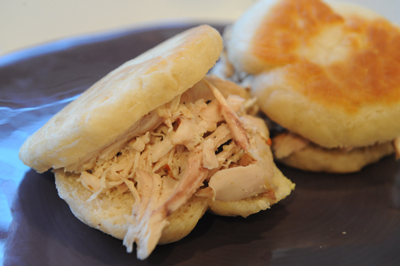
Heat a little bit of oil in a frying pan and cook each roll for a few minutes on each side, turning when golden. Drain, then cut each roll in two and put the filling inside with the chopped green onions.

Here's what we thought: The bokit was really delicious. At least me and the kids thought so, Martin is always so reluctant to rave about anything that isn't the most incredible thing he's ever eaten. He's very conservative with his praise, so whatever. He said it was a very good meal, but he refused to rave. Anyway I thought the chicken all by itself would have been a good Sunday roast, but added to those freshly-made rolls it was quite seriously delicious. The avocados were good too, really really good in an "I would have paid $12 for that as an appetizer" kind of way. The pigeon peas, well, I adore pigeon peas as you may already know. But I didn't like these. It was probably mostly the carrots, but I just thought all that other stuff got in the way of that earthy pigeon pea flavor. I much prefer them simpler, cooked with rice. But I guess they were edible anyway.

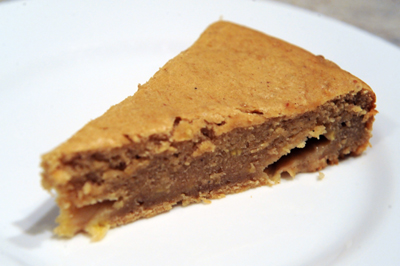
As for the cake, well, something went wrong and I don't know what it was. It was heavy and tasted doughy even though I'm fairly sure I cooked it all the way through. As you probably gathered the directions were incomplete and some ingredients were missing, so I can't take full responsibility this time. I might go scour the internet to see if I can find another version at some point, but not today. 'Cause it's Halloween! Oh by the way, happy Halloween!

Next week: Guam

For printable versions of this week's recipes:


Copyright 2023 Becki Robins and Palfrey Media.. Powered by Blogger.

Blog Flux

Blog Directory