Recipes from Marche, Italy

For this entry, I made two recipes. Neither of them were especially good, but I don't blame the people who posted the original recipes or any of the traditions they came from, I blame myself and my propensity for Googling things that might kill me.

Recipes from Marche, Italy: Brodetto

A seafood stew with mussels and clams, minus the Vibrio.

Recipes from Marche, Italy: Filone Casereccio

An Italian bread that will come out much better than mine did if you use fresh brewer's yeast and steam.

Recipes from Malta

This is actually the third time I’ve cooked a meal from Malta. The first time, I cooked the meal and then just did not write the blog post. Years went by.

Recipes from Malta: Imqarrun

Imquarrum (also called Imqarrun il-forn) is descended from a dish served in Sicily, but the Maltese have adopted it as a traditional staple. The key to making this dish is to be patient.

Showing posts with label Europe. Show all posts

Wednesday, September 27, 2023

Recipes from Malta: Roasted Garlic Ftira

Ftira is kind of like a giant sourdough bagel. According to the Food and Wine Gazette, it's been around since at least the 16th century, when it was baked in the ovens of the Knights of St. John. Of course, Food and Wine Gazette also explains that ftira is a flatbread, and the recipe I made had yeast in it so doesn't exactly fit that definition. Evidently, there are variations. Cue someone from Malta emailing me to say I did it all wrong. 

This recipe is a combination of two recipes taken from different Maltese cooking sites. The first recipe told me how to make the ftira, and the second told me how to dress it up. 


Ingredients

For the bread:
  • 4 oz sourdough starter
  • 1 ½ tsp active dry yeast
  • 1 ¼ cup water
  • 3 ½ cups baking flour (give or take)
  • 2 tsp sugar
  • 2 tsp salt
  • 2 tbsp olive oil
  • For the topping:
    • 2 whole heads of garlic
    • 1 stick of butter, softened
    • ½ tbsp chili flakes
    • Mild cheddar cheese, shredded
    • Extra sharp cheddar cheese, shredded
    • Emmental, shredded
    • Gouda, shredded
    Instructions
    1. Add all the bread ingredients to your bread machine and mix on the dough setting. 

    2. Take the dough out of the machine and shape into a round loaf.

    3. Cut a hole in the middle of the loaf.

    4. Let rise until your loaf doubles in size.

    5. Meanwhile, slice the tops off of the garlic bulbs and place them in a small baking dish. Drizzle with olive oil and sprinkle with salt and pepper.

    6. Roast the garlic at 400 degrees until the cloves are creamy. Take out and let cool.

    7. When the bread is done rising, turn your oven up to 425 and bake for 12 to 15 minutes (longer if it isn’t a nice golden color yet)

    8. Take the bread out and let it cool, then slice it in half as if it’s a giant bagel.

    9. Squeeze the roasted garlic out of its skins and mash with a fork.

    10. Add the butter and chili flakes to the mashed garlic. Sprinkle with salt and pepper.

    11. Spread the garlic butter over the sliced part of each half of the bread. Accept your fate as a future victim of heart disease.

    12. Mix the shredded cheeses together in a large bowl, then sprinkle over the loaf halves.

    13. Place under the broiler until the cheese bubbles and starts to turn brown

    What we thought:

    Obviously, the bread was the best part of the meal. Mostly because it was slathered in an entire stick of butter with four different kinds of cheese. There were no leftovers. 

    Recipes from Malta: Imqarrum

    Imquarrum (also called Imqarrun il-forn) is descended from a dish served in Sicily, but the Maltese have adopted it as a traditional staple. The key to making this dish is to be patient ... it has to be simmered for a long time, and then it has to be baked for a long time.

    from the Maltese food blog I Love Food

    Imquarrum


    Ingredients
    • Vegetable oil as needed

    • 1 onion, chopped

    • 18 oz lean ground beef

    • 3 cups tomato puree*

    • 1 level tsp Italian herbs

    • Salt and pepper to taste

    • 18 oz rigatoni, tortiglioni, or penne pasta

    • 3 eggs

    • 3 ½ oz edam or Cheddar cheese, grated

    Instructions

    *The Maltese version of tomato puree is called passata, and it’s generally just an uncooked tomato puree without the seeds and skin. But since it’s going to be cooked with the beef anyway, I think canned tomato puree is a reasonable substitute.


    1. Heat the vegetable oil in a frying pan and add the onions. Saute until translucent. Die from boredom.

    2. Add the ground beef and cook until brown. Drain the excess fat.

    3. Add the tomato puree and herbs. 

    4. Simmer for 1 hour. 

    5. Preheat the oven to 400 degrees. Meanwhile, cook the pasta for a couple of minutes less than you usually would. Drain.

    6. Add the sauce to the pasta and mix gently, taking care not to break the noodles.

    7. Stir the eggs and fold them in (you might want to let the sauce/pasta cool down a bit first to prevent curdling)

    8. Transfer the mixture to a greased baking dish and sprinkle the cheese on top.

    9. Bake for 30 to 45 minutes or until the cheese is starting to brown a little.

    10. Let cool for 10 minutes before serving.


    What we thought:

    First of all, blog meals should not be cooked on weekdays, no matter how simple they look like they might be. I trashed my kitchen, got frustrated, and took terrible pictures. The food was good though.


    Imquarrum is not a difficult dish to make ... it's takes some time, but it passes the picky eater test (I do still have some of those even though my kids are all teenagers now). In flavor, it's really not too far off from a baked lasagna. I did sort of regret not choosing something a little more … how can I say this in the least offensive way possible … not like a typical American pasta casserole? Of course, other recipes would have compounded the “no blog meals on weeknights” problem, so I guess I’m not complaining. 


    Recipes from Malta

    Fort St. Angelo, Birgu Malta. Photo by Spike28742,
    licensed under the Creative Commons Attribution-Share Alike 4.0 International.

    This is actually the third time I’ve cooked a meal from Malta. The first time, I cooked the meal and then just did not write the blog post. Years went by. One day I went, “hmm, maybe I should just cook another meal from Malta,” so I did … and then just did not write the blog post. Years went by. Third time’s a charm, right? 


    Where is Malta?


    Malta is a beensy little island nation located south of Sicily in the Mediterranean Sea. At just 122 square miles, Malta is so microscopic that Wikipedia Maps had to blow it up so you could actually see what it looks like. It's so small, in fact, you could put 52 Maltas inside the city of Beijing.


    By NuclearVacuum - Own work based on:
    Location European nation states.svg, CC BY-SA 3.0.

    Culturally, Malta is sort of a mishmash of the many places that are in proximity to it, including North Africa and Italy. I did not, however, choose recipes that reflect multiple influences ... both seemed to be entirely derived from Italian cuisines. 

    I did waffle between the dish I eventually cooked and one called Stuffat Tal-Fenek, which is rabbit stew and also the national dish of Malta. I decided against the rabbit stew even though I happen to have a whole rabbit in my freezer, because the rabbit in my freezer was once living in my backyard as a part of my daughter’s 4H project, and whenever I cook any of my daughter’s ex-4H projects I have to lie to everyone about what they’re eating. Except for the daughter whose 4H project the rabbits were, because for some reason she’s the only one who doesn’t care.


    Anyway, here's what I did pick:


    In the past, I have made this whole blogging thing a chore by taking pictures of each step of each recipe and then posting long, verbal descriptions of each step, and you know what, I’m not gonna do that anymore. How many different pictures of frying onions do my three readers need to see anyway? And I’m going to come right out and say that my pictures were never exactly awesome based on me not bothering to use the lights I bought or do proper staging most of the time, so I’m just going to post a picture of the final dish and be done with it. 


    Although, here is a picture of my cat wishing she could eat Imquarrum.


    To get to the recipes, you'll need to click through the links above.


    Friday, January 13, 2017

    Recipes from Macedonia

    So I spent the first half of my week on this "cleanse" diet where I was literally living off of baby carrots and protein shakes. I used to laugh at people who did that sort of thing. But dammit, I really wanted all that extra Christmas cookie weight to go away. By the end of the third day I was worried I was going to sleepwalk to the fridge and eat a whole pint of ice cream, but sense prevailed (or possibly the total absence of sense, depending on how you feel about this sort of thing). Anyway I got through it, it worked, and I am now capable of rationally discussing food without bursting into anguished tears of dismay.

    I'm glad that Macedonia was my re-introduction to my blog-life, because it was a fairly simple meal, it tasted good and it didn't take me all day to prepare. I picked three recipes:
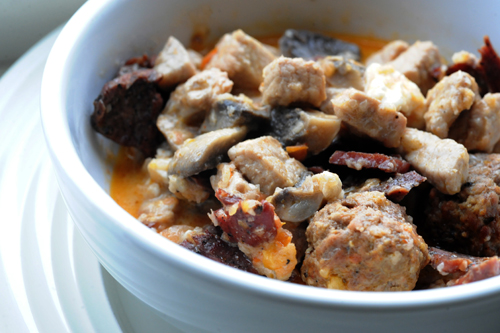
    Selsko Meso is a traditional pork and beef dish with tomatoes and cream.
    Pogacha with White Cheese.  These are kind of like dinner rolls only with feta cheese baked into them.
    Bombici. These are chocolate truffles made with cocoa powder, crushed cookies and a splash of rum.

    So you may have noticed I'm organizing things a little differently starting today, because I want my blog to be a lot more Pinterest- and search engine-friendly than it's been in the past. I know, it's a really boring reason to reorganize everything, but hey, I want more readers. So the first thing I'm doing is putting all the actual recipes and related info on their own individual pages, which should make Google happier, but will hopefully also make for a faster read and a less confusing layout.

    So. The links above will take you to each of the three recipes, with some details about all the drama involved in creating them. Enjoy!
     
    Next time: Madagascar (I like to move it move it!!)

    Recipes from Macedonia - Selsko Meso

    Selsko Meso is one of those multi-meat dishes that we really don't do very often here in the US. It's pork, but it's also beef. It's chunks of meat, but it's also meatballs. And beef jerky. I know.

    So when you're making this stuff, you do the meatballs first. In this version of the recipe (though it's always hard to tell because sometimes the translation is a little head-scratchy) you're supposed to put a little chunk of onion inside each meatball, which is a fun little surprise for the people eating it (especially my kids, evil laugh). Here's a photo of the onion-insertion process, which evidently is complicated enough to require a visual:
    After you make the meatballs, put the rest of the onion into a food processor and turn it into a paste. Now fry up the pork until it starts to brown a little, and add the onion.

    The recipe I was following said to use either tomatoes or ketchup, and come on, ketchup? I don't even use that with French fries. So I of course chose the tomatoes, but I made them kind of ketchupy by grinding them up like the onions. Then I added them to the pot with the mushrooms and the meatballs ...

    ... and ....
    The beef jerky!! Now, you will see based on the recipe below, that it didn't actually specifically say "beef jerky," it said "smoked, dried meat." Which is beef jerky, right? But they probably don't call it that in Macedonia. Anyway, I just went out on a limb and interpreted it as the stuff I can easily find in any grocery store, although I admit to not using as much beef jerky as the recipe called for, because dang, beef jerky is expensive.

    Anyway, then mix in an unspecified amount of salt, pepper and paprika. Mix together the flour and water and add that, then dump in a glass of white wine.

    Traditionally, this stuff is made in a clay pot, so you know, if you have one you would be transferring everything to the pot at this point and baking it in the oven at 350 degrees for 20 minutes or so, or until it's bubbly. The mixture is really already cooked, so at this point you're just waiting for the flavors to incorporate.

    Take it out of the oven and add the cream and feta cheese to taste.

    Predictably, Martin and I liked the Selsko Meso. Thanks to the cream it was rich but not over-rich--still a bit much for me personally given how little cream I consume these days. My kids were like, "Mmm this is good," but then they didn't eat any of it. Their logic, of course, was that in making me believe they ate some of their dinner I would then be compelled to make sure they got dessert. Ha! Well, they did get dessert but it isn't because they fooled me into thinking that they ate their dinner.

    And now for the recipe, in glorious readable, printable form:


    Selsko Meso

    from Macedonia Online

     
    Selsko Meso: Meat stew with cream and tomatoes

    Ingredients:

    • 10.5 oz ground beef
    • 1 onion
    • 2.2 lbs pork, cut into 1-inch pieces
    • 1 tbsp olive oil
    • 2 medium tomatoes (or ketchup)
    • 24.5 oz mushrooms
    • 10.5 oz dry smoked meat, cut into small pieces
    • Salt, pepper and paprika to taste
    • 1 tbsp flour
    • 1 cup water
    • 1 glass of white wine
    • Feta cheese
    • Cream

    Instructions

    1. Cut part of the onion up into thumbnail-sized pieces. Make small meatballs with the ground beef, placing a piece of onion inside each one.
    2. Put the remaining onion into a food processor and grind into a paste.
    3. Heat the oil over a medium flame, then add the pork. Fry until it starts to brown.
    4. Add the ground onion and stir until translucent. Now add the tomatoes, the mushrooms, the smoked meat and the meatballs.
    5. Season with the salt, pepper and paprika.
    6. Dissolve the flour into the water, then add it to the pot. Add the glass of wine, then transfer the mixture into an oven-safe dish (this is traditionally a clay pot).
    7. Bake at 350 degrees for 20 to 30 minutes. The mixture is really already cooked, so at this point you're just waiting for the flavors to incorporate.
    8. Add cream and feta cheese to taste.
    Approximate time: . Serves 8.

    Recipes from Macedonia - Pogacha with White Cheese (Breadrolls baked with feta)

    Bread is one of my favorite things to make, especially when I can hide cheese in it. Of course I'm never exactly sure if I'm pairing all of this stuff correctly, but to me these cheesy rolls seemed like a good fit with the creamy Selsko Meso. And they're easy to make, especially if you cheat and let your bread machine do the kneading for you.

    So this recipe starts out like no other bread recipe I've tried--you proof the yeast in yogurt instead of just sugar water. I figured the yogurt should probably be room temperature for this, so I left it out of the fridge for an hour and then mixed in the yeast. I really didn't see anything happen in the few minutes I left it out, although the dough certainly did rise.

    Now add the eggs, oil, flour and salt. The dough should be soft and pliable, not sticky, so don't worry if you have to add a little more flour. Knead (yay bread machine) and let rest for 15 minutes.
    Roll the dough out on a floured surface into a roughly rectangular shape, then brush with melted butter. Sprinkle the cheese over and then roll the whole thing up lengthwise like a jelly roll.
    Cut the roll up into pieces the size of dinner rolls (coz that's what you're making).

    Place in a baking tray and let rise until roughly doubled. Then brush the top with beaten eggs and sprinkle sesame seeds over.
    Bake at 400 degrees for 20 minutes, then reduce the temperature to 350 degrees and continue to bake until lightly browned.

    So this bread was actually kind of hilarious, not the recipe itself but my family's reaction to it. My daughter gobbled it down with much enthusiasm and declared, "You should make this once a week!" And then my son, who apparently hates me, chimed in "But it has cheese in it!" At which point my daughter's expression changed from delight to disgust and then she threw the rest of her pogacha in the trash.

    Actually that's more depressing than it is hilarious. But anyway, the rest of us really liked these things. They were an unusual twist on a traditional dinner roll, and the yogurt made them really moist and delicious.

    Here's the recipe:


    Pogacha with White Cheese

    from Macedonian Cuisine

    Pogacha with White Cheese: Breadrolls baked with feta

    Ingredients:

    • 1 cup Greek yogurt
    • 2 tsp instant dry yeast
    • 1/2 tsp sugar
    • 2 eggs
    • 3/8 cup oil
    • 3 1/3 cups flour
    • 1/2 tsp salt
    • 1/2 stick butter
    • 3.5 oz feta cheese
    • 1 egg, beaten
    • Sesame seeds

    Instructions

    1. First bring yogurt to room temperature. Add the yeast and sugar and mix together. Leave for a few minutes to give the yeast time to become active.
    2. Gradually add the eggs, oil, flour and salt. If the dough is too sticky, add a little more flour.
    3. Knead, then let rest for 15 minutes or so.
    4. Turn the dough out on a floured surface and roll to a roughly rectangular shape. Coat with melted butter, then sprinkle the feta cheese over.
    5. Roll the dough up jelly-roll style, then cut into dinner roll-sized pieces.
    6. Butter a casserole dish and transfer the rolls to the dish. Let rise for an hour, or until rolls have doubled in size.
    7. Brush the tops of the rolls with the beaten egg and sprinkle with sesame seeds.
    8. Bake at 400 degrees for 20 minutes, then reduce temperature to 350 degrees and continue to bake until lightly browned.
    Approximate time: . Serves 8.
    

    Recipes from Macedonia - Bombici

    And finally ... dessert! Now, I'm not really supposed to have dessert, at least not every week, but these were perfect because they were small and didn't really amount to much in the way of calories. If I'd only eaten one, I suppose. In my defense though, I stopped at two but it was hard, they were pretty yummy. Here's how you make them:


    Bring some milk to boil with butter, sugar and cocoa powder, then remove from heat.

    Crush some digestive biscuits into fine powder, then add to the milk. Stir, then add a splash of rum.
    Now let the mixture cool, then put it in the freezer until it becomes firm (about 45 minutes). Take it out, and roll it up into little truffle-sized balls, then put them back in the fridge to chill.
    Then, melt some chocolate and dip each ball, dust with cocoa and let the chocolate harden.

    Before I tell you exactly what we all thought, I just want to throw in a quick note: "Digestive biscuits" was a name that once horrified me, I mean what? Who names a food after a bodily function? That does not sound delicious. Doesn't your brain just want to finish the phrase with the word "juices" or something? Blech. But "digestive biscuits" are really just animal crackers without the animal shape. You can usually get them in the British foods section, though the Hispanic foods section probably also has a version.

    Anyway, everyone in my family ate one rum ball, and then two. I put the last 12 of them in the fridge because I told everyone I wanted to get better pictures of them, and then I proceeded to forget to take pictures for four days and everyone lost their minds. Evidently not letting them eat the rum balls was like the worst thing I could ever do as a parent. So yeah, they were a hit.

    Here's the recipe:


    Bombici (Rum Chocolate Truffles)

    from Tasty Mediterranean

     
    Bombici (Rum Chocolate Truffles)

    Ingredients

    • 1/2 cup milk
    • 1 stick butter
    • 1 cup sugar
    • 1 tbsp cocoa powder (plus a little more for garnishing)
    • 5 oz digestive biscuits, finely crushed
    • 3 tbs rum (optional)
    • 3.5 oz chocolate chips

    Instructions

    1. Bring the milk to a boil with the butter, sugar and cocoa powder. Once boiling, remove from the heat.
    2. Add the crushed biscuits to the milk and stir, then add the rum.
    3. Let cool, then transfer to your freezer for around 45 minutes, or until firm enough to handle.
    4. Roll the mixture into truffle-sized balls. Put the balls into the fridge for another 20 minutes.
    5. Now re-roll all the balls until they have a smooth surface. Return to the fridge for 10 minutes. Endure the impatient whines of your children.
    6. Heat the chocolate on the stove or in your microwave until it melts. When the chocolate is nice and liquidy, dip the truffles in it and return them to the plate.
    7. Dust with cocoa powder, then let harden. Endure more impatient whining.
    8. Serve!
    Approximate time: . Makes 24 truffles.


    Tuesday, January 10, 2017

    Where is Macedonia?

    OK, so on Sunday I cooked a meal from Macedonia. I didn't feel like getting my lights down, so my photos all suck, but I did cook the meal (yay).

    Actually this is the second time I've cooked a meal from Macedonia, but the last time was like two years ago and I honestly couldn't tell you a thing about it. In fact when I look at the recipes I made last time, I'm like, "Hmm, I have no memory of ever making that." So that must mean it just wasn't very memorable. Which is why I chose completely different recipes this time around.

    Stone bridge in Skopje, Macedonia. Photo by Mariusz Kluzniak.
    I'm doing this in bite-sized portions, (I don't mean the food itself, I mean the blog), which I hope will keep it more manageable. So for this post, I'm just going to tell you a little bit about Macedonia. Recipes will follow later in the week.

    Macedonia is in Southern Europe. It borders Albania, Greece and Bulgaria, with Kosovo and Serbia to the north. If you really haven’t heard much about Macedonia, there’s a good reason—until 1991 it existed only as a part of the former Yugoslavia. Macedonia is a member of the United Nations, but because of some whine-fest between it and Greece over who has the right to actually use the word “Macedonia,” the UN calls it “The Former Yogoslav Republic of Macedonia,” instead of just “Macedonia,” which must be really annoying to whomever has to keep typing its name into the official documents.

    Macedonia is beautiful—its terrain consists mostly of mountains, valleys and rivers—but it’s also one of the poorest European countries. In 2015 the unemployment rate was 27.3%, which sounds awful until you hear that that number is actually significantly down from where it was in 2005 (37.2%). Today, seventy-two percent of Macedonians say they can manage to survive on their income only with “difficulty” or “great difficulty,” even though nationally things like GDP, foreign trade and economic growth make it look pretty good on paper.

    The Macedonian climate is warm, so the conditions are good for growing fruits and vegetables, which means that the cuisine is pretty diverse. It’s been influenced by Macedonia’s Mediterranean and Middle Eastern neighbors like Greece and Turkey, so the food has got some flavor, which is always a plus.

    On a totally separate note, I got a request from one of my three readers (haha) to post one or two of my favorite healthy recipes, so I’m going to append one of those to the end of this post, even though it has absolutely nothing to do with Macedonia. So here’s healthy recipe the first. How is this Travel by Stove? Well, it hails from somewhere in exotic El Segundo, CA, which is where Clean Eating Magazine is published. It actually took me way too long to find their location on their dumb website, so I hope you at least chuckled.

    Chicken Burgers with Basil Yogurt Sauce
    From Clean Eating Magazine

    For the sauce:
    • 1/4 cup whole-milk plain yogurt 
    • 1/4 cup chopped fresh basil 
    • 2 tsp Dijon mustard 
    • 1 tsp fresh lemon juice 
    • 1 tsp raw honey 
    • 1/8 tsp each sea salt and ground 
black pepper
    For the burgers:
    • 1½ lb ground chicken or turkey 
    • 1/4 cup finely diced baby cucumber 
    • 1/4 cup finely diced red onion 
    • 1 tbsp chopped fresh dill 
    • 2 tbsp whole-milk plain yogurt 
    • 2 tsp Dijon mustard 
    • 1/8 tsp each sea salt and ground 
black pepper 
    • 4 slices (1/2 oz each) Havarti cheese
    • 4 slices whole-grain baguette (sliced diagonally) 
    • 4 small leaves red leaf lettuce 
    • 1 Roma tomato, sliced 
    • 1/4 cup diced avocado 
    Directions:

    First combine the sauce ingredients in a small bowl, then set aside.

    Now preheat your grill to medium high and brush with oil (I just used a grill pan on my stove, and they turned out awesome).

    Mix the ground chicken with the cucumber, onion, yogurt, dill, Dijon mustard and salt and pepper. Shape the mixture into four patties and grill on both sides until they reach an internal temperature of 165 degrees. A couple of minutes before they're done, top each patty with a slice of cheese and toast the baguette slices.

    Serve the patties on the toasted baguette slices and top with tomato, avocado and yogurt basil sauce.

    And just as an aside, the key to eating healthy is to limit (but not eliminate) carbs and fat. If you're going to eat carbs, eat whole grain everything. Have some cheese and avocado but don't overdo it. And substitute Greek yogurt for everything (mayo, sour cream, salad dressing ...).

    Macedonian recipes will land here in a few days. See you then!

    Tuesday, April 28, 2015

    Recipes from Luxembourg

    I am happy to report that this week’s meal was not the comedy of errors that last week’s meal was, though that does generally make for less entertaining reading. In fact this week’s meal was actually fairly painless, so, sorry about that.

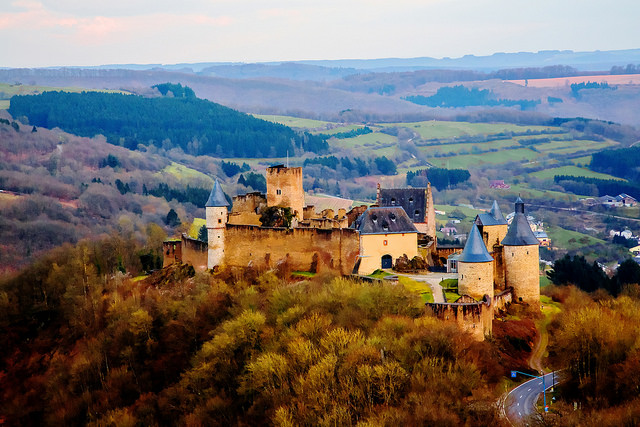
    This week we are in Luxembourg, which you’ve probably heard of though I’ll bet you ten bucks you couldn’t point it out on a map. It’s in Western Europe, bordered by Belgium, Germany and France, or maybe I should say “enveloped” because this place is so tiny that it’s like a freckle on the nose of western Europe. At 998 square miles, Luxembourg is about 150 square miles larger than Jacksonville, Florida, and considerably smaller than all four of Alaska’s major cities.

     Grand-Duché de Luxembourg. Photo by Antonio Ponte.
    There are more than 100 castles in Luxembourg, which automatically makes it a place I’d be keen to visit. Compare that to 600 to 700 castles in the UK and at first you might be unimpressed, until you realize that the UK has about six to seven times as many castles in roughly 94 times as much land area. So to put that in perspective, at its most generous estimate the United Kingdom has one castle every 134 square miles, while Luxembourg has one every 10 square miles. Yeah, I’d definitely like to go there someday. I love castles.

    Given its diminutive stature and geographical proximity to France and Germany, I’m sure it will not surprise you to hear that Luxembourg shares many of the same culinary traditions as those two larger nations. I actually stayed away from the more French looking recipes because I wasn't game for anything complex this week. Instead I chose a pretty rustic menu:

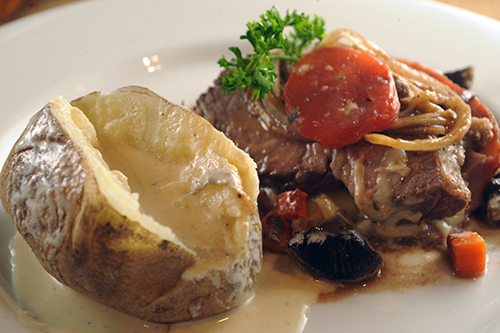
    Gequellte Grompere mat Porrettenzapp (Jacket potatoes with leek sauce)
    (from Gekonnt Gekocht)
    • 3 1/3 lbs medium-sized potatoes
    • Coarse salt
    • 4 leeks
    • 4 1/4 cups sour milk or buttermilk
    • 3/4 cup heavy cream
    • Salt and pepper to taste
    • 1 tbsp mustard (I used Dijon)
    Luxembourg stuffed roast beef
    (from Kochmeister)
    • 3 1/3 lbs rump roast
    • 6 tbsp oil
    • Cayenne pepper to taste
    • 2 large onions, sliced thinly
    • 4 large carrots, peeled and cubed
    • 4 large tomatoes
    • 2 bunches parsley
    • 1 tbsp butter
    • 2 cups gravy 
    • 10 1/2 oz cooked ham
    • 10 1/2 oz Gruyere cheese
    • 24 whole mushrooms
    • 1/3 cup whiskey
    Schuedi, the great Luxembourg sugar cake
    (also from Gekonnt Gekocht) 

    For the dough:
    • 2 3/4 cup all purpose flour, sifted
    • 2/3 cup milk
    • 3 1/2 tsp active dry yeast
    • 1/4 cup butter
    • 1 whole egg
    • 2 1/2 tbsp sugar
    • Lemon zest
    • 1 pinch salt
    For the topping:
    • 6 tbsp butter
    • 5 tbsp sugar
    Let's do the beef first, because it has to go in the oven a couple of times:

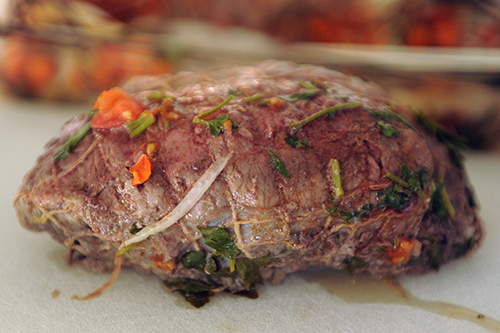
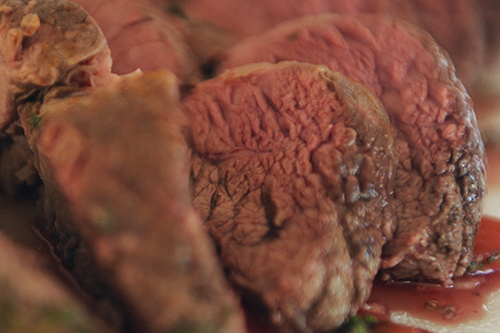
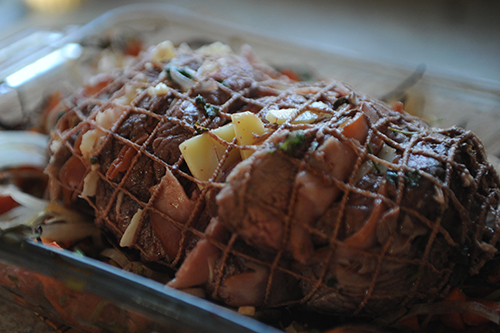
    First rub the meat all over with oil and season with cayenne pepper. Transfer to a roasting pan and surround with the onions, carrots and parsley. Roughly chop three of the four tomatoes and add to the pan. Melt the butter and pour over, then bake at 425 degrees until an internal thermometer reads 125 degrees (note that the original recipe said to cook for an hour, which I think would have overdone the meat). While cooking, baste with the gravy.

    Let the meat rest for 10 minutes, then slice thickly.

    Put thin slices of cheese and ham between each slice of meat, then tie the whole roast back together with some kitchen twine.

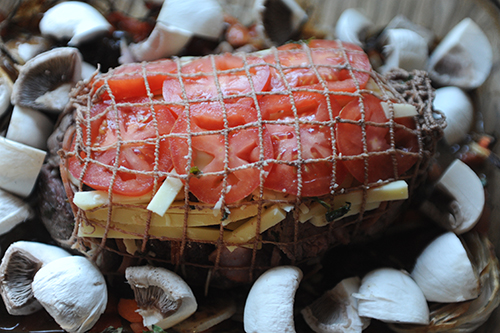
    Pour off the juices from the roasting pan and transfer the roast back to the pan. Top with the rest of the cheese. Slice the last tomato and place the slices on the top of the roast, then scatter the mushrooms around in the pan.

    Now pour the whiskey on top and cook for another 20 to 30 minutes at 425 degrees (I took mine out as soon as the cheese melted). Serve.

    Now the potatoes:

    First wash the leeks, then split them lengthwise and slice thinly. Leeks are always full of grit and dirt--I actually wash them when they're whole and then again in a colander after I've sliced them. Set aside.

    Now mix the mustard with the buttermilk and cream, and add salt and pepper to taste. Heat over a medium flame, and then reduce heat to a simmer and let cook, stirring continually, until slightly thickened.

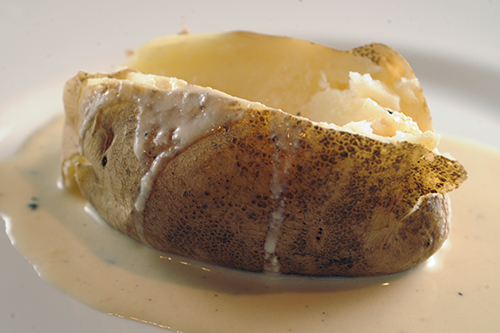
    Meanwhile, cook the unpeeled potatoes in salted water for 20 minutes. Serve immediately with the leek sauce poured over.

    And now for the cake:

    First proof the yeast by mixing 3 1/2 tbsp of melted butter with the sugar, a pinch of salt and about 1/4 cup lukewarm water. Add the yeast and let sit until frothy.

    Now mix the flour with the egg, lemon zest and milk. Add the yeast and knead for 12 minutes. Transfer to a floured surface and shape into a ball. Cover with a clean towel and let stand in a warm place for about an hour, or until doubled in size.

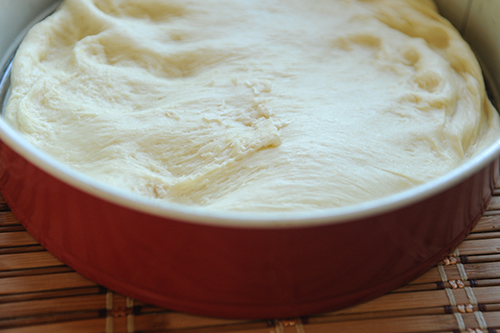
    Spread the dough evenly into a buttered cake pan, then let rise for another 30 minutes.

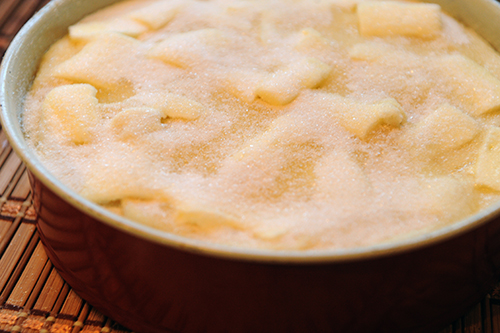
    Press down gently with your thumb to make some indentations in the dough, then place shavings of the butter into the dents. Melt some butter and use a pastry brush to paint the melted butter over the rest of the cake. Sprinkle thickly with sugar.

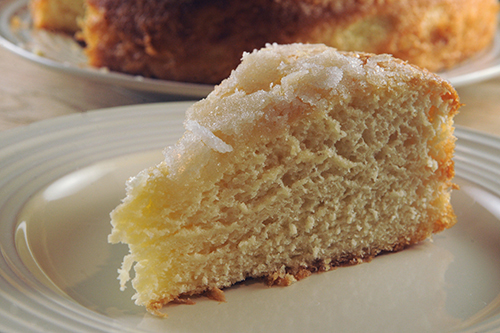
    Bake at 350 degrees for 20 minutes, or until golden. Let cool and serve.

    Both the beef and the potatoes were delicious, though a bit on the rich side. I thought the cheese and ham stuffing was really different and very tasty with the beef, but I couldn't eat a lot of it. Unfortunately the dish was also a lot of wasted vegetables, because my kids don't eat vegetables. Now, I am well aware of how bad that is so I like to point out that they eat a lot of fruit at other times of the day but yeah, most vegetables are wasted on them. I loaded up my plate and so did Martin, but we still ended up throwing a lot of them away.

    I don't have to tell you what they thought of the sugar cake, though. Because, cake.

    Looking back it does seem like there were some complexities to this meal but next to Lithuania it was easy. The hardest part was probably just putting the roast back together after slicing it, and if you compare that to potato water soaked beach towels in the living room, well, I can guess which one you'd choose.

    Next week: Macau

    Wednesday, April 15, 2015

    Recipes from Lorraine and Alsace, France (Part Two)

    OK, so the bad news is, I missed last week's posting because of spring break. So I am officially about five weeks behind in actually posting all the meals that I cook. Gah.


    The good news is, I already told you about Lorraine and Alsace, France in the last posting. Because remember? This was a two part entry. The whole "I cooked that meal two years ago and forgot about it" thing.

    Paysage de l'Aisne, France. Photo by Franck Vervial.

    So instead of telling you more things about Lorraine and Alsace, France (if you missed the info you can check out the last entry), I'm just going to dive right into what I cooked:

    Coq a Riesling 
    (from Interfrance)
    • 3 1/2 pound chicken, cut into pieces
    • 1/3 cup unsalted butter
    • 4 shallots
    • 4  garlic cloves
    • 1 cup Riesling wine,
    • 1/2 cup chicken stock
    • 1/2 lb large mushrooms, quartered 
    • 1/4 cup brandy
    • 1/2 cup heavy cream or creme fraische
    • 1 1/2 tbsp all purpose flour
    • Pinch freshly grated nutmeg
    • Salt and pepper to taste
    Alsatian Cheese Tart
    (from Epicurious)
    • 1 puff pastry sheet, thawed
    • 1/2 cup whole-milk cottage cheese
    • 1/4 cup sour cream
    • 1/4 tsp salt
    • 1/4 tsp black pepper
    • 6 bacon slices, cut crosswise into 1/2-inch pieces
    • 1/3 cup onion, thinly sliced
    • 1 tbsp freshly grated Parmesan cheese
    Alsatian Apple Tart
    (also from Interfrance) 


    For the dough:
    • 1 1/3 cup all purpose flour,
    • 1/2 cup cold margarine,
    • 1 tbsp vegetable oil
    • 1 tbsp baker's sugar
    • 1/4 cup cold water
    • Pinch of salt.
    For the filling:
    • 2 lbs Golden Delicious apples, peeled, cored and quartered
    • 2 eggs
    • 1/3 cup bakers sugar
    • 1 tsp vanilla extract
    • 4 pinches cinnamon
    • 3/4 cup heavy cream or half and half
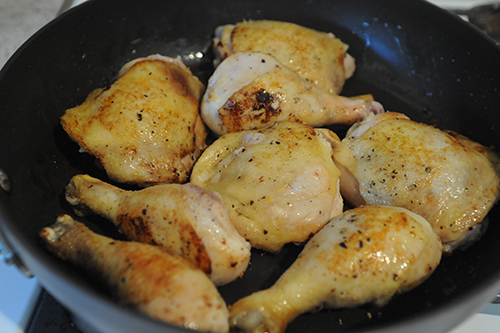
    To make the chicken, first season the pieces with salt and pepper. Now melt 4 tbsp of the butter in a heavy skillet over a medium flame and saute the chicken until golden on all sides.

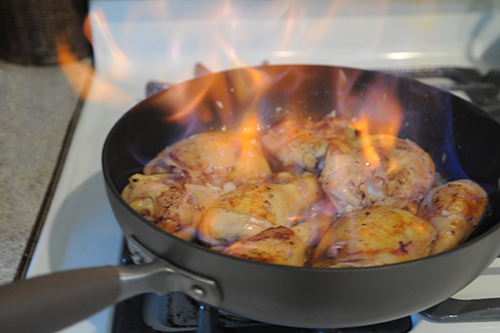
    Pour off most of the fat and add the shallots and garlic. Saute for a couple of minutes, then add the brandy and set it on fire. Shake the pan gently until the flames die down. Try real, real, hard not to burn your kitchen down.*

    Now add the mushrooms, wine and chicken stock. Let the liquid start to boil, then reduce the heat and cover the pan. Simmer for 30 to 40 minutes or until a meat thermometer inserted into the thickest part of the thigh reads 175 degrees (165 is a safe temperature, but I think the texture of dark meat is really unpleasant if you only cook it to 165).

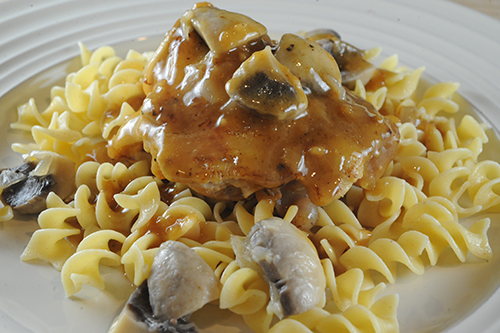
    OK now take the chicken out of the pan with a slotted spoon and place it on a serving platter. Turn up the heat and let the cooking liquid boil. When it has reduced down to about a half cup, add the cream and stir until the sauce thickens a little. You can also add a tablespoon of melted butter mixed with some flour if it doesn't thicken up enough. Serve the chicken over egg noodles and top with the sauce.

    * Please note that I almost burned my kitchen down. The flames were really big and I was trying to take pictures of them with one hand and shake the damned pot with the other. Even though this is a pretty standard French cooking technique, I do not condone or recommend actually lighting your food on fire unless you really know what you're doing, because if you burn your kitchen down you will blame me. You have been warned.

    OK now for the cheese tart:

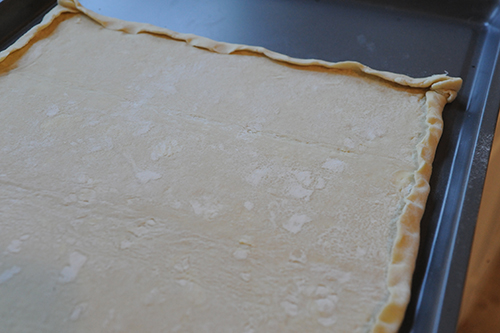
    First heat your oven to 400 degrees. On a lightly floured surface, roll out the pastry sheet until it is about 12 inches square. Place on a baking sheet (I also crimped the edges of the dough so the cheese mixture would stay put).

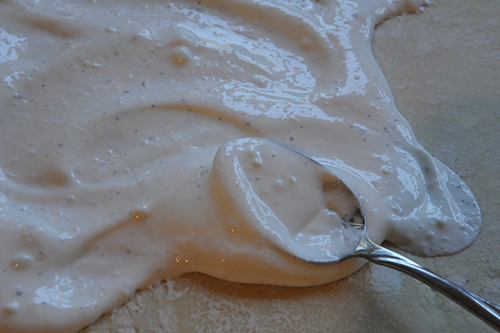
    Put the cottage cheese, sour cream, salt and pepper into a blender and pulse until smooth.

    Now cook the bacon over a medium flame until it begins to brown. Don't let it get crispy. Remove from heat and set aside.

    Spread the cheese mixture over the pastry like you would with a marinara sauce if you were making a pizza. Leave about 1 inch around all four edges.

    Now scatter the onions over the tart, sprinkle the bacon on top, then add the Parmesan cheese.

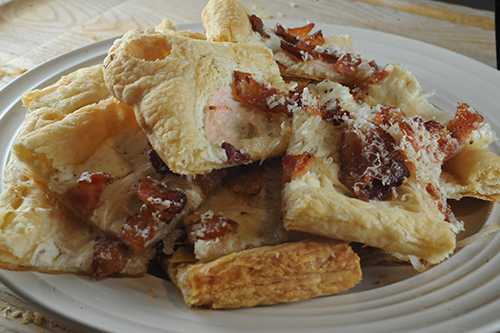
    Put the tart in the oven and bake until golden (20 to 25 minutes). Cut up into pieces and serve.

    And finally, the apple tart.

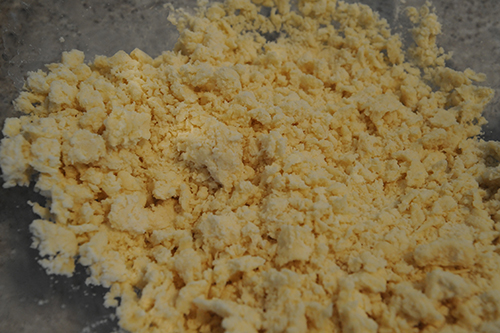
    First blend all the pastry ingredients except the water with your fingers until the mixture looks like fine bread crumbs.

    Gradually add the water until the mixture starts to turn into a crumbly dough. Don't overdo it, but eventually you should have a smooth ball. Dust it with a little bit of flour and wrap it in plastic wrap, then place it in the fridge for an hour.

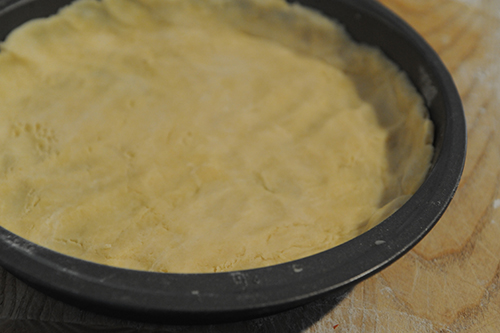
    Preheat the oven to 425 and butter a 10 inch tart pan. Lightly flour a surface and the roll the dough out until it's a large circle. Line the pan with the dough and prick it all over with a fork. Return to the fridge for another 10 minutes.

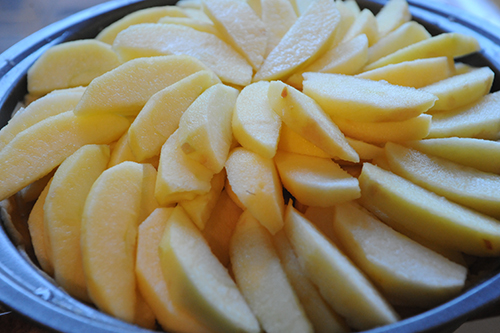
    Now cut each apple quarter into four slices and place neatly over the pastry, overlapping the slices as you go. Your tart should look something like this:

    Bake for 15 minutes. While the tart is baking, make the filling:

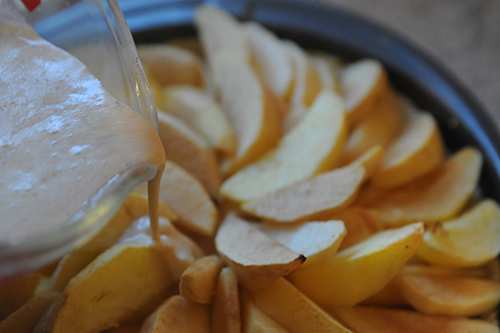
    Whisk the eggs together with the sugar, vanilla and cinnamon. Add the cream. When the tart has finished baking for 15 minutes, pour the filling over the top of it and return to the oven.

    Bake for an additional 30 to 35 minutes. When the apples are tender, the tart is done.

    So I'm sure you'd like to know if I preferred this to the frog's legs, and since I do enjoy trying new foods but I'm not a snob about it, I will not pretend that I liked the frog's legs any better than the chicken. I mean, they were the legs of a slimy creature who lives stagnant water, right? I did like the flavor of them, but when you eat frog's legs there's always that voice in the back of your head that goes, "ew."

    Anyway I liked the chicken, and yes I would probably choose it over frog's legs in the future. It had a sweet flavor from the Riesling and like many French dishes, was pretty mild in flavor, but quite rich. The cheese tart was yummy--I guess it was basically just a French pizza--but my kids missed the red sauce. And cottage cheese isn't really their thing, even though it was cleverly disguised.

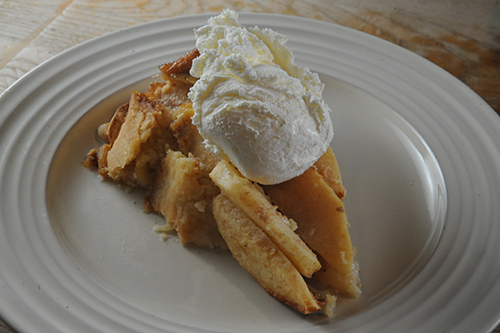
    The apple tart was yummy and looked very pretty when it was done. Again, not really different than a lot of other apple desserts I've had, but still yummy.

    OK onwards.

    Next week: Lithuania


    Copyright 2023 Becki Robins and Palfrey Media.. Powered by Blogger.

    Blog Flux

    Blog Directory