Recipes from Marche, Italy

For this entry, I made two recipes. Neither of them were especially good, but I don't blame the people who posted the original recipes or any of the traditions they came from, I blame myself and my propensity for Googling things that might kill me.

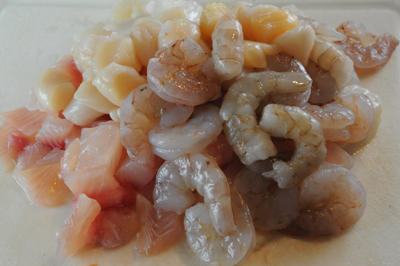
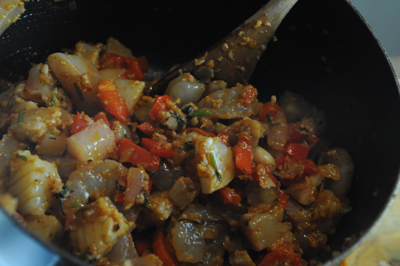
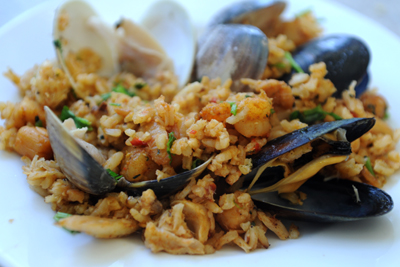
Recipes from Marche, Italy: Brodetto

A seafood stew with mussels and clams, minus the Vibrio.

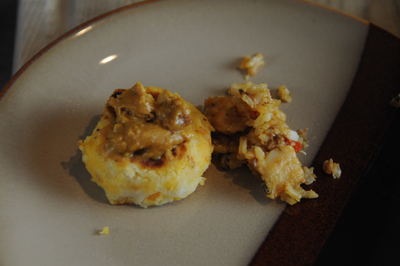
Recipes from Marche, Italy: Filone Casereccio

An Italian bread that will come out much better than mine did if you use fresh brewer's yeast and steam.

Recipes from Malta

This is actually the third time I’ve cooked a meal from Malta. The first time, I cooked the meal and then just did not write the blog post. Years went by.

Recipes from Malta: Imqarrun

Imquarrum (also called Imqarrun il-forn) is descended from a dish served in Sicily, but the Maltese have adopted it as a traditional staple. The key to making this dish is to be patient.

Showing posts with label South America. Show all posts

Thursday, June 13, 2013

Recipes from French Guiana

Every year, I plant a garden. This year I planted some bush beans, some Thai chili peppers, some little mini bells and three different kinds of tomatoes. I grow them on my deck in containers, even though I have five acres, because in our neighborhood the soil really isn't very good and there are hungry deer everywhere.


Then on Friday, someone left my deck gate open. And a deer came right up on my deck in broad daylight and ate all of my bush beans, about half of my Thai peppers and half of my tomatoes. I'm pretty sure the only reason he didn't eat my bells is because I came home and caught him in the act.

So why am I telling you this? I'm seeking commiseration I guess. Stupid deer.

Meal from French Guiana
Anyway this week we are in French Guiana, not to be confused with Guyana, Dutch Guiana or Portuguese Guiana. Confused? Me too. Apparently, at one point everyone wanted a piece of Guiana. Though I'm not really sure why, because it sounds like 18th century Guiana was an unkind place. In fact, the French sent 12,000 settlers there in 1763, and 10,000 of them died from the harsh climate and tropical diseases. So then they turned it into a prison, for, you know,  obvious reasons. Where better to send your prisoners than to an island where only 10 percent of them would survive? Dead prisoners are cheaper than live ones.

Called ÃŽle du Diable (Devil's Island), French Guiana hosted these prisons until 1953. Today the area is better known for its space center (yes, I said space center), which is an important part of the European space industry.

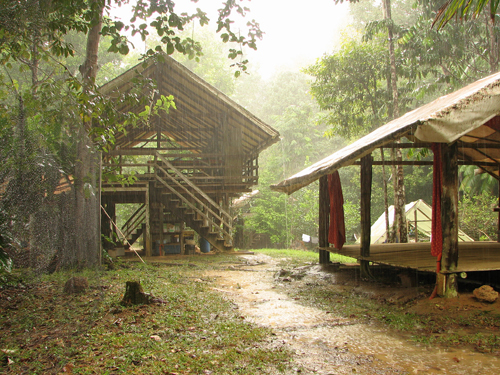
Nouragues French Guiana. Photo credit: Sean McCann (ibycter.com)

As you might guess, the cuisine in French Guiana is heavily influenced by French cuisine, its coastal waters, and prison food. I'm just kidding about the prison food. French Guianan cuisine is actually quite flavorful, which you wouldn't really expect from prison food. Hot peppers and spices grow in the region and are used to add South American flavor to dishes that are distinctly French in origin.

Of course as you might expect, there really aren't any French Guianan cookbooks, food blogs or other websites. I literally blew a couple of hours just tracking down the three recipes I did find:

Poulet Colombo (Chicken Colombo)
(from Easy French Food)
  • 1 chicken cut up, or 8 pieces of chicken
  • 1 shallot, peeled and chopped finely
  • 6 cloves garlic, peeled and crushed, divided
  • 1 tsp ground coriander
  • 1 tbsp white wine vinegar
  • 1 cup water
  • 3 tbsp colombo spices, divided*
  • 3 tbsp oil
  • 2 onions, peeled and chopped
  • 1 chili pepper, minced fine
  • 1 medium eggplant, cut into 1/2 inch cubes
  • 1 medium zucchini, cut into 1/2 inch cubes
  • 3 potatoes, peeled and cut into 1/2 inch cubes
  • juice of 1 lemon
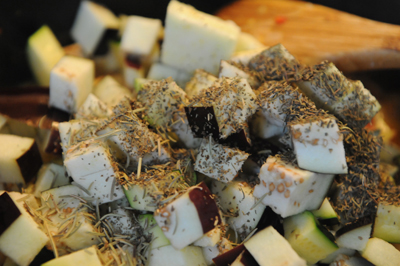
  • 1 tsp dried thyme
  • 1 tsp dried rosemary
  • 1 tsp dried basil
  • 1 cup coconut milk
  • salt and pepper
* Recipe below

Chayote-Potato Cakes
(from caribsplendor.com)
  • 2 1/2 cups chayote, shredded
  • 1 large boiling potato, peeled and shredded (about 2 1/2 cups)
  • 1 small yellow onion, shredded
  • 2 medium eggs, beaten
  • 1/4 cup yellow cornmeal
  • 1/2 tsp ground turmeric
  • 1/2 tsp freshly ground black pepper
  • 1/2 tsp salt
  • 1 tsp canola oil
  • papaya-avocado salsa*
*I homemade my papaya-avocado salsa, but am not including the recipe because it isn't from French Guiana. I'm pretty sure you can just wing it and not get in too much trouble.

Colombo Powder
(from About.com Latin Caribbean Food)
  • 1/4 cup uncooked white rice
  • 1/4 cup cumin seeds
  • 1/4 cup coriander seeds
  • 1 tbsp black mustard seeds
  • 1 tbsp black peppercorns
  • 1 tbsp fenugreek seeds
  • 1 tsp whole cloves
  • 1/4 cup turmeric
And I was also going to make some sugar roti from this page, but I didn't, because it was at about that time that someone told me Hailey's birthday party was scheduled for the exact same time and place as someone else's birthday party, and I spent the rest of the evening stressing out about the possibility of having to reschedule a birthday party at the last minute.

So here's how to make the dishes that I did serve:

First the spice powder, which is unusual because of the dried white rice (it helps thicken the food it's added to). It's easy to make and here's how:

Toast the rice in a dry pan until it starts to turn a light golden color. Keep stirring so it doesn't burn.

Transfer the rice to a bowl and let cool. Meanwhile, put your spices (except the turmeric) into the same dry pan and toast them until fragrant, stirring constantly. Let cool.

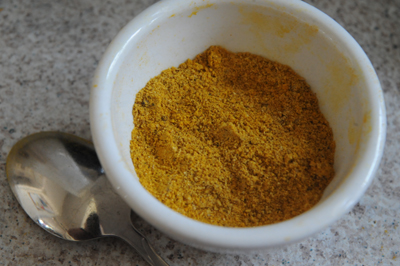
Put the toasted rice and toasted spices into a grinder or a mortar and pestle and process to a fine powder. Add the turmeric. Done!

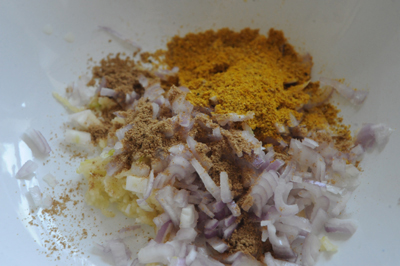
OK now salt and pepper your chicken pieces, then marinate them in a mixture made from the chopped shallot, four of the garlic cloves, 1 tbsp of the colombo powder and the coriander, vinegar and water.

Refrigerate for two or three hours or overnight.

Now heat the oil over a medium flame and add the onions, chili pepper and the rest of the garlic. Cook until the onion is translucent. Add the chicken (reserving the marinade) and brown on both sides, then add the vegetables, lemon juice, herbs and the marinade. Cover and cook over a medium-low flame for 15 minutes.

Add the rest of the colombo and stir to combine. Cover and cook for an additional 15 to 25 minutes, or until the chicken is cooked through and tender. Add the coconut milk and salt and pepper to taste. Serve over rice.

And now for the chayote:

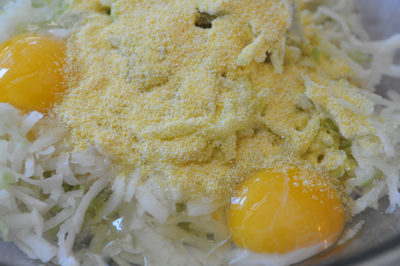
Place the chayote, potato and onion in a potato ricer and squeeze out all of the excess moisture. Place in a bowl and add the eggs, cornmeal and seasonings.

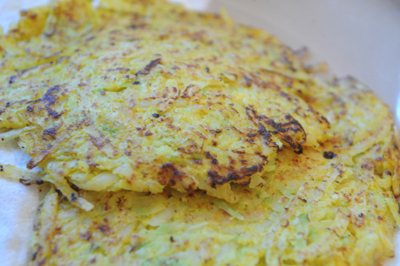
Heat the oil over a medium flame and drop about a half cup of the mixture onto the skillet, flattening with the back of a spoon (they should each be four or five inches in diameter). Cook on both sides until lightly browned, then transfer to a plate and keep warm.

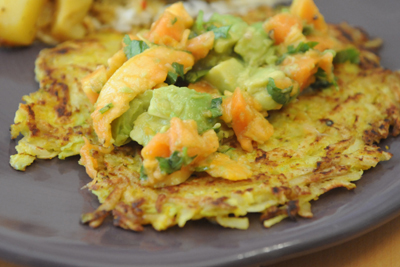
Repeat until all the cakes are done. Serve hot with papaya avocado salsa.

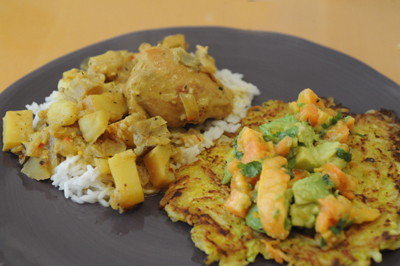
This was my first time eating chayote, which I found quite pleasant actually, especially considering that I usually hate squash of any kind. It was vaguely cucumbery and not all soggy and yucky like cooked squash usually is. The potato gave the cakes some nice body and with the salsa they were a really tasty accompaniment to the chicken.

The chicken was a different twist on a curry—there were a lot of curry flavors in it but most curries don't have the quantity of vegetables that this one had. This really could have easily been a one-dish meal, since there was plenty of protein, vegetable and starches just on that one side of the plate. I'm not crazy about eggplant really but I thought this was a good use for it, though I might accidentally forget to put it in if I ever made this recipe again.

So that's the first in our five week foray into countries that begin with the word "French." Next week: French Polynesia.

For printable versions of this week's recipes:

Thursday, May 16, 2013

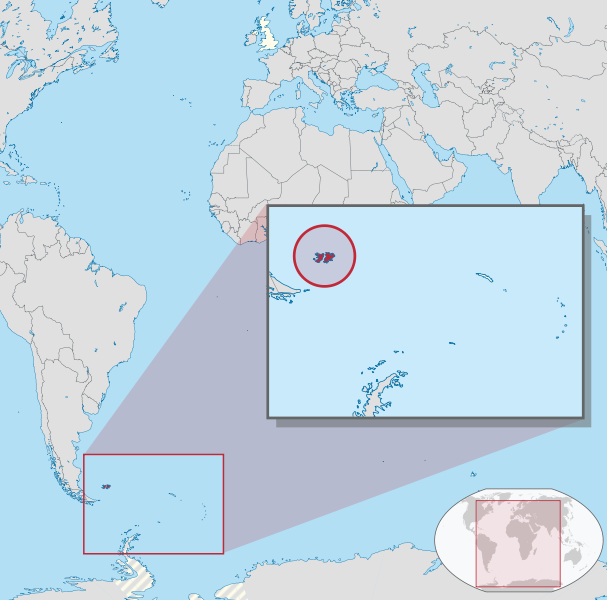
Recipes from the Falkland Islands

I got a lot of great help with last week's entry, Europa Island, so I suppose I was due for a tough one. I tried and tried to come up with a decent menu for the next place on my list, and unfortunately I ended up disappointed.

First a little bit about our destination: The Falkland Islands is an an archipelago consisting of 778 separate islands located 310 miles east of the Patagonian coast. The British have claimed it since 1833, though there is controversy as to who actually got there first. Despite 150 years of British rule, Argentina still calls the Falklands their own, which of course pisses off the British, which in turn pisses off the Argentinians.

If you grew up in the 80s you probably remember something about the Falkland Islands. There was a major conflict there in 1982, when Argentina invaded the islands in an effort to oust the British. A short war followed, which ended when British forces took the high ground surrounding the capitol city, leading to the surrender of the Argentinians.

Fitzroy Settlement, East Falkland. Photo by Flickr user k1rsch

Now I'm married to a Brit, so I'm not going to take sides. I will say, though, that I'm not terribly impressed with the friendliness of the British Falkland Islanders I tried to contact for this entry. I was hoping one of the hotels over there would be willing to share a recipe or two for Travel by Stove, but my inquiries were met with total, utter and complete silence. And there just weren't any other resources, unless you count this 1994 booklet I found a reference to entitled "Cooking the Falkland Islands Way," which would have seemed like a good investment except that I read somewhere that it is mostly full of impractical ingredients (mutton) made with impractical preparation techniques. Now I don't really know this for sure and in retrospect I probably should have given it a shot, given that I didn't find much else.

So eventually I had to turn to Argentinian recipes, even though the Falklands as they are now are really British in character. I did a Spanish language search for recetas Islas Malvinas (Falkland Island recipes) and was rewarded with a handful of recipes I thought would work. I didn't have to narrow it down very far, though, and here's the final menu:

The appetizer:

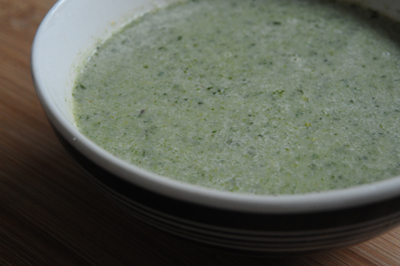
Lettuce Soup
From lanacion.com
(Yes, it is as strange as it sounds)
  • 1 tsp butter
  • 12 oz lettuce leaves
  • a small onion
  • 1 tbsp of flour
  • 3 cups chicken stock
  • 1 1/4 cup milk
  • salt and pepper to taste
The main course:

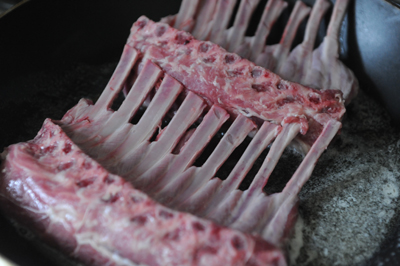
Rack of Lamb with Honey
From lanacion.com
  • 1 rack of lamb
  • 1 tbsp butter
  • 1 tbsp chopped mint
  • 3 tbsp honey
  • salt and pepper
  • lemon zest (optional).
Side dish number one:

Salad for Center Table
From cocinadelmundo
  • 3 kinds of lettuce
  • 10 walnuts
  • 3 tbsp pine nuts
  • 1 avocado, diced
  • 1 can of anchovies in olive oil
  • 7 oz goat cheese, diced
  • 6 radishes
  • 2 carrots, grated
  • 1 medium onion, sliced fine
  • 1/4 cup extra virgin olive oil
  • 1/2 cup lemon juice
  • 1/4 cup apple cider vinegar
  • salt to taste
Side dish number two:

"Scalloped" Potatoes
From Tierra de Fuegos
(Note: "scalloped" is a mistranslation, either by Google or by the website where this recipe came from. These potatoes are twice-baked, not scalloped.)
  • 6 large potatoes, washed, unpeeled
  • 1/2 cup olive oil
  • 3 or 4 green onions
  • 2 cups grated Parmesan cheese
  • Coarse salt and freshly ground black pepper
OK, the lettuce soup:

First melt the butter in a large stock pot over medium heat and add the onion. When the onions are starting to brown, put the lettuce leaves into the pan and saute, stirring continuously, until they start to wilt.

Wilted lettuce. Yum.

Whisk the flour into the chicken broth and pour into the pan. Let simmer gently for 30 minutes, then transfer in batches to a food processor. Puree and then return to the stockpot. Add the milk and seasonings and bring back to a simmer. Serve hot.

Now the instructions for the lamb seemed a little vague. They implied that the whole rack should just be pan fried, which seemed tricky for a rack of lamb since it's shape makes it difficult to cook evenly in a pan. So here's what I did:

Brown the ribs in a small amount of oil and transfer to a oven-proof dish.


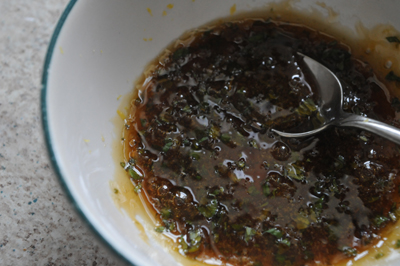
Meanwhile mix the honey with the mint and lemon zest, then brush over the rack of lamb.

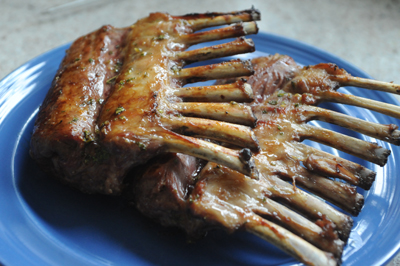
Roast at 350 degrees until an internal thermometer reads 145 degrees (this will give you medium-rare lamb, cook for longer if you like your meat a little more well-done). Baste with the pan juices before serving.

Meanwhile, make the salad:

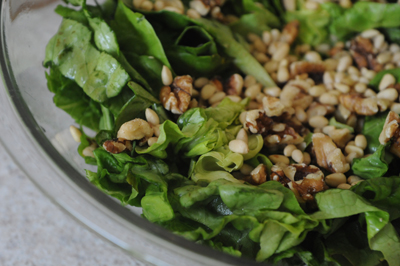
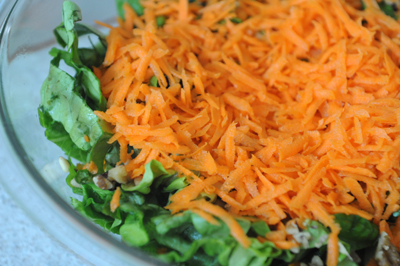
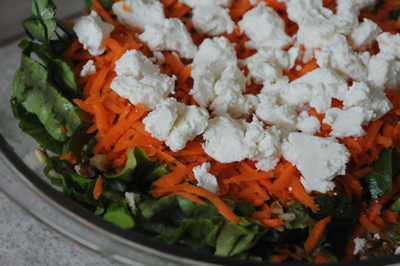
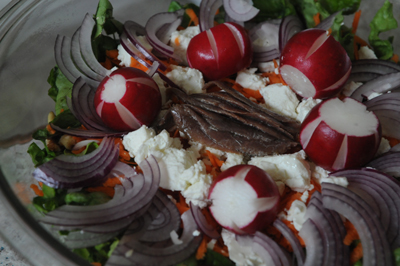
Sprinkle the diced avocado with a little bit of lemon juice to prevent browning. Cut the lettuce up into bite-sized pieces and arrange in the bottom of your bowl. Top with the walnuts, pine nuts, avocado, carrots, cheese, anchovies and red onion.


Cut the radishes into flower shapes. Laugh at your inability to do so. Then top the salad with your little mutilated radishes.

Whisk the oil together with the lemon juice and vinegar. Add the salt and pour over the salad.

Now for those potatoes:

These are supposed to be cooked in a fire pit. But if I tried to make a fire pit I would burn down my neighborhood, so I wisely did these in my oven. Here's my interpretation:

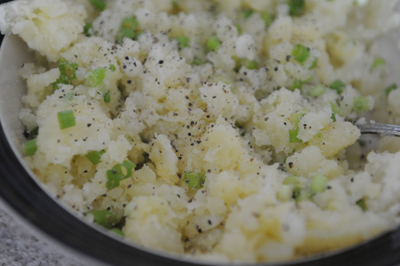
Rub the potato skins with olive oil (this will make them crispy) and add salt, rubbing all over to cover. Bake at 400 degrees for 40 minutes or until the skins are crispy and the flesh is tender. Remove from the oven and let cool until you can handle them, then cut them in half lengthwise. Scoop out the insides and transfer to a large bowl.

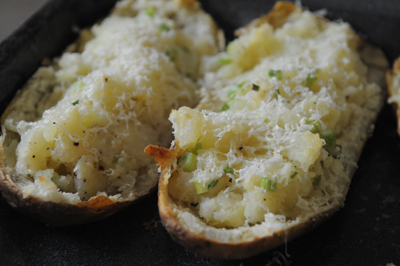
Add the oil, green onions, salt and pepper. Return the potato mixture to the potato skins and top with the cheese.

Put the potatoes back in the oven and continue to cook until the cheese is melted and just beginning to turn a golden color.

OK so the verdict: my lamb came out perfectly. If you like lamb, this is a really good way to prepare it because the flavor of the meat isn't overwhelmed by a lot of spices. The honey and mint compliment it nicely all by themselves.

If you don't love lamb, as Martin does not, you probably won't enjoy this recipe because there's nothing to temper that very strong flavor that lamb has. I liked it, personally, though I think I do prefer to eat lamb in a spicy sauce like a curry.

The potatoes were good but quite frankly I like my usual twice-baked potatoes recipe a lot more than this one, so it really wasn't anything special. The salad was good, too, but the anchovies frightened everyone. I'm not crazy about anchovies myself so I picked them out. Other than that, I personally like a stronger dressing on my salad but this was a nice mix of ingredients I don't usually put in the salads I make for day-to-day dinners.

And as for the soup. Well. It tasted like hot lettuce. Hot, wilted lettuce. I took two bites and poured the rest of it away. Fortunately, it wasn't a pricey soup. But not really my tastes.

Sadly, that's where the Falklands ended. I would dearly love if someone from those islands contacted me with some different recipes to try, because I'm really quite sure I didn't do it justice.

Next week: The Faroe Islands

For printable versions of this week's recipes:

Thursday, March 14, 2013

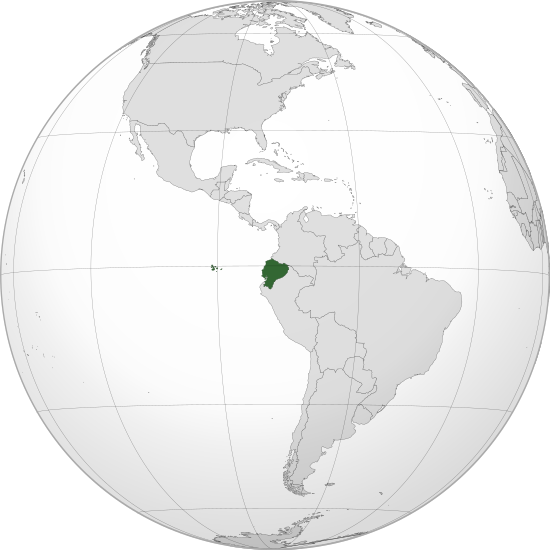
Recipes from Ecuador

Traditional food isn't always delicious to us Westerners. That's because people living in poorer nations often just don't have the resources you need to dress up a meal, such as spices, herbs or even just ordinary table salt. For these people, something as basic as meat, onions and rice make a delicious meal because a delicious meal is really anything that fills up your belly.

Then there's Ecuador. Now, you can't really say that Ecuador is a particularly wealthy nation (in terms of GDP the US ranks 8th while Ecuador is all the way down at 91). But it is a growing nation: the 8th largest economy in Latin America with a growth rate of 7.8% in 2012. Extreme poverty in Ecuador has declined by leaps and bounds since the turn of the century; in 2001 it was a whopping 40% and now it is down to 17.4%.

The nation of Ecuador includes the Galápagos Islands, made famous of course by Charles Darwin, and is one of 17 "megadiverse countries"—those countries that harbor the majority of the Earth's species—as identified by Conservation International in 1998.

Quito, Pichincha, Ecuador. Photo Credit: shapeshift via Compfight cc

So this also means that Ecuadorians have access to lots of yummy ingredients, partly because the terrain, altitude and agriculture varies greatly from one part of the country to the next.  Seafood, for example, is predictably popular on the coast, while meat and potatoes is preferred in the mountains and tropical fare such as cassava and bananas is commonly eaten in the rainforest.

So when researching Ecuador I landed almost immediately on one blog and then did not go any farther than that. Because every single thing on this blog looked super awesomely yummy. In fact, I downloaded far more recipes than I could use for this one entry, and I plan to make all of them offline at some point or another.

Here's the blog, since she deserves pretty much all the credit for this entry:

Laylita's Recipes (Note: I had to take remove the link because of a malware warning)

All you have to do is land on her homepage and I promise you'll get sucked in by all the amazing pictures of colorful and delicious looking recipes. If you have any kind of fondness for Latin American food, you will love this website.

So anyway, I chose about a million recipes and then somehow managed to narrow it down to these six (six!):

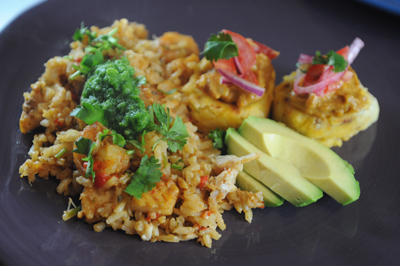
Arroz Marinero

This is very similar to a Spanish paella, only with different spices. Here are the ingredients:
  • 2 tbsp oil
  • 2 tbsp white onion, finely chopped
  • 1 garlic clove, minced or pressed
  • 2 cups long grain rice
  • 2  1/4 cups seafood stock
  • 3 tbsp sunflower, peanut or light olive oil
  • 1 1/2 cup white onion, finely chopped
  • 2 heads garlic, peeled and crushed
  • 1 red bell pepper, diced
  • 1 1/2 tsp cumin
  • 1 tsp achiote powder
  • 1 bunch of cilantro, finely chopped
  • 4 lbs seafood: shrimp, calamari, scallops, mussels, clams, crab or whitefish*
  • Salt and pepper to taste
* Based on what I can tell from this and other versions of this recipe, arroz marinero is generally made with a mixture of different seafood, which may include some or all of what I've listed above. I think you can be flexible on what you decide to use, though every recipe I saw included the mussels, clams, calamari and shrimp with some variation of everything else.

The arroz marinero is served with these two garnishes/sauces:

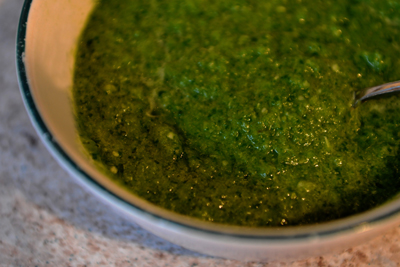
Aji Criollo
  • 4 hot peppers (I used jalapenos, but you could use serranos if you wanted it spicier)
  • 1/2 bunch cilantro
  • 1/2 cup water
  • 3 garlic cloves
  • Juice from 1/2 lime (or lemon)
  • 3 tbs finely chopped white or green onion
  • Salt to taste

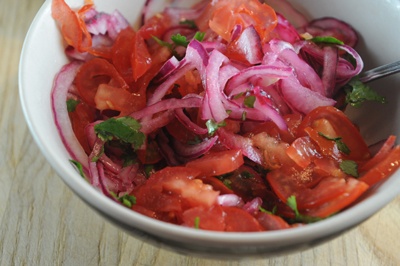
Curtido de Cebolla y Tomate
  • 2 small red onions, thinly sliced
  • Juice of 3 limes
  • 1 tbsp sunflower or canola oil
  • 3 tomatoes, thinly sliced
  • 1 tbsp cilantro, finely chopped
  • 1 tbsp salt (more to taste)
The curtido also goes with this recipe:

Llapingachos
  • 5 large Russet potatoes, peeled and cut into large pieces
  • 2 tbsp sunflower oil
  • 1/2 cup white onion, finely chopped
  • 2 tsp ground achiote
  • 1 cup grated Mozzarella or Fontina cheese
  • Salt to taste
And you also really, really need this to put on top of the llapingachos:

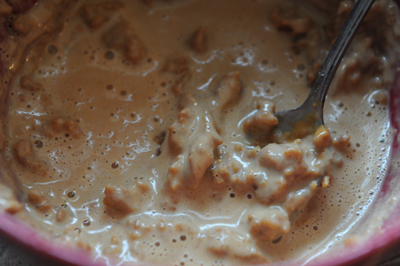
Salsa de Mani
  • 3/4 cup unsweetened peanut butter
  • 1 cup milk
  • 1/2 cup white onion, finely diced
  • 1 tsp cumin
  • 1 tsp ground achiote
  • 2 tbsp peanut oil or butter
  • 1 tbsp cilantro, finely chopped
  • 3 tbsp white onions, finely minced or sliced
  • 1 hard-boiled egg, finely chopped (optional)
  • Salt to taste
And in case you aren't already exhausted, here's the dessert:

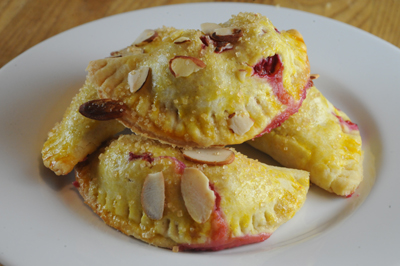
Raspberry, Goat Cheese and Almond Empanadas
  • 3 cups all purpose flour
  • 1/4 to 1/2 cup sugar (depending on how sweet you like it)
  • Pinch of salt
  • 2 sticks butter, cut into 16 pieces
  • 2 eggs
  • 2 to 4 tbsp cold water
  • 12 oz raspberries
  • 11 oz plain goat cheese, room temperature
  • 1/2 cup sugar
  • 1 tsp vanilla
  • 1 tbs orange zest
  • 1/2 cup sliced almonds
  • 1 egg, separated
  • 1/4 cup demerara sugar

OK, yes, three of these recipes are sauces. Delicious, super-yummy sauces.

Anyway, I started with the dessert, as I often do, since it can almost always be made ahead. Here's how it's done:

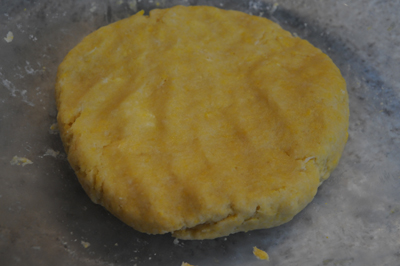
First mix the dry ingredients together, then add the butter and eggs, gradually adding the water until you get a nice smooth dough. Divide the dough into two balls and flatten with the palm of your hand, then put them in the fridge for a half hour or so.

Meanwhile, mix the goat cheese with the sugar, vanilla and orange zest.

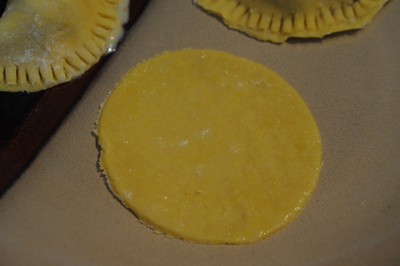
After the dough has chilled, transfer it to a floured surface and roll out to maybe 1/8 inch thick. Cut the dough up into small disks (I thought my biscuit cutter was a bit too small so I used a glass). Stop eating the dough or you won't have enough to make the empanadas. Whisk the egg white and yolk lightly in two separate bowls.
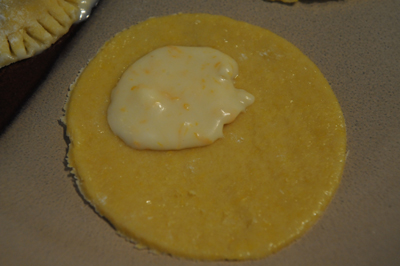
Now place a teaspoon or two (depending on the size of your disks) of the goat cheese mixture sort of off-center on each disk.

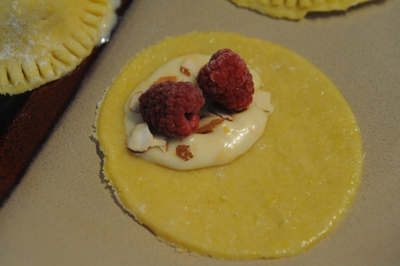
Sprinkle with the sliced almonds and add two raspberries.

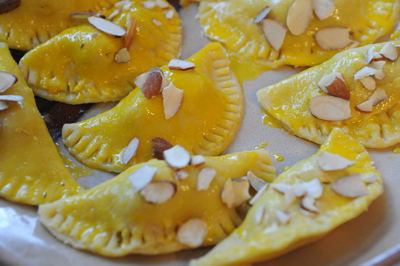
Paint the edges of the disk with the egg white and then fold the dough over, pinching to seal. Press down with a fork along the edges and then cut three tiny slits in the top to (theoretically) help stop your empanadas from exploding in the oven. Now brush with the egg yolk and then sprinkle with some more almonds and the demerara sugar.

Return the empanadas to the fridge for another 30 minutes, then transfer to a preheated oven and bake at 375 degrees for 20 to 25 minutes or until they turn a nice golden brown color.

Now let's do the sauces, since they can be made ahead too.

To make the aji criollo, just put everything except the chopped white onions and salt in a blender or food processor and blend until you get a smooth sauce. Now add the onions and salt. Done!


Now for the curtido:

First sprinkle the onions with 1 tbsp salt and set aside for 10 minutes or so. I think this helps draw out some of the liquid in the onion, which I'm guessing makes them crispier though that is a hugely uneducated guess. Now pour lukewarm water over the onions and let sit for 10 additional minutes. Rinse and drain.

Put the onions in a bowl with the lime juice and oil and refrigerate for 30 minutes. Just before you are ready to serve, take them out of the fridge and add the tomatoes and the cilantro. Adjust the salt to taste and serve.

Finally, the salsa de mani:

Mix the peanut butter with half of the milk and stir until dissolved.

Melt the butter/oil over medium heat and then add the onion, achiote, cumin and salt. Keep stirring until the onions are translucent.

Add the peanut butter/milk mixture and the rest of the milk. Bring just to a boil, reduce heat and simmer for 10 minutes, stirring frequently. Remove from heat, then add the boiled egg, cilantro and onions. (Note: you may need to add a little more milk to thin the sauce).

Since the potato dough for the llapingachos has to sit at room temperature for a while, I'm going to have you do that next.

First boil and drain the potatoes. Now you need to heat the oil over a medium to high flame and add the onions and achiote. Cook until the onions are translucent.

Mash the potatoes (don't add any milk or butter, just mash them) and then add the onion/achiote mixture. Add salt to taste, then let the mixture set at room temperature for one hour.

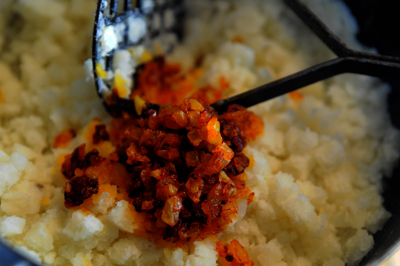
Roll the potato dough into balls about the size of golf balls. Make a hole in each one with your finger (they will fall apart a bit when you do this, so its best to cup them in your hand and then press them back into shape as necessary) and then stuff the grated cheese into each hole. Close up the holes and gently press each ball into a flat patty. Put in the fridge for another half hour to hour.

Now cook each patty on a dry, nonstick frying pan. If you use oil these things will fall apart, so just cook them right on the nonstick surface. And don't be tempted to press down on them or they will crumble. You need to make sure they are the right shape before they go in the pan. When brown on one side, turn them over gently and brown the other side.

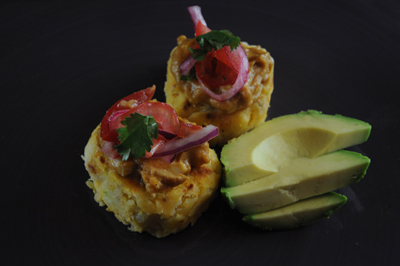
Top with the salsa de mani and onion curtido.

OK, if you haven't already dropped dead I just have one more thing for you to do—the main course. Here goes:

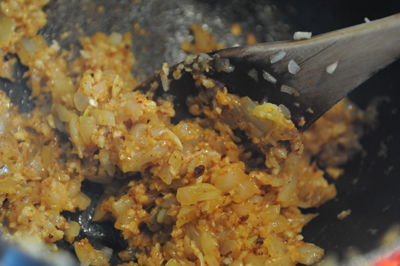
Heat the first measure of oil over a medium flame and add the onion and garlic. Keep stirring until the onion is translucent.

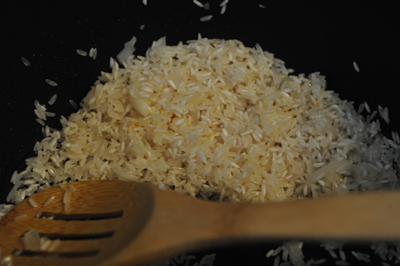
Now add the rice and stir. You want every grain of rice to be covered with oil.

Next add the broth and bring to a boil. Continue to boil until the broth is absorbed, then reduce the heat as low as it will go. Cover the pot and let simmer for 15 minutes, or until the rice is al-dente.

Now heat that second measure of oil and add the rest of the chopped onions and the two whole heads of crushed garlic. Cook until the onions are translucent. Now add the spices, half of the cilantro and the bell pepper. Cook for five more minutes, stirring often.

Here's where you add the seafood. Start with the stuff that will take longer to cook, such as the white fish, the shellfish and large shrimp.

Gradually add the rest of the seafood and stir for three or four minutes.  Transfer the rice to the pot and mix well. Keep stirring until everything is cooked through.

Add the rest of the cilantro and salt and pepper to taste.

OK so I'm sure you're wondering if it was all worth it. And yes, yes it was. This meal was truly as delicious as it looked like it was going to be, and though my back ached for three days after all that time in the kitchen it was more than worth all the effort.

The arroz marinero was excellent and probably came out better than any paella I've ever made. The rice was really light and fluffy (which is because of the cooking technique of boiling off the stock and then simmering) and the spices made the dish different enough that I didn't actually feel like I was eating some variation of a paella. Martin enjoyed this dish too which is saying something since he doesn't tend to love seafood, though he'll usually eat it without too much complaint. I really enjoyed the aji criollo on top of this dish, which was really spicy and made for a delicious twist on seafood, which I don't often eat with a spicy accompaniment.

The llapingachos, well, what can I say about them. I've never had so much success with a mashed-fried-patty anything, and I think Laylita was seriously on to something when she hit on frying these in a dry pan. Next time I try making one of those infamous bean patty things which seem to be so popular in Caribbean nations, I'm going to do it this way to see if I can get an actual patty instead of a pile of greasy mush. But beyond that, the llapingachos were also really tasty. I could have put more cheese in them because as they were they really just barely tasted of cheese, which is a crime against cheese. But topped with the salsa de mani and the curtido they were still irresistible. I wish I'd made more of them. Tons more.

And just for a laugh, here's what my kids' plates looked like:


 And yes, they looked pretty much exactly the same at the end of the meal, too.

As for the goat cheese empanadas—well, I once loved goat cheese but let me just say that norovirus and goat cheese aren't really a good combination (and I'll leave it at that). Ever since that experience I've kind of not really liked goat cheese anymore, but in this recipe it was pretty good. I think I would have preferred to make these empanadas with cream cheese but that is wholly because of my own negative experiences. Goat cheese lovers will love this recipe, I promise. Even my kids loved it. Hailey was shocked to learn she'd just eaten goat cheese and still wanted more. And that is really saying a lot.

So if I had to pick a country in South America to visit, I think Ecuador would be right up there at the top of my list, though I doubt I would do much more than eat the whole time I was there. Well, maybe I would visit the beach while eating. Or eat as I explored Galápagos. You get the idea.

Next week: Egypt

For printable versions of this week's recipes:

Thursday, October 25, 2012

Recipes from Colombia

Entertainment-wise, it's going to be really difficult to top Clipperton Island and Cocos (Keeling). Colombia, as far as I know, has never had an insane lighthouse keeper declare himself king, nor has it been ever occupied by an eccentric ex-explorer and his harem of 40 Malay women. Instead, it has the same sad story that most of the countries on this side of the globe share—discovery by Europeans followed by decades of slavery and the eventual decimation of the native population.


Colombia is, as you probably already know, a South American nation. Today, it has the dubious distinction of being the world's number one producer of cocaine, an industry that has fueled the continent's longest-running armed conflict. Government forces, right-wing paramilitaries and left-wing insurgents have been fighting in Colombia since the 1960s in a conflict that has personally affected a whopping 1/3rd of the nation's population. In the 1990s, at least 35,000 people died as a direct result of this conflict, and between 2000 and 2011 the violence forced 3.7 million people to flee their homes. In short, this is really not a place you want to be living at the moment. Or visiting. Which is why you should, you know, just travel there by stove. Open-mouthed smile

As far as food goes, Colombia is probably best-known for its coffee (yes, coffee is a food). Colombia is very ethnically-diverse, and its culinary traditions reflect that—Spanish, African, Asian and Arab influences can be found in many of the dishes, which of course have roots in indigenous traditions and locally available foods.


As I was researching the history part of this entry I actually found myself regretting that I didn't look up Colombian cuisine on Wikipedia before I decided on this menu. Because I found a few dishes in that entry that I probably would have rather cooked than the ones I settled on (Ajiaco sounds pretty danged tasty). But by the time I got around to checking out Wikipedia it was too late to turn back, though, so here's the menu I did do:

Cerdo Encebollado (Pork with Onion Sauce)

  • 1 1⁄2 pound boneless pork loin
  • Salt and pepper to taste
  • 2 tbsp vegetable oil
  • 3 large onions, thinly sliced
  • 1 cup aliños sauce*
  • 2 cups water
This recipe came from Colombian blogger Erica, who blogs at My Colombian Recipes. Now that I think of it, all of this week's recipes came from Erica. What can I say, she had some great resources on her website. Bloggers are always the best source for authentic recipes.

Here's the recipe for the Aliños Sauce, ingredient number 5 in the Cerdo Encebollado.

  • 1/2 medium green pepper, chopped
  • 1/2 medium red pepper, chopped
  • 1/2 medium onion, chopped
  • 4 scallions, chopped
  • 1/2 tsp cumin
  • 2 cloves garlic, crushed
  • 1 cup water
  • 1/2 tbsp Sazon Goya with Azafran *
* Sazon Goya with azafran contains MSG, which may or may not bother you.

Here's the side dish:


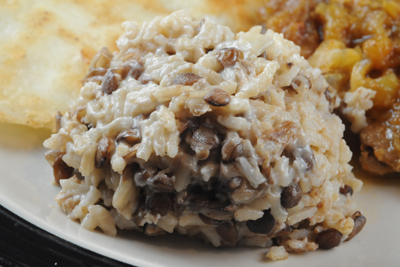
Arroz con Coco y Lentejas (Rice with Coconut and Lentils)

  • 1/2 cup lentils
  • 1 cup rice
  • 1 tbsp olive oil
  • 1/4 cup chopped onion
  • 1 garlic clove, crushed
  • 1 bay leaf
  • 2 cups coconut milk
  • 2 cups water
  • Salt to taste
  • Fresh cilantro for serving
And the bread (sort of):

Arepas de Queso (Cheese Cornmeal Patties)

* I got my arepa flour at the Mexican Market in Auburn, CA. You can also order it from Amazon.com, if you don't have a local source for Hispanic foods in your area. I do think you need to have it in this recipe, rather than just using cornmeal. It gives the bread a particular kind of texture that you won't get with cornmeal.

So I started with the lentils and rice, since the lentils have to soak.

For some reason, this was the only photo I took of the Arroz con Coco y Lentejas.


First rinse the lentils and cover them with water for about 30 minutes.

In a large pot, cook the onions in the olive oil until they are translucent. Then add the garlic and keep stirring for an additional two minutes or so.

Add the lentils to the pot along with the bay leaf, salt and water. Bring to a boil, then reduce heat to medium. Cover and cook for 30 to 40 minutes or until the lentils are tender and there is little or no water remaining in the pot.

Throw out the bay leaf and add the rice, then pour in the coconut milk. Return to a boil, then reduce heat to low. Cover the pot and simmer for 20 minutes or until the rice is tender. (Note: I have a hard time getting rice to absorb coconut milk, so I usually add a little bit of water. If your rice isn't tender after 20 minutes try adding about a half cup of water to the pot.)

Garnish with the cilantro.

You will need the aliños sauce for the pork, so to make that just put all the ingredients in a food processor and blend until you get a smooth paste.


On to the pork:

Cut the pork loin up into 8 slices, trimming the excess fat. Pound with a mallet until each slice is about 1/4 inch thick. Season with salt and pepper on both sides.


Heat the oil in a large pot and brown the pork on both sides. Transfer to a plate and set aside.


Now add the onions to the pot and brown them, then add the aliños sauce and cook for another minute or so. Pour in the water and scrape the bottom of the pot to loosen any brown bits.
 
Return the pork to the pot and bring to a boil, then reduce heat and partially cover the pot.


Cook for about an hour and 15 minutes, or until the pork is tender and the sauce is thick (you may have to add a little bit of water to keep it from drying out).

Finally, the arepas, which are really more like a flatbread than a "pattie," as Erica describes them. They do take a bit of time since you have to do them in batches, so bear that in mind when planning your meal.

First mix the P.A.N. with the warm water, grated cheese, salt and half of the butter. Let stand for five minutes.


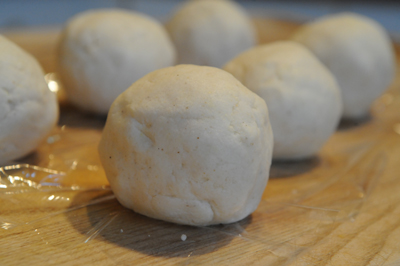
Knead for 3 minutes (moisten your hands with a little bit of water if you need to). Shape the dough into four small balls and place between two large sheets of plastic wrap.

(I doubled the recipe so I had more than four balls)


Flatten each ball with your hands (Erica recommends using the bottom of a pot). Each bread should be about a quarter inch thick.

Now put the rest of the butter in a large pan and melt over medium heat. Working in batches, cook each bread about 3 minutes on both sides, until it forms a crust and starts to turn a golden color (Note: don't be impatient. If you try to turn them too soon, they will fall apart.).


Everyone in my family tried this meal, with mixed results. The pork was good but sadly it wasn't really that interesting. My kids picked the pork out of the onions, of course, because onions are the stuff of horrible nightmares (if you have kids you know what I'm talking about).

I really liked the Arroz con Coco y Lentejas, but I typically adore anything with rice and coconut milk in it. I could really taste the Caribbean influence in that particular dish. 7-year-old Dylan liked it too, as did Martin and Henry. But the girls both moaned about having to try it and then left most of it on their plates. Which I really don't get, but I honestly don't get a whole lot about those girls and their tastes in food.

Finally, I have to rave about the arepas. They were really good, with an interesting, firm texture and a lovely salty, cheesy flavor. I would definitely make them again, and probably will the next time I'm cooking anything vaguely South American.

I'm not personally done with Colombia (in fact I'm about to go in search of an Ajiaco recipe, which I will make with some more arepas). But for Travel by Stove, it's time to move on.

Next week: Comoros

For printable versions of this week's recipes:


Copyright 2023 Becki Robins and Palfrey Media.. Powered by Blogger.

Blog Flux

Blog Directory