Recipes from Marche, Italy

For this entry, I made two recipes. Neither of them were especially good, but I don't blame the people who posted the original recipes or any of the traditions they came from, I blame myself and my propensity for Googling things that might kill me.

Recipes from Marche, Italy: Brodetto

A seafood stew with mussels and clams, minus the Vibrio.

Recipes from Marche, Italy: Filone Casereccio

An Italian bread that will come out much better than mine did if you use fresh brewer's yeast and steam.

Recipes from Malta

This is actually the third time I’ve cooked a meal from Malta. The first time, I cooked the meal and then just did not write the blog post. Years went by.

Recipes from Malta: Imqarrun

Imquarrum (also called Imqarrun il-forn) is descended from a dish served in Sicily, but the Maltese have adopted it as a traditional staple. The key to making this dish is to be patient.

Showing posts with label North America. Show all posts

Thursday, October 17, 2013

Recipes from Greenland

Well it was autumn here for a few days, so I was ready for a little bit of food from a frozen land. But then Ms. Weather changed her mind and we're looking at another week of 80+ temperatures. Lame.

I really love the summer, but when the kids go back to school and the Halloween decorations come out, I'm done. I'm ready for hot chocolate and for that damned swamp cooler to come down out of the living room window so I can have my view back.

So this would have been a great October meal, if it had actually seemed like October when I was cooking it.

Greenland as you know is a massive big chunk of ice up there in the Arctic Circle, or more accurately just partly in the Arctic Circle. Greenland is an autonomous country but it is actually within the Kingdom of Denmark. It is also the world's largest island, and the least densely populated country in the world.

I would not have actually guessed that it would be tough to find recipes from places like Greenland and the Faroe Islands. It is in fact particularly difficult, but not for the reasons you would imagine. There are actually resources online for Greenlandic recipes but because of its location, Greenland doesn't use a lot of what we would consider "standard" ingredients like pork and chicken. I'm guessing, though I can' t really say for sure, that this is because the chickens and pigs would all turn into vaguely chicken- and pig-shaped icicles if Greenlanders tried to raise them in Greenland itself. So instead, the local cuisine is based on game like marine mammals, reindeer, seabirds and fish. Now I have made reindeer before, but it's cost prohibitive for me to do it again, at least not right away. And I'm pretty sure I'm not legally allowed to go shoot a whale or a seabird, nor would I want to. So that leaves fish.


Fortunately I did find plenty of Greenlandic fish recipes, though all of them were in Danish. Also fortunate was that they all called for cod, which is easy to obtain out here in California. And I found a pretty good side as well as a bread and cake recipe too, so I was happy. Here's the menu:

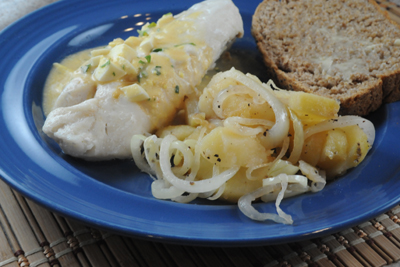
Boiled Cod with Mustard Sauce (This recipe comes from The All Times Cookbook)
  • 1 lb cod filets
  • cold water
  • 1 tsp of salt*
For the sauce:
  • 1/3 cup fish stock
  • 1/3 cup potato water
  • 1/3 cup milk
  • 1 tbsp butter
  • 1 tbsp all-purpose flour
  • 1 tbsp mustard (I used dijon)
  • 1 tbsp chopped parsley
  • 2-3 hard-boiled eggs, chopped
  • 2 tbsp grated horseradish
  • 1 tbsp melted butter
*The original recipe called for a "handful" of salt. I interpreted this to mean a very small handful. Also, like so many of these translated recipes, there were no measurements included so most of the measurements you see above are my guesses.

The rest of these recipes came from The Greenland Surveyor:

Kartoffelsalet Varm (Hot Potato Salad)
  • 2 3/4 lb potatoes
  • 1/4 cup vegetable oil
  • 1 onion, sliced
  • 1 1/4 cup chicken stock
  • 1 cup vinegar
  • 2 tbsp sugar
  • salt and pepper
Chef's Bread
  • 4 cups whole wheat flour
  • 1 1/2 cups lukewarm water
  • 4 tsp active dry yeast
  • 1 tsp salt
  • 2 tsp sugar
  • 2 tbsp butter or margarine
  • 1 egg, beaten (for brushing)
  • Poppy seeds to taste
Chef's Dream Cake
  • 2 cups all-purpose flour
  • 1/4 cup butter or margarine
  • 1 1/2 cup sugar
  • 3 eggs
  • 3 tsp baking powder
  • 1 tsp vanilla sugar
  • 2 cups milk
For the filling:
  • 1/2 cup butter or margarine
  • 1 1/8 cup coconut
  • 1 1/8 cup brown sugar
  • 1/4 cup milk
First the bread:

Dissolve the yeast in the water. Add about a third of the flour, then the rest of the ingredients. Gradually add the remainder of the flour and knead until you get a smooth dough.

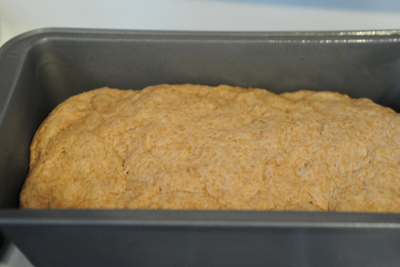
Place in a warm area and let rise for 30 minutes. Punch down and transfer to two loaf pans.

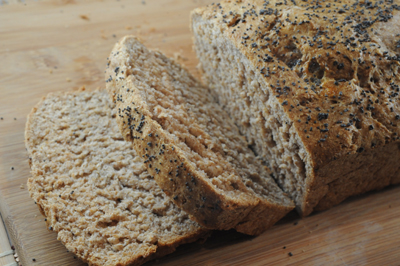
 Let rise for another 30 minutes. Brush with the egg wash and sprinkle with poppy seeds. Bake at 395 degrees for 45 minutes or until golden.

 
Now for the cake:

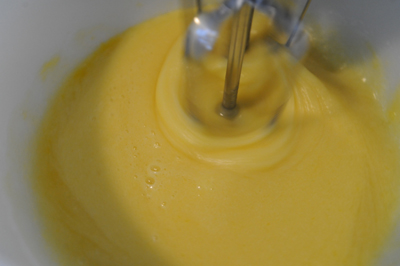
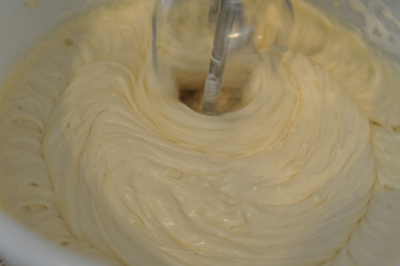
Cream the eggs and sugar. When ready, the eggs should make ribbons and be a pale yellow color.

 
Now sift together the flour, baking powder and vanilla sugar and gradually add to the eggs and sugar. Warm the milk and butter and add to the rest of the batter.

 
Line a baking pan with waxed paper and bake at 395 degrees for 20 minutes, or until a toothpick inserted in the middle comes out clean.

 
Meanwhile, combine the ingredients for the filling in a small pan and heat on your stovetop. Spread over the top of the cake and return to the oven for five minutes at 430 degrees.

Just a note about this cake: 2 cups of milk seemed like way too much. I double checked the ingredients and conversions and they matched the original recipe, but I don't know if something got mucked up in translation. I can't promise this recipe is correct, I can only tell you how the translation said to make it.

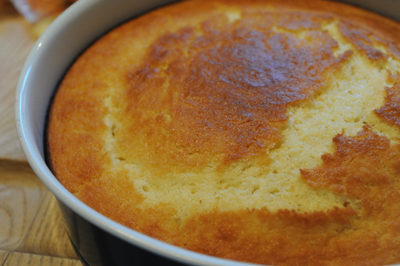
Also, I wanted my topping to caramelize a little so I left it in the oven longer.

OK now for the fish. Dice up the cod filets and sprinkle with salt. Return to the fridge for 4 or 5 hours, then rinse and transfer to a pot of water. Add 1 tsp of salt and then bring the pot to a boil. By the time the water reaches the boiling point the fish should be done.

Reserve 1/3 cup of the boiling water for the sauce. You can also use the potato water from the potato salad, so don't pour that away either. Mix together the stock, potato water and milk.

 
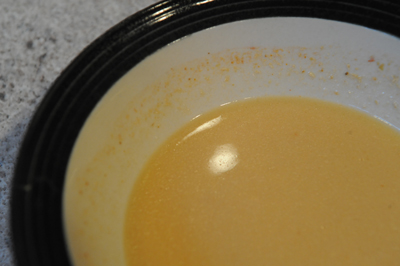
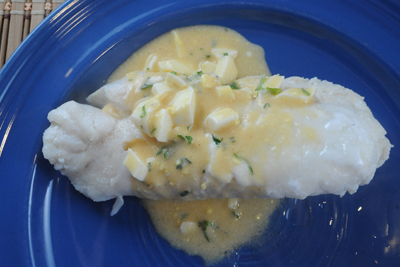
In a separate pan, make a roux from the butter and flour. Pour in the stock mixture and bring to a simmer. When the sauce has thickened, add the parsley, hardboiled eggs, horseradish and melted butter. Pour over the fish and serve.

 
Finally, the potato salad:

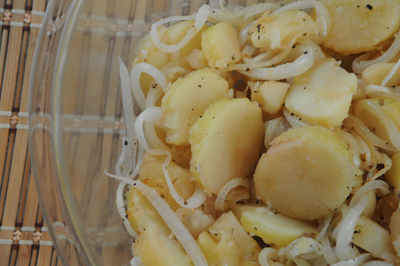
Boil the potatoes in their skins, then peel and cut into cubes. Sauté the onions in the oil, then add the vinegar, stock and sugar. Season with salt and pepper.

Reheat the potatoes and add to the onion mixture. Serve hot.

 
I liked this meal. I would have liked it better if it had been cold outside, but there you go. The fish was really good—I liked the sauce a lot and might actually make it again the next time I want to liven up a boring piece of fish. The potato salad was a nice side that went well with the fish. The bread was OK, but I feel that way about any whole wheat bread (as you already know if you read this blog). Martin thought it needed more salt, which was annoying because this time I really didn't forget the salt.

The cake was very strange. It had an odd sort of spongy texture only with less air in it. I attribute that to the amount of milk called for in the recipe. I keep thinking I made a mistake somewhere, maybe in the conversion of the ingredients, because I'd be surprised if that was the right texture. But I swear, I did double check so I guess I'll just have to shrug my shoulders. The flavor was fine and I really, really liked the topping, especially after it caramelized in the oven and developed a nice crunch to it. Although I did wonder about the whole coconut thing—I really can't picture palm trees in Greenland.

Next week: Grenada

For printable versions of this week's recipes:

Thursday, June 27, 2013

Recipes from French Saint Pierre and Miquelon

Guess what, another island where they eat a lot of fish. Yay.

Eh, it was actually pretty good. But these islands, you know, they really need to try chicken now and then.

In the defense of Saint Pierre and Miquelon, though, there's not a whole lot of people there writing cookbooks on local cuisine. In fact at just under 6,000 people, French Saint Pierre and Miquelon is only about four times the size of Rough and Ready, CA. So it's possible and probably even likely that there are many different local recipes for chicken, but of course I couldn't find them because I am always singing the same song about these places. La, la, la no recipes online.


Located 12 miles off the Burin Peninsula of Newfoundland, Canada, French Saint Pierre and Miquelon is an archipelago consisting of eight islands, two of which have actual people living on them. These islands are the last crumbs of New France, the former colonial empire that once stretched from the gulf of Mexico to the northern tip of Newfoundland. Poor France.

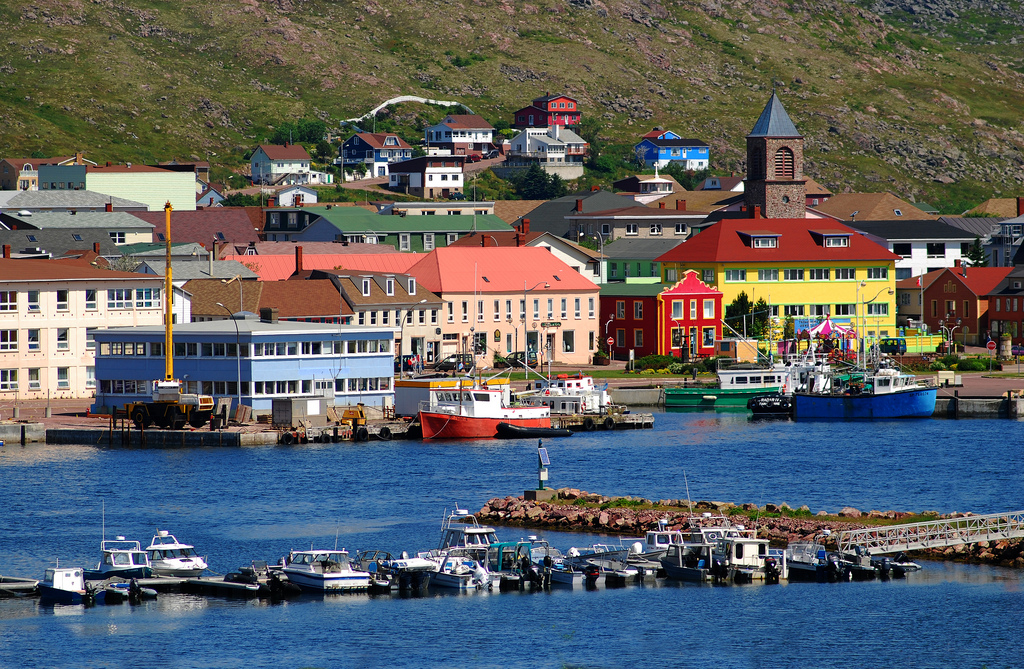
St. Pierre. Photo Credit: Gord McKenna.
Saint Pierre has the dubious distinction of being the site of the one-and-only execution by guillotine ever performed in North America. Saint Pierre is evidently proud enough of this little bit of infamy that said guillotine, which had to be imported from the Caribbean of all places, now resides in a local museum. The French also made a movie about the whole sordid affair (The Widow of Saint-Pierre). Well, we all have to have our claims to fame.

Anyway as I mentioned earlier, they eat a lot of fish on Saint Pierre and Miquelon. Cod is fished in the region and is heavily eaten there, along with lobster, snow crab and mussels. So my menu is very seafood-based, and came entirely from French-language sources because that's literally all there was.

Here are the recipes:

Cod Fillet with Cream
(From Recital Culinaire)
  • 4 fresh cod fillets (or cod)
  • 1/2 cup white wine
  • 1/2 lemon
  • 2 tbsp chopped chives, tarragon and parsley
  • 3 tbsp butter
  • 2/3 cup heavy cream
On the side:

Salad with Crab, Apples and Oranges
(From The Workshop of Boljo)

For the salad:
  • 2 cups baby spinach leaves
  • 2 tomatoes
  • 1/4 red onion, chopped
  • 1 orange, peeled and diced
  • 1 apple, peeled and diced
  • about 1 1/2 cups cooked crab meat
For the dressing:
  • 1/2 cup orange juice
  • 3 tbsp olive oil
  • 1 tbsp cold water
  • 1 1-inch piece ginger, grated
  • Salt and pepper to taste
Now I must admit, I am not utterly convinced that this recipe comes from St. Pierre and Miquelon. It was on a French language blog authored by someone who does post recipes from the region, it was included in a link list of recipes from St. Pierre and Miquelon, but it wasn't specifically tagged as such. So the jury is out.

And for dessert:

Date Squares
(From Recital Culinaire)
  • 1 3/4 cup rolled oats
  • 1 1/2 cups flour
  • 1 cup brown sugar
  • 1 cup soft butter
  • 3/4 tsp baking soda
  • 18 oz pitted dates
  • water
  • 1/2 cup brown sugar
Starting with the dessert:

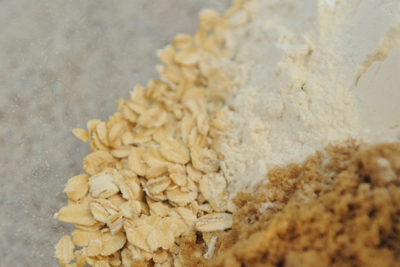
Preheat your oven to 350 degrees. Combine the flour with the baking soda, brown sugar and rolled oats.

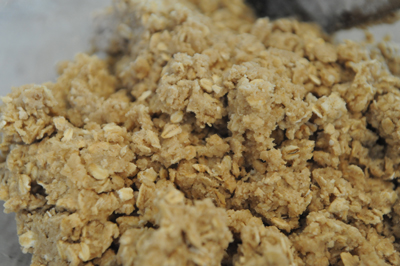
Now add the butter and mix with your hands until you get a crumbly mixture.

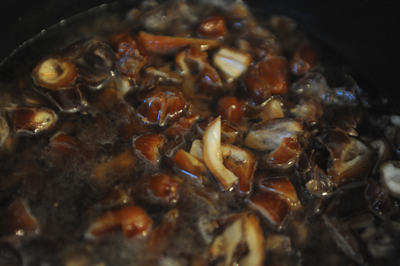
Chop up the dates into a small dice and add to a saucepan with enough water to cover. Add the brown sugar and bring to a boil, then reduce heat and simmer for 10 to 12 minutes or until the mixture is the consistency of jam. Remove from heat and mash. Let cool.

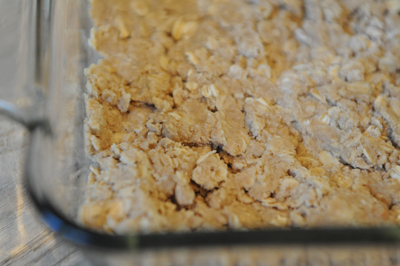
Butter an 8x8 inch baking pan and cover the bottom with half the dough. Now add the dates and top with the remaining dough.

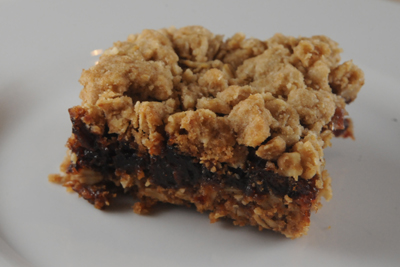
Bake for 20 to 30 minutes, or until the top begins to turn a golden color. Remove from the oven and let cool slightly, then cut into squares and serve.

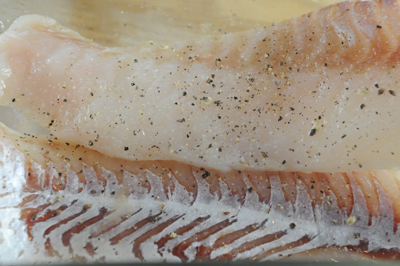
Preheat your oven to 350 degrees. Rinse the fish and place it in a buttered casserole dish. Drizzle with the wine and lemon juice and add salt and pepper.

Transfer to the oven and bake until a meat thermometer registers 100 degrees. Cover with aluminum foil and continue to bake until the thermometer reaches 145. Remove.

Meanwhile, mix the herbs with the softened butter, a little bit of lemon juice and some salt and pepper.

Drain the juices from the casserole and transfer to a small pan. Bring to a boil for 2 to 3 minutes or until reduced to about 3/4 its original volume. Remove from heat.

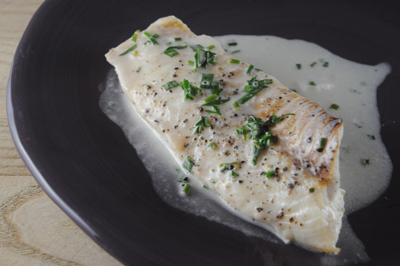
Add the butter and herb mixture and the cream, whisking constantly. Bring to a simmer for 1 or 2 minutes. Pour over fish fillets and serve.

Finally, the salad:

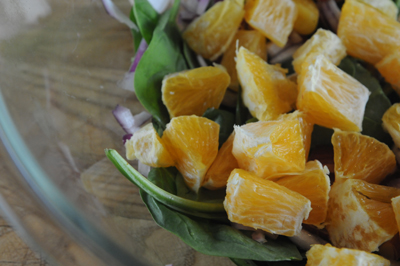
Line the bottom of a salad bowl with the spinach. Then add a layer of tomatoes, red onion, orange pieces and apple pieces.

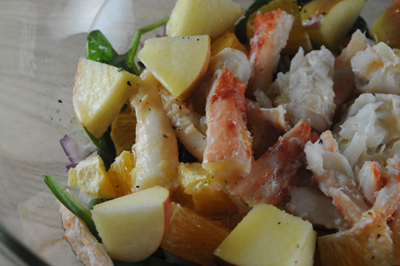
Top with the crab. Whisk the ingredients for the dressing together in a small bowl and pour over the salad. That's it!

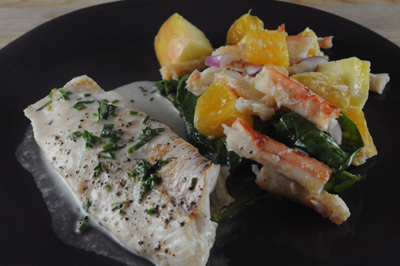
Meal from French Saint Pierre and Miquelon
What we thought: I loved the salad. Martin, not so much. He said it was just because he wasn't in the mood for crab, but whatever. I thought the crab with the fruit was a really nice combination.

The fish was good, too. Basic, but good. The original recipe said to serve it with fries, which honestly probably would have been a better fit than the salad since it was a pretty rich dish. But I'm trying to cut some calories out of my diet so I'm glad I went with the salad, though it was a bit of an odd combo.

The date squares were fabulous. So good in fact that I gave half the pan away because I was afraid that I would eat them all. Martin was quite angry with me actually. He went away on a business trip and when he came home the date squares were all gone. But yeah, they were yummy.

So that's another seafood meal done. Now it's on to … another seafood meal. Jeez.

Next week: French Wallis and Futuna

For printable versions of this week's recipes:

Thursday, March 7, 2013

Recipes from Eastern Canada

Someone laughed at me this week when I said I was dividing Canada up into regions. Maybe it is a tad silly, I mean, it's not like Canada is known for its cuisine or anything. I've seen French restaurants, Indian restaurants and Chinese restaurants, but I don't think I've ever seen a Canadian one. Though I did once go to an "American" restaurant in the UK. All the waiters wore cowboy hats and I think there was sawdust on the floor.

Anyway, Canada is a big country and it is actually pretty diverse, so I still stand by my decision to divide it into regions. And in fact this week's meal was considerably different from the meal I did for Central Canada, so that is yet more evidence that it was the right thing to do.

The Battery, St John's, Newfoundland. Photo credit: manumilou via Compfight cc
Depending on who you ask, Eastern Canada is either everything east of Manitoba, or it's just the eastern coastal provinces. Now, when I did Central Canada I included Quebec and Ontario in that region, so for the purposes of this post I focused on Newfoundland, Labrador, New Brunswick and Nova Scotia (also called Atlantic Canada). And then as I was narrowing it down to just the three recipes I ended up serving, I was down to just Newfoundland.


It probably won't surprise you to hear that a lot of the cuisine from this part of Canada is seafood-based. The seafood industry in Newfoundland and Labrador alone is a $1 billion industry employing more than 20,000 people. Cod was once the most important fish harvested in this area, until overfishing drove the Canadian government to place a moratorium on it in the early 90s. Today, snow crab and shrimp have replaced cod as the region's most important harvested species. Aquaculture is also an important part of the industry: atlantic salmon, steelhead trout, and blue mussels are all farmed in Newfoundland.

So yes, I chose a seafood recipe. I wanted something that was pretty traditional, so I searched until I found this recipe on a website called Newfoundland Island Recipes:

Salmon Pie
  • 8 oz cooked salmon, flaked
  • 1/2 cup butter, divided
  • 2 lbs potatoes (use an extra pound if you want your topping to be thick)
  • 1/4 cup warm milk
  • 1 egg, unbeaten
  • 1 1/2 cups reserved potato water
  • 2 onions
  • 3 tbsp flour
Martin likes to eat his pies with baked beans, so I thought it would be fun to make some baked beans from scratch—having only ever eaten them out of a can. Wow that sounds so embarrassing when I say it out loud.

Here's the Newfoundlander's version of Old Fashioned Baked Beans:
(from Newfoundland.ws)
  • 2 lbs dried white navy beans
  • 1 medium onion, sliced
  • 1/4 cup ketchup
  • 1 tsp yellow mustard
  • 1/4 cup brown sugar
  • 3/4  lbs salt pork, sliced
  • 1/2 cup molasses
And I also chose a sweet bread for dessert, although this would have been fine served with the meal, or even for breakfast and/or with a cup of coffee:

Lassy Bread
(also from Newfoundland.ws)
  • 1 tsp sugar
  • 1/2 cup lukewarm water
  • 2 1/4 tsp active dry yeast
  • 2 1/2 cups milk or water
  • 1/4 cup butter
  • 1 tbsp salt
  • 1/2 cup molasses
  • 6-7 cups flour (all-purpose)
  • 2 tsp cinnamon
  • 1 tsp mace
  • 1 tsp cloves
  • 4 cups raisins
Starting with the beans:

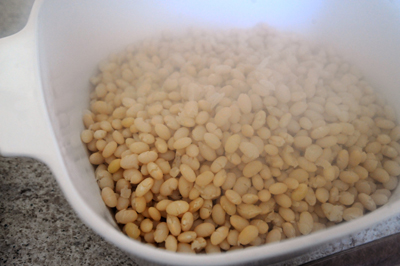
I feel like I should put this is all caps and hot pink text or something, because I'm always forgetting to soak beans. So the day before you make this meal, SOAK YOUR BEANS. Amazingly, I did remember to do it this time.

The next morning, rinse the beans then put them in a pot with water. The water level should be about two inches above the top of the beans. Now boil for about 30 minutes, or until the beans are tender.

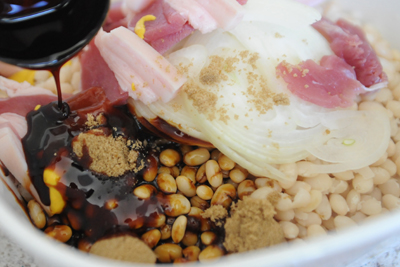
Preheat your oven to 250 degrees. Transfer the beans to a casserole dish and mix in the rest of the ingredients. (Note: you can get salted pork at Safeway! It comes packaged and can be found with the sausages or with the bacon, depending on your store).

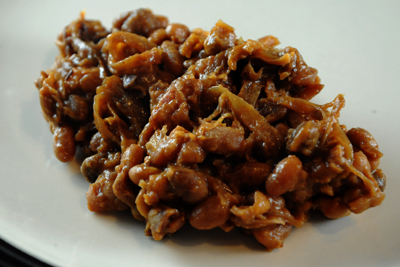
Cover and bake for 6 hours, then remove about 1 cup of the beans and mash them with a potato masher. Mix them back in and return to the oven for another hour, this time uncovered.

Now if your husband has also never eaten baked beans that did not come out of a can, he might be horrified to discover (as mine was) that old fashioned homemade baked beans are quite a bit drier than what he is used to. This actually may be the first time in my life that I've made something from scratch, only to be told that I need to do a better job emulating the stuff that comes out of a can. So if your family (or you) like a saucier bean, I don't think it's too off the recipe to mix a little water in with the beans towards the end of the baking cycle.

So meanwhile, make the bread. Now you already know I do everything in my bread machine, even bread recipes that aren't really intended for a bread machine. But if you want to do it the traditional way:

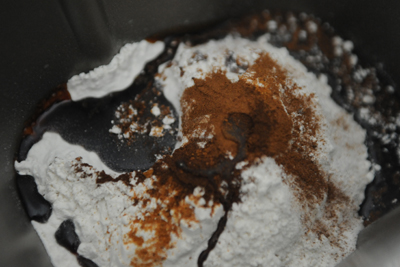
Add the sugar to the water and then use that mixture to dissolve the yeast. Let stand until frothy (10 to 15 minutes). Meanwhile, put the butter and milk in a small pan and heat until the butter melts. Remove from the stove and let cool to lukewarm.

Meanwhile, mix the molasses with the yeast mixture, half of the flour, spices and raisins. Mix well. Add the rest of the flour bit by bit until you get a soft dough. Knead for 10 minutes or until the dough is smooth and elastic.

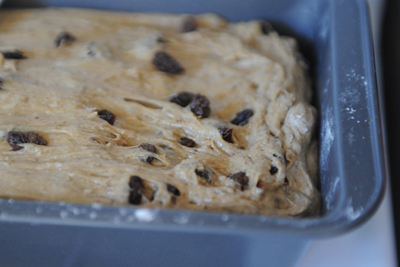
Put the dough in a lightly oiled bowl and let stand in a warm place until it is about doubled in size. Now divide the dough in half and transfer to two greased 9x5 loaf pans.

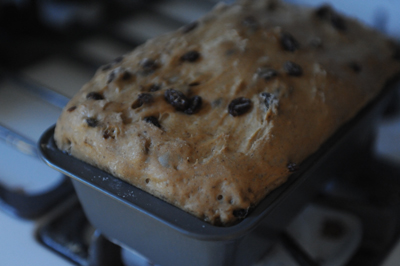
Cover with a clean, damp tea towel and let rise again for 1 to 2 hours, or until it doubles again.

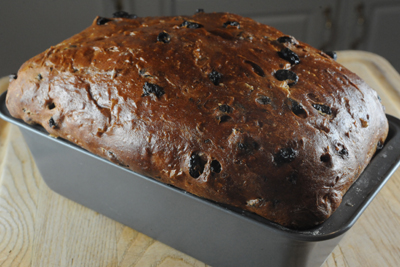
Bake in a 370 degree oven for 1 hour. The bread should be golden and should make a hollow sound when you knock on it. Remove from the oven and brush with a little melted butter.

Finally, you can get started on the fish pie. It helps if you have two ovens, because the baking temperatures are quite a bit different between the beans and the pie, and the beans have to be cooked for a long time. Don't have two ovens? You'll probably need to finish the beans an hour before the pie, and then reheat.

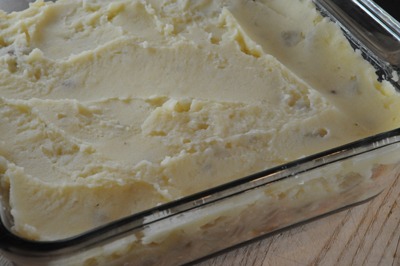
So first, preheat your oven to 350 degrees. Boil the potatoes until soft, reserving 1 1/2 cups of the water. Now mash the potatoes with the warm milk, half of the butter and the egg and set aside.

Now melt the rest of the butter over medium heat, then cook the onions in the melted butter until soft. Reduce the heat and add the flour, whisking continuously until you get a roux. Keep whisking while you add the potato water, then add the salmon.

Transfer the salmon mixture to a casserole and then spread the potatoes on top. Bake until the potatoes turn a nice golden brown color.

So, I made this for me and Martin, because of that whole fish problem that my kids have. But I still made way too much, so really I might as well have made this for everyone because I would have ended up throwing about as much of it away anyway.

It was a nice meal but pretty basic. I think I would have preferred a fish pie with a few more spices in it, just to dress it up a little. The baked beans came out great, except (apparently) for being too dry. They did taste almost exactly like baked beans in a can, which begs the question: why go to all that trouble to make them from scratch when my husband would clearly rather have the canned variety anyway? I had tons of leftover beans too, but I made pot pies later in the week and they went really nicely with them as leftovers. My kids all ate them, except of course for Hailey who really doesn't like anything unless it's bread. You know that time-honored parental threat: "I'm going to send you to your room and you can have stale bread for dinner!"? That would not have a negative impact on Hailey. She would love to have stale bread for dinner alone in her room, where she can draw in peace.

The lassy bread was really good. The kids had it for breakfast the next morning and I think they even took some of it to school to have with their lunches. We ate it with butter but it would have been totally fine without butter, too. It was a really nice versatile bread—easy to make and delicious.

So that's Eastern Canada, ay? (Sorry.) Next week: Ecuador.

For printable versions of this week's recipes:

Thursday, August 30, 2012

Recipes from Central Canada

It's time for a confession. I know, you probably think I'm a bit of a food snob, or am at least trying to be one. I love Indian food, rabbit stew and gourmet cheeses. I turn my nose up at cheap coffee and I almost never buy frozen produce.

But I love French fries. Yes, I will even eat McDonald's French fries (I know, I know). So when I heard about poutine I kind of based my entire Central Canadian recipe around that one dish.

Poutine. It's basically just French fries smothered in cheese curds and gravy. Cheese curds, mmmm. Cheese + French fries = cardiac disease heaven. This dish originated in Quebec and is now a very popular fast food all over Canada, so I had to make it. I just had to.

Anyway you may be wondering just what parts of Canada are considered "Central," so we'll get that out of the way first. Central Canada includes Canada's two largest provinces, Ontario and Quebec. On the map, this region really looks more eastern than central, but there are much smaller regions on the coast that comprise the "East Coast region." Central Canada is a part of French Canada, so most of the food that comes from this region has French influences—hence the rich, cheesiness of the poutine.


It was actually harder to find recipes from Central Canada than it was to find recipes from most tiny African or Caribbean nations. I'll bet that surprises you as much as it does me.

If I had to guess (which is what I'm doing), I'd say that the reason for the difficulty is because Canadian food is a lot like American food: chefs take elements from cuisine that is popular in other parts of the world and combine them to make dishes that are delicious but not really quintessentially anything. So although I found a lot of "Canadian" recipes, I really had no idea how truly Canadian they actually were. Add to that the fact that most people think poutine is a meal all by itself, and I had extra difficulty trying to find a truly Canadian dish to go with this dish that I already had my heart set on.

So I did some Googling, which is my solution for everything, and I eventually found a forum where some Canadians were debating the different dishes that you could potentially serve with poutine. A few posters suggested a classic Quebecois dish called Tourtière, which is a recipe I kept running into during my research but ended up rejecting for two reasons: the first and primary because Tourtière is a winter dish (often served at Christmas time), and it's been 100 degrees here in Gold Country. The second reason was because it's a heavy dish to be paired with another heavy dish.


But you know, I just had to make poutine. And I couldn't find anyone anywhere who was suggesting an alternative dish to serve with it. So Tourtière it was.

Here's the recipe (this version came from Simple Bites):

  • 1 1/4 pounds ground pork
  • 3/4 cups cold water
  • 1/2 cup finely chopped onion
  • 1/4 cup finely chopped celery
  • 1/2 tsp ground black pepper
  • 1 bay leaf
  • 1/2 tsp dried savory
  • 1/4 tsp dried rosemary
  • 1/4 tsp grated nutmeg
  • 1/4 tsp cinnamon
  • Salt to taste
  • 1/4 cup old-fashioned rolled oats
  • Pastry for one 9-inch pie
  • 1 egg, beaten
And of course, the poutine:

For the fries:
  • 2 lbs unpeeled russet potatoes
  • Canola oil for frying
  • Cheddar cheese curds
For the gravy:
  • 2 tbsp butter
  • 1/4 cup cup white onion, diced
  • 2 tbsp all-purpose flour
  • 2 cups beef stock, warmed
  • 1 tsp Worcestershire sauce
  • Freshly ground black pepper, to taste
There are many versions of this recipe online, but this one seemed the most complete. It came from Thierry Pepin, a restaurateur who grew up in Quebec and posted his poutine recipe on AskMen.com. Of course, you could always do this recipe with a bag of frozen French fries and a can of gravy, but I only like to do things the easy way when I'm not blogging about it and no one will know.

I had to do a dessert, too, you know, to balance out all that super-healthy stuff we'd be eating for the main meal. So I picked this one, which came from Oak Cottage Recipes:

Old Quebec Molasses Cake

  • 1 1/2 tsp lemon juice, combined with enough milk to make 1/2 cup*
  • 2 large eggs
  • 1/2 cup sugar
  • 1/2 tsp baking soda
  • 1/2 cup molasses
  • 2 cups flour
  • 1/2 tsp cinnamon
  • 1/2 tsp nutmeg
  • 1/4 tsp ground cloves
  • 1/4 tsp powdered ginger
  • 1/2 cup of melted butter
  • 1/4 cup chopped toasted walnuts
  • 1/2 cup of sultana raisins
* This is a substitute for sour milk. If you have sour milk (which most American cooks probably don't), you can use 1/2 cup of that instead.

I almost always start with the dessert, unless it's something that needs to be served hot. So here's how to do the cake:

Preheat your oven to 350 degrees. Combine the lemon juice and milk and let stand 5 minutes, or until thickened.

Grease and lightly flour a 9-inch round baking pan.

Add the baking soda to the lemon juice/milk mixture and stir until dissolved.

Beat the egg with the sugar, then add the milk mixture and the molasses.


In a large bowl, stir the flour and spices together, then add this to the wet ingredients. Stir until completely mixed. Add the melted butter, walnuts and raisins.


Pour the batter into the baking pan and bake for 35 to 40 minutes, or until a toothpick comes out clean.


Now for the pie:

In a large pot, mix the ground pork with the cold water and bring to a boil, breaking apart any lumps in the meat. The mixture should be slightly wet, so add more water if necessary.
Now add the vegetables and all the spices except for the salt. Cover the pot and cook on medium low heat for about an hour and 15 minutes. Lift the lid and stir often, adding more water if the meat looks too dry.


About 40 minutes into the cooking process, add the salt.
When the cooking time is up, add the rolled outs and stir for a minute or two. Now remove the bay leaf and let cool.


Preheat your oven to 425 degrees. Line a pie pan with the pastry (I just used a refrigerated, pre-made dough, though you can do it from scratch too if you don't have four kids who are complaining about how long it's taking you to make dinner).

After the meat has cooled (it doesn't need to be room temperature, just lukewarm), pour it into the pie shell and brush the edge of the pastry with some of the beaten egg.


Now cover the pie with the rest of the pastry, trim, and crimp or roll the edges to seal. Don't forget to cut slits in the top of the pie crust so it can vent while baking.

Bake for 15 minutes, then reduce the heat to 375 and continue baking for 25 minutes or until the crust is golden.


Now for the poutine.

First slice up your potatoes and submerge them in ice water. It really helps if you have a French fry slicer to do this, that way your fries will cut faster and cook evenly.

Meanwhile, heat 1 1/2 inches of oil in a heavy pot until bubbles rise around the non-stirring end of a wooden spoon.

Remove the potato sticks from the ice water and pat dry. Now fry them in batches for about a minute and a half and drain on paper towels. This will not cook them through—these potatoes are double-fried. Why? I don't know, and neither does anyone else. One theory is that the first fry creates a water-tight seal around the outside of the potato, which will make for a moister French fry. Another theory is that frying them just one time will give you a French fry that is still raw in the middle, though that's not what happens to me when I make French fries, and I don't usually double-fry them. Anyway, that's what this recipe said to do, so that's what I did.


After the first fry return the potatoes to the hot oil and refry for about five minutes, or until golden (mine took more like 7 minutes). Drain again. Lament at how many expensive paper towels you are going through.

Meanwhile, make the gravy. First melt the butter over medium heat, then add the onion and sauté until translucent. Now stir in the flour to make a roux (the mixture should be lightly browned, which will take 3 or 4 minutes). Add the stock, stirring constantly to prevent lumps. Bring to a boil, then reduce heat and simmer until the gravy is thickened, which should take another 10 or 15 minutes. Add the Worcestershire sauce and the pepper.


Put the French fries on serving plates. Add the cheese curds. Cover with the gravy. YUM.


I don't have to tell you how much I enjoyed to poutine. Because come on, freshly made French fries, cheese curds and gravy … what kind of a crazy person wouldn't like that?

My kids, actually. To be honest I didn't even bother giving Hailey any cheese or gravy because cheese and gravy both deserve to be treated better than that. But even Natalie and Dylan turned their noses up at the poutine. Crazy people.

The pie was good. It really was too heavy a combination with the poutine, but I still liked it. I can see how it would have been a lot nicer on a cold winter's day, served with a chunky green ketchup (which I didn't have). Everyone in my family ate it though. My kids love anything made with pastry.

The cake was very good with a scoop of vanilla ice cream. In flavor it was a lot like a gigantic gingerbread cookie. Again, it would have been great on a cold December evening. I almost feel like I'm going to have to go back and do this meal again around the holidays to really appreciate it.

I made two of the cakes, and one of them went with Martin to work, where it instantly vanished. So it was a hit with more than just my family.

I loved making this meal for many reasons, not the least of which was because it was a nice change from all the African and Asian fare I've been doing for the past few weeks. But mainly because of the cheese and French fries. We all have our weaknesses.

Next week: Central Thailand

For printable versions of this week's recipes:

Thursday, April 5, 2012

Recipes from Bermuda

For the past 60 years or so, people have been saying that airplanes and ships will sometimes mysteriously vanish into the so-called "Bermuda Triangle." I'm pretty sure that's where most of Bermuda's good recipes have gone, too.

OK so it's really just a matter of personal opinion. I did find recipes. A few. And none of them really sounded all that good to me, so I wound up settling.

I'm still a bit surprised by my general lack of good luck in Bermuda, because these touristy-type island nations are usually as rich in culinary tradition as they are in beaches and sunny weather. Of course Bermuda isn't really in the same category as the other island nations I've covered--though it is an associate member of the Caribbean Community it is actually located far to the north and is in fact significantly closer to Martha's Vineyard than it is to The Bahamas.

Sorry, this map is the best Wikipedia could do.


Bermuda was uninhabited for more than 100 years after it was first discovered (in 1505 by Spanish explorer Juan de Bermudez), and it wasn't until a ship wrecked there in that anyone actually thought about settling it. That's not because Bermuda isn't a beautiful place to live but because for a century it was known as "The Isle of Devils," which is a nickname people took literally. The name was derived from stories of the spirits and devils that lived there, which turned out to just be foraging wild hogs and a nocturnal seabird now called the "Bermuda Petrel," both of which like to make eerie noises late at night.

There are 181 islands in the territory of Bermuda (which is just that, a territory of the United Kingdom rather than an independent nation). It is roughly 20 square miles in total landmass with a total population of about 64,000 people, none of whom particularly seem to enjoy sharing recipes online. Despite Bermuda's reputation as a tropical vacation destination, tourism is in fact only its second biggest industry, with the first being offshore finance. This is because Bermuda has very low taxation on personal and corporate income, which makes it a great place for entrepreneurs who want to export financial services such as insurance, reinsurance and investment funds.

So maybe Bermudans really just aren't that into food, or are just too busy to bother with blogging and recipe sharing. I did find one half-hearted attempt at a Bermudan food blog (which only contained a handful of recipes), some chef recipes, which I don't usually like to use because they tend to be not very traditional, and a few scattered recipes on sites like Bermuda2u.com (which was sadly short on main courses) and CaribbeanChoice.com.

Looks yummy doesn't it? :-/


So here's what I settled on:

Fish Chowder (which actually came from Suite 101 writer Heather Zorzini, who promises it as an authentic Bermudan recipe). Here are the ingredients:

  • 4 tbsp unsalted butter
  • 3 medium onions, chopped
  • 2 garlic cloves, minced
  • 2 green peppers, chopped
  • 5 cups water
  • 1 1/2 lbs red snapper fillets
  • 2 bay leaves
  • 1/2 tsp dried thyme
  • 10 peppercorns
  • 1/4 tsp ground cloves or 6 whole cloves
  • 1 28-oz can chopped tomatoes, with juice
  • 1 10-oz can beef consomme
  • 1/4 cup ketchup
  • 1 tbsp Worchestershire Sauce
  • 2 lbs potatoes, peeled and diced
  • 6 ribs celery, diced
  • 6 carrots, diced
  • 2 tbsp Outerbridge's Original Sherry Peppers Sauce
  • 1/4 cup dark rum
  • 8 lemon wedges
  • chopped parsley for garnish
  • freshly ground pepper

Ingredient note: "Sherry Peppers Sauce" is popular in Bermuda and I gather is kind of important to the authenticity of this recipe. I got mine from The Great American Spice Company.

My next recipe came from that one sparsely populated Bermudan cooking blog (Bermuda Traditional Recipes):

Cod Fish Cakes

  • 1 lb cod fish
  • 3 cups mashed potato
  • 1 egg
  • ½ tsp pepper
  • 1 tsp seasoning salt
  • ¼ tsp thyme leaves
  • 2 tbsp chopped parsley
  • 1 small onion, chopped or grated
  • Cooking oil
  • Flour

And for dessert (from CaribbeanChoice.com):

Sweet Potato Casserole
  • 3 cups mashed cooked sweet potatoes
  • 1 cup granulated sugar
  • 1 cup coconut flakes
  • 1/2 cup raisins
  • 2 eggs, lightly beaten
  • 1 tsp vanilla extract
  • 1/4 cup heavy cream (if needed)
  • 1 cup packed brown sugar
  • 1 cup chopped pecans
  • 1/2 cup self-rising flour
  • 1/4 cup melted butter

So let's start with the fish chowder, and let it be known this important fact:

I hate carrots and celery.

OK that's not strictly true, I like raw carrots and celery (with dip and in salads) and Martin makes these candied baby carrots that are pretty ridiculously good. I can tolerate grated or pureed carrots in a recipe as long as they aren't overwhelming but as a general rule I do not tend to like recipes that contain cooked carrots and celery. And this recipe has a lot of them. But because I like my Travel by Stove recipes to be authentic, I chose the route of the martyr and decided to leave them in.

Do I chop it fine, thus making it less noticeable, or do I leave it in chunks,
thus making it easier to pick out? Dilemmas, dilemmas.


Now, I know my dislike of carrots and celery isn't normal because it seems like about 90% of all beef stew recipes contain them, as do a billion or so other recipes. It seems like I'm always cutting carrots and celery out of something I'm cooking, so I guess my inability to enjoy them is quirky. Though Martin does share this preference, so I guess we're a quirky pair.

So with that confession out of the way, here's how you make fish chowder ala Bermuda.

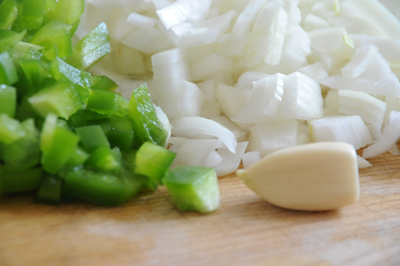
First make the stock. To do this, chop up the onions and celery and squish the garlic.

Too bad these weren't the only vegetables in this chowder ...


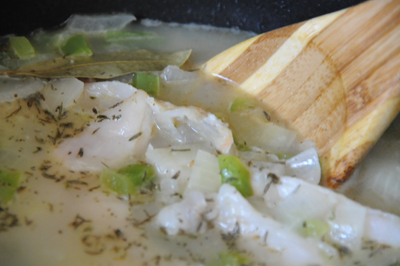
Melt the butter and cook the onions, garlic and green pepper in it until soft. Then add the water and the fish filets. Add the bay leaves and thyme, then put the peppercorns and whole cloves (if that's what you're using) into a tea ball and drop into the stock. Bring to a boil, then reduce heat and cover. Simmer for 30 minutes.

This actually looks like it's going to be pretty good ... sigh ...


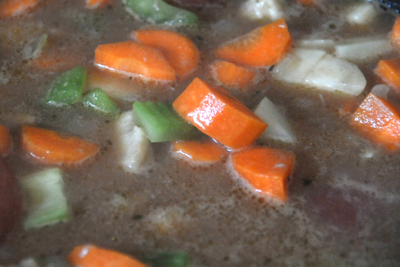
Now add the tomatoes, the beef consomme, ketchup and Worcestershire sauce. Stir until well incorporated, then add the potatoes and those awful (or lovely, depending on your perspective) carrots and celery. Lastly, add the rum and Sherry Peppers sauce and bring back to a boil.

Hmm, looking a bit less good now.


Reduce heat and partially cover the pot. Simmer for 1 to 1 1/2 hours.

When the chowder is done, remove the tea ball and bay leaves, garnish with the parsley and top each serving with ground black pepper. Serve with lemon wedges, extra rum and Sherry Peppers sauce on the side.

Now on to the fish cakes, which can be served as an appetizer (as I did) or as a side, though I don't actually know how the Bermudans tend to like them. The blog where I got the recipe had them served with hot cross buns, which seemed a bit odd to me, so I just did them ala-carte.

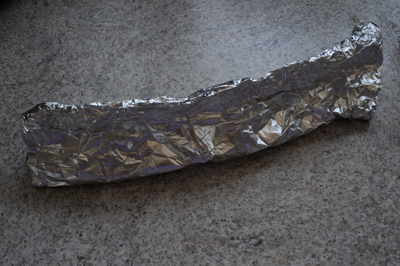
First cook the fish. I steamed mine in a foil packet with a little bit of water (325 degrees for 20 minutes). When it's done cooking, flake it with a fork.

If you've never cooked fish in foil, just fold it over and roll the folds tightly to keep steam from escaping.


Mix the fish with the mashed potatoes. Beat the egg in a large bowl, then add it to the potato mixture.


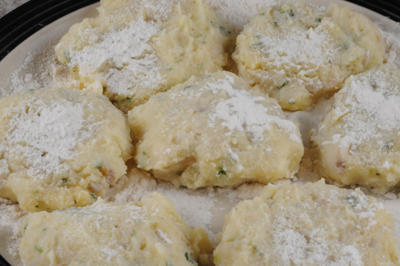
Mix well, then season with the salt, pepper, thyme, parsley and onion (I grated mine, but I also patted out the excess moisture with a paper towel because the mixture was already pretty wet). Dust a large plate with flour, then shape the mixture into patties and arrange on the plate. Dust the tops with a little more flour.

Ready to fry.


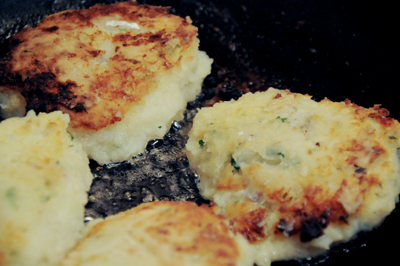
Heat a generous amount of oil in a skillet and add the fish cakes. Fry on both sides until golden brown.

Fry until golden brown on both sides.


Now for the dessert. I'll admit I've never eaten a dessert made with sweet potatoes, because that sounds about as yummy as a dessert made out of squash (no I don't like pumpkin pie either). But hey, I was already venturing into the land of Stuff I Don't Like, so I decided to forge ahead.

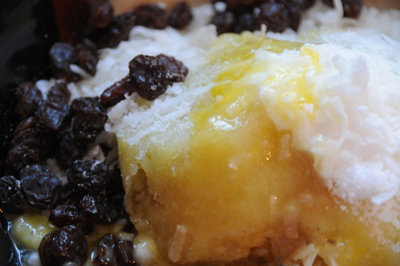
First mix the mashed sweet potatoes with the sugar, coconut, raisins, eggs and vanilla.

This will become the base of the casserole.


If it seems too thick (compared to what, I don't know), add the cream. Mine didn't really seem too thick so it didn't get any cream. Now spoon the mixture into a well-greased casserole dish.

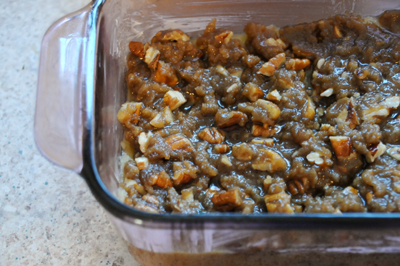
Combine the brown sugar with the pecans, flour and butter. Spread over the top of the sweet potatoes and bake at 350 degrees for 20 to 30 minutes (it's ready when the topping is golden brown).

Oven-ready sweet potato casserole.


I know you're dying to hear the verdict, so here it is:

The fish cakes were good but I did feel like they needed something a little extra, like a sauce (or maybe some hot cross buns). As I said earlier, I served them as an appetizer but in retrospect I think they would have been better as a side (to something other than fish chowder).

So you can probably guess based on all the above bitching how much I liked the fish chowder, which was not at all. It wasn't like I could even pick out the carrots and celery because there were so many of them, and they actually overwhelmed the flavor of the fish, which at the end of the cooking process had disintegrated to the point where you could barely tell it was even there. I didn't even finish mine. You might as well have just called it a "carrot chowder," because that's what it seemed like.

As for the sweet potato casserole, I thought it was the best part of the meal. Though I confess, I liked the topping a lot more than I liked the filling (it was just like a pecan pie). When we eat the leftovers I'll probably add some vanilla ice cream. As for the chowder leftovers, they went (tragically) down the garbage disposal. Don't let this put you off, though, Martin thought it was a good flavor overall and someone who enjoys carrots and celery would probably have a better opinion of it than I did.

Next week: Bhutan

For printable versions of this week's recipes:


Copyright 2023 Becki Robins and Palfrey Media.. Powered by Blogger.

Blog Flux

Blog Directory