Recipes from Marche, Italy

For this entry, I made two recipes. Neither of them were especially good, but I don't blame the people who posted the original recipes or any of the traditions they came from, I blame myself and my propensity for Googling things that might kill me.

Recipes from Marche, Italy: Brodetto

A seafood stew with mussels and clams, minus the Vibrio.

Recipes from Marche, Italy: Filone Casereccio

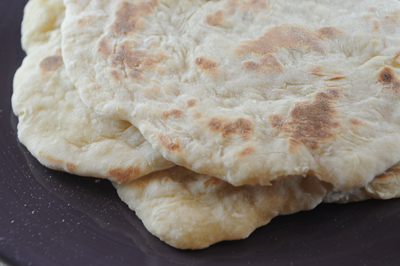
An Italian bread that will come out much better than mine did if you use fresh brewer's yeast and steam.

Recipes from Malta

This is actually the third time I’ve cooked a meal from Malta. The first time, I cooked the meal and then just did not write the blog post. Years went by.

Recipes from Malta: Imqarrun

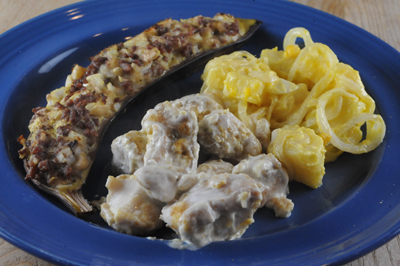
Imquarrum (also called Imqarrun il-forn) is descended from a dish served in Sicily, but the Maltese have adopted it as a traditional staple. The key to making this dish is to be patient.

Showing posts with label Oceania. Show all posts

Thursday, November 7, 2013

Recipes from Guam

Finally! A country that I actually know something about. Here's what I know: when he was in the Navy, my dad was stationed on Guam.

OK so that third sentence is actually the sum total of my knowledge about Guam. Sorry. Because I was maybe one when he was over there and I really know nothing about it, except that he brought home this sort of Japanese-looking doll from there that I still have somewhere.

When Travel by Stove landed on Guam I had to ask my dad if he knew anything about the food there, and he said he did, because one of the guys on his ship was a native of the island, and they were all invited to his wedding. The food served at the event was traditional style, "very spicy, marinated overnight and cooked in a pit." But he's pretty sure it was undercooked because some of the guys were sick the next day, or it might have been the beer.

So that's the sum total of my dad's knowledge about the food in Guam, which is roughly equal to my own plus one actual meal. Now that was many years ago and I won't say how many because then you'll know how old I am. But he couldn't recall the names of the dishes or anything, so besides being an amusing anecdote my dad's lead was kind of a dead end.

Anyway, in case you know about as little about Guam as I do, here's some background:

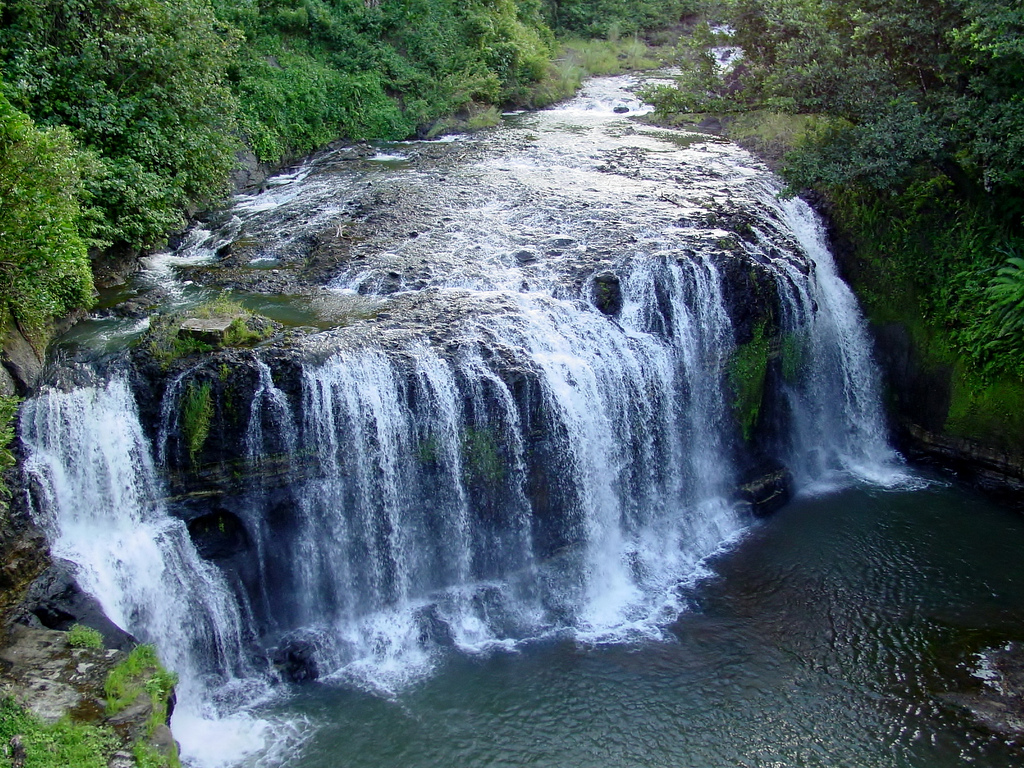
Talofofo Falls, Guam. Photo credit: Douglas Sprott.

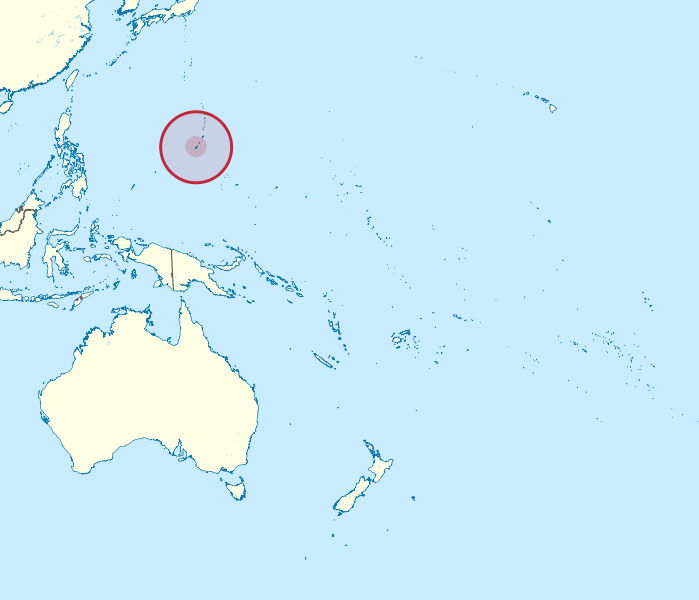
Guam is an unincorporated territory of the United States. It is one of only five US territories that have a civilian government (Puerto Rico is another). And it has, of course, a long history of Europeans trying to settle there and take control over everything. And also the Japanese. In fact, during World War II Guam was captured by the Japanese on the same day as the attack on Pearl Harbor. The Japanese occupied it for two and a half years, during which time the people were subjected to some brutal treatment which I won't describe here because I don't really like to use the word "torture" on my blog, unless I'm talking about shrimp paste or hakarl. Anyway, US troops recaptured Guam in 1944, and today there's still a strong military presence on the island. The military, in fact, is Guam's second largest source of income, just behind tourism.

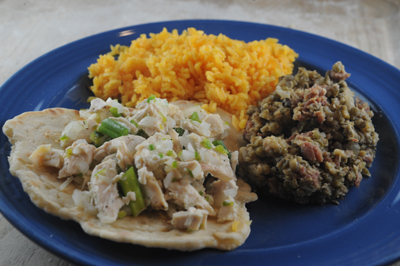
Most of Guam's traditional cuisine comes from its indigenous population, the Chamorros. The food is flavorful, relies on tropical ingredients such as coconut and is, as my dad described, often grilled, barbecued or cooked in a pit. It was actually surprisingly easy to find Chamorro recipes since Guam's indigenous people have a long tradition of preparing delicious food, and probably also because the tourism industry helps keep those old recipes alive. Here are the ones that I chose for this week's meal (all recipes come from 671 Guam Recipes):

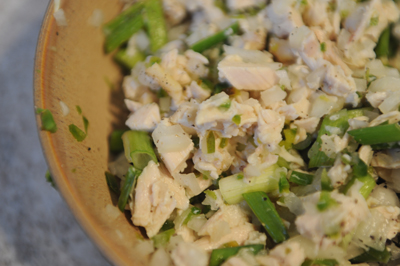
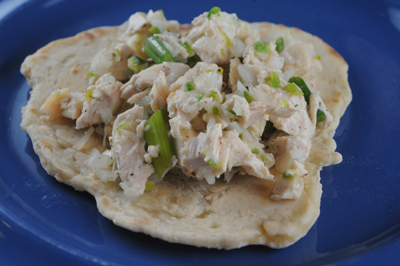
Chicken Kelaguen
  • 2 grilled chicken breasts
  • 1/2 onion
  • 3 green onions, sliced on the diagonal
  • 1 jalapeño
  • Salt and pepper to taste
  • Juice of 2 lemons
  • Flour tortillas
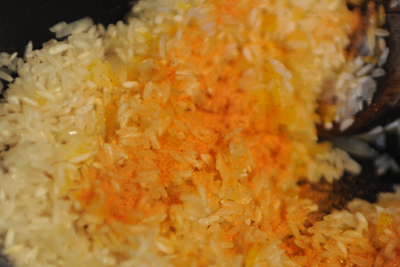
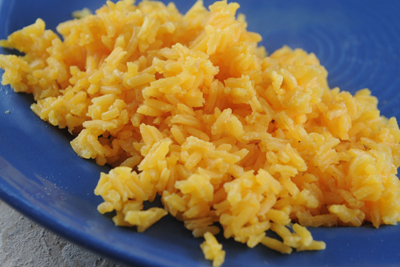
Red Rice
  • 4 cups uncooked  rice
  • 2 packs Sazon Goya
  • 1 onion, chopped
  • 1 tsp vegetable oil
  • 1 or 2 tsp salt
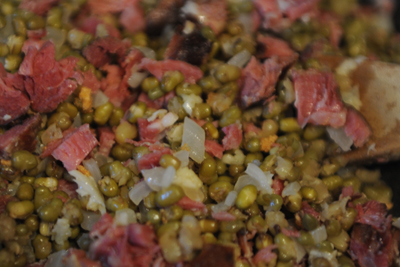
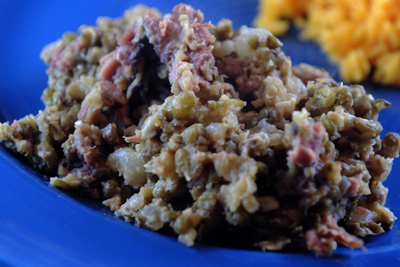
Mung Beans and Ham Hocks
  • 2 to 3 smoked ham hocks
  • 1 1/2 cup dried mung beans
  • 5 or 6 garlic cloves
  • 1 whole onion, quartered
  • Salt to taste
  • Black pepper to taste
  • Garlic powder to taste
  • 1 whole onion, diced
  • 3 cloves garlic, minced
  • 1 tbsp olive oil
  • 1 tsp salt
  • 1 tsp achiote powder mixed with 1/4 cup water
  • 1/2 cup coconut milk
Manha Titiyas
  • 3 1/2 to 4 cups of flour
  • 1 cup sugar
  • 2 tbsp canola oil
  • 1/4 cup milk
  • 1 1/2 cups coconut water
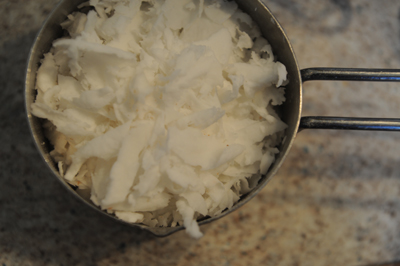
  • 1 to 2 cups coconut meat, sliced thinly into 1-inch pieces
You can make the chicken ahead of time since it's served chilled, so let's start there.

I'm pretty sure you can cook the chicken any way you like, as long as you don't season it. The chicken should take most of its flavor from the lemon juice and the rest of the ingredients in the kelaguen itself. This particular recipe calls for a basic grilled chicken, but the author also says he often just steams his chicken breasts in foil like you would a piece of fish. I just used a rotisserie chicken from Safeway.

So, break the chicken up into bite-sized pieces and then mix in the onions, green onions, jalapeno, salt and pepper and lemon juice. Transfer to the fridge and chill.

Serve on flour tortillas (I served mine on the Manha Titiyas, more about that later).

Meanwhile, make the mung beans:

Boil the ham hocks with the garlic, onion, black pepper and garlic powder for about three hours. Drain and set aside, reserving the stock. Let cool, then cut the meat up into small pieces.

Meanwhile, boil the mung beans until soft (mung beans cook pretty quickly, in about 45 minutes to an hour).

Now saute the rest of the garlic and onions in olive oil until the onions are translucent. Add the mung beans and salt.

Now add the chopped ham and a little more pepper and garlic powder to taste, then two or  three cups of the ham broth and the achiote water.

Simmer for 10 to 15 minutes. In the last couple of minutes, add the coconut milk. Serve at once.

Now for the rice:

Saute the onion in the vegetable oil until translucent. Add the rice, Sazon Goya and water, then bring to a boil.

Reduce heat, cover and cook for 20 minutes or until all the water is absorbed.

Now I get the feeling that this is kind of a dumbed-down version of Guam's red rice, which is generally made with a blend of seasonings and achiote paste (the achiote is what gives it its red color). Since Sazon Goya is also made with achiote paste and since this shortcut comes from a source in Guam, I felt justified in making things easy for myself. This time.
Now for the titiyas (which means "tortillas").

I originally made these as a dessert, because I looked at the amount of sugar in the recipe and thought, "dessert." Then as I was making them I decided to do some extra Googling just to be sure, and found several references to them being used with savory dishes. So at the last minute I served them with the kelaguen instead of using the plain flour tortillas I bought for the occasion. Anyway first here's how to make them:

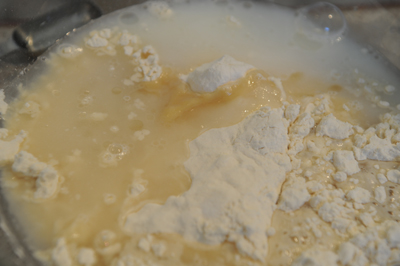
Mix together all of the ingredients except for the coconut meat.

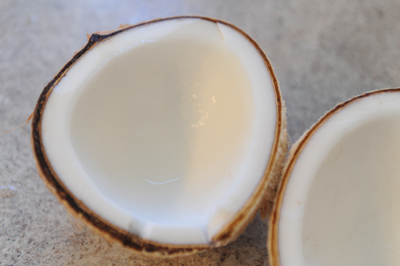
Now, I used a fresh coconut which was a first for me, because I didn't think that canned coconut water would be an acceptable substitute (maybe it is, who knows) and all you can really buy in the store is sweetened, shredded coconut. So I had Martin open up the coconut for me using what I'm pretty sure was an incredibly dangerous technique, and I poured out the water into a measuring cup.

Then I spent about an hour scraping the damned coconut. It's hard to get enough meat out of one of those things, or at least out of that particular one of those things.

So once you've done all that and you've mixed together the ingredients you can add the coconut meat. The dough should be pliable, so feel free to add extra flour until it is the correct consistency. If it's too dry you can add a bit more of the coconut water.

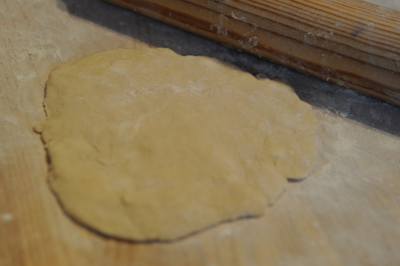
Now break the dough apart into six pieces and roll into balls. On a floured surface, roll each ball out until it is about as thick as a tortilla (mine were thicker than they were supposed to be).

Heat the oil in a large skillet and turn the heat down to medium. Put the tortilla in the skillet and cook until it's starting to turn golden on one side, then flip and cook the other side. Keep warm until ready to serve.

I was very pleasantly surprised by this meal. It's exactly what you want from a meal—simple and delicious. It seems like you hardly ever get those two things to happen together, at least not on blog night.

Martin loved the kelaguen. In fact he told me I should make it again and we should invite some friends over. I was almost afraid to tell him it was just a rotisserie chicken with some onions and lemon juice.

Actually I think one of the things he liked the best was the manha titiyas, which were sweet but strangely delicious with the kelaguen. Now, someone is bound to post a note on this entry letting me know that eating manha titiyas with kelaguen is wrong, wrong, wrong, but hey, it worked for us and even if it was wrong I would probably do it again. There, I said it.

The beans and ham were nice and different, but a bit stodgy. I'm not sure they were exactly right with the kelaguen, but I did like them.

Oh, and the rice: loved it. I am a huge fan of fluffy rice with a simple flavor, like the sort of thing you get as a side in a Mexican restaurant. This was exactly like that, only with a twist. Nice light flavor and light texture that went perfectly with the other two dishes.

So there you go, not exactly the same experience that Dad had with food in Guam, but very surprisingly delicious and simple. A keeper, for sure.

Next week: Guatemala

For printable versions of this week's recipes:

Wednesday, July 3, 2013

Recipes from French Wallis and Futuna

It is 103 degrees and I am sitting on my deck watching my kids swim, thinking of blowing off this entry in favor of a dip in the pool. I am pretty sure I can hear sizzling every time I move one of my feet out from under the shade of my patio umbrella.

Now aside from when I lived in Chico, land of 115 degree Augusts, this is the worst heat wave I've ever seen. So thank god I'm not cooking something stodgy and wintery this week from, say, Iceland or Norway. I think that might actually create a rift in the space-time continuum.

 
Instead, this week we are on a nice, refreshing tropical island with cool breezes blowing in from that inviting blue sea. When we are finished eating, we'll jump into that gorgeous, flower-enveloped swimming hole flanked by the tumbling waters of a 15 foot waterfall. Huh? Oh, sorry, I blacked out there for a second.


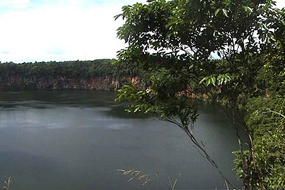
Lake Lalolalo on ʻUvea, French Wallis and Futuna

French Wallis and Futuna: I have no idea if they have actual 15 foot waterfalls pouring into lovely little secluded swimming holes, but they do have beaches. And probably much better air conditioning than me. Anyway this is another one of those archipelagos in the same general vicinity as French Polynesia and American Samoa. The recorded history of this place begins, of course, with the French showing up and converting everyone to Catholicism, which is the same basic way all these island histories begin. Wallis and Futuna got to keep their king, though--in fact they still have a king today even though they are officially a territory of France.

 
Despite all of my dreams of tropical beaches and those coconut shell cocktails with little umbrellas sticking out of them, Wallis and Futuna doesn't get a whole lot of revenue from tourism. Instead they depend on subsistence agriculture, fishing and lumber. This is not a wealthy place (so much for my theory about their air conditioning, but that's kind of where my brain is), but they do have good food.

As for the recipes, small places always equal slim pickings, but I was very happy with the recipes I did find, all of which came from the French language website Easy Cook. Here they are:

Spicy Fried Fish
  • 2 lbs fish fillets (I used barramundi, which is fished there locally)
  • 1/2 cup flour
  • 2 tsp to 1 tbsp curry powder (I used a hot madras variety)
  • 1 ½ cups coconut milk
  • Oil
  • salt and pepper to taste
Sweet Potatoes
(Google Translate gave the title as "softness kumala," with "kumala" being an Oceanic variety of sweet potato and "softness" being a second translation of the French word for "sweet," so I gather that the name of this recipe is really just "sweet potatoes")
  • 5 or 6 sweet potatoes
  • 1 large onion (or 5 small green onions), sliced
  • 1 clove garlic,
  • 1 to 2 tsp chopped ginger
  • 3 hard boiled eggs, chopped
  • 1 cup coconut milk
Stuffed Bananas
  • 6 green bananas
  • 9 oz ground beef
  • 1 onion, chopped fine
  • 1 egg
  • Salt and pepper
This is a really easy meal to make, which believe me is what you want on a hot day.

 
Start by mixing the flour with the curry powder, salt and pepper. Now rinse the fish and cut it up into bite sized pieces. Dip them in the coconut milk and dredge in the flour mixture.

 
Now pan fry them in a splash of oil until golden.


Pour in the rest of the coconut milk and simmer over a low flame until cooked through. Sprinkle with a little lemon juice and serve.


And the potatoes:

Peel the sweet potatoes and cut into chunks. Boil for 15 or 20 minutes or until easily pierced by a fork, but not over-soft. Drain and set aside.

Now Sauté the onions with the garlic in a little oil. Add the coconut milk, sweet potatoes and boiled eggs.

 
Meanwhile, make the bananas:

Brown the meat and set aside. In a small bowl, beat the egg.

Slice the bananas in half lengthwise and remove the flesh, taking care not to damage the peels. Mash with a potato masher and then mix in the meat, egg and onion.

 
Stuff the banana peels with the mixture and wrap up in banana leaves. Bake for 45 minutes.


Once again, my kids were left out ... But Martin and I enjoyed these recipes. It might have been a little too much coconut milk for one meal, but like I said; slim pickens. The fish was very flavorful and tropical in character and so were the potatoes, which made for a very natural tasting combination with the coconut milk. The bananas were a bit odd, and I usually like cooked green bananas. I didn't finish mine, but mostly because I found it bland, not because I thought it was unpleasant. With a little more spice I think it would have been quite good.

So that's it, tropical food for a sweltering heat. Now I believe I will go melt into an unhappy puddle.

Oh, and happy Fourth of July!

Next week: Fujian, China


For printable versions of this week's recipes:

Thursday, June 20, 2013

Recipes from French Polynesia

I am not a chef. Sometimes, I mangle some nation's beloved favorite dish. Actually it probably happens more than I know.

Of course if you're a regular reader you know about my struggle to find recipes. Sometimes there just isn't much out there, so I have to rely on dubious sources. But I use recipes that appear to be authentic whenever possible, and I always stick to the recipe as much as I can. Sometimes it's actually the recipe that's wrong and not my interpretation of it.

If I get something wrong I want to be called on it. So if you're from French Polynesia or The Falkland Islands or the Czech Republic and you can't read that entry without cringing, I would dearly, dearly love it if you would send me the correct version of the recipe I got wrong, or at least tell me where and why my technique failed.

Not because I think I got French Polynesia wrong or anything. But I'm pretty sure something went wrong with that lettuce soup from the Falklands.

French Polynesia Meal
Anyway, this week we're in Tahiti, baby! Which, along with a bunch of other islands in the region makes French Polynesia. Remember Clipperton Island? It was administered by French Polynesia until 2007. Though I'm not sure what exactly there is to administer on Clipperton Island. All those nasty little man-eating crabs I guess.

French Polynesia Scene
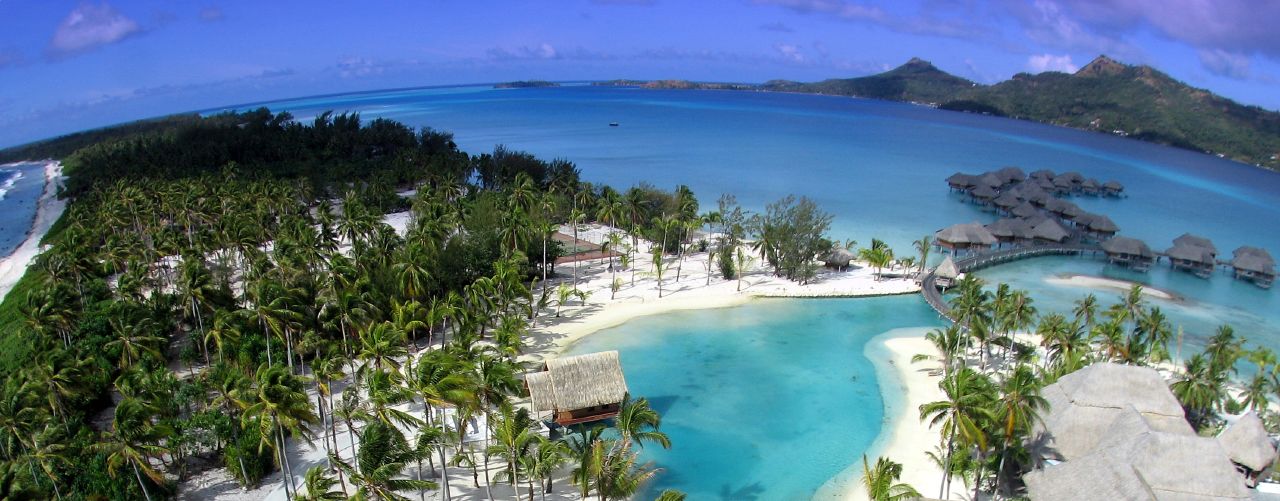
Bora Bora, Tahiti. Photo Credit: Pierre Lesage.

Like so many other territories of [insert European Colonial Power], Tahiti and the rest of French Polynesia have a long history of other people coming along and telling them that their religion and lifestyle are all wrong and now they have to do things the European way. To make a long story short, the French moved in, kicked out the king of Tahiti and converted all his followers to Protestantism. And made a few bucks off the subsequent tourism industry. The end.


Tahitian food as you might imagine is heavily seafood-based. Exotic fruits and vegetables are often featured and the cooking style is distinctly Polynesian with a French twist.

One of Tahiti's signature dishes is poisson cru, which is basically just raw fish marinated in lime juice and coconut milk—the Polynesian answer to sushi. I felt like I ought to make poisson cru but I didn't, because it was too similar to the oka popo I made back in American Samoa. (I did like the oka popo, but I don't like to repeat myself because that seems too much like cheating). Anyway here's what I did choose:

For an appetizer:

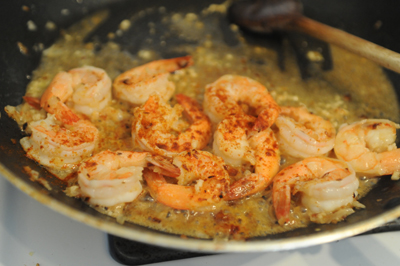
Papeete Tahitian Prawns
(from The Polynesian Kitchen)
  • 1 lb prawns
  • 1/4 cup chopped onion
  • 2-3 tbsp oil
  • 1/2 tsp salt
  • 1/8 tsp ground red pepper (more to taste)
  • 1/2 cup dry white wine
  • 2 garlic cloves, crushed
  • 1/2 tsp paprika
  • 1 1/2 tsp parsley, finely chopped
The main course:

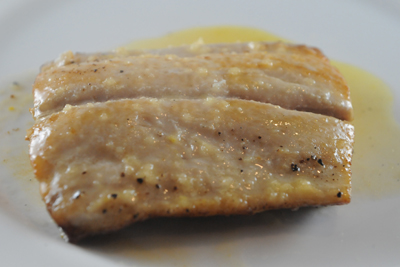
Mahi Mahi with Passion Fruit, Ginger and Vanilla Coulis
(from Hawaii Travel at About.com, which did promise this was a Tahitian recipe)
  • 8 oz passion fruit juice
  • 1 one-inch piece of fresh ginger, peeled and minced
  • 1/2 vanilla pod, split open
  • 4 tbsp of unsalted butter
  • 1 tbsp of peanut or olive oil
  • 4 six- to eight-ounce mahi mahi fillets
  • Salt and freshly ground black pepper
On the side:

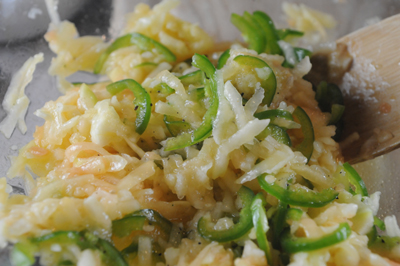
Green Papaya Salad
(from Tahitian Dreams)
  • 1lb green papaya
  • 2 chili peppers, deseeded and finely sliced
  • Juice of 2 limes
  • 1-2 tbsp olive oil
  • Salt and black pepper to taste
And for dessert:

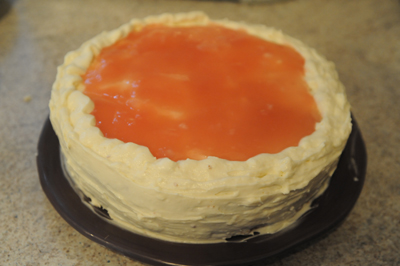
Guava Cake
(from SOS Children's Villages, which does work in French Polynesia and has local recipes on their site)

For the cake and frosting:
  • 1 package yellow cake mix
  • 1 1/3 cup guava juice
  • 3 eggs
  • 1/3 cup vegetable oil
  • 1 8 oz package of cream cheese, softened
  • 1/3 cup of sugar
  • 1 tsp vanilla
  • 1 small package of whipped topping, thawed
For the guava gel:
  • 2 cups guava juice
  • 1/2 cup sugar
  • 1/4 cup cornstarch
Now how about that, in that early paragraph I said I almost always use authentic sources, and this week I got a recipe from the always questionable About.com. Dang.

Anyway, I like to start with the dessert, so here goes:

Mix up the cake batter, but substitute guava juice for the water. Bake according to the package instructions.

In a mixing bowl, beat the cream cheese until fluffy, then beat in the sugar and vanilla. Fold the whipped topping into the mixture and refrigerate until the cake is ready to be frosted.

To make the gel, bring the guava juice and sugar to a boil. In a small bowl, mix the cornstarch with enough water to make a paste. Remove the juice from the heat and whisk in the cornstarch paste. Now bring back to a boil for one minute, then cool in the refrigerator.

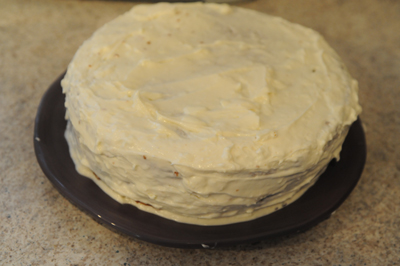
When the cake is finished, ice it completely with the whipped cream frosting, setting aside a little bit of the frosting.

This is why I always buy my kids' birthday cakes at Safeway.

Spread the guava gel over the top of the cake, then using a piping bag (I just cut the corner out of a ziplock) make a little ridge out of the remaining frosting so the gel doesn't run down the sides. Return to the refrigerator and serve cold.

Now for the prawns:

Wash and devein your prawns. Set aside.

Saute the onion in the oil until it starts to turn golden, then add the prawns. Cook until just pink. Season with salt and pepper, then add the white wine, garlic and paprika.

Cover and let simmer for 5 minutes. Sprinkle with parsley and serve.

And the main course:

Preheat your oven to 475 degrees. In a medium pan, bring the passion fruit juice, ginger and split vanilla pod to a boil. Add 3 tbsp of the butter and and reduce heat. Simmer gently for two minutes or until syrupy.

Now heat the oil over a medium-high flame and add the rest of the butter. When the butter has melted, add the mahi mahi, season with salt and pepper and cook for about a minute.

Transfer the fish to your oven and cook until a meat thermometer registers 145 degrees.  Serve topped with the vanilla coulis.

And finally, the salad:

Peel the papayas and cut them in half. Remove the seeds and grate into a large bowl.

Add the rest of the ingredients and toss. Serve at once.

This was another me-and-Martin-only meal, since I don't like to waste expensive fish on my seafood-hating children. Those poor kids have no idea what they're missing. I can't think of anything I didn't like about this food. OK maybe just that one thing, which I'll get to.

The shrimp was mildly spicy and quite yummy, and was even enjoyed by Martin, who usually thinks shrimp is pretty ho-hum. The fish was also delicious; the vanilla sauce gave it a very light sweetness. I was really afraid it would be overwhelmingly sweet, but it was perfect.

The salad went great with the fish. My papaya probably wasn't as green as it was supposed to be (it's hard to find them green so far from the source) but I really didn't mind. I like papaya in all forms.

And the cake, it was yummy too. Except for that weird guava gel. Now, I know I am not normal in thinking this but I have a problem with foods that have that texture. (Remember the spotted dick back in England? Custard, blech.) I know this makes me a freak of nature, but I felt the same way about the guava gel. Gel is not supposed to be eaten. It's supposed to be put in your hair. Some people's hair, anyway. But it's not supposed to be eaten. I scraped mine off.

I thought the meal was missing a nice cocktail, though, because what's a Tahitian vacation without a cocktail? Oh yeah, it wasn't a Tahitian vacation. It was my dining room. Sigh.

Next week: French St. Pierre and Miquelon

For printable versions of this week's recipes:

Thursday, May 30, 2013

Recipes from Fiji

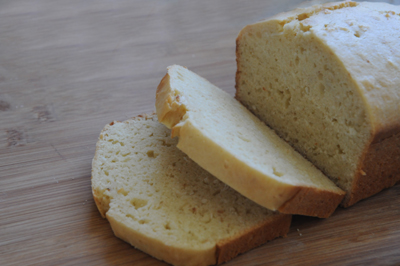
I just have two words to say about this week's meal: coconut bread. And I can just end the entry there. Because Fijian coconut bread is so delicious, I don't really need to say anything else.

Oh, you probably want the recipe though. I guess I'll have to finish the entry.
You probably know something about Fiji already. At the very least, you know it is one of those tropical paradises that everyone wants to go to. I'm sure that's because of the food. Well, maybe the beaches and the weather also have something to do with it, but mainly I'm guessing it's because of the food.

Meal from Fiji
Fiji is an archipelago of 332+ volcanically-formed islands, located in the South Pacific Ocean about 1,300 miles northeast of New Zealand. Most of the population live on the two largest islands—Viti Levu and Vanua Levu—with the remainder living on any one of 110 other smaller islands.

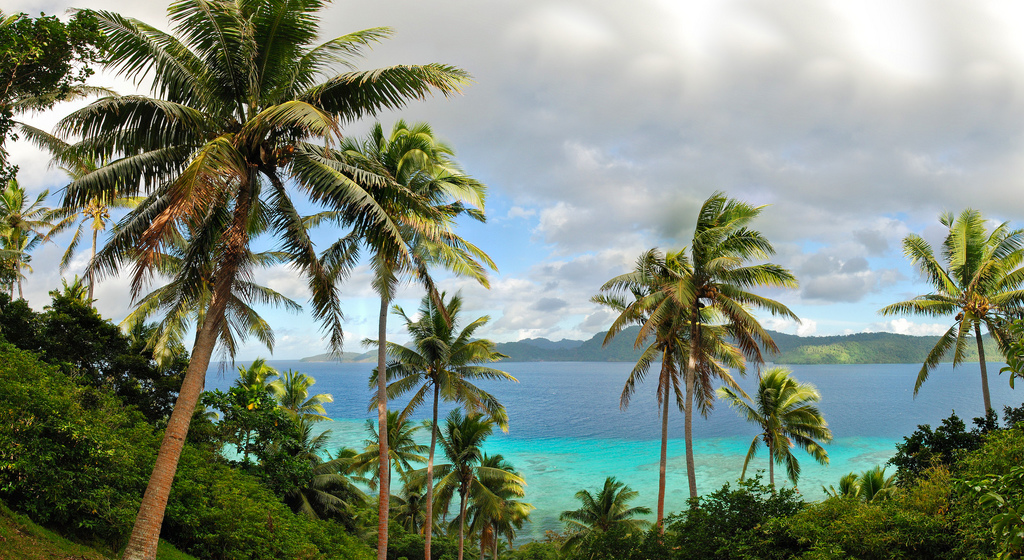
Scene from Fiji
Photo Credit: Flickr user flip.01.

The majority of Fijians live on the coast since the inland regions are mountainous and overgrown with thick tropical forests. While not very habitable, those inland regions are rich in forest and mineral resources—and the coastal regions, of course, are rich in ocean resources. Together all those resources help make Fiji one of the most economically developed nations in the Pacific island region. The very active tourism industry doesn't hurt, either.

So I was on Wikipedia looking for some basic background on Fijian cuisine when I received firsthand confirmation of one of Wikipedia's major flaws—letting just anyone come in and make edits. Because among traditional Fijian meats Wikipedia lists "wild pig, human, and various birds." OK so yes, I know that Fiji has a history of cannibalism but really, Wikipedia, don't you think if you're going to mention it under the heading "Fijian Cuisine" you need to include just the teensiest bit more explanation? 

Anyway I will just say that modern Fijian cuisine as I understand it depends heavily on seafood, typical tropical-type root vegetables such as taro and cassava, lots of coconut and probably not very much human.

On to the menu:

Ginger Fish
(from The Fijian Kitchen)
  • 2-3 lbs firm white fish (I used cod)
  • Juice of 1 lemon
  • 2 tbsp vegetable oil
  • 1/4 cup soy sauce
  • 1/4 cup corn oil
  • 3/4 cups white wine
  • 1 clove garlic, crushed
  • 2 tsp ginger root, grated
  • 2 tsp sugar
  • Parsley, coriander or slivered ginger root (for garnish)
And on the side:

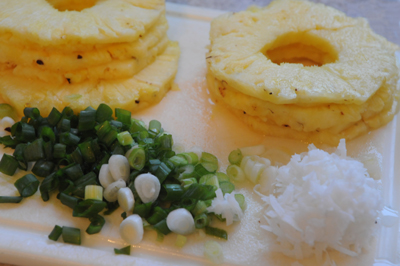
Baked Pineapple and Sweet Potato
(from The World Cookbook for Students)
  • 2 medium sweet potatoes, boiled until just tender and thickly sliced
  • 1 fresh pineapple, peeled, cored and sliced thin
  • 4 tbsp freshly grated coconut
  • 4 tbsp green onions, chopped
  • Grated cheese (optional)
  • Salt and pepper to taste
And for dessert:

Sigh.

Cocount Bread
(from The Fijian Food Safari)
  • 3 cups all-purpose flour
  • 1 cup white sugar
  • 1 tbsp baking powder
  • 2 eggs
  • 1 tsp vanilla extract
  • 1 1/2 cups coconut milk
  • 1 cup grated fresh coconut
Most of this meal comes together quickly, so I'll just list the directions in the order I listed the recipes.

First the fish:

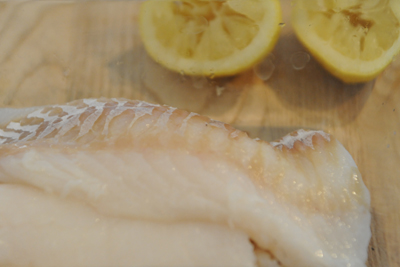
Rinse and pat dry the fish. Rub the lemon juice all over the fillets and refrigerate for about an hour. Then brush on the vegetable oil and place in a shallow casserole dish.

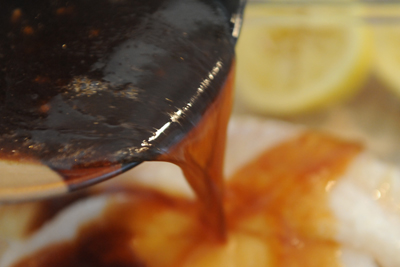
Put the soy sauce, corn oil, wine, garlic, sugar and ginger into a blender and pulse. Pour over the fish.

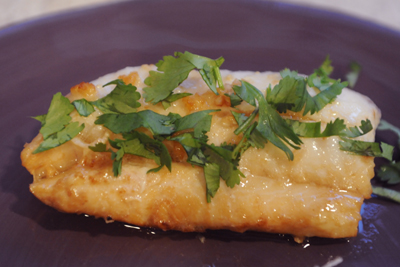
Bake at 350 degrees, basting frequently, for 40 minutes or until the fish flakes easily with a fork (you can also use a meat thermometer and bake to an internal temperature of 145 degrees). Garnish and serve.

And now for the potatoes:

Preheat your oven to 350 degrees. 

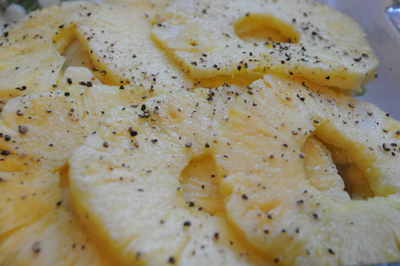
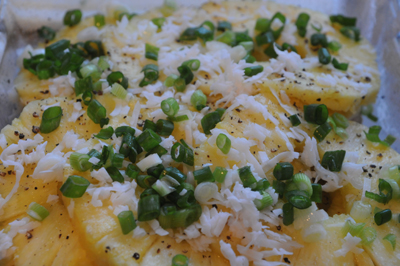
Grease a casserole dish and put the sweet potatoes into it. Season with salt and pepper. Add a layer of pineapple and more salt and pepper.

Top with the coconut, even more salt and pepper and finally with the green onions.

Grate a little bit of cheese on top (if using) but don't go overboard. Bake for 30 minutes.

And now for that wonderful bread:

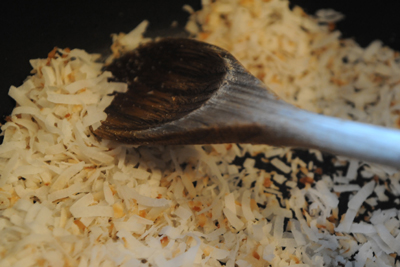
Preheat your oven to 350 degrees. Meanwhile, toast the grated coconut in a dry pan until golden.

Sift the flour together with the baking powder and salt. Gently stir in the coconut.
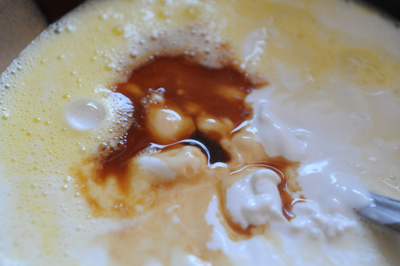
In a separate bowl, beat the eggs with an electric mixer until frothy. Stir in the coconut milk and vanilla extract.

Make a hole in the center of the flour mixture and pour in the liquid. Fold gently or until just combined. Don't overdo it or you will lose all that air you got from beating the eggs.

Now pour into a greased loaf pan and bake for one hour, or until the top is golden and a toothpick inserted in the center comes out clean.

So you already know what I thought about the coconut bread, but seriously, this whole meal was delicious. The fish had a nice, tropical flavor that was enough to make Martin declare his new-found love for cod, which is really something coming from a guy who is usually pretty ho-hum about fish.

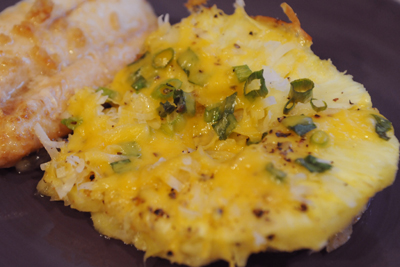
I really, really liked the sweet potatoes and pineapple. Not just because pineapple is hands-down my favorite fresh fruit, but also because it was a very unusual combination of flavors that tasted delicious together. (Once upon a time I would not have expected pineapple/cheese to be a good combo but I actually suspected I would like this recipe based on how much I enjoyed that combo back on Bouvet Island.)

And the coconut bread, ah, yes, the coconut bread. Martin said, "So how many times a week will you be making this?" Happily—I mean, sadly—my children did not enjoy the coconut bread. So Martin and I were forced kicking and screaming to devour the whole loaf. Did I mention how much we loved it?

Anyway that was Fiji. Another gem, and it was a particularly happy day because that gem was also easy to prepare.

Next week: Finland

For printable versions of this week's recipes:

Tuesday, December 11, 2012

That Mahi-Mahi Again

Remember a few weeks ago when I did the mahi-mahi from the Cook Islands and forgot one of the key ingredients? That whole incident has been bugging me ever since. Because, if you remember correctly, I cooked up that whole meal and then forgot to fry up the garnish to go on top, which actually seemed like it might be a make-or-break factor in the finished dish.

So I got some mahi-mahi the last time I was at Safeway, and about a week ago I repeated the recipe, with a couple of exceptions.

Here's the original ingredient list:

Moana-Roa Mahi Mahi

  • 7 ounces mahi mahi
  • 2 cups coconut cream
  • 1 cup cooked taro leaves*
  • 2 cloves garlic
  • 1 onion, diced
  • Zest of 1 lemon
  • 1 tbsp fresh ginger slivers
  • Salt and pepper to taste
  • Two green bananas
  • Two taro roots, diced
  • Vegetable oil
So here are the exceptions I made this time:

1. I used spinach instead of taro leaves, which is actually what I did last time because there really is no good source around here for taro leaves.

2. I used coconut milk instead of coconut cream, because evidently coconut cream only keeps in the fridge for two days and then it becomes a curdled, disgusting mess.

3. I just made green bananas instead of green bananas with taro root, because I wasn't actually terribly fond of the taro root.

And the instructions again, if you need them, which I actually followed this time:

  1. Saute half of the onion with one garlic clove in a small amount of oil. When the onion is translucent, add the taro leaves (or spinach, which is what I used) and 1 cup of the coconut cream. Season with salt and pepper and simmer until the leaves are tender. (Taro leaves take some time to cook, while spinach will be ready pretty quickly). Add a squeeze of lemon and set aside, keeping warm.
  2. Saute the other half of the onion and the other garlic clove in a medium-sized pot. Meanwhile, rub the fish fillets with salt and pepper and add to the onion and garlic. Pour another cup of coconut cream into the pan and bring to a boil. Reduce heat and simmer, covered, until the fish is done (12 to 15 minutes).
  3. Heat a little more oil in a small pan and fry one tablespoon of slivered ginger with the lemon zest. Keep stirring to avoid burning the zest. When the ginger is crispy, remove from heat.
  4. Meanwhile, bring two large pots of water to a boil. Add the diced taro root to one pot and the green bananas to the other (leave the peels on the bananas). Boil the taro root until it is fork-tender, and the bananas until the skins start to split (they should also be tender). Let cool, then peel the bananas and slice.
  5. Spoon the taro leaves (or spinach) onto each serving plate. Place a piece of fish onto the leaves and then garnish with the fried ginger and lemon zest and some freshly-ground pepper. Surround the fish with the taro root and banana and serve. 
Here's what this mahi mahi is actually supposed to look like:


With the main difference between this and my last attempt being those crispy little fried bits of ginger and lemon/lime zest that you can see on top.

They made a world of difference, actually, transforming an otherwise bland dish into a really tasty one. It just needed that little hint of lemon and ginger to bring it to life, which is exactly what I suspected when I originally made it.

I served it with rice this time, too, just to round it out. 

And yes, I feel much better now.


Copyright 2023 Becki Robins and Palfrey Media.. Powered by Blogger.

Blog Flux

Blog Directory