Are we halfway through summer already? I don't think I like that, because we haven't done enough. Some swimming, a weekend at the beach, more swimming, some barbecuing. Fun, but low key.
We did have a big Fourth of July with two barbecues in one day, which was really crazy stupid because no one needs to eat that much food. We did a smoked tritip, seasoned grilled corn on the cob, barbecued sausage and grilled salmon. Oh and my famous jalapeño poppers with dill and Dijon potato salad. And strawberry lemonade. Oh and a cake decorated like an American flag. And homemade baked beans. Did I forget anything? What did you have?
So after all that American fare I'm switching gears--waaaay switching gears to Kazakhstan, which is halfway across the world and doesn't really do baked beans or American flag cakes, at least not as far as I know.
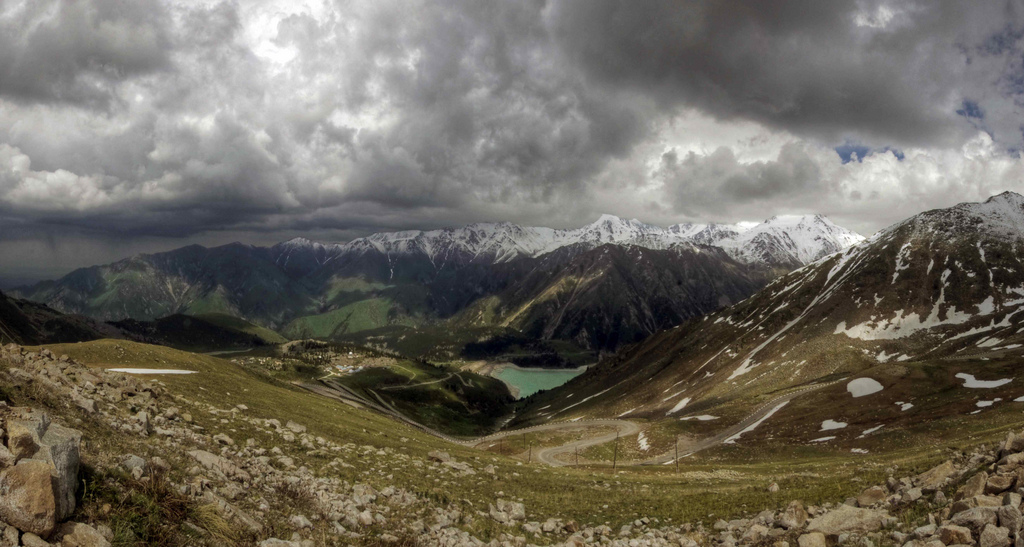
It may surprise you to hear that Kazakhstan is actually a big
country--the ninth largest in the world--because it's not one of those
places that we regularly hear a whole lot about. It's a transcontinental
nation, which means it is mostly situated in Central Asia but has a
small part west of the Ural river in Europe. There are 17 million people
in Kazakhstan, which seems like a lot but actually equates to fewer
than six people per square mile.
 |
|
Kazakhstan is one of the nations Genghis Khan occupied in the 13th century, and it wasn't until the 16th century that the Kazakhs themselves emerged as a distinct group. Sadly, they didn't have control over their homeland for very long--by the 18th century the Russians started moving in, and then by the 19th century Kazakhstan was officially a part of the Russian empire, and later of course the Soviet Union. It must have gotten used to its identity being wrapped up with the Russians because it was the last of the Soviet Republics to declare independence in 1991.
 |
|
|
Kazakh dinners, as it turns out, are generally way more elaborate than the one I did. Typically, they will do a bunch of appetizers, followed by a soup, then one--sometimes two--main courses. And though I'm not philosophically opposed to spending all day in the kitchen once in a while, I just spent all day in the kitchen in the Fourth of July and really am not up for doing it multiple times in such a short space of time. So I limited myself to three dishes, and here they are:
Kazakh Lemon Chicken
(from Chef Boris Nurdamanbye, Hotel Otrar, Almaty, Kazakhstan)
- 1 tbsp olive oil
- 2 whole chickens, 3 lbs each
- 2 tsp ground ginger
- 1 tsp paprika
- 3 garlic cloves, minced
- 1 large onion, chopped
- 1/4 tsp saffron
- 1/2 tsp nutmeg
- 2 tsp salt
- 2 tbsp black pepper, freshly ground
- 2 cups chicken stock
- 1 cup green olives (without pimientos), chopped
- 4 tbsp lemon rinds, minced
And some rice on the side:
Kazakh rice
(from Chef Pyotr Numurdaleshev, Kazakh Aul Restraunt, Almaty, Kazakhstan)
- 1 1/2 cups rice
- 3 cups water
- 1/3 cup slivered almonds
- 2 garlic cloves, minced
- 1 medium onion, chopped
- 1/2 cup pitted dates, chopped
- 1/3 cup pitted prunes, chopped
- 3 dried apricots, chopped
- 1 tbsp salt
- 1 cup ground lamb, precooked
- 1 tsp vegetable oil
And some bread:
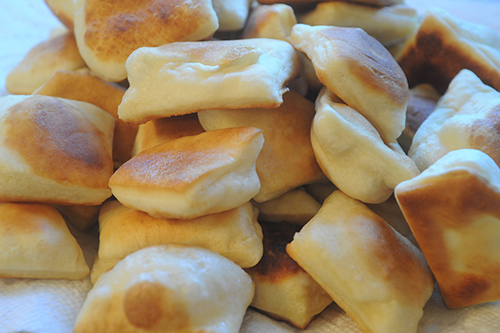
Baursak (Kazakh puffy bread)
(from
Silphiumfood.com)
- 3 cups white bread flour
- 1/2 cup milk
- 1/2 cup of water
- 2 eggs
- 1 tbsp yeast
- 2 tbsp margarine
- 1 tbsp sugar
- 1 tsp of salt
Now first a disclaimer: I don't usually choose chef recipes, because they tend to not be as traditional. Chefs like to add their own personal flare to their recipes, so while delicious, most natives wouldn't really recognize them. I made an exception this week, though. Because despite Kazakhstan being a large place, it doesn't have a whole lot of recipe resources online. At least not that I could find in the limited amount of time I actually have to do research these days. And these dishes are both served at restaurants in Kazakhstan so I figure they are technically still "from Kazakhstan."
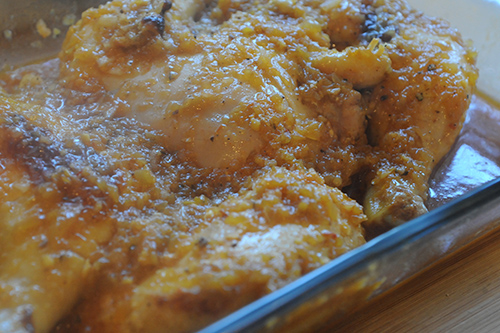
Here's how to do the chicken: first preheat your oven to 400 degrees. On your stovetop, heat the oil in a Dutch oven and then add the chickens, breast side down (I used leg quarters for this so my process was a bit different). While the chicken is browning, mix the seasonings in a bowl.
Now rub the seasoning into the chickens (using the back of a spoon, because you don't want to burn yourself). Add enough water so the chickens are about half submerged, then turn up heat and bring to a boil.
 |
| I don't have a Dutch oven, so I just transferred mine to a casserole. |
Next, move the Dutch oven to your actual oven and bake uncovered for 30 minutes, then turn the chickens over and cook for another 25, or until a meat thermometer inserted into the thickest part of the thigh reaches 175 degrees.
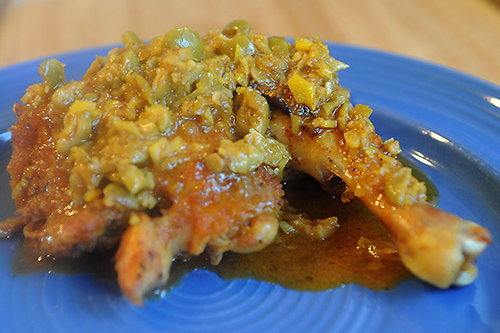
Transfer the chickens to a platter and then move your Dutch oven back to the stove. Bring the broth to a boil and add the olives and lemon rind. Reduce heat to low and simmer for five minutes. Drizzle the sauce over the chicken and serve.
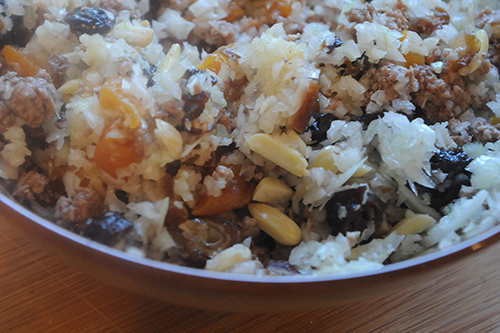
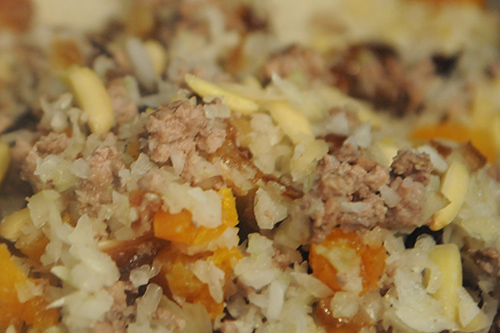
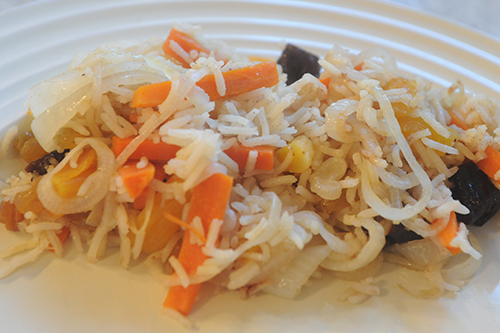
Now for the rice: first mix the cooked lamb with everything except the rice, water and oil.
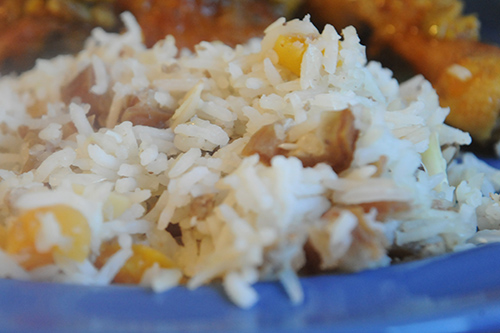
Meanwhile, place the rice and water in a pot, then bring to a boil. Cover, reduce heat and simmer for fifteen minutes. Pour the oil over. The rice should be not-quite cooked--don't drain! Add the lamb, fruit and nut mixture and cover the pot again.
Let cook for another five minutes or until all the liquid has been absorbed.
Finally the bread:
Combine all the ingredients in a large bowl (or your bread machine) and knead for five minutes or until you get a nice, elastic ball. Cover and let rise in a warm place for four hours.
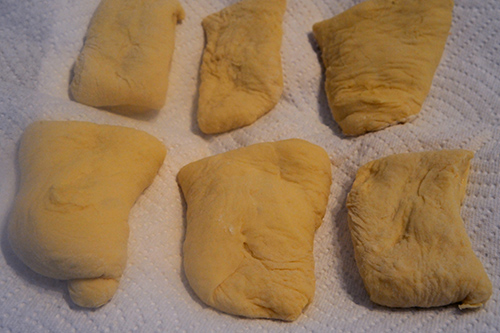
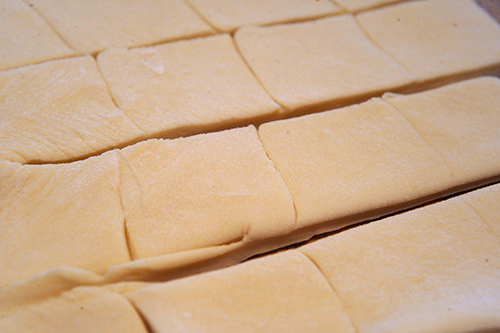
Divide the dough into eight balls and roll them out to about a quarter
inch thick and four inches wide, then cut each piece into three
equal-sized rectangles.
 |
| OK not exactly equal sized, but you can do better than I did. |
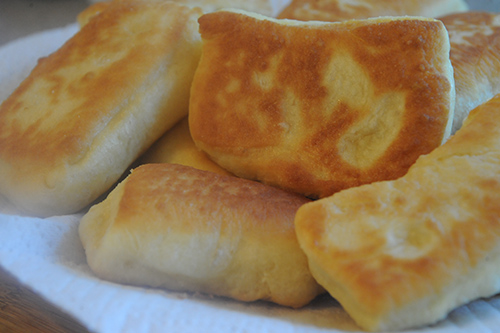
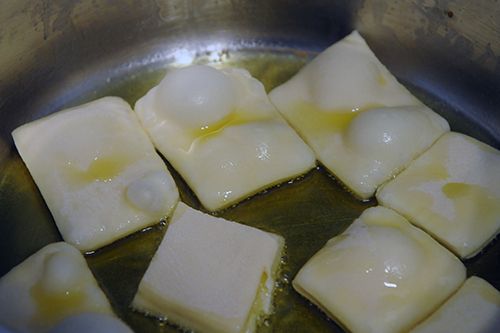
Now heat some sunflower oil (canola will work too) in a frying pan. The recipe says to use about an inch, but I used a lot less than that and mine were perfect. Just make sure your pan is deep enough that there's no danger you'll spill any hot oil. The oil is ready when bubbles rise around the non-stirring end of a wooden spoon.
Now drop the dough pieces into the oil and fry on one side until golden. Then flip and fry on the other side. Drain on paper towels and repeat until all the pieces are done.
I gotta say, this meal is going to make my list of favorite recipes from 2014. The chicken was really good. Now, I liked it more than everyone else because I love olives. My husband, on the other hand, does not love olives. So although he liked all the other flavors I think it was a bit overly olivey for him. The rice was really good too, it was mild but paired with the much stronger-flavored chicken I think it was a good match. And the bread, oh the bread. It was soft and warm and delicious. I don't know how much of it had to do with the sunflower oil I fried it in, but oh yum. My kids wanted some of the leftovers the next day, and they did not get any because I ate it all.
Yay another blog post on time! I'm on a roll. Next week: Kenya.


.svg/250px-Kyrgyzstan_(orthographic_projection).svg.png)

.svg/553px-Kazakhstan_(orthographic_projection).svg.png)