Recipes from Marche, Italy

For this entry, I made two recipes. Neither of them were especially good, but I don't blame the people who posted the original recipes or any of the traditions they came from, I blame myself and my propensity for Googling things that might kill me.

Recipes from Marche, Italy: Brodetto

A seafood stew with mussels and clams, minus the Vibrio.

Recipes from Marche, Italy: Filone Casereccio

An Italian bread that will come out much better than mine did if you use fresh brewer's yeast and steam.

Recipes from Malta

This is actually the third time I’ve cooked a meal from Malta. The first time, I cooked the meal and then just did not write the blog post. Years went by.

Recipes from Malta: Imqarrun

Imquarrum (also called Imqarrun il-forn) is descended from a dish served in Sicily, but the Maltese have adopted it as a traditional staple. The key to making this dish is to be patient.

Showing posts with label Central America. Show all posts

Thursday, January 23, 2014

Recipes from Honduras

The great civilization of the Mayans fell in the 16th century, leaving behind only its monuments and its culinary traditions. Today, the food in modern Honduras echoes those Mayan influences, with staples such as corn and beans coming together with Spanish ingredients to create this modern, Central American cuisine.


Until I started doing this blog, I had no idea how many preconceived notions I had about cooking. I can’t tell you how many times I’ve looked at one of these world recipes and thought to myself, “There’s no way that’s going to work.” And then been wrong.

It happened again this week with corn tortillas.

Now I know, you’ve probably made corn tortillas before and are laughing at me. But when I looked at the ingredients and saw that corn tortillas are made entirely from masa flour, salt and water and nothing else, my first thought was, “There’s no way that’s going to work.”

I’ll get to the details in a minute, but I’m sure you’d have already guessed that we're in Central America just based on the above comment, even if you hadn't actually read the title and intro of this week’s entry. Yes, we're in Honduras, a fact that pleased me immensely because I love food from Central America.


Honduras is bordered by Guatemala, El Salvador and Nicaragua. Historically, it's one of the regions that Spain conquered and oppressed back in the 16th Century. It stayed under Spanish rule until 1821, and since then has had about 300 internal rebellions and civil wars, which works out to about one every seven or eight months. The nation has also had a sort of unstable relationship with El Salvador and in fact fought a war with its neighbor in 1969 that was misleadingly titled “The Soccer War,” since it broke out shortly after Honduras and El Salvador met for a World Cup elimination match. It was a short lived war that really stemmed from a disagreement about the economic impact of immigrants from El Salvador, but you know how history loves a good story.

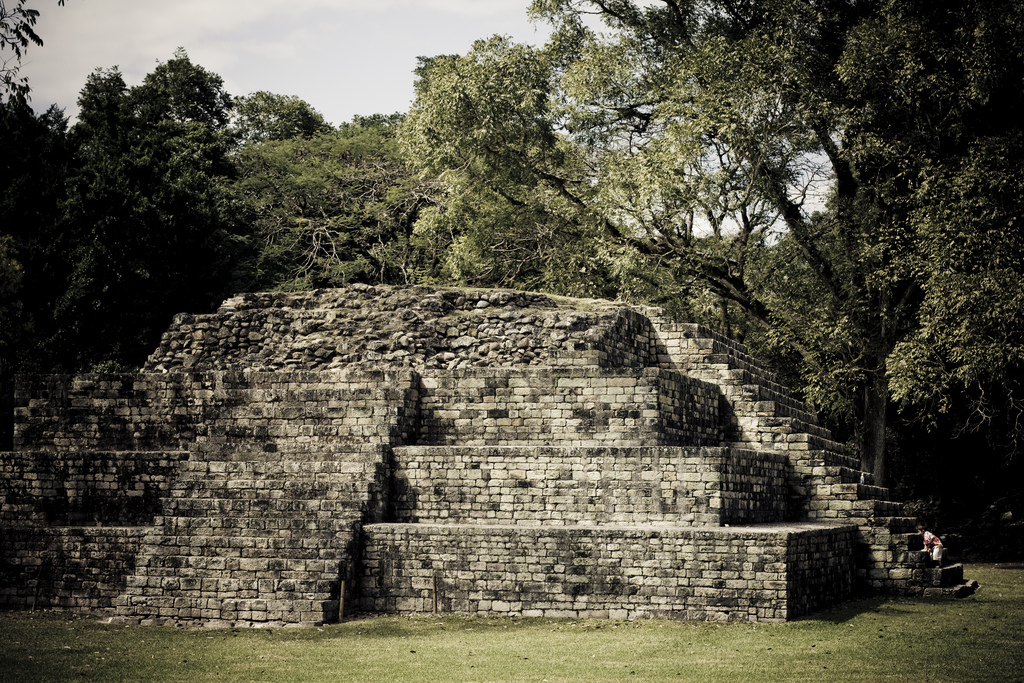
Copan, Honduras. Photo by Mario Pleitez.

Speaking of stories, Honduras is also known for Lluvia de Peces, a phenomenon where fish literally fall from the sky. Or not, depending on who you believe.

Anyway this week’s menu does not include any fish, from the sky or otherwise. I stuck with a pretty basic menu instead:

Carneada
(from Honduras.com)

  • 1 1/3 lb beef flank or skirt, cubed
  • 1/2 cup seville orange juice
  • 4 garlic cloves, mashed
  • 1 tbsp salt
  • 1 1/2 tsp ground cumin
  • 1/2 cup olive oil
  • 1 tbsp Worcestershire sauce

The next three recipes come from This is Honduras:

Refried Beans
  • 1 3/4 lb canned red kidney beans
  • 2 tbsp ground cumin
  • 6 tbsp oil (canola or sunflower)
  • 2 tbsp chopped onion
  • 2 tbsp chopped green bell pepper
  • 4 garlic cloves, chopped
  • Salt and pepper to taste
Chimol
  • 1/2 white onion, finely diced
  • 1 green bell pepper, finely diced
  • 1 diced tomato, finely diced
  • 1/4 cup fresh cilantro, finely chopped
  • Juice of 2 limes
  • 1/2 tsp salt
  • 1/2 tsp powdered garlic (optional)
Corn Tortillas
  • 2 cups masa flour (such as MASECA)
  • 1  1/4 cups water
  • 1/8 tsp salt
Let’s do the carneada first, since it needs to marinate for a while. But first a word about Seville oranges, otherwise know as “bitter orange” or “sour orange.” You can’t buy them here in California, or at least not in my part of California. Now this carneada recipe says you can substitute tangerine juice but that’s not what I did, because I thought it would be a little too sweet. Instead I used the Cook’s Thesaurus substitution for bitter orange: 2 parts grapefruit juice, one part lime with a little bit of orange zest. My results were excellent. If you can’t find Seville oranges, I suggest you use the same substitute I did.

OK so first you will want to cut your beef into strips that are one inch wide. Then mix the rest of the ingredients together and add the strips, turning until they are completely coated with the marinade. Let marinate in your fridge for a few hours, preferably overnight.


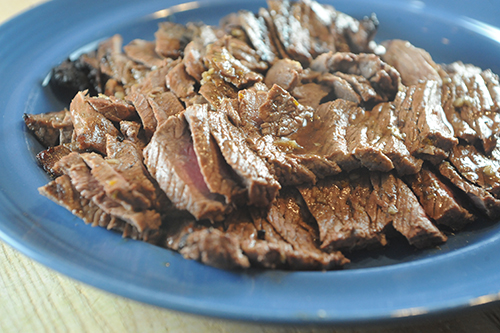
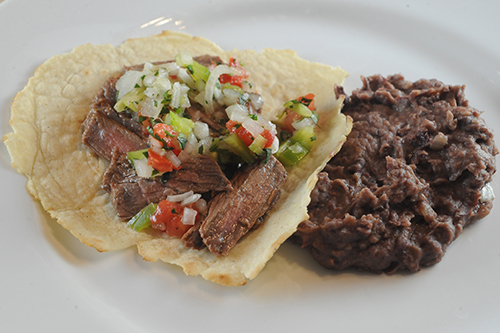
Heat your BBQ. Now I personally swear by charcoal, though I know it isn’t as popular as propane. This recipe mentions charcoal specifically, though I'm sure you could get by with using a gas grill. Anyway cook the strips on your grill until medium rare, then slice into smaller pieces and serve with the corn tortillas and chimol.


Next the chimol, which is easy to make and can be prepared ahead of time:

Toss the vegetables together and add the cilantro. Add the lime juice and salt to taste, and powdered garlic (if using; I did). Refrigerate until ready to serve.


Now the beans:

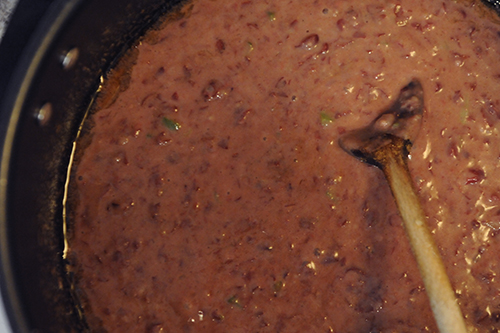
Open up the can and pour the beans directly into your blender, liquid and all. Pulse until mostly a paste with a few whole beans remaining.

Meanwhile, heat a small amount of oil in a large pot and add the onions, peppers and garlic (I like to add the garlic last so it doesn't burn). Cook until the onions are translucent. Add the beans and stir in the cumin.


Reduce heat and cook, stirring occasionally, until the beans thicken.


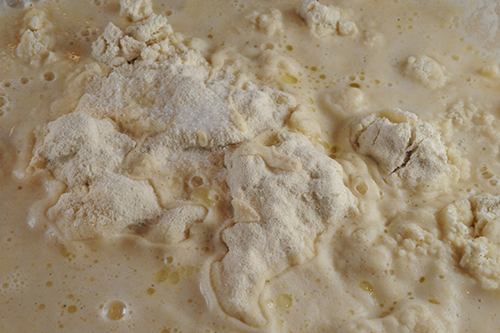
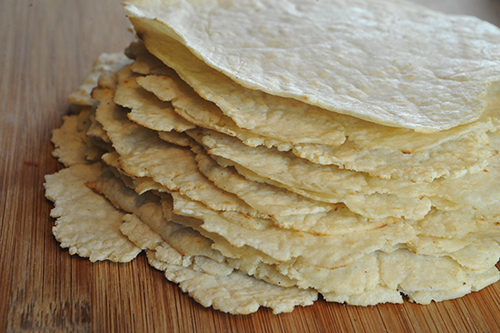
Finally the tortillas. Mix the masa flour with the salt and water. Your dough should be smooth and not sticky, but it shouldn't be too dry either. I had to add a little more water to mine then the recipe called for.


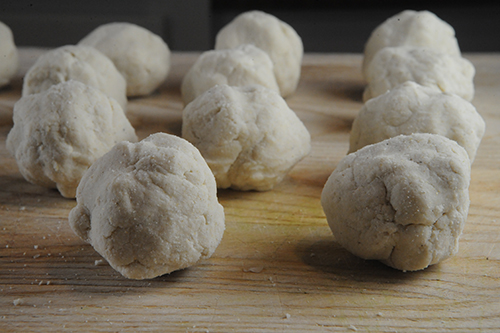
Now separate the dough into golfball sized balls.


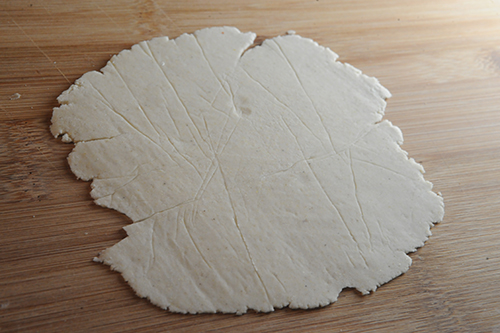
Flatten each ball with a tortilla press. If you don't have a tortilla press, you can put the balls between two layers of plastic wrap (I actually used a ziplock bag) and flatten with a rolling pin. Your tortillas should be pretty thin, no more than maybe a millimeter.


Now heat up a large frying pan over high heat.

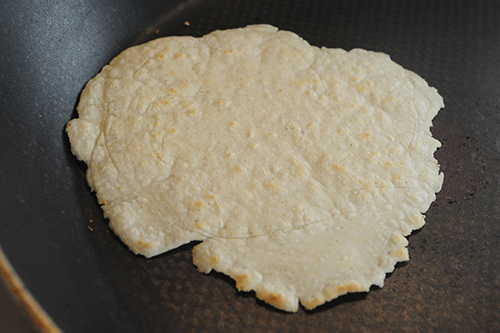
Here's where the magic happens: I was pretty sure these things would just fall to pieces in the pan. After all, they were just held together with nothing but water. But they didn't so much as crack, and when I served them they held together fabulously--unlike store bought tortillas, which tend to split when you fold them.

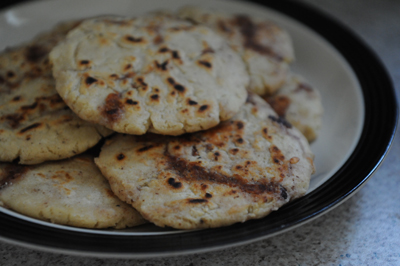
So here's how to make perfect corn tortillas: Transfer the flattened dough to the pan (don't use any oil, it should just be a dry pan). Cook on one side until the tortilla starts to curl around the edges, then flip. It should have some golden spots on the cooked side.


Cook on the other side until you get some more golden spots, then transfer to a warm plate. I put damp paper towels in between each one and they were perfect when I served them.


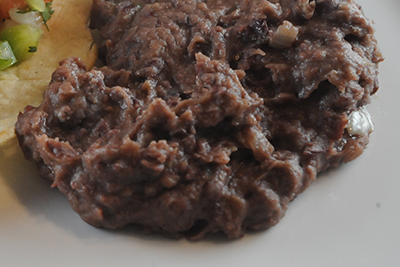
And so was everything else. The beans: delicious. The chimol: delicious. Really just a simple salsa but the peppers were a nice twist. The beef: to die for. The combo: heavenly. It really was a very easy meal to put together but before we were finished Martin was already talking about how we should recreate it for some friends.

Next week: Hong Kong.

For printable versions of this week’s recipes:
Thursday, November 14, 2013

Recipes from Guatemala

I'm on a roll!  After cooking some really outstanding food from Grenada and Guam I've hit on another winner: Guatemala. I don't know if I'm getting lucky or I'm just getting a whole lot better at choosing meals that I can a) reproduce correctly and b) tell in advance are going to be tasty. Probably a little of both.

Guatemala is a Central American nation, in fact it's Mexico's closest neighbor to the south. At just over 42,000 square miles, it is roughly the size of the state of Tennessee, so not one of the largest nations on my list. It has a big history, though, since this is where the civilization of the Mayans rose and fell somewhere around the same millennia as the birth of Christ.

Guatemala is one of those places that attracts passionate travelers. Its archaeological sites are, for some people, deeply spiritual places or at least endlessly fascinating. Like Egypt, Guatemala is full of ruins both big and small, from Tikal to Quirigua and Zaculeu. You only have to spend some time looking at photographs of these places before you start to wish you could visit them, too.

Photo credit: Pedro Szekely

Guatemalan cuisine is, as you might expect, similar to the sorts of dishes you find in Mexico. Actual Mexico, I mean, not the one that pretends to occupy your local taqueria. The food comes from Mayan traditions, since it's the descendants of those ancient Mayans who now occupy the area. Corn, beans and chilies are all on the typical Guatemalan menu. Sounds good to me!

During my research there was one dish that kept popping up over and over again, and since it contained pretty much no ingredient that I don't find incredibly delicious I couldn't ignore it, even though it was kind of the obvious selection. Here it is:

Pork Jocón
  • 1 pound pork*
  • 1 onion, roughly chopped
  • 1 tomato, roughly chopped
  • 3 cloves garlic
  • 2 tsp salt
  • 6 green onion stalks
  • 20 tomatillos
  • 4 sprigs of cilantro
  • 2 green chilies (if you want it spicy)
  • 1 oz margarine
  • 1/8 tsp pepper
  • 2 tbsp bread crumbs
* I gather that this dish is typically made with chicken. The only reason I didn't make it with chicken was because a lot of my recent TbS meals have been poultry based, and I wanted to try something different. I did find several references to a pork alternative during my research, so I think this version is still authentic even though it may not be typical.

On the side:

Arroz Guatemalteco

  • 2 cups long grain rice
  • 2 tbsp oil
  • 1 cup mixed vegetables (carrots, celery, sweet red peppers, green peas), finely chopped
  • Salt and pepper to taste
  • 4 cups chicken stock
Now I desperately wanted to find a recipe that did not include peas and carrots, because as you know I'm like a little kid when I encounter peas and carrots. I just want to hold my nose and go "Ew!!!" But this really is the only rice recipe I could find, so I went with it. See, I'm not inflexible.

And finally:

Chilaquilas
  • 6 corn tortillas
  • 12 oz fresh Mexican cheese (I used queso fresco)
  • 3 eggs, separated
  • Salt and pepper to taste
  • About 4 tbsp vegetable oil
Now I also had a dessert picked out, and even bought all the ingredients for it. Here's a link to it, in case you decide you want to make it. (Note: this is a Google Translate page, and the recipe is at the bottom after several others.) I forget what was going on that night, but by the time I finished making this meal I couldn't be bothered to do the bananas, too. But hey, it's not the first time I've done that.

So here goes, starting with the pork:

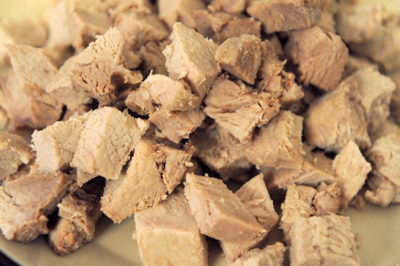
Place the pork in a pot with the onion, tomato and one of the garlic cloves. Add 1 tsp of the salt and cover everything with water. Bring to a boil, reduce heat and simmer until the pork reads 145 degrees with an internal meat thermometer. Remove the meat from the pot, reserving the broth. Let cool and then cut up into bite sized pieces.

Diced pork in very strange lighting.

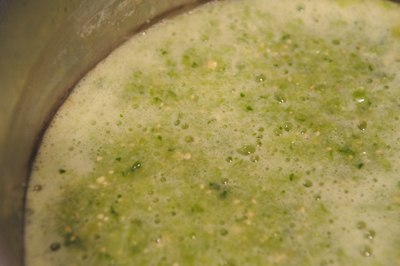
Place the green onions, tomatillos, cilantro, the remaining garlic cloves and the chili peppers into a food processor with about two cups of the broth. Blend well, then strain off some of the liquid.

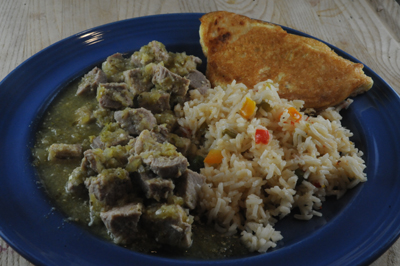
Melt the margarine in a large saucepan and then add the tomatillo mixture. Season with salt and pepper and then add the bread crumbs to thicken. Add the pork to the pot and then bring just to a boil.

And now, the rice. Super easy, which would be great if it wasn't for those damned peas and carrots. Here's how:

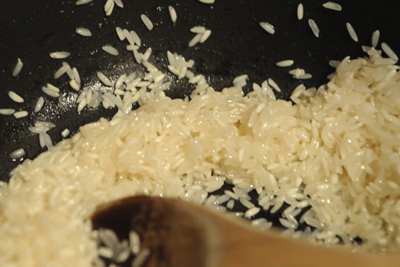
Heat the oil in a heavy pot and add the rice. Stir for a few minutes, until all the grains are coated but don't let them brown.

Now add the (gag) vegetables, chicken stock and salt and pepper. Bring to a boil, then cover and reduce heat. Simmer for 20 minutes or until all the liquid has been absorbed.

And finally, the Chilaquilas. Spoiler alert: these are pretty danged tasty and also really simple, if you don't mind beating egg whites.

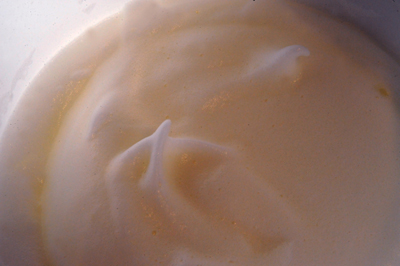
First beat the egg whites with an electric mixer until you get some lovely stiff peaks.

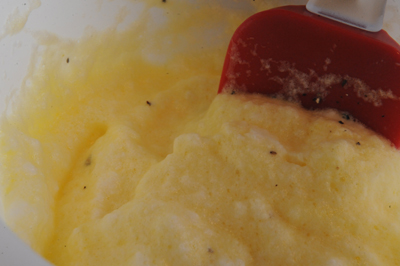
In a separate bowl, beat the yolks lightly, then gently fold them into the whites.

Now put the tortillas in the microwave with a damp paper towel. Nuke them for 20 or 30 seconds to soften them up.

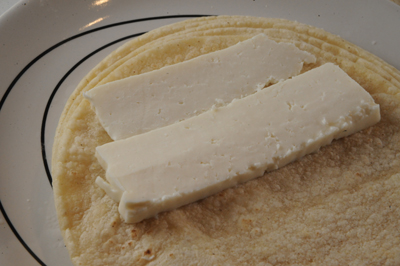
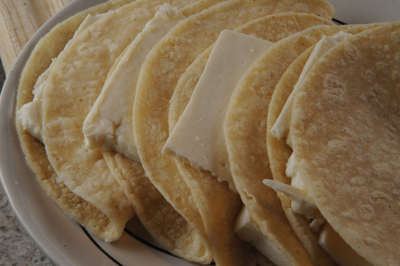
Slice the cheese into quarter-inch thick slices and put them inside the tortillas, covering one half of each one. Then fold the tortillas in half.


Heat the oil in a shallow pan and then dip each tortilla in the egg mixture, covering completely. Now place in the hot oil and fry on each side until golden. Keep warm while you finish the rest of them.
OK so I will admit, I even liked the rice. I might have picked out some of the carrots. Possibly also some of the peas. But I really did like it. It was rather plain, really, but I don't need my rice to be particularly fancy.

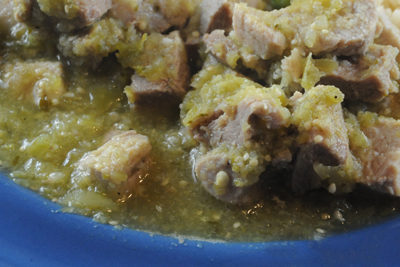
The pork was delicious, and went perfectly with the tomatillo sauce, which was not surprising since that's the basis for a chili verde recipe I sometimes make. But by far my favorite part of the meal was the chilaquilas. They were kind of like little tortilla-stuffed omelets. Now I know I'm a mean mom but I had to kind of tell Hailey a half-truth when she wanted to know what she was eating, because the chilaquilas contained her two arch nemeses, cheese and eggs. So I told her she was eating tortillas dipped in huevos and stuffed with queso, which meant nothing to her and which she evidently didn't think to question. So even she liked it. Now of course it was a heart-attack inducing mass of cholesterol-stuffed bad for youidness, so really, what's not to like. Hailey just hasn't figured out yet that she really does like cheese and eggs.

Still picking through the alphabet and can finally see a light at the end of the "G" tunnel! Next week: Guernsey.

For printable versions of this weeks recipes:

Thursday, March 28, 2013

Recipes from El Salvador

I think this week was a first, though I'd have to go back through my entire Travel by Stove history to know for sure. But I'm pretty sure I haven't ever done a totally vegetarian meal for this blog before.

Which is almost a little shameful when I think about it, because in poorer nations meat isn't readily available, so vegetarian meals are the norm (though not necessarily by choice). I enjoy meat, though, so I generally don't pick the vegetarian meals.

I do not know what happened to the depth of field in this photo.

On paper, El Salvador isn't really poor—it is the third largest economy in Central America. In reality, of course, there is a huge divide between the wealthy and everyone else, with per capita income actually ranking at the fifth lowest in the Western Hemisphere. El Salvador is also the smallest and most densely populated country in Central America--as far as square mileage goes, it has 8,124 of them, which makes it roughly the same size as Massachusetts.

Do you see that dark spec in Central America?
No, it is not dust on your screen--it's El Salvador.

For all that small land area, though, El Salvador has a lot of cool stuff. Of the eight species of sea turtle that exist in the entire world, six of them nest on the El Salvadorian coast. El Salvador is also home to that coolest of wildcats, the ocelot.  It has 22 active and inactive volcanoes, (which I suppose is only cool if they aren't posing an immediate danger to people or property). And El Salvador is home to a ton of Mayan ruins, like Tazumal, Joya De Ceren and Casa Blanca.

Chalchuapa, Santa Ana, El Salvador. Photo Credit: otrarove via Compfight cc

It probably won't surprise you to hear that the cuisine of El Salvador depends heavily on corn and beans. For my selections this week I didn't actually deviate too far from that, choosing one of El Salvador's most popular dishes as my main course:

Pupusas
  • 3 cup instant masa
  • 2 cups water (more if needed)
  • Salt and pepper to taste
  • 14 oz refried beans
  • 1 cup queso fresco or mozzarella, finely grated
  • 1 to 2 tbsp water
  • Vegetable oil
This recipe came from "Kitchen Conundrum," which isn't technically a Salvadorian resource. However, this particular blog entry featured recipes from the author's Salvadorian friend, so I have no reason to doubt its authenticity.

Now here I should take note that pupusas aren't always vegetarian. Nor, do I gather, are they usually vegetarian. In fact I originally downloaded a recipe for the pork filling that typically goes inside of them, but decided in the end that I wasn't going to have time to do the pork. Which was fine, because I liked this version, but in the interests of full disclosure there are plenty of other takes on pupusas that aren't strictly vegetarian.

To go with this recipe, I made the Salvadorian salad that you would generally find next to pupusas (this recipe also came from Kitchen Conundrum):

Curtido
  • 1/2 head of cabbage, shredded
  • 1 carrot, peeled and grated
  • 4 cups water
  • 1/2 onion, diced
  • 1/4 cup white vinegar
  • 1 jalapeño or Serrano pepper, minced or 1 tbsp red pepper flakes
  • 1/2 tsp salt
Now another disclaimer: Salvadorian curtido is not very similar to the curtido we had the other day in Ecuador. And also, it's usually fermented. I don't personally do fermenting, because I don't like the idea of accidentally poisoning my family if things go wrong. Though maybe I have entirely the wrong idea about fermenting, but still. So I liked this version because it didn't ask me to leave anything out in the sun for several days. And because it came from the blog author's Salvadorian friend, I'm still going to claim it's authentic.

Because I was feeling ambitious, I decided to make my own refried beans using the technique I found at Postres de la Cipota, a blog authored by an American who is married to a Salvadorian.

Refried Beans
  • 1 lb small red beans
  • Water to cover
  • 1 tbsp cumin
  • 1 tbsp black pepper
  • Salt to taste
Now I will say that I'm not sure about those last three ingredients, because La Cipota's recipe is actually spread across two posts. One mentions the spices, and the other doesn't talk about them at all. I did the beans without the spices, but if I had it to do over again I would have added them because (duh) the beans all by themselves weren't particularly interesting.

And some garnish (also from Postres de la Cipota):

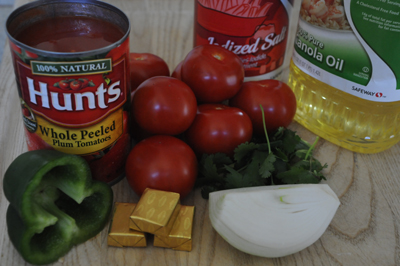
Salsa Roja
  • 8 small,  red tomatoes
  • 1 can peeled, whole tomatoes
  • 1/4 white onion
  • 1/4 green bell pepper
  • 3 or 4 sprigs of cilantro
  • 2 tsp salt
  • 2 to 3 tbsp Caldo de Pollo*
  • 2 tbsp oil
* Caldo de Pollo is a brand name, and it's actually just chicken bouillon. I very much doubt that brand is important, though I did happen to already have some on hand.

And now for the finale:

Quesadilla Salvadorena

No! This is not two flour tortillas filled with melted cheese and other random ingredients. No, it is not. Salvadorian quesadillas are totally unique, and nothing like you would get at Chevy's Mexican Restaurant. Or any other Mexican restaurant. In fact, Salvadorian quesadilla is a dessert. Here are the ingredients (also from Postres de la Cipota):
  • 1 cup rice flour*
  • 1 cup white sugar
  • 3/4 cup sour cream
  • 4 oz Parmesan cheese
  • 3 eggs, separated
  • 1 stick salted butter, melted
  • 1 tsp baking powder
  • Sesame seeds
*La Cipota also says you can use Bisquick, which is what I did because I couldn't find the rice flour that I thought I had in my cupboard.

Now another disclaimer: in the original recipe, sour cream and Parmesan cheese are alternative ingredients to the Salvadorian versions (crema and queso duro, respectively). If you can find these in the US, use them, but I don't think it's cheating to use the alternatives since they are evidently pretty similar to the traditional stuff.

So yes! This was another huge time-suck of a meal, but it was worth it. Here goes, starting with the refried beans:

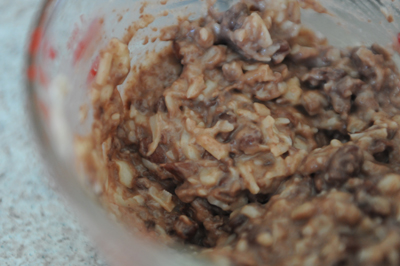
Boil the small red beans with the spices for three hours or until soft, adding more water as necessary. Then drain and remove half of them to a blender (you can add a little water until the puree gets to the right consistency). Mix the pureed beans with the whole beans and cook over low heat for 30 to 40 minutes, stirring occasionally so they don't stick (I added a little oil to my skillet).

 
OK, now let's get the red sauce and curtido out of the way:


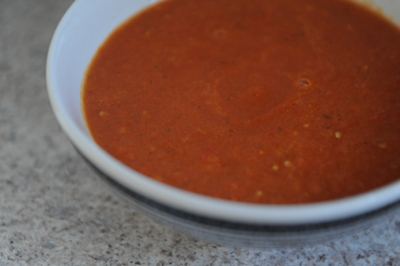
Put all the ingredients for the salsa roja into a blender and puree until you get a smooth sauce. Transfer to a pot and pour another tbsp of oil over. Heat over a medium-high flame until boiling, then shut off the heat and keep warm until ready to serve.


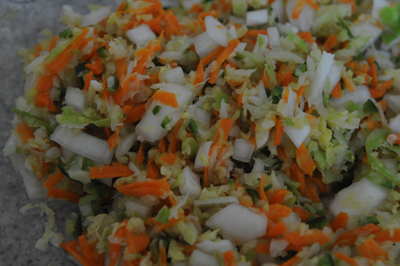
To make the curtido, first boil the water. Put the cabbage and carrots in a heat-proof container and pour the water over. Let stand for 10 minutes, then drain. Try to get out as much of the water as you can.

 
Transfer the cabbage and carrots to a bowl and add the rest of the ingredients. Let stand at room temperature for at least an hour. Chill and serve.

Now for the pupusas:

Put the masa in a bowl and slowly add the water with some salt and pepper. Knead until you get a smooth ball. The dough should not crumble when you handle it—if it does, add more water.

In a separate bowl, mix the cheese with the water and mash it until you get a cheesy paste. Now add the beans and mix well. Add salt and pepper to taste.

 
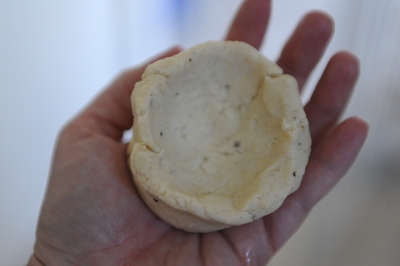
Put the vegetable oil on your hands and pick up a golf-ball sized chunk of dough. Roll it into a ball and then make a little well in it with your thumb.

The "well" thing wasn't working out for me, so I made mine into little bowls.

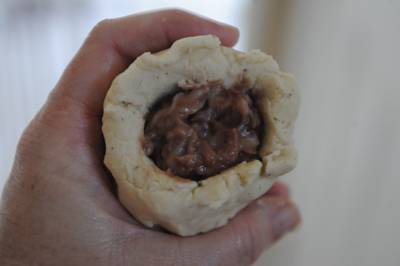
Put a tablespoon of the bean mixture into the well, then seal and flatten into a round patty. Make sure there is plenty of oil on the patty.

 You can probably see what a mess this is going to make.
Yes, this is exactly as tricky as it sounds like it is. I had bean and cheese mixture seeping out everywhere. My finished pupusas still tasted fine, so I tried to ignore their ugliness.

 
Now heat a large frying pan over a medium flame and add one of the pupusas (if they are well-coated in oil you don't need to add oil to the pan). Fry them until they are golden on both sides, taking care when you turn them. Serve warm with the curtido and salsa.

 
Now for the quesadilla:

Preheat your oven to 350 degrees.

With an electric mixer, beat the egg whites until firm, but stop before you start to get stiff peaks. Set aside.

Now use the mixer to cream the butter and sugar until fluffy. One at a time, add the egg yolks. Keep mixing until creamy. Gradually add the cheese.

 
Remove the bowl from the mixer and fold in the sour cream and baking powder. Sift the flour/Bisquick over the mixture and blend gently until everything is well-incorporated. Then fold in the egg whites.

 
Pour the batter into a 9x13 inch glass baking dish and sprinkle the sesame seeds on top.

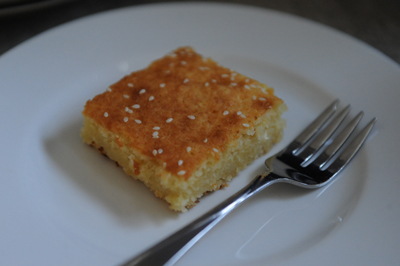
Bake for 38 minutes. Yes, that made me laugh, too. I guess if you were using La Cipota's oven, that's how long you would bake it. In my oven it took more like 45 or 50 minutes. I was worried, too, because the center was still jiggly after about 45 minutes and everything else was turning a deep brown. I was starting to have arepa flashbacks, so I just shut off the oven and left the quesadilla in there while it cooled, which has worked for me in the past when I'm having some trouble getting that center to bake. Fortunately it worked this time, too, and I ended up with nearly perfect quesadilla.

 Serious yumminess.

So here's how my no-meat Salvadorian meal went over:

I put the plates down and Hailey looked at hers with suspicion. She asked me what it was and I said "pupusas." She then looked at me with shock and horror and shrieked "It has POO in it??"

OK so I guess I was more than a little dismayed to learn that my daughter thinks my cooking is so bad that it might actually have poo in it, but I had to move on. Here's what everyone else thought:

The kids were split down the middle about the pupusas. My more adventurous kids (Natalie and Henry) ate them and enjoyed them. Dylan and Hailey (obviously) did not eat them. In fact, Hailey declared that I should never again cook another vegetarian meal, because evidently this was the only meatless meal she could even fathom, which tells me I probably ought to be doing Meatless Mondays or something.

I liked them. A lot. And I liked the salsa, too, even though it had nothing spicy in it. The curtido was really good, too, a lot like sauerkraut but not as strong. I figured Dylan, who is a self-professed sauerkraut fan, would enjoy it too but he didn't. Well, there's no predicting what kids will eat I guess.

And now for the quesadilla. Knowing my feelings about cheese, I'm sure you will not be shocked to learn that I loved, loved, loved this dessert. The first bite, though, was really strange. You don't usually expect your dessert to be cheesy, and this was definitely cheesy. It was a strong, salty cheese flavor, too, but it paired surprisingly well with the sweetness of the cake. Even Hailey ate this cake, and when I told her it had cheese in it she did not run screaming from the room but actually asked if she could have another piece.

So that's El Salvador, and I can definitely say I'll be making quesadillas again. In fact I've already shared the recipe with some friends, who were likewise intrigued by the blend of cheese and sweet. I love it when I find a gem.

Next week: England. Yes! My husband's homeland.

For printable versions of this week's recipes:

Wednesday, November 21, 2012

Recipes from Costa Rica

I just have one thing to say about this week's meal: coconut fudge.

I guess I have to write a whole post too, though. Dang.

Yes, coconut fudge is heavenly. And when I say heavenly, I mean that this is the stuff Saint Peter hands out to all new arrivals at the Pearly Gates. It is also the stuff that the devil dangles in the faces of all his new recruits while taunting "Nah-nah-nah, you can't have some!"

So I'm sure you're dying to know about the coconut fudge. First, though, I have to tell you about Costa Rica.


Costa Rica has many things going for it, besides just the coconut fudge. Though seriously, the coconut fudge really should be enough. Anyway, besides being quite high on the Gobsmackingly Delicious Desserts Index, Costa Rica is the only Latin American country included on the list of 22 countries that have been "steadily democratic" since the 1950s. On the Human Development Index, it ranks 69th in the world—and this despite the fact that it is still a developing country with a poverty rate of about 23%. It is also fifth in the world (and first in the Americas) on the 2012 Environmental Performance Index—with aspirations towards becoming the world's first carbon-neutral country by 2021. And it doesn't have a military. Can you believe that? After a bloody civil war in the 1940s, the Costa Rican government decided to just abolish that entire institution.

Oh yeah and then there's the coffee, which is one of Costa Rica's principle sources of income. So Costa Rica is probably at least partially responsible for the fact that I can actually get out of bed in the mornings.

Finally, Costa Rica is home to the world's largest oxcart. The trivia just keeps getting better and better.

As far as the food goes, Costa Rican cuisine is similar to what you find in other Latin American nations. It is not typically particularly spicy, but it does have a lot of flavor.


I didn't have too much trouble finding a main course and a side, and here they are:

Escabeche de Pollo (Chicken Escabeche)
From Costarica.com

  • 12 chicken drumsticks
  • 2 large onions, sliced
  • 1 cup olive oil
  • 4 bay leaves
  • 1/2 cup pitted olives
  • 1/2 cup capers
  • 1/2 cup balsamic vinegar
  • 1/2 cup water
  • Salt and pepper to taste
And on the side:

Gallo Pinto
From Amigofoods.com

  • 2 cloves garlic, chopped
  • 1 red bell pepper, chopped
  • 1 onion, chopped
  • 1 cup cooked rice
  • 1 cup canned black beans
  • 1 tbps vegetable oil
  • 1/3 cup cilantro, chopped
  • 4 tbsp Salsa Lizano
  • A dash of black pepper
And finally, the coconut fudge. Cue the heavenly bells and sounds of singing angels:


Cajeta De Coco
This recipe came from Food.com, from a poster who obtained it while visiting Costa Rica.

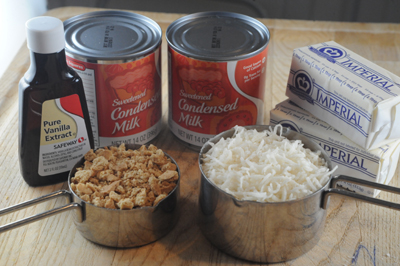
  • 2 cups sweetened condensed milk
  • 1 cup fresh coconut, shredded
  • 1 cup butter or 1 cup margarine
  • 1/2 cup graham cracker crumbs
  • 1/2 tsp vanilla extract
OK, let's start with the chicken.

This recipe is weird. It's really more like a drumstick salad, only without the lettuce. And other salad ingredients. It's drumsticks with salad dressing.

Anyway, it's easy to make. Here's how:

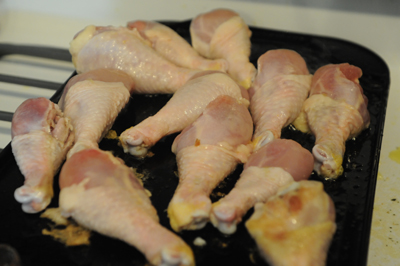
Heat half of the oil in a large skillet. Fry the drumsticks in the oil over a medium high heat until they are golden brown on both sides. Drain on paper towels.

Using this grill pan was really not the best idea.


Now put the drumsticks in a glass bowl and top with the sliced onions, bay leaves, olives and capers.


In a smaller bowl, mix the vinegar with the water and the rest of the olive oil. Toss with the drumsticks. Cover and let rest for 30 minutes.


At this point you can reheat the drumsticks or just serve them cold.


That's it! Now on to the gallo pinto. "Gallo pinto," by the way, means "painted rooster." The name comes from the appearance of this dish, which is speckled like (evidently) a colorful rooster. Gallo pinto is the national dish of Costa Rica.

Heat the vegetable oil over a medium flame and cook the bell pepper and onions until soft. In the last couple of minutes, add the garlic and cilantro.


Add the beans and Salsa Lizano to the pot with the black pepper. Then stir in the rice. Done!


And finally, the coconut fudge.

The ingredients of pure bliss.


Put all the ingredients in a pot over medium-low heat. Bring to a boil, stirring constantly.


Keep boiling for about five minutes, but don't stop stirring. Remove from the heat and let cool.

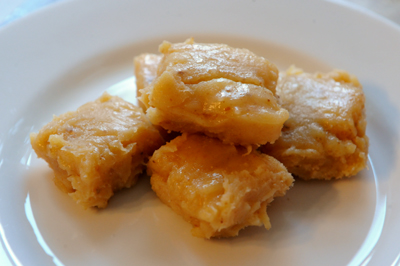
Now at this point, I figured I would just pour mine into a pan like I do when I'm making chocolate fudge, because I didn't have any of those little candy papers like the original recipe called for. Well, sadly this didn't really work. Coconut fudge doesn't solidify the way chocolate fudge does. So when I served mine, it was really just like a little scoop of pudding rather than something you could eat with your fingers. I can see now why the little papers would have been better.


I did chill my leftovers and that made them easier to cut up and eat, but they were still a lot softer than traditional fudge.

Here's the verdict:

My kids love drumsticks, so all 12 of the ones I made vanished pretty quickly. But the onion/caper/olive topping seemed a bit wasted. It added a little flavor to the drumsticks but even the vinegar didn't really penetrate them in a significant way. It was really just like eating unbreaded drumsticks that had been fried in hot oil, which, you know, is exactly what we were doing. I think maybe this recipe would have worked better if I'd put the drumsticks in the fridge and let them soak in the dressing for a couple of hours instead of just 30 minutes.

I really liked the gallo pinto. It was very flavorful and the Salsa Lizano gave it a sweet flavor. It made for pretty tasty leftovers, too. I would definitely make this again as something a little different to go with pretty much any Latin American main course.

And now, the coconut fudge. You know, I don't typically like coconut in desserts. I like it in savory dishes. But this, whoever invented this is a culinary genius. The coconut gave the fudge a great texture and a subtle coconut flavor. The graham cracker crumbs gave it a little more body than it would otherwise have had (which wasn't much really). And the rest of the ingredients combined just made it incredibly rich, decadent and unusual.

I know I'm gushing. I hope that readers who actually make this enjoy it as much as I did. I hope I'm not setting expectations way too high, because I realize that this newfound love of mine could very well just be a serendipitous connection between my personal tastebuds and this particular dessert. I will say, though, that I wasn't the only one in my family who loved this. When I wondered out loud which holiday I could make this recipe a traditional part of, Martin said "EVERY holiday."

So yeah, it was good. And now on to the turkey, homemade cranberry sauce and apple pie (I don't eat pumpkin pie, which I know makes me a freak of nature). Happy Thanksgiving everyone! See you next week.

For printable versions of this week's recipes:


      Copyright 2023 Becki Robins and Palfrey Media.. Powered by Blogger.

      Blog Flux

      Blog Directory