Recipes from Marche, Italy

For this entry, I made two recipes. Neither of them were especially good, but I don't blame the people who posted the original recipes or any of the traditions they came from, I blame myself and my propensity for Googling things that might kill me.

Recipes from Marche, Italy: Brodetto

A seafood stew with mussels and clams, minus the Vibrio.

Recipes from Marche, Italy: Filone Casereccio

An Italian bread that will come out much better than mine did if you use fresh brewer's yeast and steam.

Recipes from Malta

This is actually the third time I’ve cooked a meal from Malta. The first time, I cooked the meal and then just did not write the blog post. Years went by.

Recipes from Malta: Imqarrun

Imquarrum (also called Imqarrun il-forn) is descended from a dish served in Sicily, but the Maltese have adopted it as a traditional staple. The key to making this dish is to be patient.

Showing posts with label East Asia. Show all posts

Thursday, February 2, 2017

Recipes from Maharashtra, India

So I kind of had to squeeze this blog meal in on a weekday, because of various factors including a power outage, a roast beef dinner and my baby boy's 7th birthday. Happily, the meal I chose wasn't terribly complicated, so no one had to go to bed late. Not that late, anyway.

There were just two recipes, much to my older daughter's dismay, since she believes very strongly that no blog meal is complete without desert. And also, she hates curry. So it really wasn't her night.

Here are the two dishes I chose:


Kolhapuri Chicken, which are super spicy drumsticks.


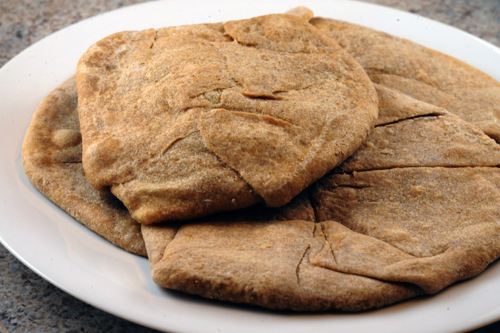
Alu Paratha, a flatbread stuffed with spicy mashed potatoes.

I will admit that I had to actually make two separate versions of each one of these recipes. While my older son (he's now 11) is so macho about spicy food that he says things like, "I can't believe you actually think this is spicy, Mom," even while his face is turning bright red, my other children don't appreciate spicy food at all. So I left out the super spicy chili powder from the drumsticks and excluded the red chili powder from the mashed potatoes. But just to keep it authentic, I did serve the complete recipe, fire and all, to me and Martin.


Recipes from Maharashtra, India: Kolhapuri Chicken

I have always loved spicy food, so I loved this super-spicy drumstick recipe from Maharashtra. It reminded me of Tandoori chicken, but much less kind. I do suggest if you're going to make it that you
test-drive the primary spicy ingredient before adding it--it's called "Degi Mirch," and it's a special blend of super-spicy Indian chili powder. I thought it was going to be hard to find, but I actually located it in 30 seconds or less on Amazon Prime (here's the link).

If you can get past the mouth on fire thing, this is a tasty recipe. Here's how to make it:

First, you marinade the drumsticks. Take the skin off, mix together the maranade ingredients and then rub all over the chicken. Put it in the fridge and let it sit for 30 minutes or so.

Now you have to mix up a bunch of whole garam masala ingredients: bay leaf, cumin seeds, coriander seeds, sesame seeds, poppy seeds, star anise and garlic.


Fry the seeds until they start to smell delicious, then add some sliced onion and dry coconut to the pan. Keep stirring until the onions start to brown.


Next, put the onion mix in a blender with some tomatoes and water and pulse to make a paste. Transfer back to the pan and cook in a little oil with the Degi Mirch and garam masala.


Now add the chicken to the pot, mix, cover and cook over medium low for  20 minutes, or until a meat thermometer reads 175 degrees. Now give it to your family and laugh as their faces turn red and they all dive for a glass of water.

Actually as I said, I didn't give my kids the spicy version, at least not deliberately. My super-macho 11-year-old helped himself to some sauce and then sat there sweating while simultaneously complaining that it wasn't spicy enough. Haha, I am so on to you, dude. My husband liked the flavor, spices and all, but of course complained that it wasn't a boneless, skinless chicken breast. You know, the most flavorless cut on the chicken. Sigh. You can't please everyone.


Kolhapuri Chicken

from Madhuras Recipe
Kolhapuri Chicken

Ingredients

  • 1 lb chicken drumsticks

  • For the marinade
  • 1/2 tsp turmeric powder
  • 1 tsp red chili powder
  • 1 tbsp ginger garlic paste
  • 1 tbsp lemon juice
  • 1 tsp Garam Masala

  • For the sauce:
  • 3 tbsp oil
  • 1 tsp cumin seeds
  • 1 tbsp coriander seeds
  • 2 tbsp sesame seeds
  • 1 tbsp poppy seeds
  • 2 tbsp garlic, chopped
  • 1 bay leaf
  • 4 green cardamom pods
  • 2 to 3 whole cloves
  • 4 to 5 peppercorns
  • 1 star anise
  • 1 large onion, sliced
  • 1 medium tomato, diced
  • 1/2 tsp garam masala
  • 3 tbsp dry, shredded coconut (unsweetened)
  • 1 tbsp Degi Mirch powder*
*Degi Mirch is a spicy red Indian chili powder blend. I got mine on Amazon.com

Instructions

  1. First pull the skin off the drumsticks. 
  2. Mix together the marinade ingredients and rub all over the drumsticks. Let sit in the fridge for 30 minutes or so.
  3. Now heat up the oil and add all the various seeds and the chopped garlic. Keep stirring until fragrant. 
  4. Add the coconut and onion and keep cooking until the onions starts to brown.
  5. Now transfer the onion mixture to a blender with the chopped tomatoes. Add just enough water to make a paste.
  6. Now heat some more oil and add the paste, along with the  Degi Mirch and garam masala. Cook for 5 minutes or so.
  7. Drop in the chicken pieces and add a little water to make a nice sauce. Cover and cook on medium low for 20 minutes, or until a meat thermometer reads 175 degrees.

Recipes from Maharashtra, India: Alu Paratha

So this is a pretty simple flatbread, no yeast or bread machine required. It's just whole wheat flour, water, salt and olive oil. The trick is stuffing it, and then getting the stuffing to stay inside while you roll it flat. It's actually not as hard as it sounds, you just can't have a heavy hand with the rolling pin. Here's how it's done:

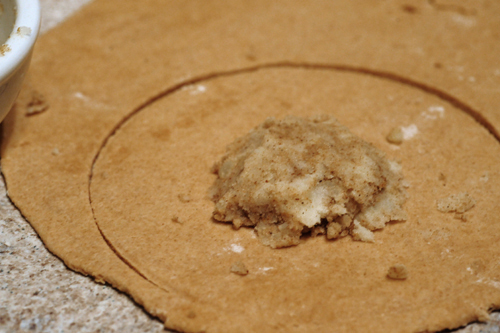
First mix up all the dough ingredients, then roll flat. I used a teacup saucer to cut circles out of the dough.

Make sure the dough is pretty thin--think tortilla rather than naan bread.

Now you mix up the filling, and then put a lump of it in the middle of the bread.


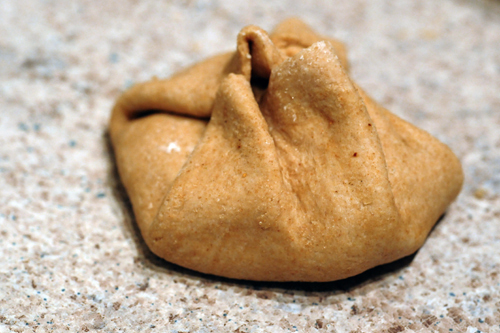
Pull up the corners to make a packet, like so:


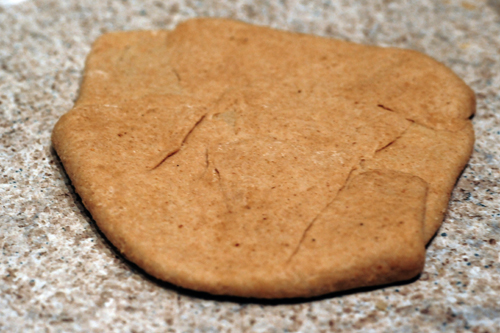
Then roll flat again. Just be gentle--you want the bread to be pretty flat but you don't want any of the potato filling to come out.


Now brush the tops with some melted ghee. The original recipe said to roast it on tawa, but if you have no idea what that means I think baking is a fine substitute. There were no times given but mine took about 15 minutes--you want it to start browning a little on top, then it's time to take out.

This bread was spicy, but not too spicy--you can certainly adjust the amount of red chili powder you use according to your own personal tastes. For all my kids except the oldest, that meant just not using any chili powder, of course, they still didn't like it because that's how they are. Even though they like flatbread and they like mashed potatoes but oh no, you just can't put the two together. Whatever.

Anyway here is the printable, pinable version:


Alu Paratha

from Simple Indian Recipes
Alu Paratha, flatbread stuffed with spicy potatoes

Ingredients

    For the dough
  • 2 cups whole wheat flour
  • 1 tsp salt
  • 2 tbsp olive oil
  • 3/4 cup hot water (more if necessary)

  • For the filling
  • 3 to 4 potatoes, peeled, boiled and mashed
  • 2 tsp red chili powder
  • 1 tsp garam masala
  • 2 tsp coriander powder
  • 1/2 tsp mango powder
  • Cilantro to taste
  • Bread crumbs

Instructions

  1. Mix together the ingredients for the dough and knead.
  2. Now combine all the filling ingredients together.
  3. Roll the dough out into tea saucer sized circles.
  4. Place a lump of filling in the center of each circle, then pull up the edges to form a packet.
  5. Roll the packet out flat, taking care not to expose the filling.
  6. Brush the top of each flatbread with a little melted ghee, then bake at 350 degrees for 10 to 15 minutes
Approximate time: 30 minutes Serves 6.

Friday, January 27, 2017

Where is Maharashtra, India?

So on Sunday afternoon I was just getting ready to embark on the next leg of my culinary travels, when there was a clap of thunder, followed by a lightening bolt, followed by a blackout. Well, I have actually been known to cook in the dark because I have a gas stove, but I wouldn't have been able to manage taking photos in the dark,so I elected to postpone my blog meal in favor of Chinese takeout. I can't say that I wasn't secretly a little grateful to have a night off.

Chatrapati Shivaji Terminus (CST), Mumbai, India.
Photo by sandeepachetan.
Anyway this was our week of student conferences, plus all the usual Kung Fu lessons, gymnastics classes etc., and then Martin tells me he's invited people over for roast beef on Saturday, and Sunday is my baby boy's seventh birthday ... so squeezing a blog meal in this week was a challenge. I did it, but not in time to get a recipe post online before next week. So for a start, I'll just tell you where we're going next, and you can look for the actual recipes after the weekend.

This week we're in Maharashtra, India, which based on the recipes Martin actually correctly guessed to be in central India. Leave it to a Brit to be able to pinpoint a whole region of India based entirely on the curry.

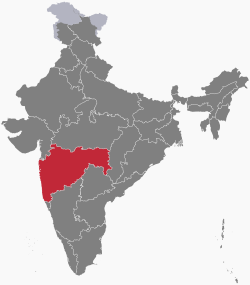
Anyway, Maharashtra is on the west side of India, bordering the Arabian Sea. It is the wealthiest state in India, contributing nearly one quarter of the nation's GDP and attracting migrants from all over India who come there in search of a higher standard of living. Its capitol is Mumbai, which is the most populous city in India and the ninth most populous urban agglomeration (which is the area encompassing both a city and the populated areas surrounding it) in the world. Mumbai is also home to the world's largest university (by number of graduates).

Maharashtra's cuisine can be mild or spicy, though the recipes I chose were notably on the spicy end of the spectrum. Most meals are served with rice and a flatbread such as chapati, and dal (lentils) are often served alongside. Of course, when I cooked my Maharashtrian meal I tried to cram it in on a weekday and I didn't have time to do dal ... and I also didn't have any rice, so it was lacking a bit in authenticity. Of course, I can't complain too much because it would have been a carb fest if I'd added both those elements, and you know I'm trying to stay away from carb fests because I love them and they're bad for me. But in case you want to do it more correctly than I did ... basmati rice and plain dal are easy accompaniments to help round out the meal.

As it was, I chose two recipes--a spicy chicken dish and a chapati stuffed with curried potatoes. It was tasty, but I had to make a no-heat version for my kids and a spicy version for us adults, so it was some extra work. It was good though, and I might make it again but would not be allowed to use drumstricks because my husband hates having to work for his food, haha.

See you in a few days.

Thursday, May 7, 2015

Recipes from Macau

I didn't set anything on fire this week, but I did cause a minor explosion. So you know, hopefully that will be entertaining reading.


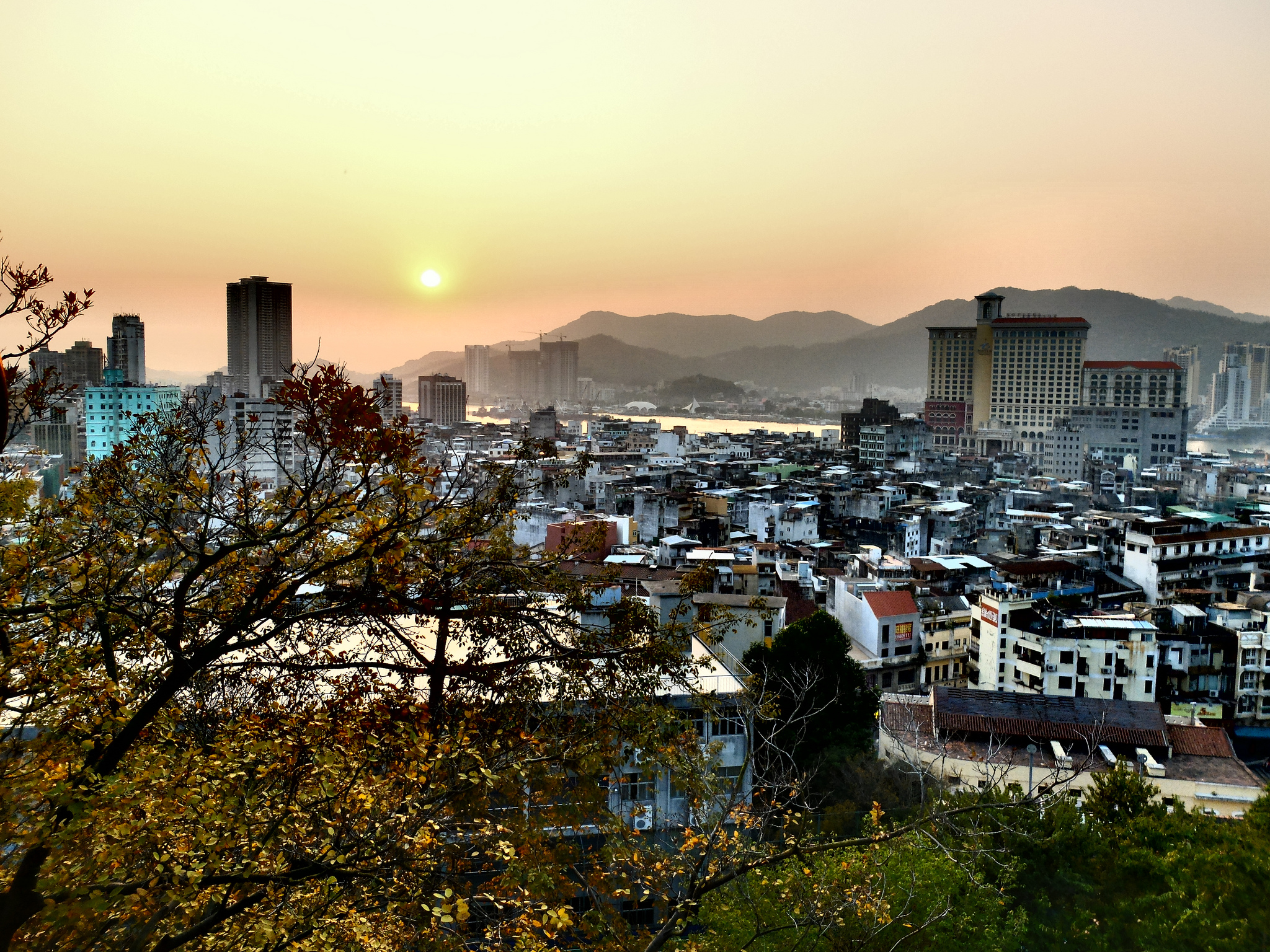
This week were in Macau, which I have to admit I had not actually heard of until I made this meal. Strange, because I have of course heard of Hong Kong (who hasn't), and Macau is sort of a sister nation. Actually it's not really a nation at all, but a "Special Administrative Region" of China, which is the same status that Hong Kong has had since 1997 when the British colonists finally packed up and went home. Macau is across the Pearl River from Hong Kong, and it's actually a former Portuguese colony. In fact Macau was the last remaining European colony in Asia until it was finally handed back to China in 1999.

There are 636,200 people in Macau, and all of them live in an area of about 11 square miles. Yes, you read that correctly and it is not a typo. Macau is the most densely populated place in the world. Don't feel too bad for the Macanese people, though, because their densely-populated little corner of the planet also happens to be one of the world's richest cities, and despite the close quarters the people who live there have the second highest life expectancy in the world. So they must be doing something right.

Macanese cuisine is, of course, heavily influenced by its past association with Portugal. The result is a cuisine that's actually quite unique, because it's largely based on the only marginally-successful attempts of Portuguese settlers to replicate their traditional dishes with Chinese ingredients.

 Macau. Photo by Karl Pang.

Because Macau is so small, though, it wasn't that easy to find good collections of recipes. But I did find one that appealed to me almost immediately. My daughter loves duck, and I've actually had a raincheck to get one for $1.99 a pound for a couple of months now, so when I saw this recipe I knew I was going to have to make it:

Duck Rice 
(from macau.com)
  • 1 whole duck, cut into eight pieces
  • 2 large onions, chopped
  • 4 large garlic cloved, minced
  • 1 bay leaf
  • 1 oz bacon, chopped into large pieces
  • 1 chorizo sausage, chopped into large pieces
  • 1/2 cup long grain rice, steamed
  • 1 3/4 oz Parmesan cheese
  • 1 egg, boiled, peeled and cut in two
  • 3/4 cup duck stock
Duck rice sounded like a meal all by itself, so the only other recipe I chose was a dessert:
Sawdust Pudding
(from Wendyinkk)

  • 4 1/2 oz Marie biscuits
  • 1/2 cup heavy cream 
  • 1/4 cup condensed milk
  • 1/2 tsp vanilla extract
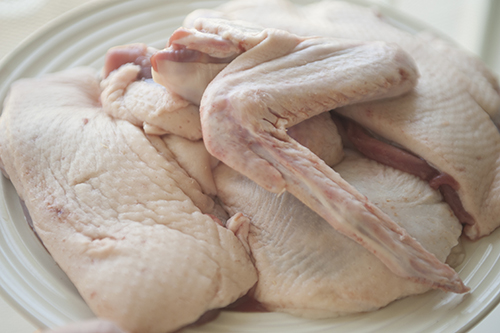
OK, we'll make the duck first. First you have to cut the duck up, which for me was a first. I don't think I've ever even cut up a chicken before.

Anyway you're supposed to cut the duck up into eight pieces: two breasts, two thighs, two legs and two wings. That leaves the back, which I used to make the duck stock. I just threw mine in a pot with some water and an onion and boiled it until the stock was nice and rich. 

While you're doing that, saute the duck pieces in hot oil on both sides until the skin is golden brown. Use a deep pot, because you'll be adding stock later. Remove the pieces from the pan and add the chorizo.

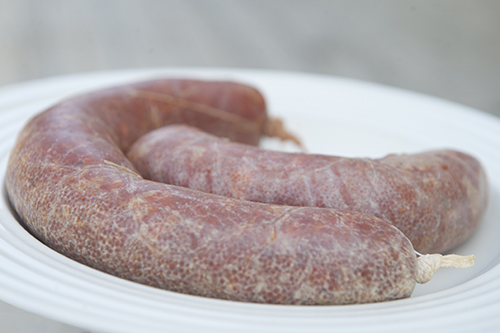
Oh, the chorizo. Here in California, the only kind of chorizo you can get is Mexican chorizo (at least until the week after I made this recipe, when I found Portuguese chorizo at the Grocery Outlet of all places). Anyway Mexican chorizo, if you're familiar, is really crumbly. As soon as you take it out of the package it just falls apart, which doesn't really mesh with the whole "cut into pieces" part of the instructions. So I thought I'd be clever and transfer all that crumbly sausage into a couple of casings and cook it up so it would hold it's shape and I could slice it.

 It doesn't look like an explosive ...
Now, if you know anything about sausage you are probably laughing at the notion. Me, on the other hand, well clearly I know nothing about sausage because I did all this, thinking I was very clever, and when I cooked the sausages they  exploded.

This is all that remained of my exploded chorizo.

Now granted, this was a minor explosion. But it was really messy and distressing, partly because after the explosion the sausage looked just like something you might get at The Chum Bucket, and partly because it was the only thing I had to work with and I'm pretty sure you can't do duck rice without sausage. So I ended up just throwing the remains of the exploded sausage into the pan with the duck and then calling my husband to get him to bring some linguica home from the supermarket. I know, it's not chorizo but it does slice and it is Portuguese, so I hope Macau can forgive me.

Anyway after your sausage explodes, fry the onion and garlic in the pan and add the duck pieces. Saute until everything is well-incorporated.

Now pour in the duck stock and add the bay leaf. Bring to a boil, then reduce heat and simmer until the duck is tender and cooked through.

Take the duck pieces out of the stock, then debone them and set the meat aside. Drop the chorizo into the stock if you have some that didn't explode, and add the bacon, too. Let cook for a few minutes and remove with a slotted spoon.

Now spread half of the steamed rice out over the bottom of a casserole dish.

Spread the duck meat over the top, then cover with another layer of rice. Now scatter the bacon and chorizo pieces over the rice and add the boiled egg pieces.

Finally, sprinkle the Parmesan cheese over and transfer to the oven. Bake at 350 degrees until golden brown. (I served mine with roasted asparagus.)

Now for the dessert.

First grind up the biscuits. Note that I got mine in the ethnic food section at Safeway, but they were called "Mary" biscuits, not Marie. They looked exactly the same, though. If you can't find either version, English "digestive" biscuits are also basically the same thing.

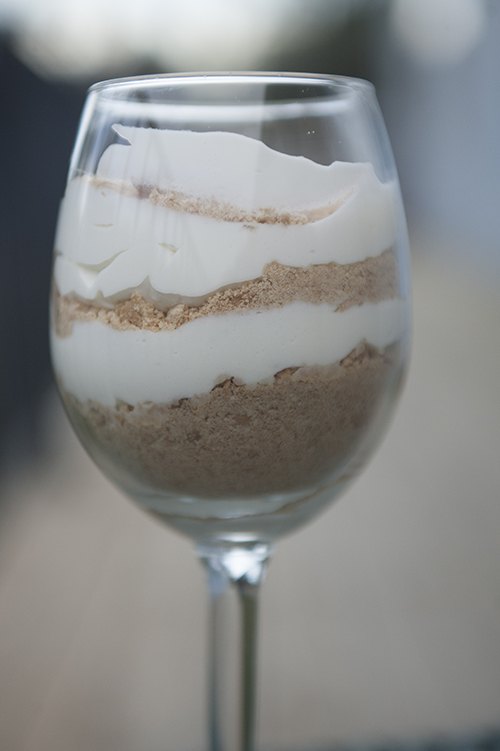
Now whip the whipping cream until you get some stiff peaks, then fold in the vanilla and condensed milk. Place the cream into a piping bag (I just used a ziplock with the corner cut off). Pipe a layer of cream into each of four wine glasses ...


... then top with the biscuit crumbs. Gently level out the crumbs with the back of a spoon, then add another layer of cream, followed by another layer of crumbs. Repeat until you've used up all your ingredients. Chill and then serve.

The duck rice was a lot of work, and I regret to say that it wasn't really worth the trouble. I think if the rice had been something other than just steamed, it would have been a different story--but there wasn't enough interesting flavor in the duck itself to make up for the fact that the rice was just plain white rice. There was no sauce or anything for the rice to soak up, so it was an unfortunately bland meal.

My kids all liked the sawdust pudding, though. It was quite fiddly to make but rich and refreshing, and fun for the kids because they got to eat it out of wine glasses. I'd make it again--it would make a particularly lovely summer dessert.

Anyway, I promise I will never again try to put Mexican chorizo in a sausage casing. Lesson learned.

Next week: Macedonia

Friday, August 29, 2014

Recipes from South Korea

So, I'm sure that North Korea is a lovely place to live and work, but I have to say, I really found the differences between North Korean food and the stuff served just to the south to be quite telling. North Korean food: a little bland, and, dare I say, sort of, um, oppressed. South Korean food, on the other hand ... huge difference.

Of course, it was only one meal. Maybe I got the most flavorful thing on South Korea's menu, and the least flavorful thing on North Korea's. Maybe it was just bad luck. But I sure did like my South Korean meal.

Gyeonghoeru Pavillion, Gyeongbok Palace, Seoul, South Korea.
Photo by Scott Rotzoll.
Let's start, as usual, with a little bit of background about South Korea. First and foremost, it is not North Korea. As you know--because you memorized the facts from my post about North Korea, right?--North and South Korea were once a part of the same nation, right up until the end of World War II when it was divided into Soviet and US occupied regions. This eventually led to the Korean War in 1950. After that ended in 1953, the two nations sort of went their separate ways, with South Korea prospering and North Korea, not really. In fact South Korea became so prosperous that despite its relatively small size it is the eighth largest country in the world for international trade, has the highest human development index in East Asia and in terms of wages also has Asia's highest income. In fact, pick an index--education, healthcare, job security, tolerance and inclusion--and South Korea is always close to the top. And also, the food is awesome.

I used to live in the San Francisco Bay Area, so I've eaten at some Korean places but don't recall what I really thought of it. The stuff I made was fabulous. I am told that South Korean cuisine is actually quite diverse from province to province, so my generalizations are probably not fair. On paper, South Korean ingredients are similar to what you might find anywhere else in Asia--noodles, rice, vegetables, meat and tofu. On the plate, well, yum. Here's what I made (all these recipes came from Easy Korean Food):

Korean fried chicken
  • 2 lbs chicken drumsticks
  • 5 tbsp of soy sauce
For the batter:
  • 1/2 cup plain flour
  • 1/3 cup cornstarch
  • 1/2 tsp baking powder
  • salt and pepper to taste
  • 1/2 cup water
For the sauce:
  • 3 tbsp catsup
  • 1 tbsp Gochujang*
  • 1 tbsp sugar
Bokkeum bap
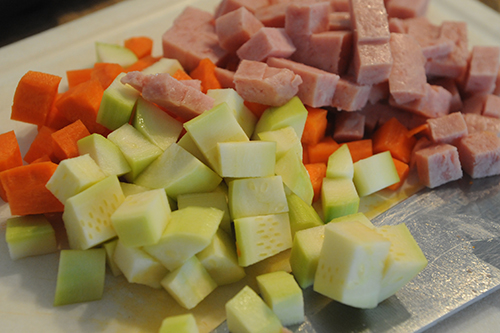
  • 3 1/2 oz spam, cubed**
  • 3 cups Jasmine rice
  • 1/2 carrot, cubed
  • 1/2 zucchini, cubed
  • 1 mushroom, cubed
  • pinch of salt
  • 1 tbsp soy sauce
Kimchi
  • 2 large Napa cabbages, cut into chunks
  • 8 oz rock salt
  • Water
For the sauce:
  • 10 tbsp fish sauce
  • 10 tbsp ground red pepper***
  • 1 onion
  • 4 to 5 cloves garlic
  • 1 Asian pear
  • 1 tbsp salt
  • 1/2 tbsp sugar
  • small piece of ginger
  • 4 green onions, sliced fine
Spicy Cucumber
  • 1 cucumber
  • 1 tbsp apple cider vinegar
  • 1 tbsp sugar
  • 1 tablespoon ground red pepper
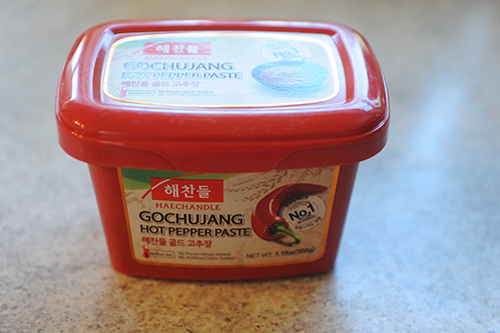
* Gochujang is a Korean hot sauce. It's yummy. Buy some.

** Sorry food purists, spam is indeed a popular ingredient in South Korea. In fact, South Korean spam is actually made with better quality ingredients than American spam, so I guess you could call it "gourmet spam." Its presence in this recipe didn't actually surprise me because I've seen a lot of fried rice recipes that include it.

*** 10 tbsp red pepper is a TON. You don't have to use this much, I didn't. I used maybe half and it was still almost inedibly spicy.

Do the kimchi first, because that takes a few hours. If you're really ambitious, you could do it a few days or a week in advance to give it time to start fermenting. I did mine on meal day. Here's how:

Combine the cabbage and the salt and cover with water. Let soak for four to five hours (one recipe said one to two hours, if you're in a time crunch).

Meanwhile, put all the ingredients for the sauce except for the green onions into a blender. Pulse until fine, then remove from the blender and add the green onions.

 At the end of the soaking time, drain the water. Rinse the cabbage in a sieve, then mix with the sauce. You can serve kimchi fresh or you can let it ferment in the fridge for six to 12 months. There's so much salt and spice in this stuff that trust me, no harmful bacteria is going to touch it.

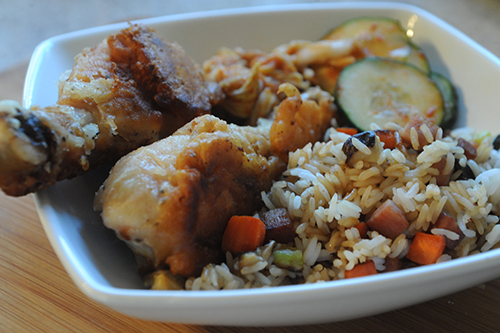
Now let's do the chicken. First lightly spray a roasting pan, and put the drumsticks into it. Pour the soy sauce over them and roast at 425 degrees for 45 minutes, or until a thermometer inserted in the thickest part of the drumstick reads 175 degrees. Remove and let cool for five or 10 minutes.
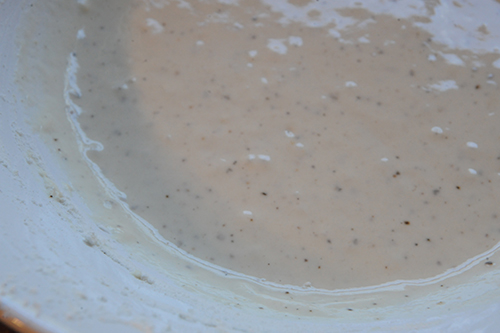
Meanwhile, mix the flour with the cornstarch, baking powder and salt and pepper. Add about a half cup of water to the mix, then add more as necessary to make your batter a bit thicker than a pancake batter.

In a separate bowl, mix together the sauce ingredients.

This is Gochujang. Put it on everything.
Heat about an inch of oil in a large pan (you can use more, I just don't like to throw out oil) until bubbles rise around the non-stirring end of a wooden spoon. Pat the chicken with a paper towel to help absorb some of the excess oil. Dip each drumstick into the batter. Drop the chicken into the oil and deep fry on both sides until golden brown. Just do a few at a time and take care not to let them stick to each other. Drain on paper towels and serve with the sauce.

Now for the rice. This recipe calls for boiling, which is easy. When it's al dente, drain and set aside.

Simple ingredients, yay!

Meanwhile, heat some oil in a wok or other large pan and add the vegetables and spam. Add a pinch of salt and let cook until the vegetables and spam are just starting to brown.

Now add the cooked rice and stir in the soy sauce. Let cook for another three to five minutes and serve.

So while the chicken is roasting and/or the rice is cooking, you can make the cucumbers because they are ridiculously easy. Just put everything in a bowl and mix. Done!


Here's what we thought: Martin said, "These are the best drumsticks I've ever had!" Which coming from him is huge, because he really dislikes meat on the bone. But I had to agree that they were pretty I danged tasty drumsticks. They came out really crispy and the sauce, oh my. It was a little fruity and just spicy enough without being overwhelming.

Now the kimchi was actually a bit overwhelming. This was the first time I've had it but Martin has eaten it a few times, and didn't like it this time, either. It was kind if over the top spicy, even though I didn't use as much red pepper as it called for. It was also really salty. I think I would have liked to let it ferment for a while to see what that did to the flavors, but Martin was pretty adamant that we wouldn't ever eat it, so it got tossed. The cucumbers were also quite spicy but the fire was a really good combo with the mellow cucumbers. And I liked the rice, spam and all. With all that spicy food the salt in the spam was kind of needed to help cool things down.

If you're a fan of spicy foods, make this meal. Maybe skip the kimchi, unless you've already got a taste for it (I hear it's an acquired one). It's a lot if work for something you might end up not liking. But that chicken, yum. Already looking forward to making it again.

Oh and you know, you could substitute diced ham for the spam. I won't tell.

Saturday, August 16, 2014

Recipes from North Korea

My kids went back to school this week, so yay. Not because I didn't enjoy having them home (I did) but because now I'm really hoping I will have enough time to keep up with the work I get paid for and the work I don't get paid for (this blog). 

Anyway this week we are  in the world's most scary place, I mean the world's most wonderful place. Because if you say anything bad about this place, the person who is currently in control of it starts whining--I mean legitimately complaining--to the United Nations that you have committed an act of war. So let me just begin this entry by saying, North Korean food is fabulous and not at all bland or boring.


OK, so about North Korea, it's a magical land full of unicorns and fairies. Super macho, manly fairies and unicorns that have nuclear launch capabilities. You may know it as that country that the US got involved with in 1945, back when we were sort of irrationally afraid of communism. We occupied the south, Russia occupied the north, and five years later both sides started fighting each other. Technically, the two nations are still at war since no one actually got around to signing a peace treaty, and each one thinks it is the legitimate government of the entire region.

Pyongyang, Arirang, North Korea (Mass Games). Photo by (stephan).
North Korea is the most militarized nation in the world, with a total of nine and a half million military personnel, which includes an active duty army of 1.21 million, the fourth largest in the world. Oh, and it is led by a person who is not at all crazy.

I got all of this week's recipes from the North Korean government's online recipe website (no, really!) which I'm not going to link to because frankly, I don't want my website linking to it. Evidently, North Korea launched the site a couple of years ago for "housewives' convenience." How thoughtful. If you're interested, The Guardian has published a link to it here: http://www.theguardian.com/world/2014/jul/22/north-korea-launches-cooking-website


North Korean food is less spicy than South Korean food, which doesn't necessarily mean it's boring or tasteless ;). Most of the recipes I found seemed very simple, and the meal didn't take a lot of time to put together, so that was a definite plus. Here's what I made:

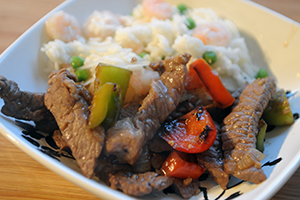
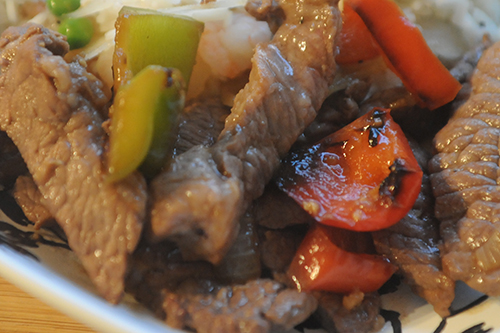
Beef Stir
  • 2 lbs beef, sliced
  • 3/4 small onion, sliced
  • 1 /2 red bell pepper, sliced
  • 1/2 green bell pepper, sliced
  • 3 tbsp soy sauce
  • 3 tbsp oil
  • 1 tsp sugar
  • 6 cloves garlic
  • 1/4 tsp black pepper
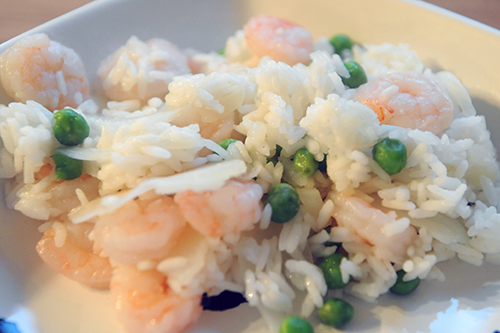
Bibimbap shrimp
  • 3 3/4 cup cooked rice
  • 10 1/2 oz prawns
  • 1/2 cup frozen peas
  • 1/2 a small onion, sliced
  • 1/2 a medium potato, sliced
  • 3 tbsp oil
  • 1 tsp salt
  • pinch pepper
And that was all, because I was kind of feeling like I wanted a slow week, and frankly I didn't find any recipes that qualified as Must-Make.

Again, these recipes are really simple, so no need to wait until you have half a day to make them. Starting with the beef:

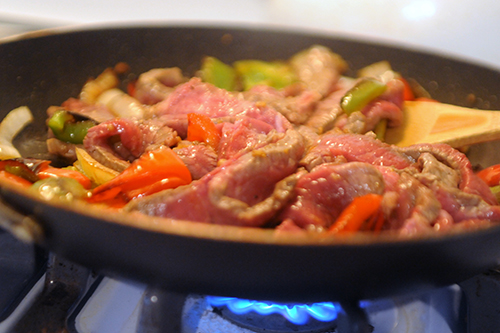
First whisk the soy sauce together with the spices. Add the vegetables to a hot pan and stir fry until the softened. Add the beef and fry quickly on both sides until brown.

Pour the soy sauce mixture over and stir until well-incorporated. That's it!

Now for the rice:

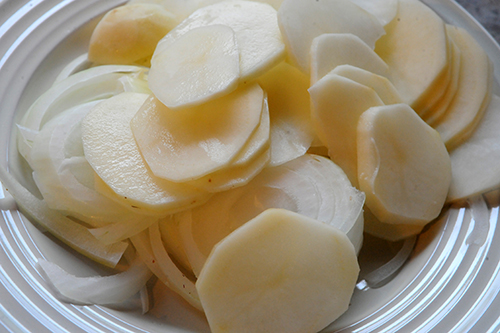
Boil the rice and drain. Set aside. Now place the shrimp in boiling water until just pink. Remove and set aside. In the same pot, add the potatoes and onions and let cook until just soft.

Transfer to a pan and stir fry with the oil, peas, rice and shrimp. Season with salt and pepper and serve. 

That's all there is to it. See? Simple. And very simple-tasting too, which is fine if that's what you like. All joking aside, it was OK and perfectly edible, but I was left wanting a little bit more. So I added soy sauce.

Next week: Emilia-Romagna, Italy

Thursday, July 3, 2014

Recipes from Kashmir, Pakistan

We're not going very far this week, in fact we're actually staying in the same region that we were in last week. What's more, the region has the exact same name as the one we were in last week, except instead of India it's Pakistan.

Now, to Pakistan, Kashmir is pretty much all Pakistani. They refer to Indian Kashmir as "Indian Occupied Kashmir," and India refers to Pakistani Kashmir as "Pakistani Occupied Kashmir," so that gives you some indication about the general neighborliness of the two areas. The two nations have actually fought three wars over Kashmir--one in 1947, one in 1965 and one in 1999--and they still don't seem to have settled the matter.

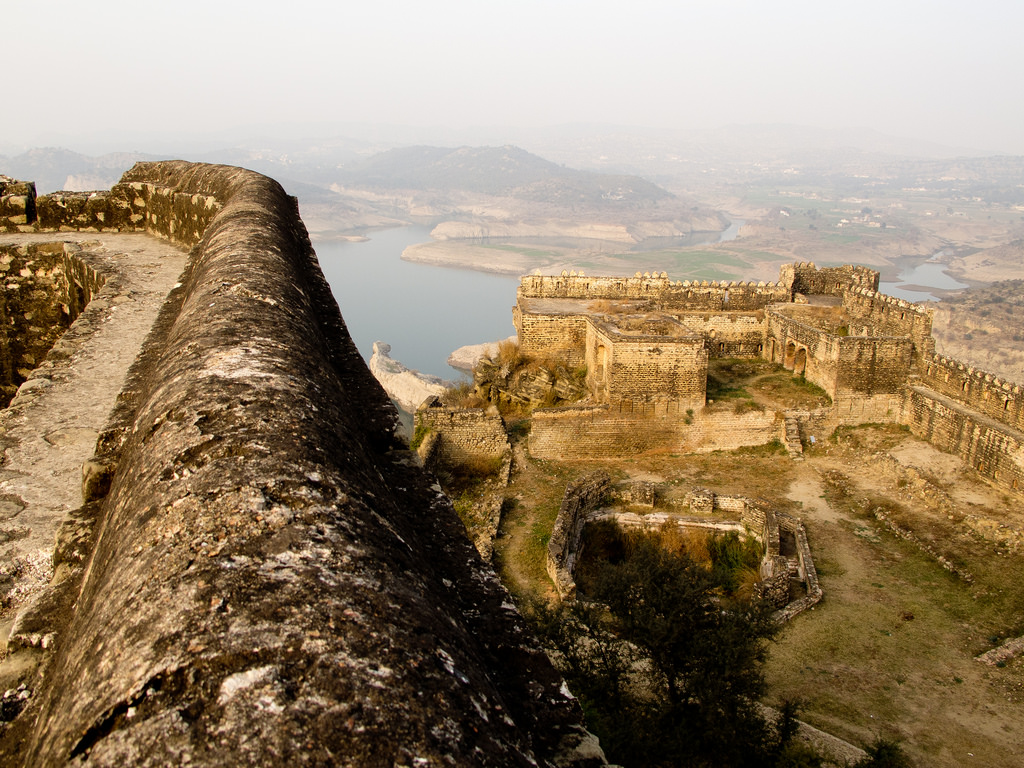
 Ramkot Fort, Mangla, Azad Kashmir, Pakistan. Photo by
Pakistani Kashmir is known as "Azad Kashmir," which means "Free Kashmir." It was established in 1947 after the first war, and though it is protected by and economically linked to Pakistan, it has its own government and is not considered a province. In size it is roughly 650 square miles, which is just a little bit larger than Oklahoma City. So it's not a huge area and it has a lot of similarities with its Indian cousin--in particular its preference for mutton, which I couldn't really avoid this week.

Yes, it seemed like every recipe I found for Pakistani Kashmir was mutton based, or contained mutton. Now, of course you can't get mutton here in the US, or at least not in the standard supermarkets found in Grass Valley. I'm betting you can get it at the Indian markets in Sacramento, where I bought goat meat last year--but I'm going to pretend like you can't and just say that lamb is a perfectly acceptable substitute. It's the same animal, after all, just a younger version. So I did choose one mutton-based recipe and yes, I used lamb instead. I'm happy to say, though, that the main course actually called for lamb. Here's my menu:

Rogan Josh
(from KFoods.com)
  • 1 tbsp whole fennel seeds, freshly ground
  • 3 1/4 cups plain yogurt
  • 6 tbsp vegetable oil
  • 1 3/4 inch stick of cinnamon
  • 1/2 tsp whole cloves
  • 2 1/2 tsp salt
  • 1 pinch asafetida
  • 3 lb lamb, cubed
  • 4 tsp paprika
  • 1/2 tsp cayenne pepper
  • 1 1/2 tsp dried ginger
  • 3 2/3 cups water or beef broth
  • 1/4 tsp garam masala
Qeema Pilao
(also from KFoods.com)
  • 2 tbsp oil
  • 1 lb mutton, minced
  • 1/2 cup dahl
  • 2 inch piece ginger, chopped
  • 1 tbsp coriander
  • 1 tbsp paprika 
  • 1 tbsp garam masala
  • 2 cups rice, soaked for 20 minutes
  • 1 tsp saffron, soaked in 1 cup warm water
  • 1 cup milk
  • 1 tsp salt
  • 1 cup pine nuts, toasted
Kashmiri Naan
(from Evernew Recipes)

For the dough:
  • 6 cups all-purpose flour
  • 2 cups whole milk
  • 1 egg
  • 1/2 tsp baking powder
  • 2 tsp granulated sugar
  • Oil
  • 1 1/2 tsp salt
For the filling:
  • 1 cup granulated sugar
  • 1/2 cup cashews
  • 1/4 cup almonds
  • 1 cup maraschino cherries, drained
OK let's do the lamb rogan josh first. Start by heating the oil over a high flame, then add the cinnamon and cloves, followed by the asafetida. Stir for a few seconds, then add the meat and the salt. Cook for five minutes, then add the paprika and cayenne pepper.

Stir, and slowly add the yogurt, stirring continuously.
Continue to cook over high heat until the sauce boils down and the meat is brown. Add the fennel and the ginger and stir to combine. Add the water or broth and cover the pot with the lid slightly ajar. Cook over a medium flame for 30 minutes, then cover the pot completely and cook for an additional 45 (stirring occasionally), or until the meat is tender.

 
Now I will add here that I don't think you should use beef broth. I did, and my rogan josh was waay too salty. I attribute this to the fact that I used a beef bouillon instead of a broth, so if I'd used the broth I might not have had the same problem. But that 2 1/2 tsp of salt is plenty, in fact it may even be a little too much all by itself. Probably a good idea to err on the side of conservative salt use.

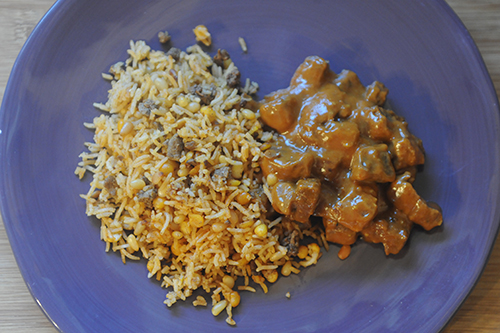
Now on to the rice. First cook that lamb, I mean mutton, over a medium heat until just starting to brown.

Add the garam masala, coriander, salt, ginger and paprika and give it a good stir. Now add the dahl and keep cooking until the meat is brown.

Add the rice and stir until coated with oil, then pour in the milk and water.

Reduce heat to low and cover. Cook for 20 minutes or until all the water has been absorbed.

Stir in the pine nuts and transfer the rice to a casserole dish. Bake at 375 degrees for 10 to 15 minutes, or until done.

Finally, the naan. Now, this is a sweet naan and I admit that I don't know how it is usually served in Pakistan. For what it's worth, I served it as a dessert. Here's how to make it:

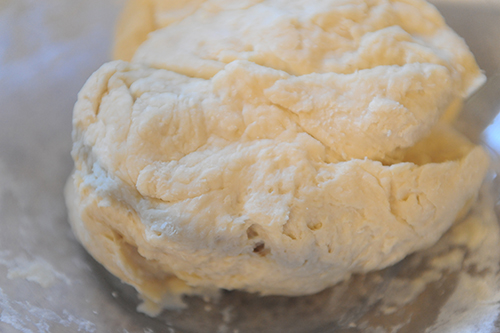
Mix all the dough ingredients together with your hands. Add one to two tablespoons of water and keep mixing until you get a smooth, stretchy dough. Cover and let sit in a warm place for two or three hours.

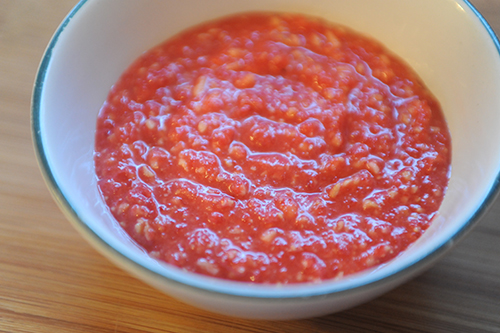
Meanwhile, put all the filling ingredients into a food processor and pulse until you get a paste.

Divide the dough into 14 equal-sized balls. Roll each one to make a thin circle. Place some of the filling in the center.


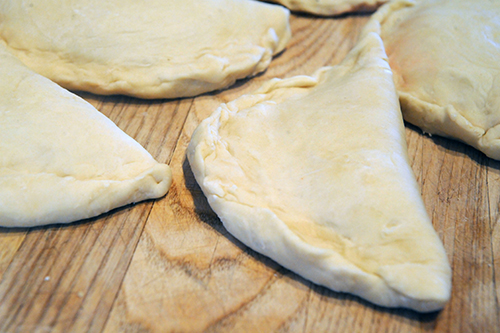
Now fold the edges of the dough over, pinching to seal. Now reshape the dough into a circle. Note--I made mine half-moon shaped, like calzones. The reshaping thing wasn't working for me and I figured they weren't going to taste any different, even though they might like sort of Italian.

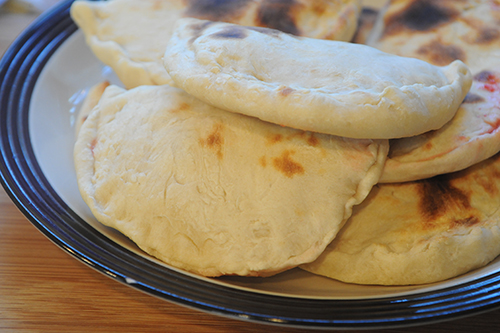
Turn on your broiler and place the naan breads under it. Let cook for five or six minutes, checking frequently (they'll go from almost there to burnt in no time if you don't keep your eye on them). When the naans are a golden brown, they're done.

It was a shame about the rogan josh. I could tell it had great flavor, but it was overwhelmed by all that salt. I definitely want to try making it again because I feel like I didn't do the recipe justice.
The rice I loved, of course. Have you ever heard me say, "I did not like that rice?" No. It never happens. I always like the rice.

The naan was really tasty. I love these new takes on my old favorites and I'm definitely going to make this again. It was really sweet and fruity/nutty, not anything like I'd expect to find in that part of the world, where rice pudding seems to be the favorite dessert (though a good rice pudding is pretty yum). This recipe made for a great change and wasn't at all difficult, plus the results were unique and interesting. Two of my favorite things!

Yay I got the blog up on Thursday! Patting myself on the back. Let's see if I can manage two weeks in a row.

Next week: Kazakhstan


Copyright 2023 Becki Robins and Palfrey Media.. Powered by Blogger.

Blog Flux

Blog Directory